
Property Types We Roof
Manufacturing Plant Roofing in Mission, TX
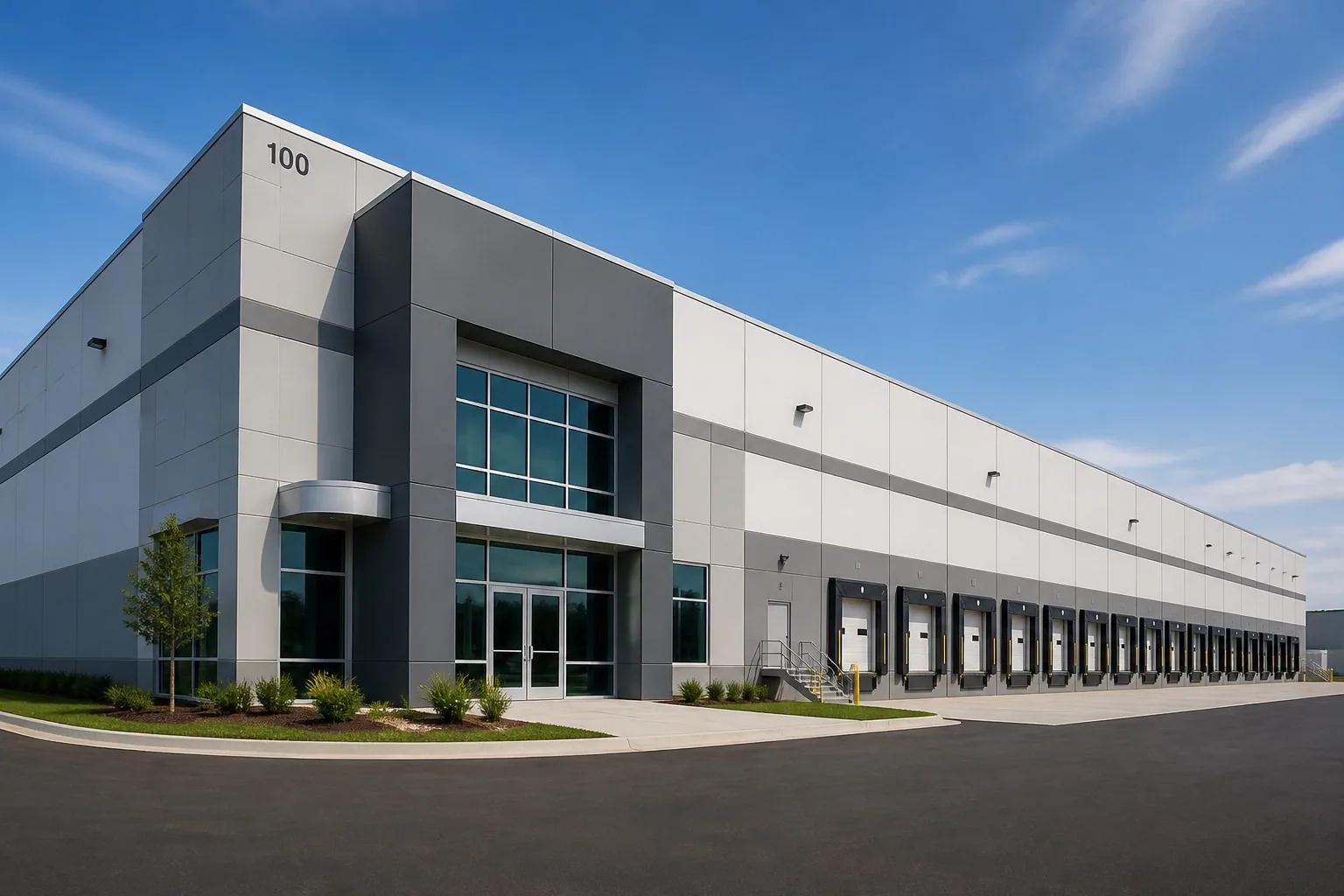
The sketch for a plant roof in Mission, TX has more marks than most: stacks, exhaust fans, make-up air intakes, relief vents, and a line of discoloration downwind of each. The inspector photographs the staining, dates it, and asks the plant engineer what leaves the building at that point. The answer sets the membrane chemistry, the repair method, and the maintenance interval. A plant roof is judged by what the process puts on it as much as by what the weather does.
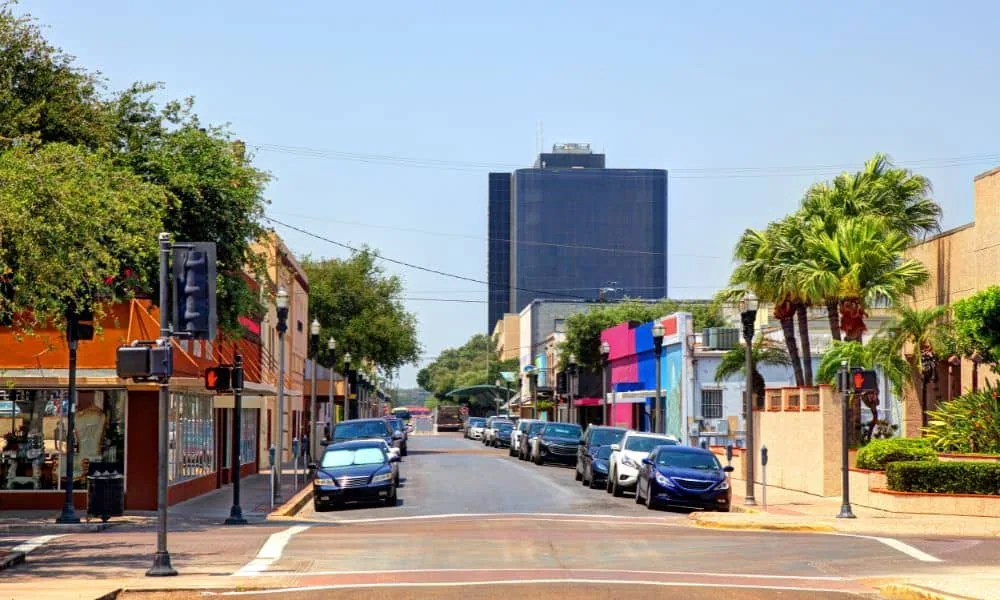
Plants Growing in the Mission Area
Mission EDC names manufacturing among the city's growth sectors and points to a label-printing manufacturer expanding production and an Ecoat.us plant expansion. McAllen sits across the border from the Reynosa manufacturing center, and the area's economy has shifted from agriculture toward international trade, health care, retail and tourism. New or expanded buildings bring roof penetrations that did not exist on the original plan.
Every added stack and rooftop unit changes the roof. A building that began as a quiet storage shell may now carry process exhaust, and a membrane chosen for the first use may not suit the second. The inspection record lists each addition by date, so the owner can see which penetrations are recent and which belong to the original build.
Expansions also change drainage. A new bay added to a plant often leaves a valley where the old and new roofs meet, and that valley collects water, debris, and thermal movement at the same spot. We measure slope through the transition, check the flashing that bridges the two roofs, and note whether the new section was built with the same insulation and deck as the old one.
Process Discharges and Membrane Choice
Printing plants vent solvents and inks, coating lines vent vapors, food packers vent fats and steam, and metalworking shops vent oils and mist. Standard single-ply sheets can soften, stain, or lose seam strength where those deposits land. We map each discharge point and photograph the membrane around it.
The recommendation then follows the exposure. PVC roofing handles many fats and chemicals, and the more resistant KEE roofing alloy gives extra reserve where oils or aggressive vapors are routine. Where discharge is mild, TPO or a coating over a sound existing surface may be enough. The scope line names the discharge that drives each choice.
Compatibility extends to adhesives, sealants, and walkway pads. A sealant that holds on a clean TPO field can dissolve at a stack base wet with oil. We specify each accessory against the exposure at its location and record the product family in the file, so later repairs use the same chemistry rather than whatever is on the truck.
Rooftop Equipment, Curbs, and Supports
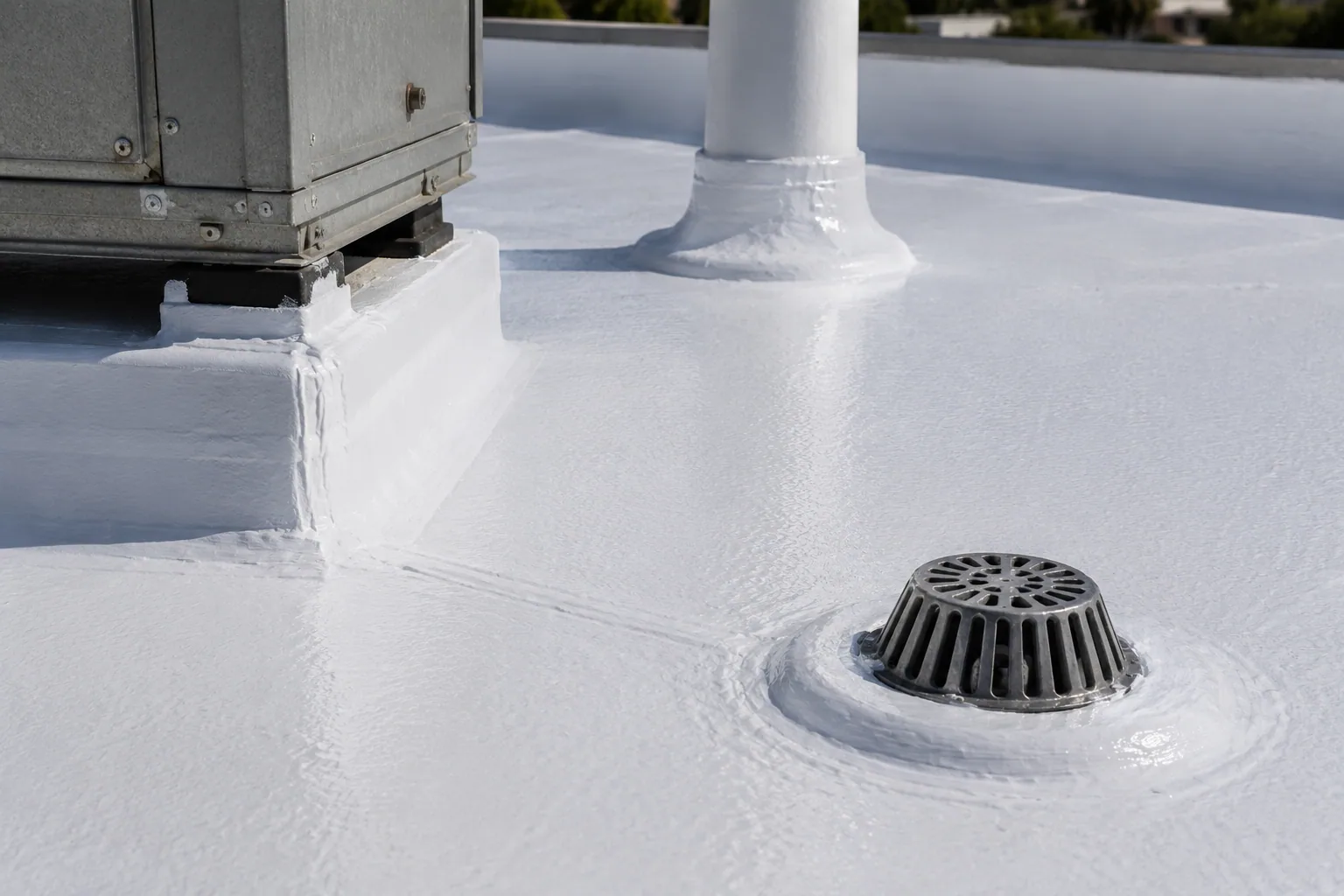
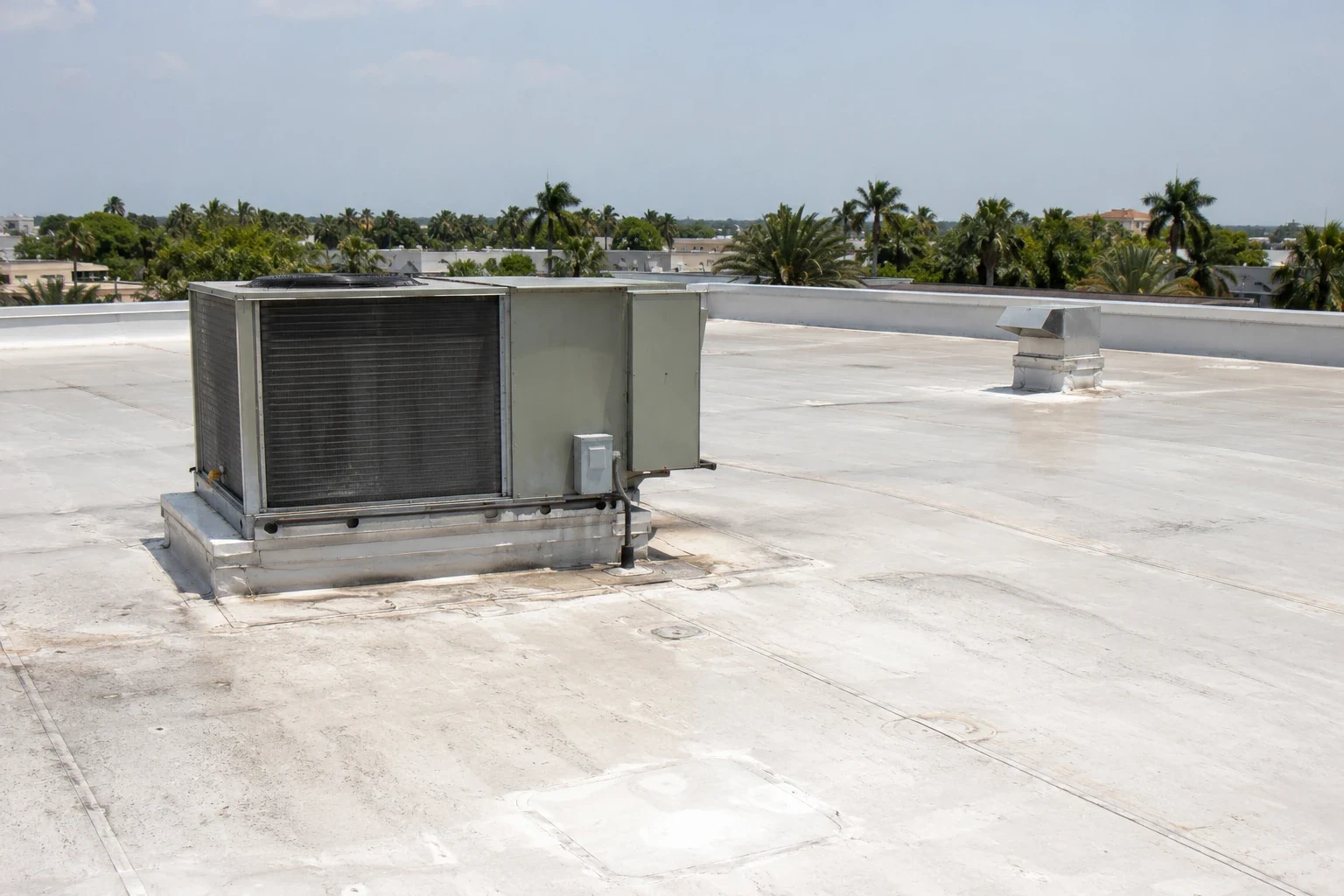
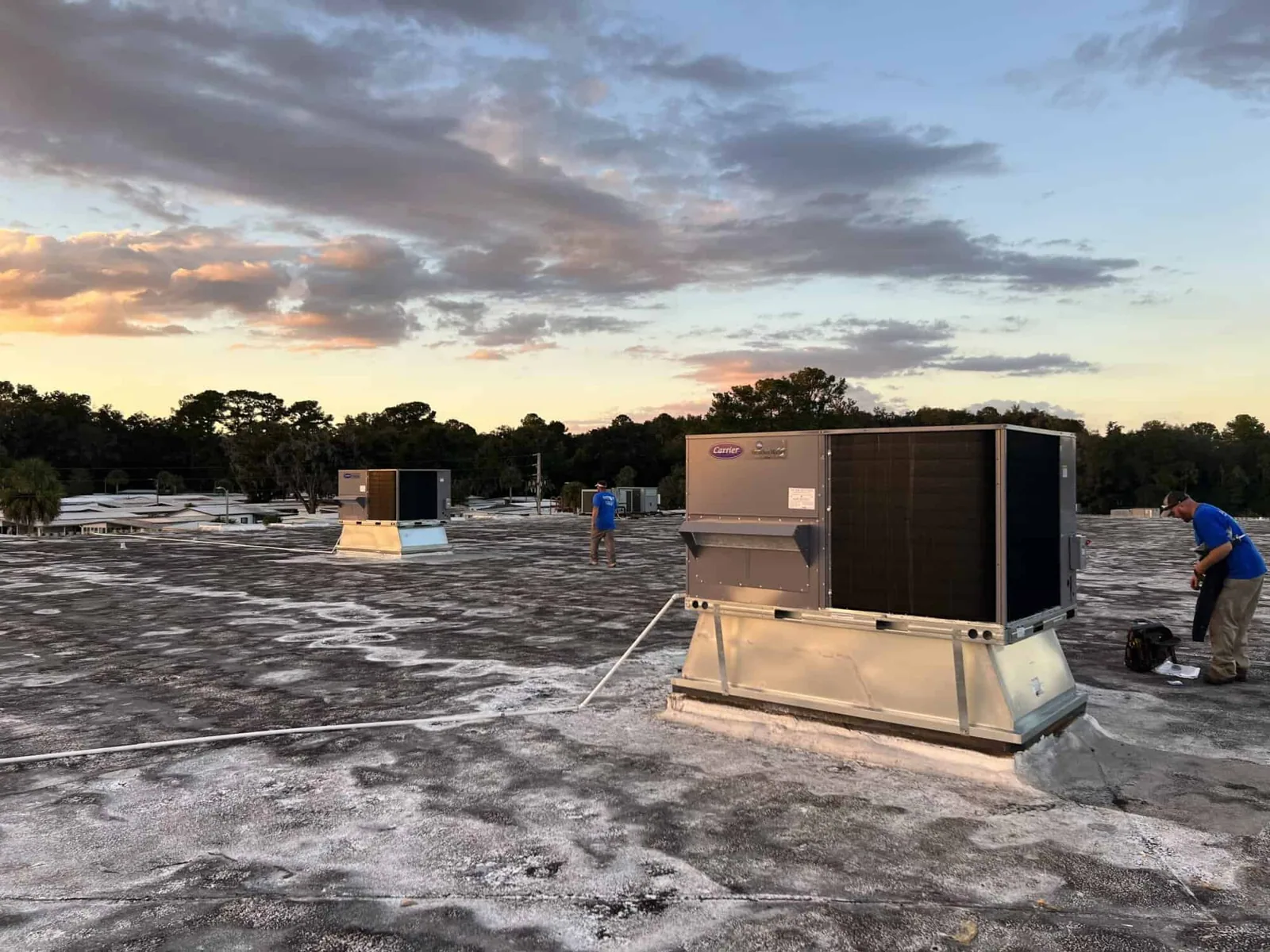
Plants carry heavy rooftop equipment: air handlers, exhaust fans, cooling towers, and ductwork. Each unit sits on a curb or a support rail, and each of those is a flashing detail waiting to fail. Vibration loosens fasteners, condensate stains the membrane, and technician traffic wears a path across the roof.
We record curb height, flashing condition, sealant, and equipment anchorage, and we mark walkways that need protection pads. Where a unit will be replaced soon, the roofing plan coordinates with the mechanical contractor to avoid cutting new flashing twice. Our rooftop equipment curbs and supports work follows the same log.
Storm Exposure on a Tall, Wide Building
In July 2020, Hanna sent estimated winds of 60 to 65 mph over Mission, and the roofs of hundreds of poorly built Valley structures took most of the damage. Dolly in 2008 lifted roofs near Weslaco, chiefly on older buildings. Plants often have tall walls, long eaves, and louvers that increase edge loading.
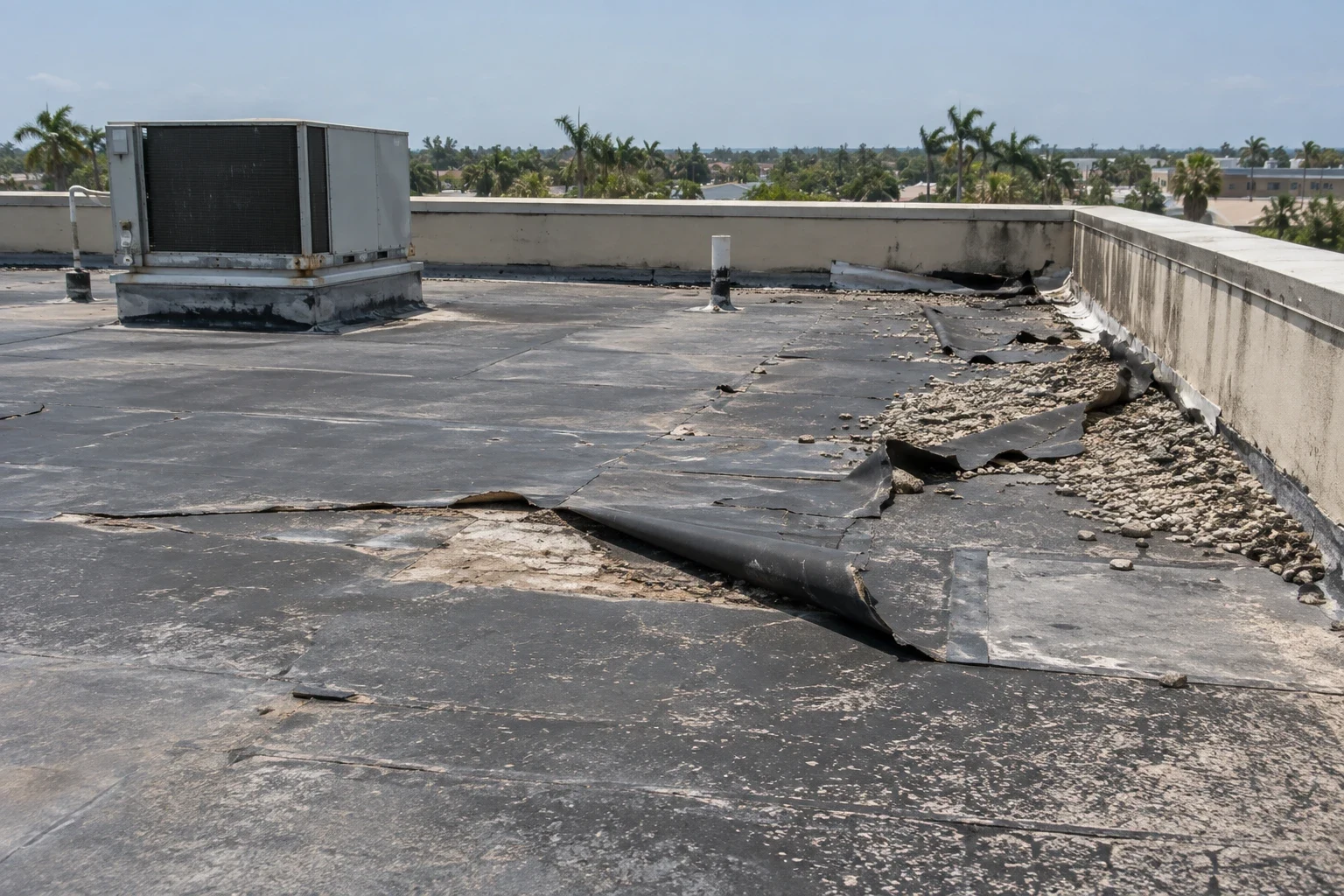
Attachment is verified with a fastener pull sample from the deck, and edge metal receives close fastener spacing. After a storm, the baseline photographs show which coping joints and flashings moved. Production-critical areas, such as electrical rooms and clean zones, are checked first, and the hurricane damage roof repair list is ordered by operational risk.
Rain, Drains, and Production Risk
A northwest Mission gauge logged 14.40 inches of Hanna rain, and streets across the area flooded. A plant roof must move that water off quickly, since a ponded roof adds weight and a failed seam above a production line can stop work. Drains are cleared and logged, overflow scuppers are measured, and low spots are mapped after rain.
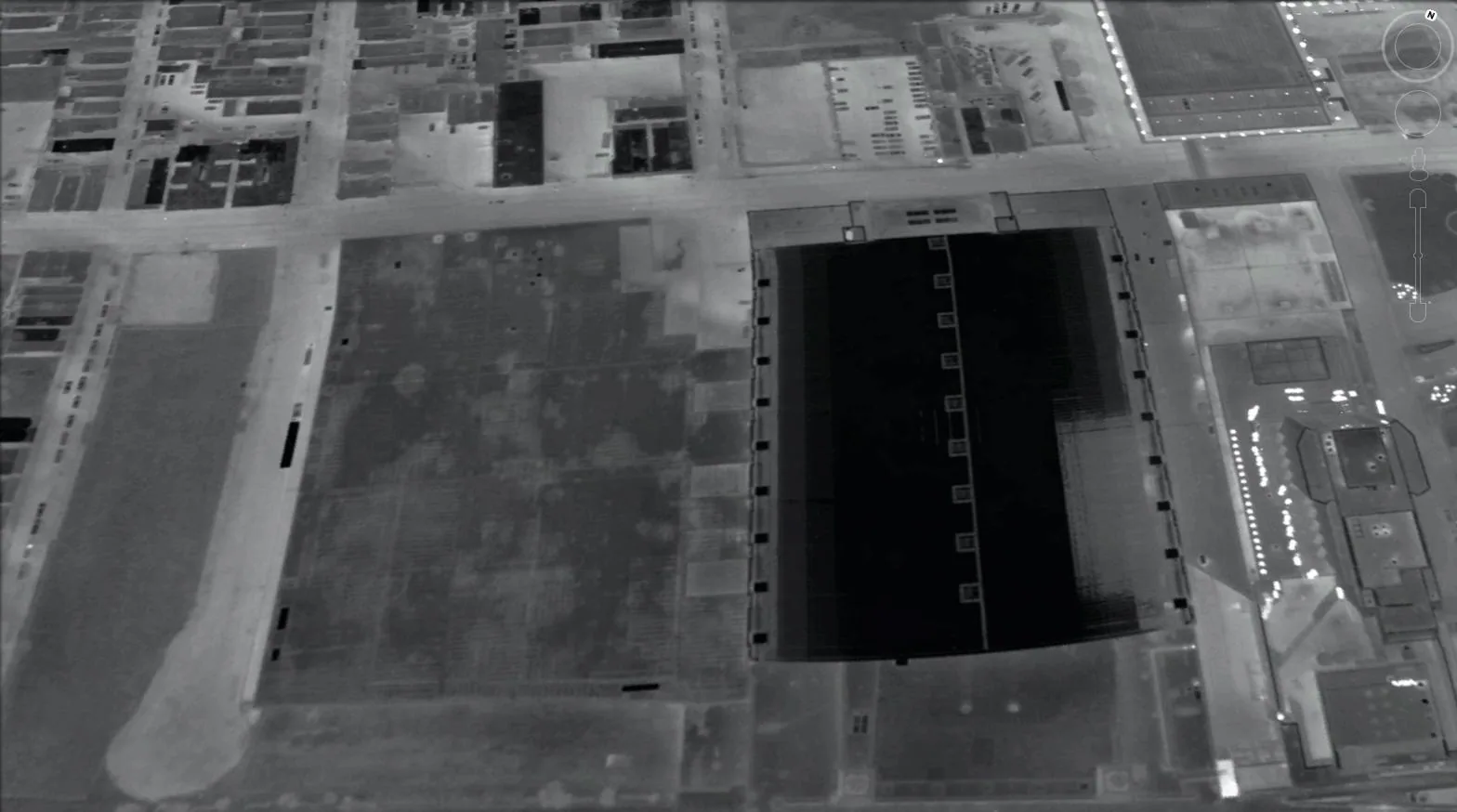
Moisture surveys are valuable on plants because wet insulation can hide above equipment that cannot be shut down for investigation. An infrared moisture survey run at dusk, with core cuts to confirm, shows the wet zones without interior disruption, and the results feed the phased scope.
Condensation inside a plant can look like a leak. Humid process air meeting a cool deck produces drips beneath a perfectly sound membrane, and a roof repaired for the wrong reason stays wet. Readings on the underside of the deck and in the insulation separate the two, and the recommendation addresses ventilation or vapor control when that is the real cause.
Working Around Production
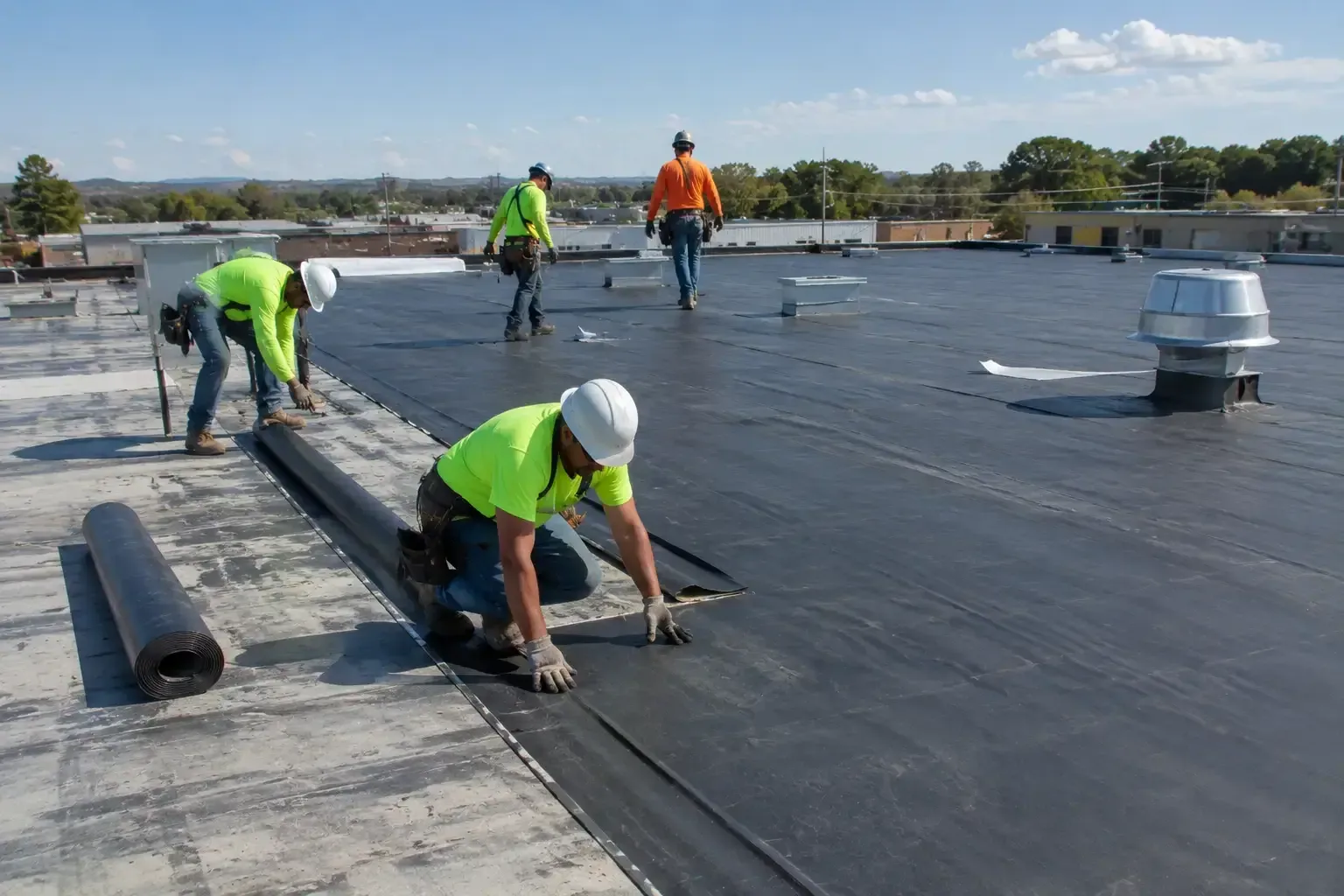
Shift patterns, maintenance shutdowns, and delivery windows shape the schedule. Some plants have a planned shutdown each year, which is the best time for work directly above sensitive lines. Other areas can be reroofed during normal operations with protection below and attention to intakes.
Hot work, fumes, and noise are managed against the plant's safety rules. Crews follow site orientation, lockout awareness, and hot-work permits. Daily photographs show the open area and the dry-in condition at day's end, and the plant engineer receives a short log with each change. Where a server room or clean room shares the site, its roof section is scheduled and protected under stricter rules than the rest, much as a cold storage area would be. This is how roof replacement proceeds without halting output.
Questions and Answers
Why does a plant roof need a map of its exhaust points before any repair?
Because the membrane near a discharge point ages differently from the rest of the field. A patch in the wrong chemistry can fail within months. The map shows where the roof sees fats, solvents, or acids, and the repair material is matched to that exposure.
Can a plant roof be replaced while production continues?
In most cases, yes, with planning. Work is staged by zone, intakes are protected, and interior areas under the open section are covered. Particularly sensitive spaces may be handled during shutdowns. The proposal lists the sequence so the plant engineer can compare it to the production calendar.
What do you ask the plant engineer during the first visit?
We ask what each stack and fan exhausts, how often it runs, whether any equipment is planned for replacement, and which interior areas cannot tolerate water. The answers go into the owner's file alongside the photographs and shape both the repair and the replacement scope.
How are new rooftop units added to an existing membrane?
A curb or rail is set on prepared structure, flashed into the membrane with compatible material, and photographed before and after. The new penetration is added to the roof sketch with its date. Compatibility matters, since the wrong sealant can attack the sheet around the new curb.
Is a coating a sensible option for a plant roof?
Sometimes. If the roof is dry, well attached, and the discharges are compatible with the coating, a reflective film can extend its life. A test patch and a moisture survey come first. Heavy chemical exposure usually points toward replacement with a resistant membrane instead.
Request a Plant Roof Assessment
Tell us what the process sends through the roof and when shutdowns occur. We inspect your Mission, TX plant, map discharges and moisture, and deliver a written condition summary for budgeting or an insurance conversation.