
Commercial Roofing Services
Rooftop Equipment Curbs and Supports in Mission, TX
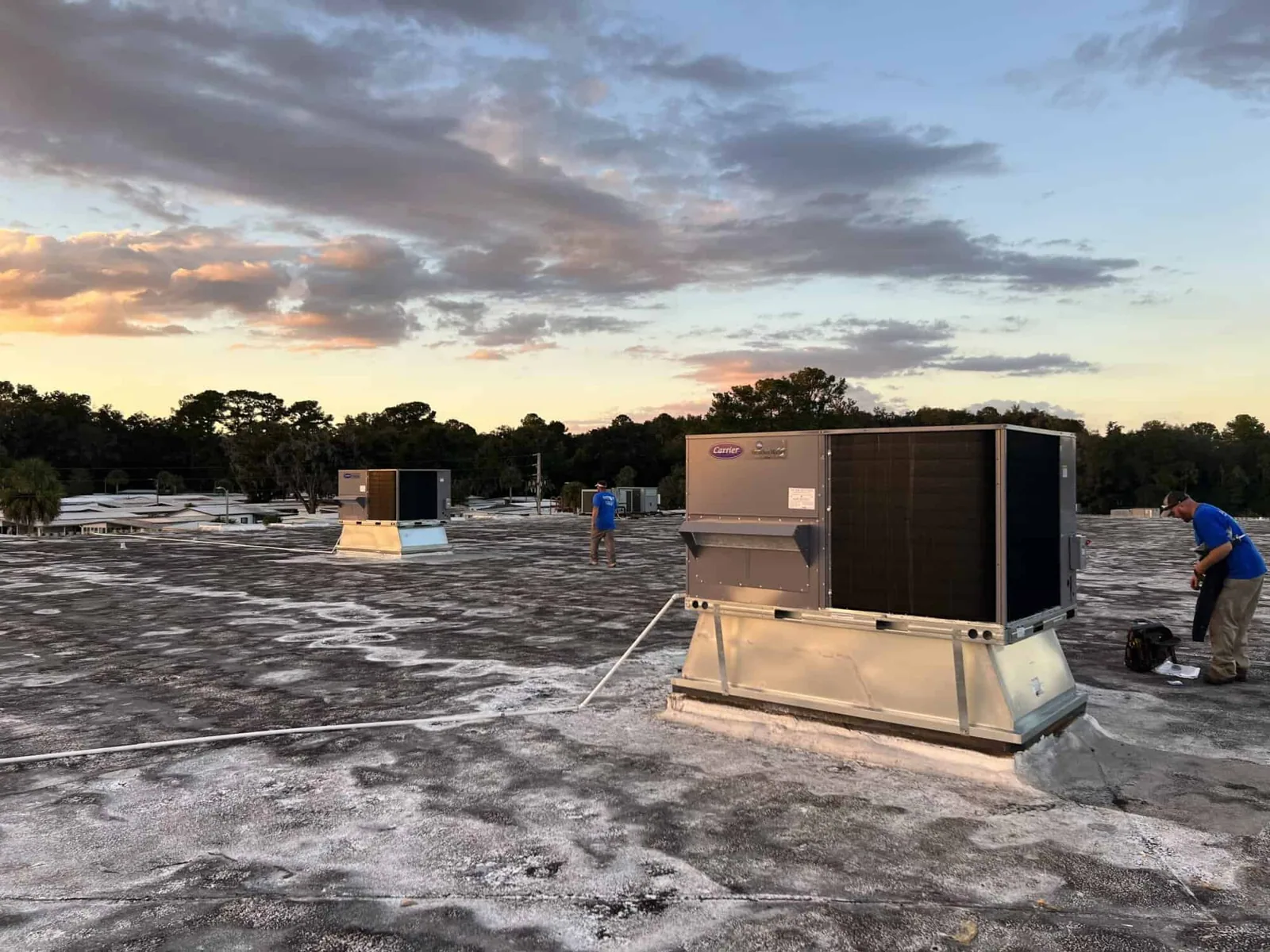
A rooftop unit that sits a fraction off level leaves a record on the roof: a worn track in the membrane, a puddle beside the curb, a sealant line pulled thin on one side. On a Mission, TX building, those marks are the first items on the equipment sheet. Curbs and supports carry mechanical units, ducts, and piping, and they are penetrated by every refrigerant line and electrical conduit that feeds them. When the roof and the equipment trades share that space, nobody owns the detail unless somebody writes it down.
Counting and Describing Every Support
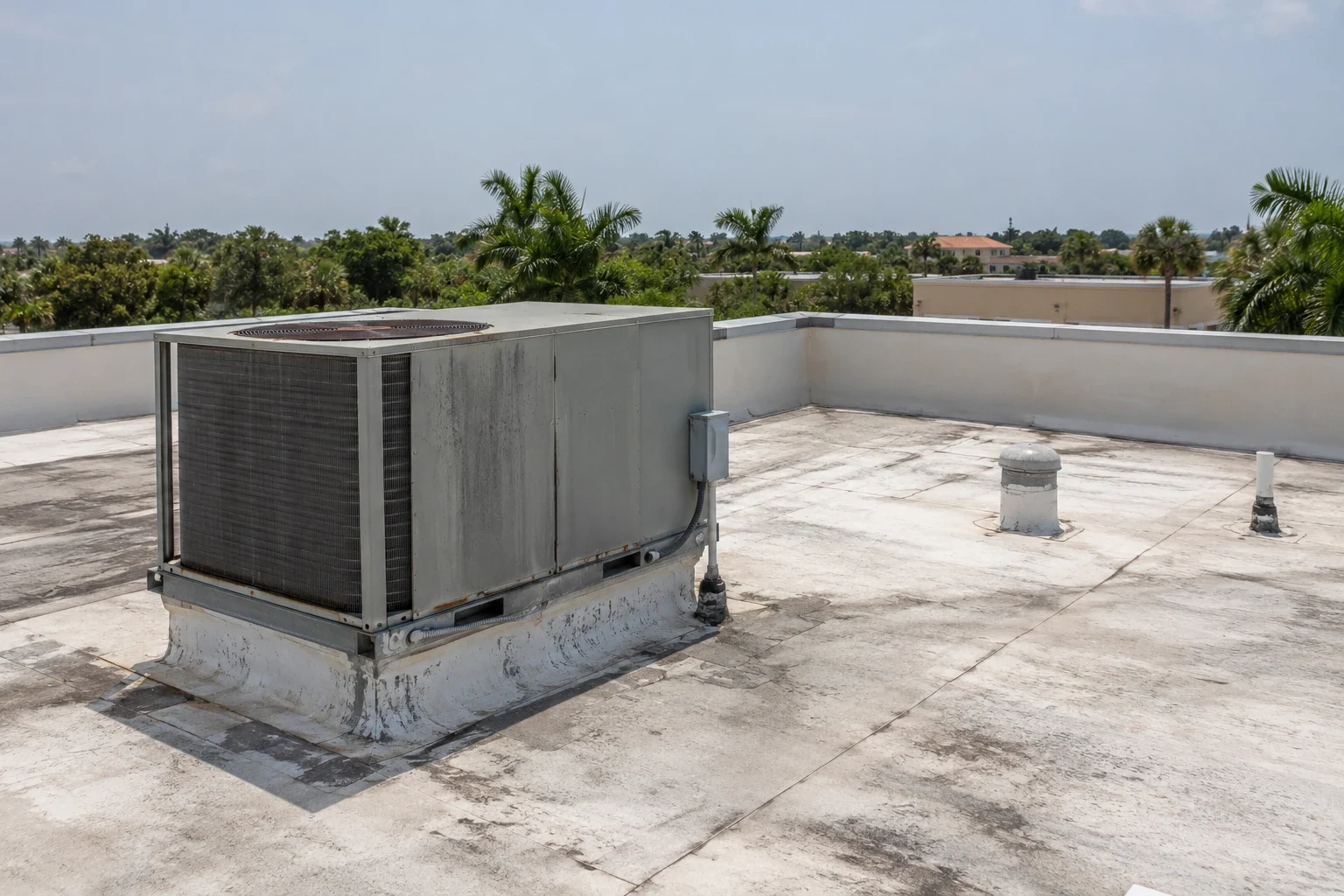
The equipment inventory lists each curb, each frame, each pipe stand, and each duct support, with type, size, material, and condition. Prefabricated curbs and field-built curbs fail differently, so the sketch labels each one. We record the curb height above the membrane, because a curb set too low lets ponded water reach the flashing, and the roofing system's termination requirements depend on that height.
Equipment supports that sit directly on the membrane, such as pipe stands and conduit blocks, are listed separately. They concentrate load on small footprints, and over seasons they can abrade or puncture the surface. Walk pads, support pedestals with larger bearing plates, and rubberized isolation blocks are the usual corrections, and the inventory notes which ones each stand needs.
Curb Flashing and Counterflashing
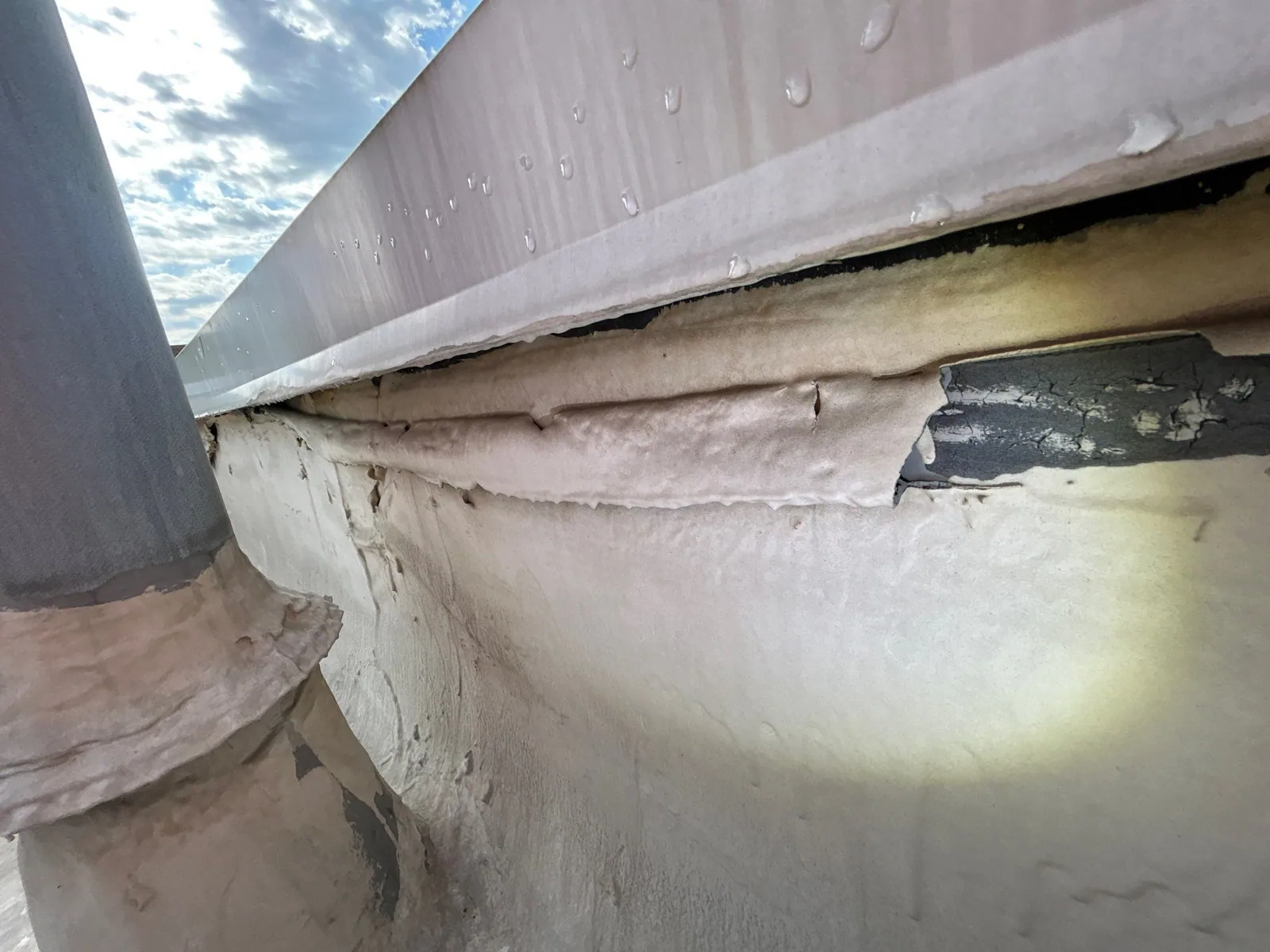
The roofing side of a curb is the base flashing: membrane carried up the curb sides, terminated at the top, and covered by counterflashing or a metal cap. Failures cluster at the corners, where the membrane is folded, and at the top termination, where sealant ages and metal moves. These are the classic weak points of flashing failure, only spread across a bigger footprint.
On the equipment side, the unit's own skirt and gasket should shed water onto the curb cap and away from the roof. A unit with a damaged skirt can leak into the curb even when the roof flashing is sound. We photograph both surfaces, so that when a leak appears below, the owner and the mechanical contractor can see which side failed.
Heat, Movement, and Vibration
May through October is the Valley's heat-safety season in the Brownsville office's terms, and rooftop units run hard through all of it. Their exhaust warms the surrounding membrane, and their housing radiates heat to the flashing close by. Compressors and fans add vibration that loosens fasteners and cracks hard sealants over time.
We look for sealant that has hardened beside the unit, fasteners that have backed out of the curb, and membrane that has chalked or shrunk close to hot exhaust. Where vibration is the cause, isolation pads or brackets are added, and the finding is reported to the mechanical contractor, since loose fan housings and failing mounts are the source of that movement and sit outside the roofing scope. The roof sketch shows the units, the exhaust directions, and the locations of the worst heat wear, which helps an owner plan coating or membrane work with the equipment layout in mind.
Restraint Against Tropical Wind
Hanna sent estimated 60 to 65 mph winds across Mission and McAllen in July 2020, and the Valley's damage to hundreds of poorly built structures fell mostly on roofs. A rooftop unit is a large sail, and the straps, bolts, and curb connections that hold it down are part of the building's wind resistance. A unit that shifts also drags the flashing with it.
On each visit we check that the restraints are present, tight, and not corroded, and that access panels and covers are latched. Loose covers are one of the common causes of debris on a roof after a wind event. Where straps or bolts are missing, the finding goes to the mechanical contractor with a photograph, and the roofing scope records that the detail is open.
Working With the Mechanical Trade
Many curb repairs require a unit to be lifted, disconnected, or moved, which means coordination with the HVAC contractor. We schedule the roofing work so the unit comes off, the flashing is rebuilt, and the unit is set back in the shortest possible window, particularly for buildings that need continuous cooling. A clinic cannot lose air handling for long, so the schedule for a medical office roof is built with the facility manager before any unit is touched.
When a unit is being replaced, the roofing contractor and the mechanical contractor should agree on the curb height and curb adapter before the new unit arrives. A mismatched curb is a common reason for sealant-heavy patchwork, and it is avoided by a short conversation at the start. We can write the shared notes into the file so both trades work from the same drawing.
Planning Support Upgrades With Roof Work
The best time to upgrade curbs and supports is during a recover or replacement, since the membrane is open and the work is easier to integrate. On an office building in Mission or Pharr, putting equipment changes and roof work in the same budget year avoids cutting into a new roof for a new unit.
Planned upgrades include raised curbs, additional pedestals, walkway pads, and sleeved penetrations designed for later circuits. Because penetration flashing and equipment supports share a design logic, we combine them in one scope line and one set of photographs, and the same record feeds the maintenance schedule for the next year.
Questions and Answers
Who is responsible when a leak starts at a rooftop unit?
The roofing contractor handles flashing and the roof side of the curb, and the mechanical contractor handles the unit and its skirt, gasket, and connections. A leak can come from either side, so we photograph both and test the seams. Clear photographs keep the repair moving instead of leaving two trades pointing at one another.
How high should a curb be above the roof?
Roofing systems call for a minimum flashing height above the membrane, and the curb needs to be tall enough to meet it with room for water to drain around it. Manufacturer details and the building code set the exact number. We measure existing curbs and flag any that sit too low for the roof system.
Can a unit be moved to a different spot on the roof?
It can, if the structure supports it and the new location has proper drainage and clearance. The old curb is removed and the opening is closed with deck and roofing, while a new curb goes in at the new location. A structural check is advisable first, and we coordinate that with the building's engineer.
What are walk pads for?
Walk pads are protective strips that shield the membrane along routes where service technicians walk to reach equipment. Without them, repeated foot traffic scuffs and thins the surface. We lay them along the main paths and around access points, and we record their placement on the sketch. Where a route crosses a seam or a flashing edge, the pad is set so the seam stays visible for inspection instead of being buried under it.
Do conduit and pipe stands need maintenance?
Yes, they need a periodic look. Stands can shift, tilt, or settle, and the sealant around their bases ages. Supports that are too small for the load press into the membrane. During a visit we check each stand for movement and wear, and add pads or larger bases where the surface is already marked.

Request an Equipment Curb Review
Send us the address and a count of the rooftop units if you have it. We will walk the roof, inspect every curb and support, and give you a written condition summary with photographs and a short list of repairs in priority order.