
Roof Systems
PVC Roofing in Mission, TX
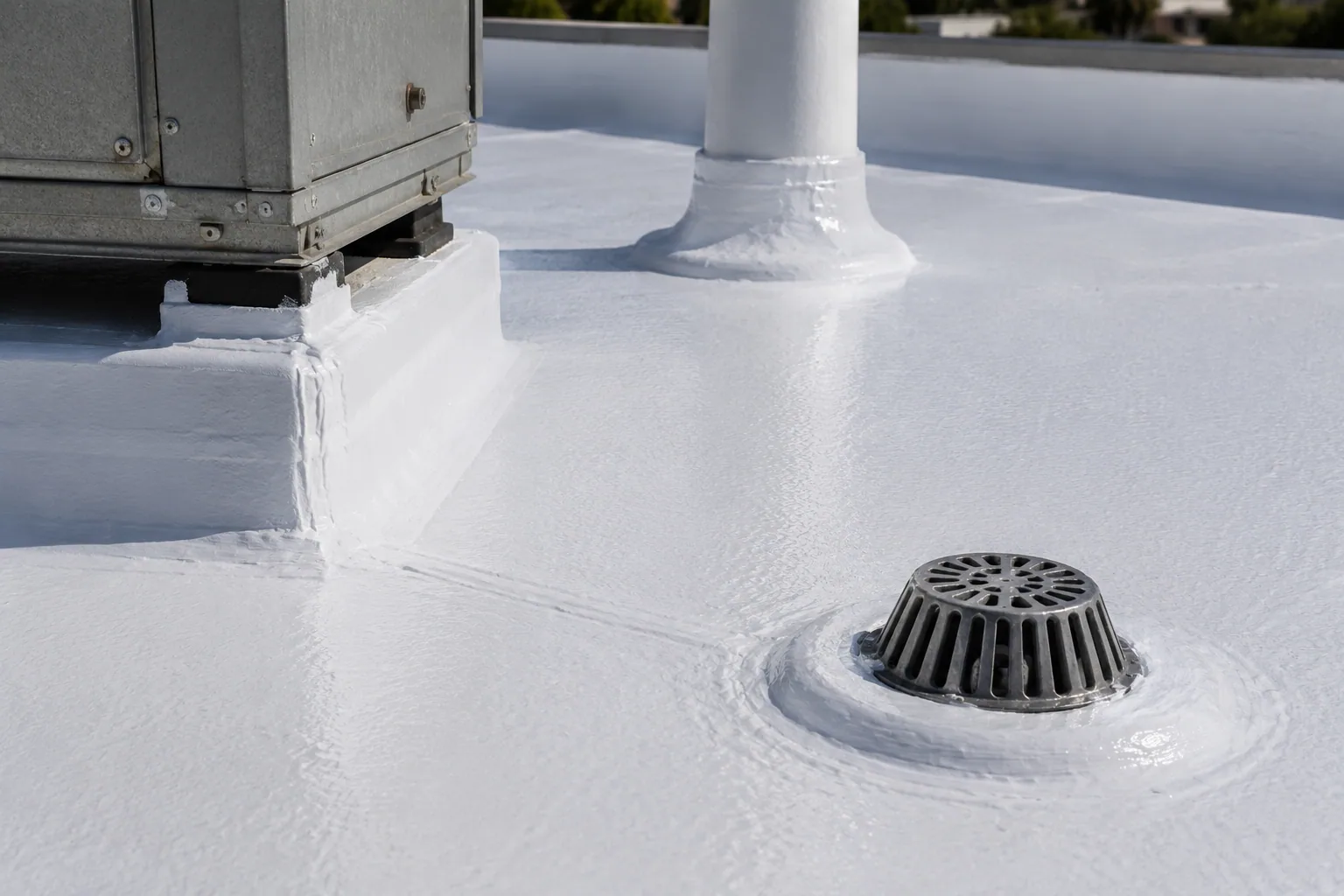
On a restaurant or processing roof in Mission, TX, the first entry on the sheet is often a smear. A dull film around the exhaust fan, photographed and tagged to the roof section, shows what the cooking or the process is depositing on the membrane. That film decides which single-ply sheet belongs there. PVC, a welded thermoplastic with plasticizers that resist fats and many chemicals, is usually the answer when other membranes soften. The inspection record supports the choice, and the scope line states why.
Grease, Chemicals, and the Exhaust Zone
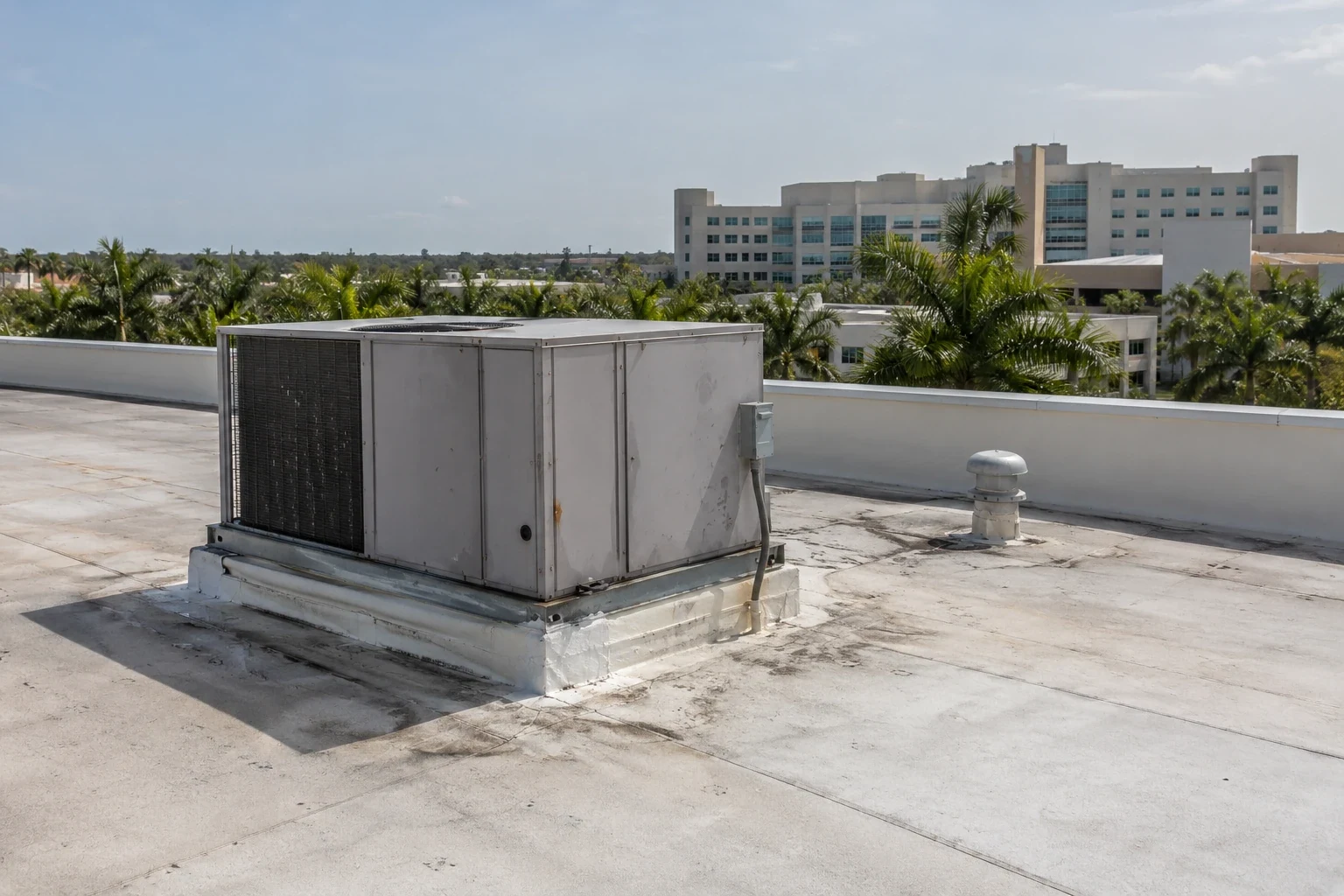
Kitchen exhaust throws airborne fat onto the roof within a few feet of the fan, and the deposit builds with each service day. Some membranes absorb that fat and become spongy. PVC sheet is formulated to shrug off most animal and vegetable fats, so seams near the exhaust stay firm and the surface can be washed.
The film is also a safety item. A greasy membrane is slick underfoot, and it can carry fat onto the drain bowls and clog them. We clean the area around a fan as a maintenance step and note the frequency the owner should expect. Schedules vary with the kitchen, and the log gives a real basis for setting them.
Process buildings face similar problems from other sources. A label-printing plant, a food packer, or a lab may vent solvents, steam, or acid vapors. Mission EDC names manufacturing among the city's growth sectors, and a plant's exhaust can be unusual. We log each vent and fan on the rooftop sketch, then match the sheet chemistry to what leaves the building.
Hot-Air Welds and Seam Probing
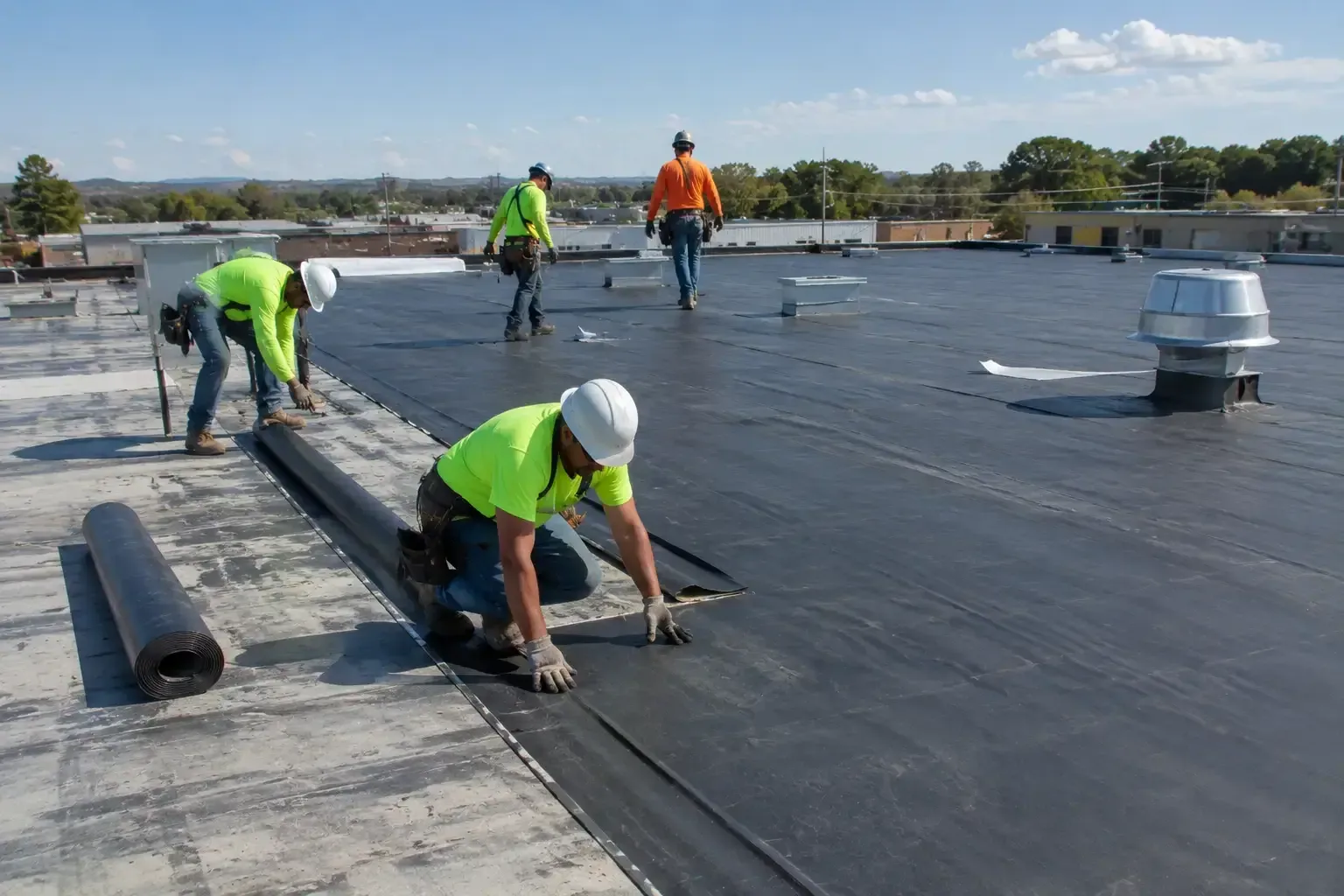
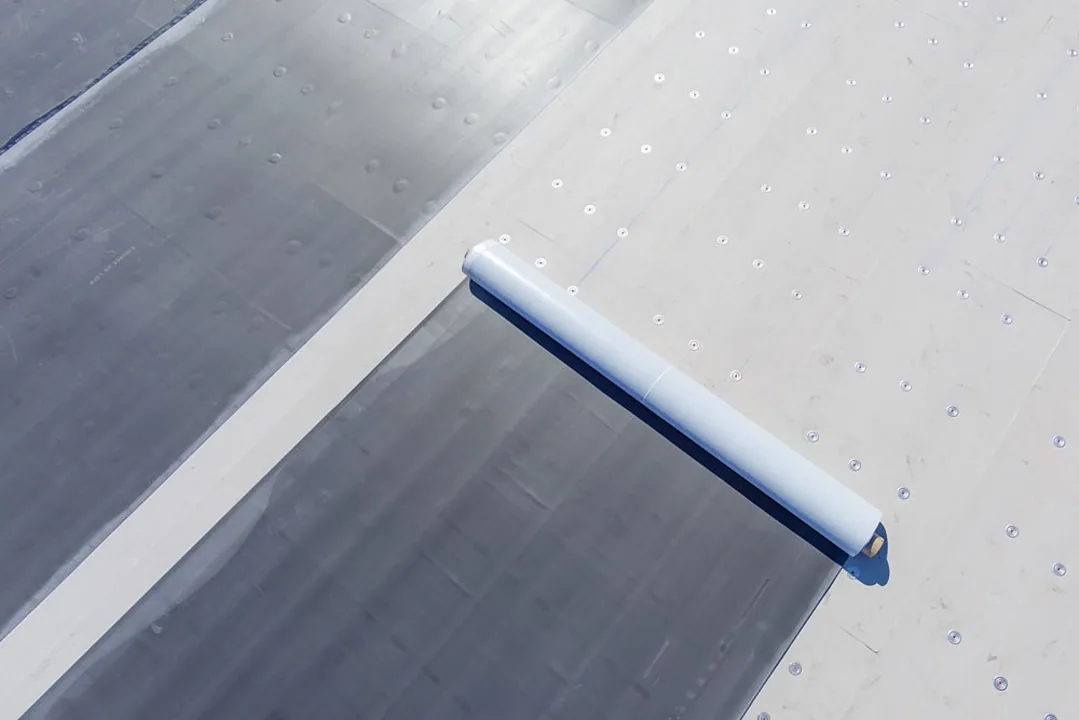
PVC laps are joined by hot-air welding that melts the overlapping sheets into one. After welding, a technician draws a probe along every seam and marks any gap. A continuous bead of melted material at the edge is the visual sign of a good weld, and the probe confirms it by touch. We photograph the probe line at a sample of seams and keep the images in the owner's file.
Probing matters most at the T-joints, where three sheet edges meet and the weld is thinnest. A technician checks each T-joint, each corner boot, and each seam that crosses a drain sump. These locations see the most movement and collect the most water, so a flaw there shows up as a leak sooner than a flaw in the middle of a long lap. The log lists the joint count checked and the count that needed rework.
Because PVC stays welded, repairs are straightforward later. A technician can clean the aged surface, lay a new patch, and weld it in place without special adhesives. That makes the membrane a practical choice for roofs with many penetrations, since each pipe boot and curb corner can be formed from the same material and fused to the field sheet.
Heat-Season Behavior of a White Sheet
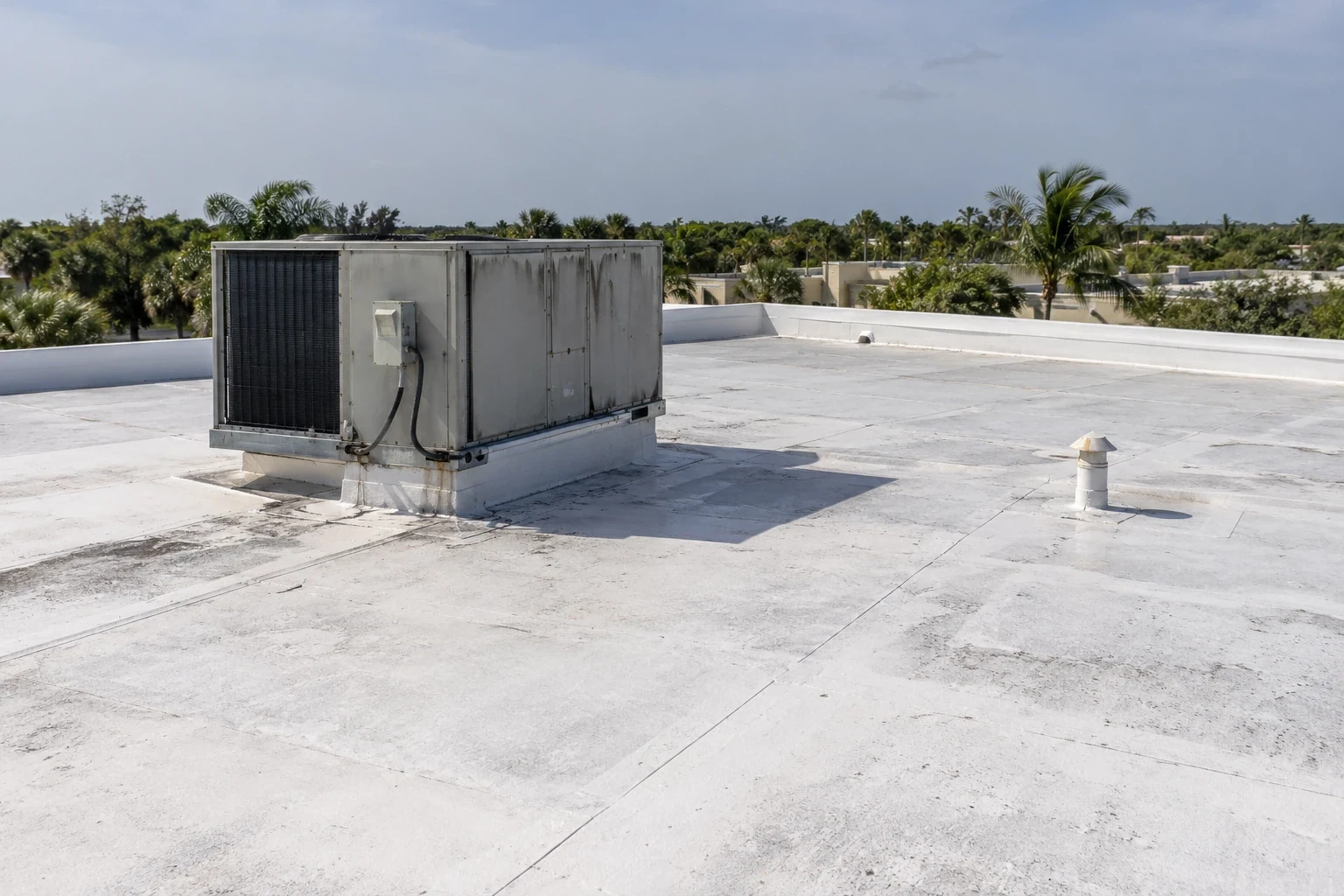
Brownsville forecasters place the Valley's heat-safety months between May and October. A white PVC surface reflects much of the sun, which keeps the membrane cooler than a dark roof would be. Cooler membranes expand less, so laps and flashings see less repeated stress.
Roof traffic changes the picture. Service technicians walking to rooftop units wear a path in the membrane, and in the Valley's summer heat a soft surface scuffs more easily. Walkway pads in a contrasting color mark the route and protect the sheet, and we record where they sit so the next inspection can check them. A path that runs through ponded water gets special attention.
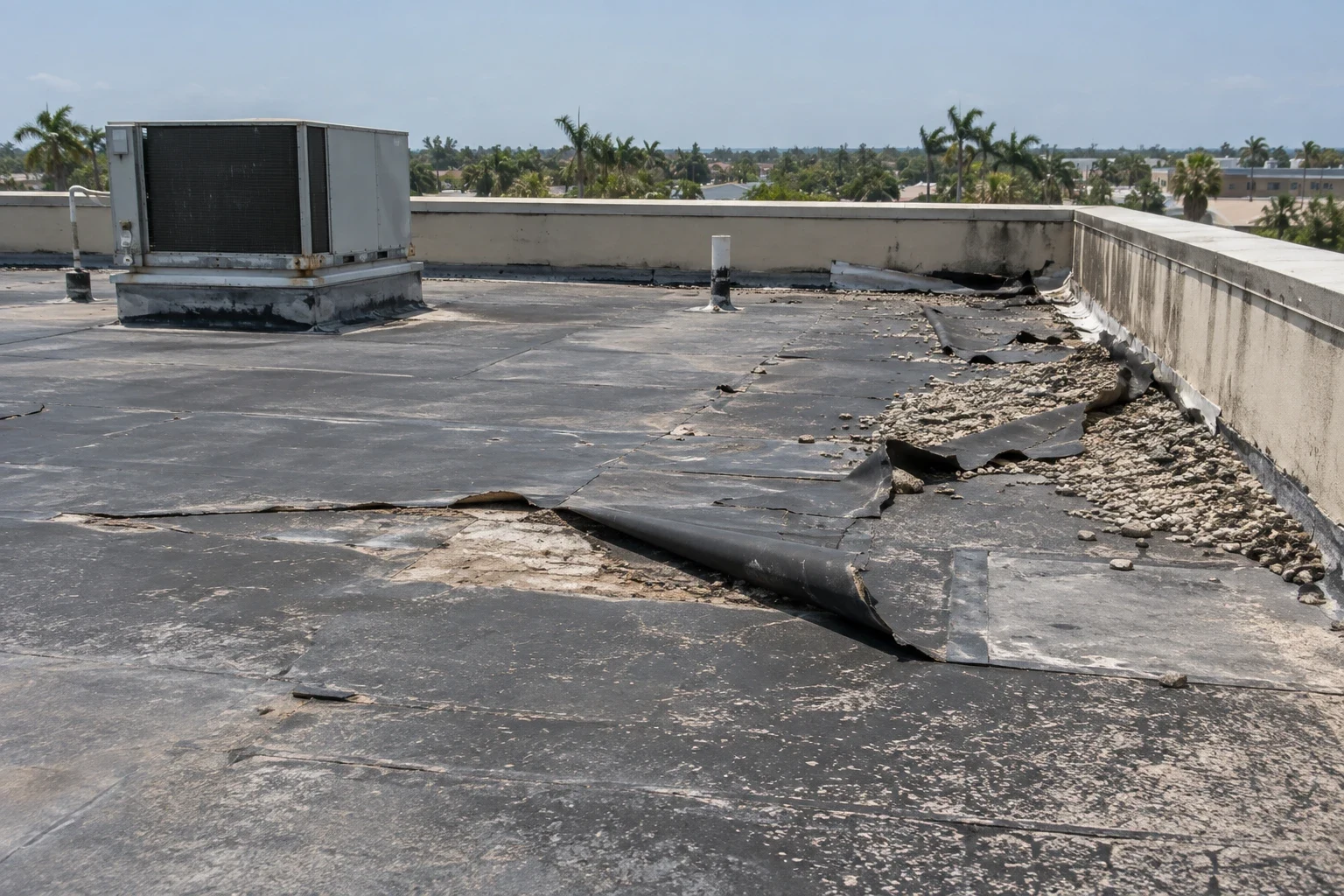
Over many seasons, plasticizer content slowly declines in any flexible sheet, and thicker PVC gives more reserve. We take small sample measurements where an older roof allows it, and we watch for the early signs of embrittlement at corners and fastener rows. When the field still bonds well, roof coating restoration can be compared against replacement, and the scope line lists the findings that favor each.
Wind, Flooding, and Edge Detail
Hanna in July 2020 sent estimated gusts of 60 to 65 mph around Mission and McAllen and left 14.40 inches in a northwest Mission gauge. A PVC roof meets that combination with two requirements: a secure edge and a clear drain path. Perimeter metal is fastened at the spacing the wind zone calls for and sealed with welded flashing strips, and the drain bowls are cleaned and logged at every visit. A fastener pull sample taken at the edge before work starts tells us if the substrate can hold the new attachment.
Flooded streets during Hanna, including about 12 inches of water on Shary Road near Griffin Parkway, remind owners that outlets and overflow scuppers need room to work. After a storm, the hurricane damage findings are compared against the pre-storm baseline photographs so repairs stay targeted.
Buildings That Suit PVC
Healthcare is one of the sectors Mission EDC names, and a medical office or clinic with laboratory exhaust or disinfecting agents suits PVC, as does a hospital roof where a continuous welded surface limits the places water can enter. Restaurants in shopping centers need grease tolerance. Cold storage buildings are a different case, because the vapor drive from a freezer interior has to be handled in the assembly below the sheet, and the membrane choice follows that design.
Where the building runs mild exhaust and the budget is tight, TPO may be compared, and an elastomeric alternative such as EPDM enters the discussion on simple roofs. The comparison considers exhaust, expected foot traffic, and how long the owner plans to hold the asset.
Work Sequence on an Occupied Building
Tear-off, insulation work, and welding are scheduled around tenant hours, with air-intake locations marked so fumes do not enter occupied space. Existing insulation is probed and, where wet, replaced before the new sheet goes down. The finished roof is reviewed with the owner using tagged photographs and the drain log. Penetration flashings are the last items closed, and each one is probed and photographed before the crew leaves the roof. Owners in McAllen, Weslaco, Edinburg, and the rest of the metro receive the same file format as those in Mission.
Questions and Answers
Why choose PVC over a cheaper white sheet for a restaurant roof?
Fat from the exhaust fan lands on the membrane every day. Sheets without grease-resistant chemistry can swell and lose seam strength within a few seasons, which turns a modest savings into a repair line item. PVC is formulated to tolerate that exposure, so the first inspection photograph of the fan zone usually settles the choice.
Can PVC be welded to an old PVC roof for a repair?
A clean, aged PVC surface can usually accept a welded patch after the dirt and surface film are removed. Technicians test a small area first to confirm that fusion occurs. If the old sheet has become brittle or will not weld, the repair moves to a larger section or full replacement, and the findings explain why.
What do you record when the roof sits over a clinic or laboratory?
We note every exhaust stack, relief vent, and intake on the sketch, then photograph the surface around each. The owner receives a condition summary that names which discharge points could affect the membrane, along with the drain and scupper log and a moisture map when one is ordered.
How are overflow scuppers handled on a PVC roof near a flood-prone street?
After Hanna put water on Shary Road and multiple Mission neighborhood streets, we treat overflow outlets as a safety feature. Each scupper is measured, its height relative to the roof edge recorded, and the opening checked for blockage. Welded sleeves seal the penetration through the parapet.
Is PVC always the right choice for a hospital roof?
Not always. A hospital campus may have different roof sections with different loads, equipment, and histories. The recommendation for each section follows its own findings, and a moisture survey helps separate dry areas that can be recovered from wet areas that need full removal.

Request a PVC Roof Assessment
Send the building address and a short description of the exhaust or process on the roof. We schedule a visit, photograph the membrane and discharge points, and deliver a written condition summary the owner can use for budgeting or an insurance conversation.