
Commercial Roofing Services
Commercial Roof Repair in Mission, TX
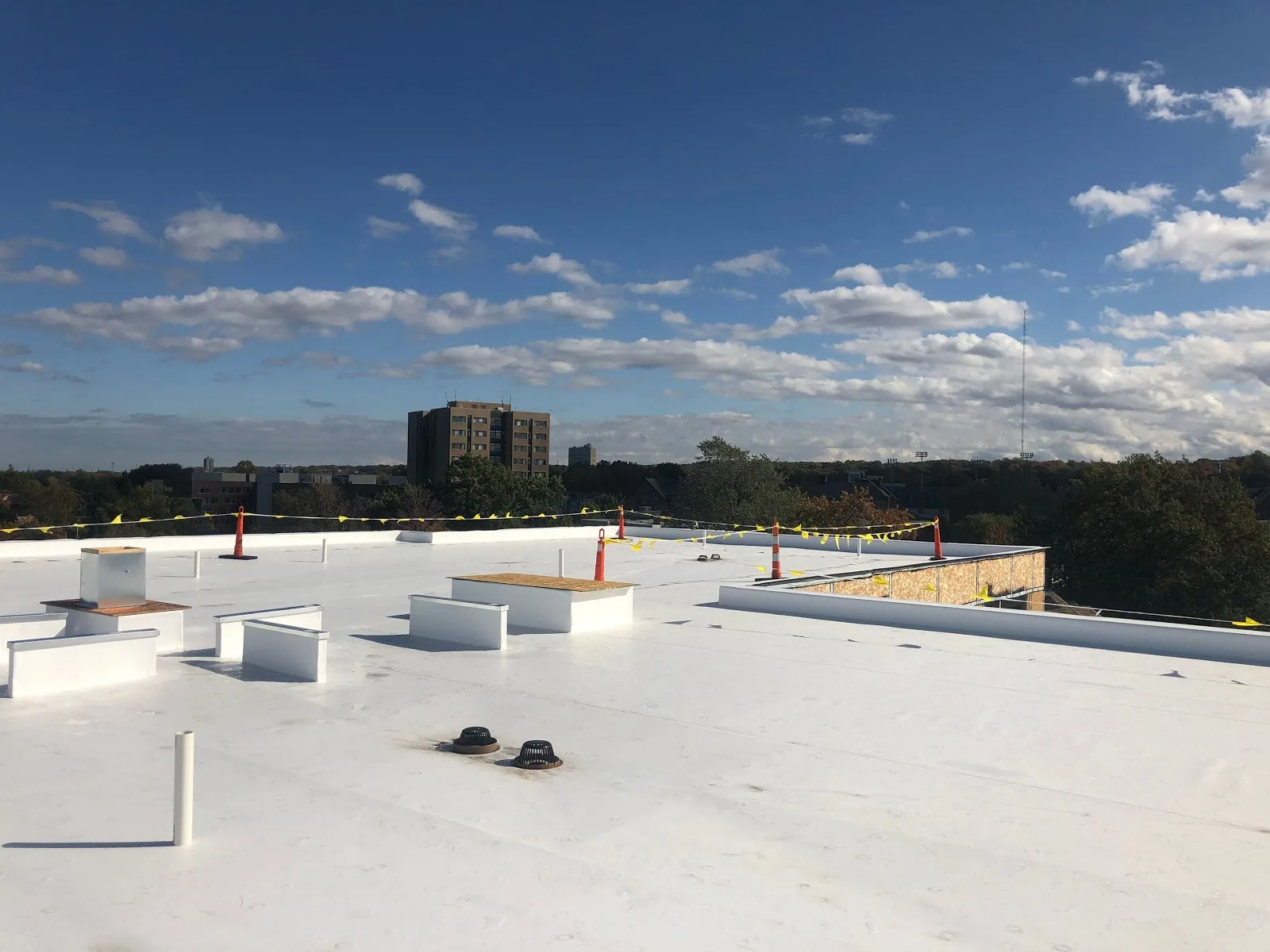
Repair work is only as good as the line drawn around it. On a Mission, TX roof we begin by marking the repair boundary on a sketch: the cracked seam, the split flashing, the cut membrane, and the distance in each direction that the inspector can confirm is dry and sound. Everything inside that line is fixed, everything outside it is recorded as monitored, and both go into the owner's file with dated photographs. Planned repair differs from emergency work because the owner has time to choose materials, schedule access, and compare the cost of fixing now with the cost of a larger project later.
Membrane Defects and Their Repair Methods
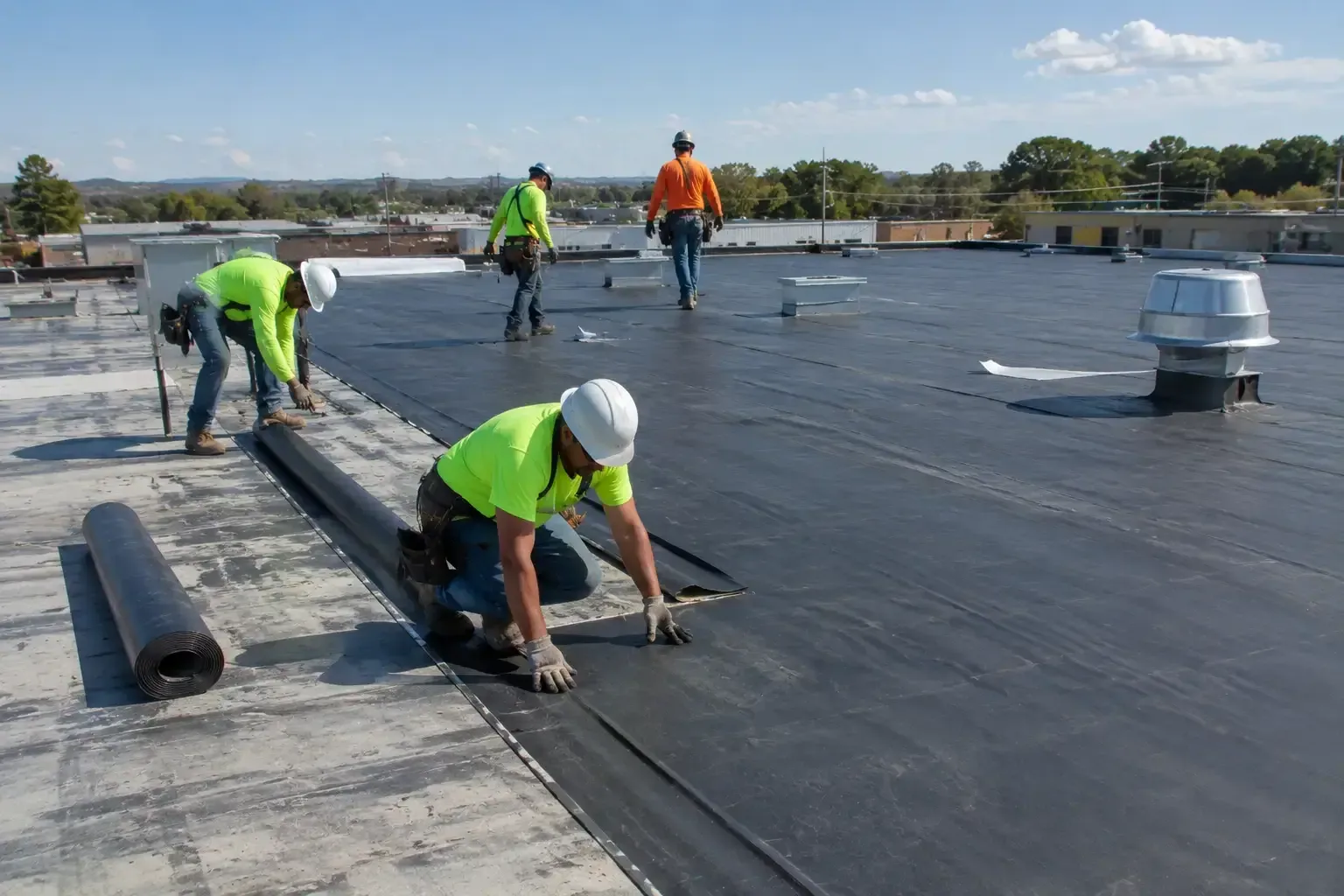
Single-ply membranes fail in recognizable ways. TPO and PVC develop open or weak heat-welded seams, EPDM shrinks and pulls at terminations, and modified bitumen cracks along laps once granules wear off. Each defect gets a method suited to the material: hot-air welded patches on thermoplastic roofs, adhesive-bonded patches with primer on EPDM, and torch or cold-applied patches on modified bitumen.
Before any patch goes on, the surface is cleaned and dried and the old adhesive or sealant is removed back to sound material, since a patch placed over residue will not bond. The repair is checked by probing the edge of every patch and every adjacent seam, because a patch that sits next to a weak seam simply moves the leak. For TPO roofs, we also check for dirt contamination at the weld, which is a common reason a field patch fails in the first season. On a ballasted or aggregate-surfaced roof, the stone is pulled back and reset around the patch so the repair area can be inspected again at the next visit without disturbing the surrounding surface.
Flashings, Terminations, and Penetrations
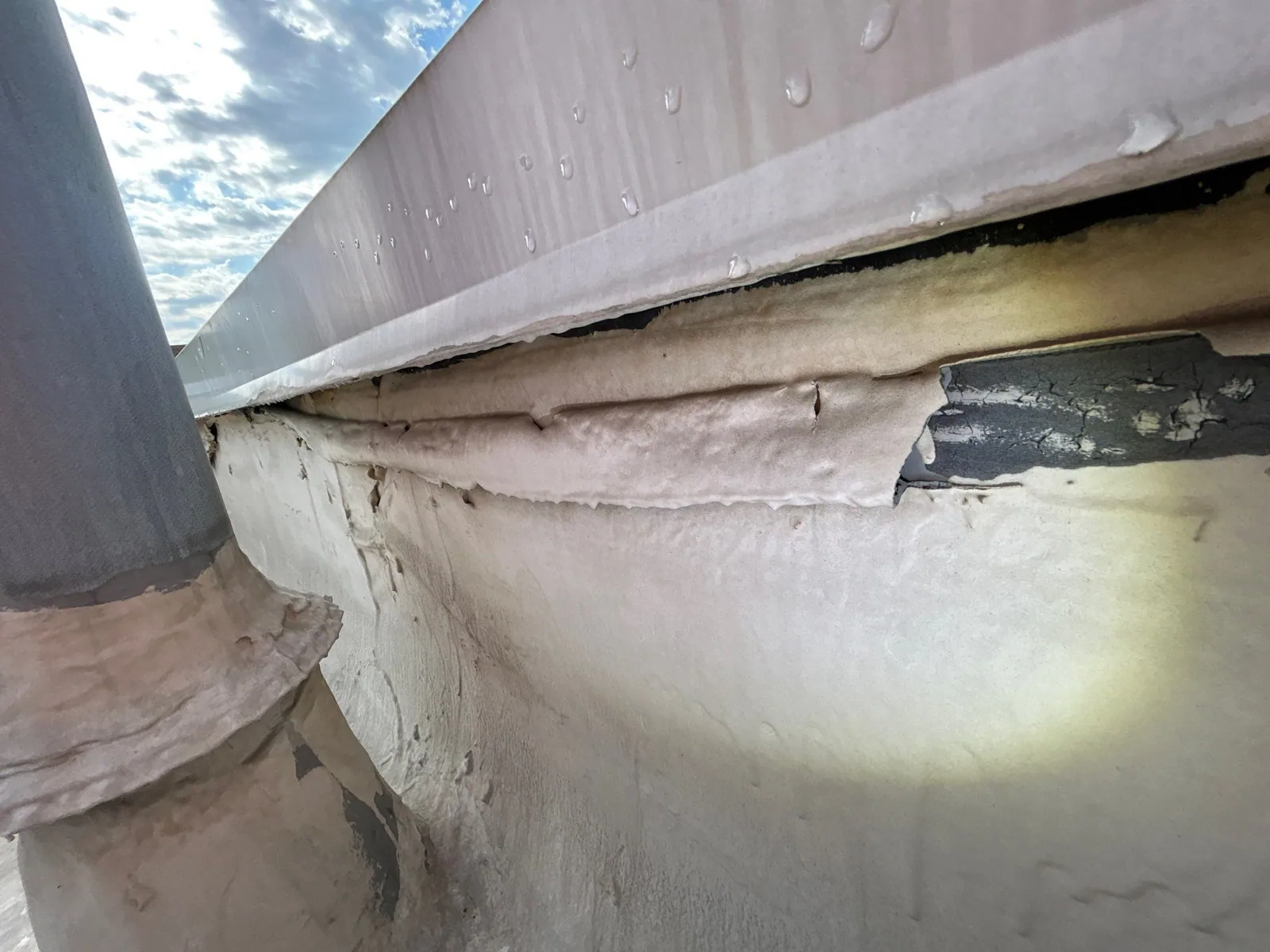
Most repair calls trace back to the places where the membrane meets something else: a parapet wall, a curb, a pipe, a roof drain, or a unit support. These details move differently from the field of the roof, and heat cycles expand and contract them daily. The National Weather Service lists May through October as the Valley's heat-safety season, so a sealant that was serviceable in March may be cracked by October.
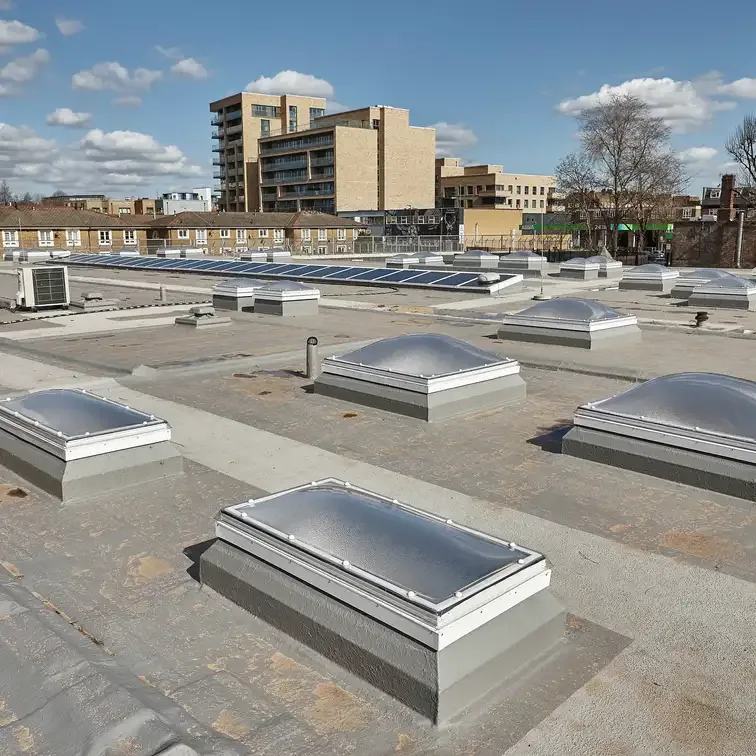
We replace failed sealant with a compatible material, not a layer over the old one, and we re-secure terminations with fasteners and bars where the assembly allows. When a flashing has failed more than once, the report says whether the problem is the material or the geometry, because geometry problems return unless the detail is rebuilt. Rebuilding a detail of that kind is closer to flashing failure repair, and a leaking skylight curb follows the same logic.
Repairs After a Wind and Rain Event
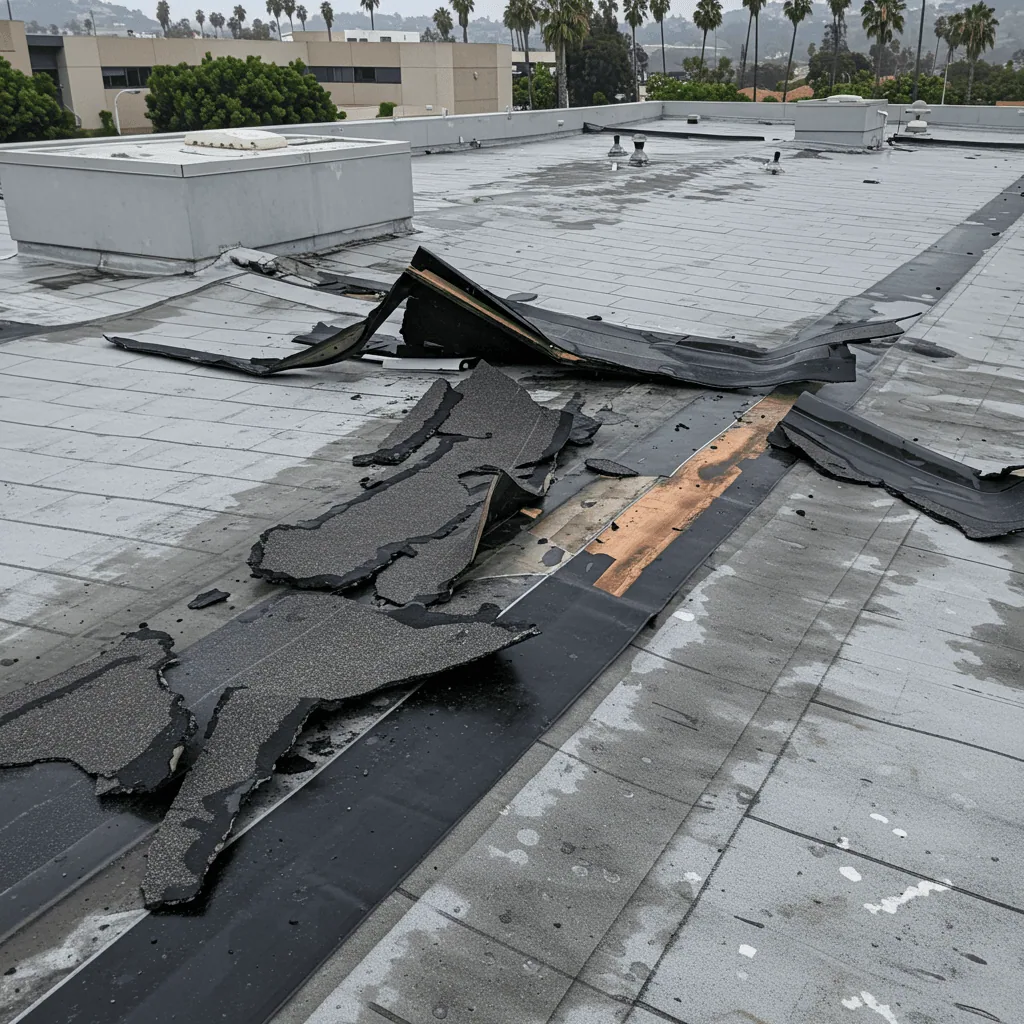
After Hurricane Hanna in July 2020, reports from McAllen described metal roofs blown off or torn back, and a Mission school district shed lost sections of its roof. Those are the kinds of findings that a post-storm repair visit records first: loose coping, peeled edge metal, displaced fasteners, and torn membrane at the perimeter. The visit compares conditions against the pre-storm photograph set where one exists and notes what is new. Wet insulation under a torn area is flagged for a moisture survey, because a patch over wet material only hides the problem for a season.
If a roof has no baseline, we build one during the visit, and repairs go in order of exposure: openings that let water into the building, then edges that could fail in the next wind, then cosmetic damage. Temporary protection is documented in the same file so the owner has a clear line between temporary and permanent work, which helps when an insurance conversation follows.
Drains, Ponding, and Debris
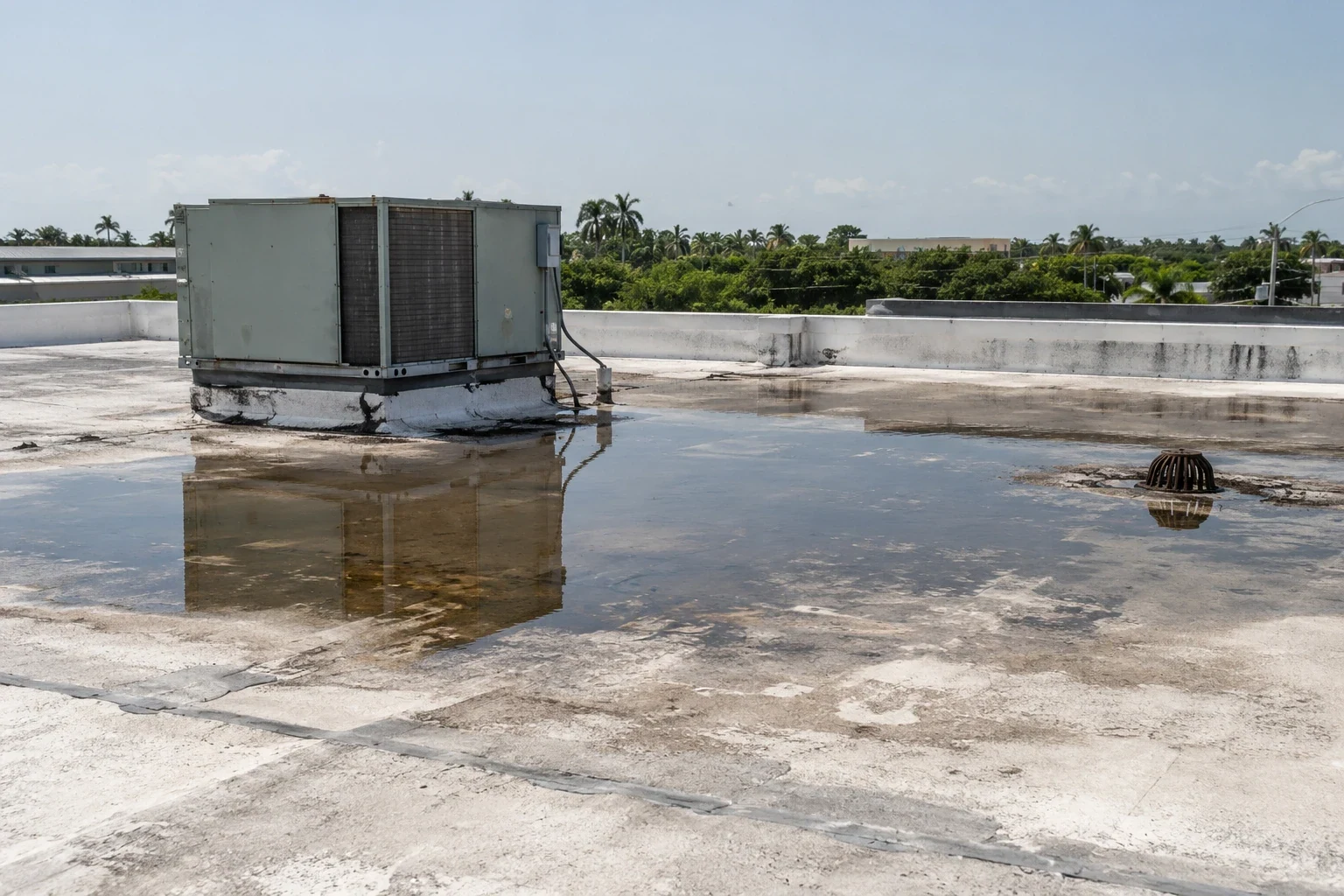
A repair that ignores drainage often fails again. Ponded water holds heat, stresses seams, and carries dirt that attacks sealants. Hanna produced 14.40 inches of rain at a gauge northwest of Mission, a volume that shows how fast water can arrive and how slowly a clogged drain can clear it. A drain and scupper log is part of every repair visit: location, condition, debris, and whether the surrounding membrane is flat, depressed, or properly tapered.
Where ponding persists for more than a day after rain, we say so and list the options, which range from cleaning and drain replacement to tapered insulation. The photographs taken after rain are more useful than those taken on a dry day, because they show the exact outline of the low area. Persistent ponding sometimes pushes the decision toward ponding water repair or a larger scope.
When Repair Stops Making Sense
Repair has a limit. Wet insulation, widespread seam failure, and repeated patches in the same area are signals that the roof as a whole is losing ground. We state that limit in terms the owner can test: the number of defects found, the share of the roof where moisture was confirmed, and the cost of the proposed repair against the cost of a coating or replacement.
If the findings support a larger option, the recommendation says so and describes coating restoration or full replacement as the next step, with the repair kept as a short-term bridge. If the findings support continued repair, the recommendation lists a maintenance interval so the roof is looked at before the next storm season starts in June. Owners with several buildings can use the same format across the portfolio, which makes it easier to rank which roof needs money first and which can wait one more budget year.
Questions and Answers
How large can a repair be before it makes more sense to coat or replace?
The answer comes from the moisture map and the defect count. A repair is reasonable when wet insulation is limited and the remaining membrane passes seam probes. When defects are spread across several sections, or a moisture survey shows widespread wet areas, the cost of repeated repairs tends to exceed a larger scope, and the written recommendation shows both numbers.
Do you match the existing membrane or use a different material?
The patch material must be compatible with the existing membrane. TPO patches need TPO, EPDM needs EPDM-compatible adhesive and patch, and modified bitumen needs compatible bitumen products. Where the existing material is not identifiable, we take a small sample or probe the surface to confirm it before choosing a method.
Can a repair be done in the rain season without making things worse?
Small emergency stabilization can be done in wet weather, but permanent repair needs a dry surface and the right temperature. In the June to October season we schedule permanent work for dry windows and use temporary protection in between. The temporary work is documented, so the later repair replaces it cleanly.
What records come with a repair?
Each repair file has a before photograph, an after photograph, a marked sketch of the repair boundary, the material used, and the notes on adjacent conditions that were monitored but not repaired. The file can be used for budgeting, tenant questions, and warranty or insurance conversations.
Will repairing one leak void my manufacturer warranty?
Not automatically, but warranty programs vary. Many require repairs to be made with compatible materials and by qualified applicators, and some require notice. We confirm the warranty terms at the start of the visit and describe the repair method in terms the manufacturer's program can review.
Schedule a Repair Assessment
Send us the building address and the problem area. We will mark the repair boundary, state what is monitored, and give you a written recommendation.