
Property Types We Roof
Cold Storage Roofing in Mission, TX
A frost line on the ceiling of a freezer is a roof finding before it is a refrigeration problem. In a Mission, TX cold storage building, the inspector photographs rime near the roof deck, records the temperature differential, and marks the matching spot on the rooftop sketch. Moisture that reaches the insulation from above or from inside changes how the whole assembly behaves, and the dated record shows which source is at work before the owner pays for the wrong fix.
Why a Cold Building Roof Is Built Differently
In a freezer or cooler, the warm, humid Valley air sits on the outside and cold dry air on the inside. Water vapor wants to move toward the cold side, and it condenses inside the insulation if it meets a cold surface. A cold storage roof therefore relies on a vapor retarder placed on the warm side of the insulation, often with thicker insulation than ordinary buildings use.
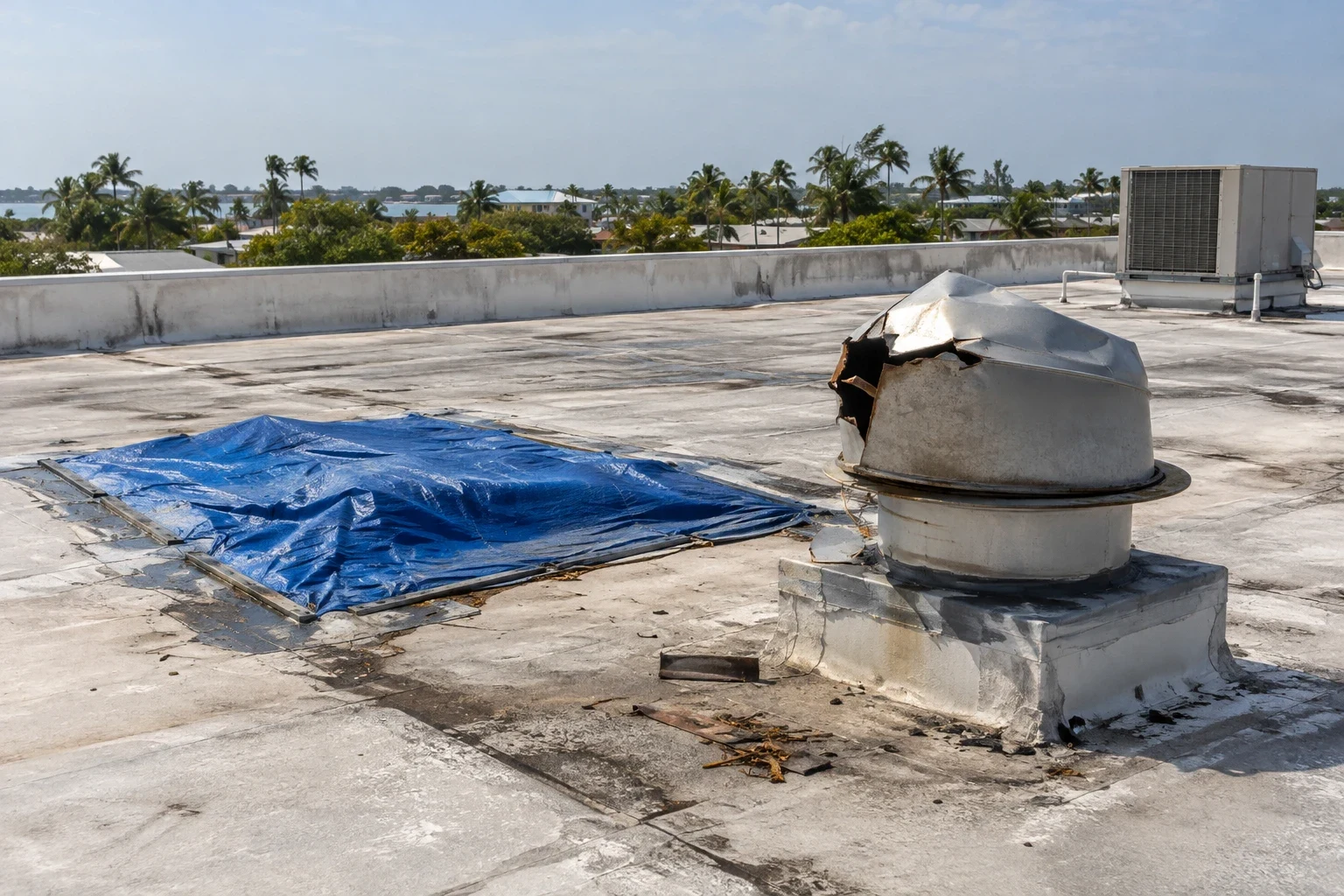
Penetrations make this assembly fragile. A pipe, conduit, or fan opening that is not sealed carries humid air into the insulation, where it freezes. Over time the board becomes saturated and loses value. We record each penetration, its seal, and any frost or ice nearby, since a failure from either side can produce the same interior symptom.
Dock doors on the cooled side of a building matter here too. A door that stays open lets humid air rush toward the cold wall, and the moisture that follows can climb into the roof assembly through unsealed joints. We note door condition, curtain seals, and the position of vapor barriers at the wall-to-roof joint, because the roof often takes the blame for a problem that began at the dock.
Finding Wet Insulation Over a Cold Space
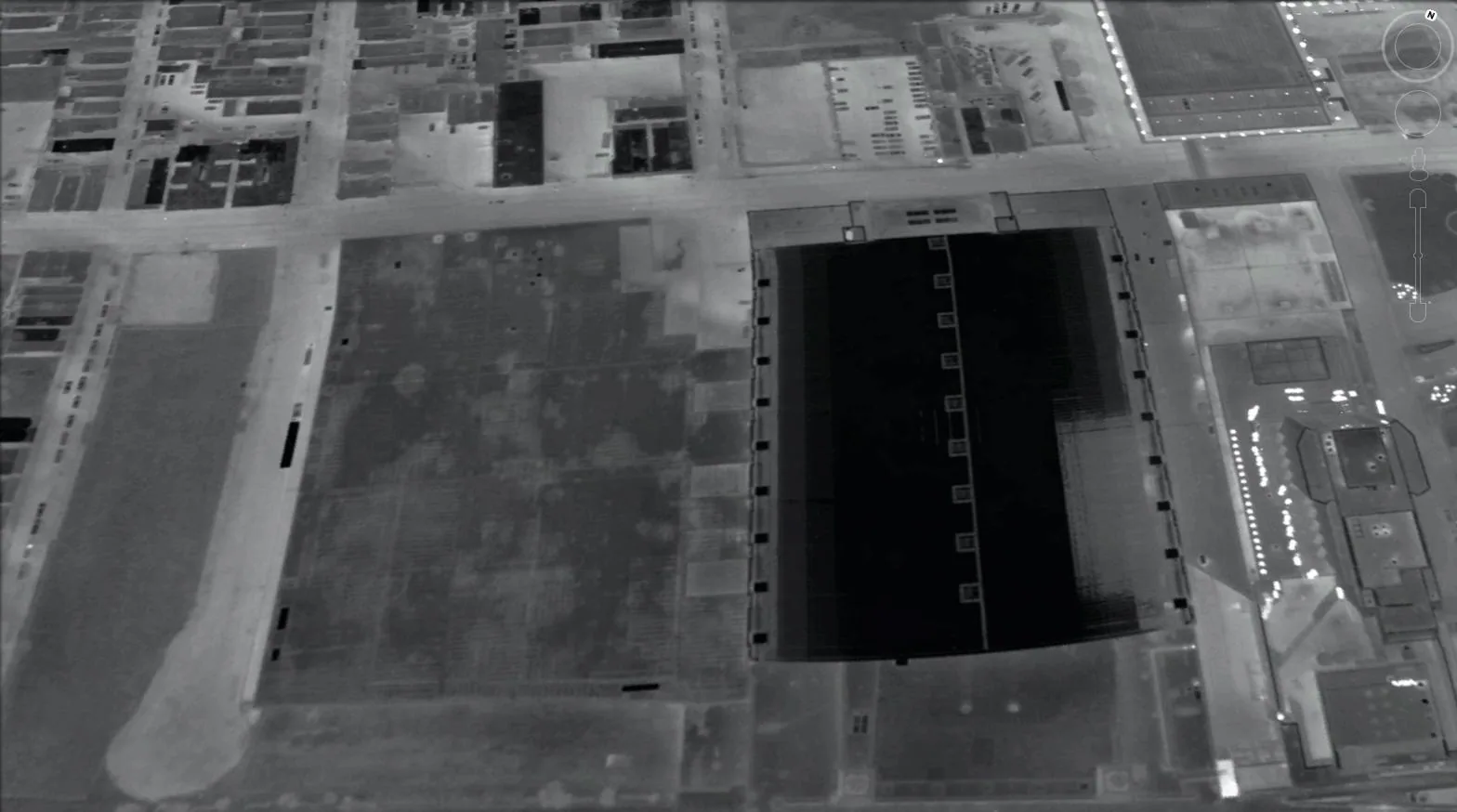
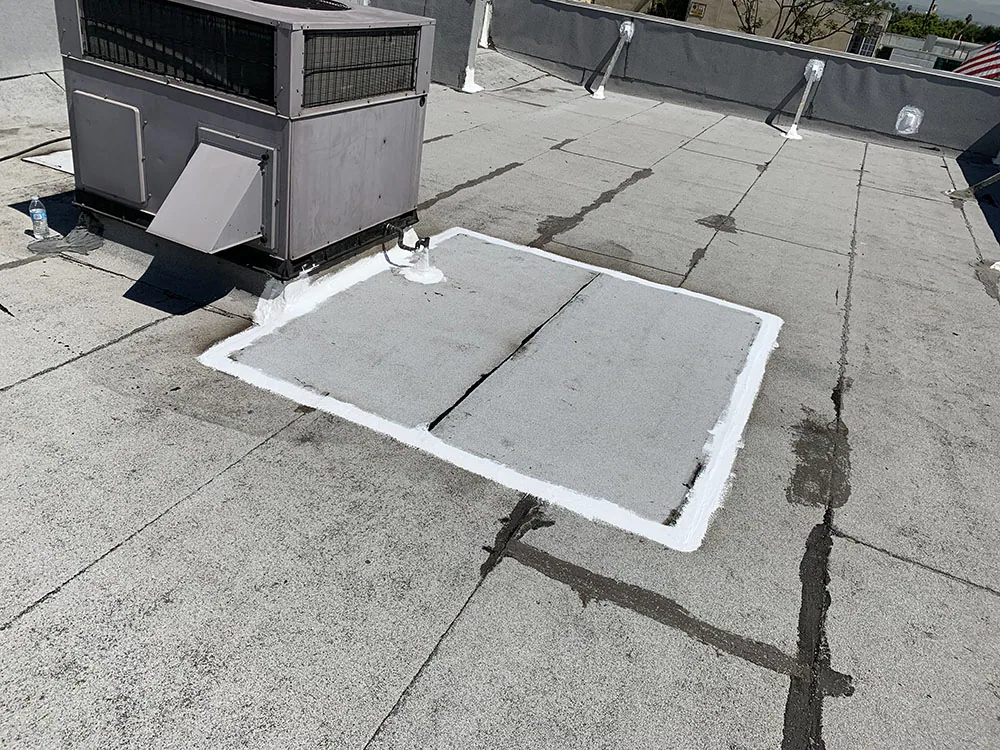
Infrared scans work differently over refrigerated space, because the roof surface is not warmed from below in the usual way. Roof temperature patterns can mislead, so we pair scans with nuclear or capacitance meters and core cuts when needed. A core through the membrane, insulation, and vapor retarder shows the actual condition, and the cut is patched and photographed immediately.
The infrared moisture survey results are interpreted with the interior temperature in mind. Wet insulation over a freezer may be ice-bound and stable, while wet insulation over a cooler can be actively draining. The distinction guides whether a repair is local or a larger section must be removed, and the moisture map goes into the owner's file.
Core cuts are kept few and small. Each one is located on the sketch, sealed against vapor, and photographed after the patch. A building that holds goods at low temperature cannot tolerate casual sampling, so the plan states how many cuts are needed to prove the reading and which of them can be shared with a later warehouse roofing inspection on the same property.
Valley Produce, Trade Freight, and Refrigerated Space
Citrus agriculture dates to about 1910 in Mission, and the Alamo area is an irrigated vegetable and citrus region. Hidalgo County remains a top producer of oilseeds and dry beans in Texas, and the McAllen Foreign-Trade Zone supports inventory and distribution services. Refrigerated storage fits that economy, whether the product is produce, packaged food, or goods in transit.
Those uses make roof leaks costly. A wet pallet of produce or a thawed freezer load is lost inventory. We therefore tie each roof section to the room beneath it and rank the findings by what is stored there. That ranking helps an operator decide which repair must happen this month and which can wait for a slower season. A packing building that is partly refrigerated and partly ambient needs two different roof treatments on adjoining sections.
Storms, Outages, and Roof Resilience
Power failed for as many as half the county's customers when Hanna came through in July 2020, with gusts estimated at 60 to 65 mph over Mission. A cold storage building facing a long outage cannot afford a roof that has also been breached. Water entering a roof assembly during a power loss soaks insulation just when the building has little capacity to dry it.
Before the tropical season, we photograph edges, curbs, condensing-unit supports, and drains. After a named storm, we compare conditions and mark urgent items. Dry-in is the first priority, and the permanent repairs follow the storm damage roof repair plan. The record also helps document the damage if the owner decides to file an insurance claim.
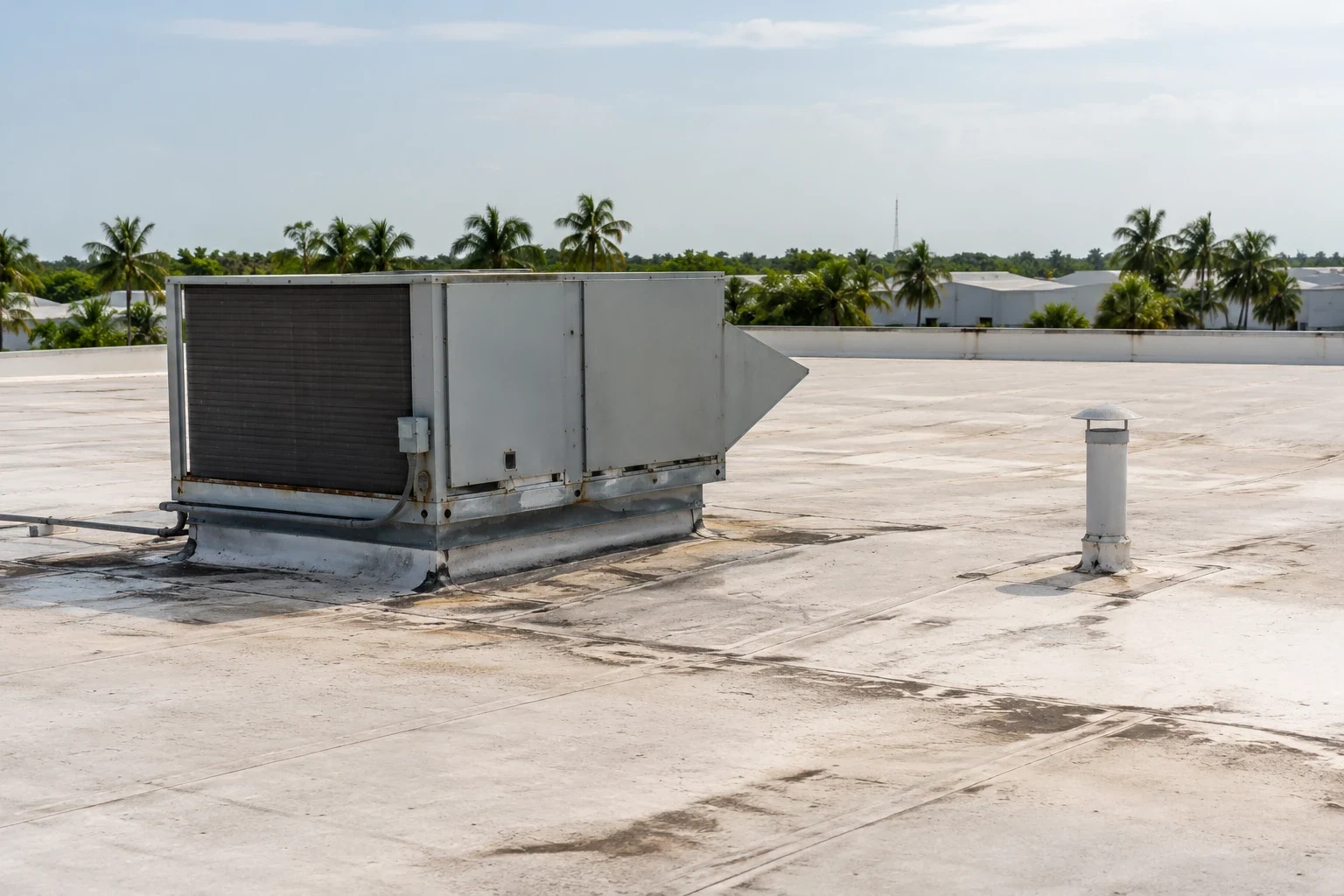
Rooftop condensing units deserve their own line in the log. They sit on stands that are bolted through the roof, and each bolt is a path for water and vapor. Hurricane winds can shift a unit, tear a refrigerant line, or crack a curb flashing. Anchorage, curb height, and sealant all get checked, and a stand with rust at its base or play in its bolts is flagged on the sketch.
Membranes Suited to Refrigerated Buildings
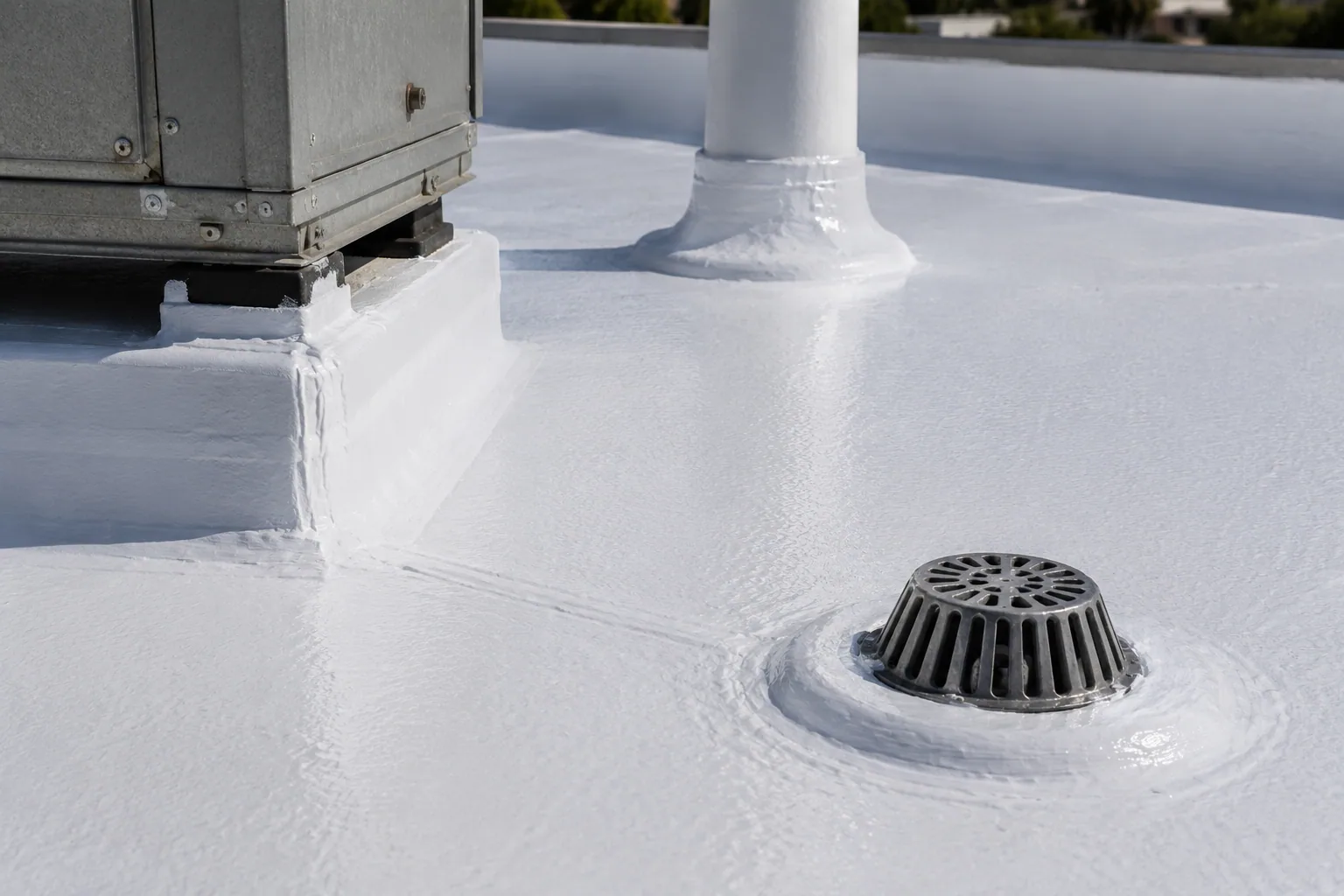
Single-ply sheets such as TPO and PVC suit cold storage because reflective surfaces reduce solar gain on top of a refrigerated envelope. Summer heat matters on a refrigerated building, because compressor load follows roof surface temperature through the stretch from May to October that the Brownsville weather service treats as the Valley's heat-safety period.
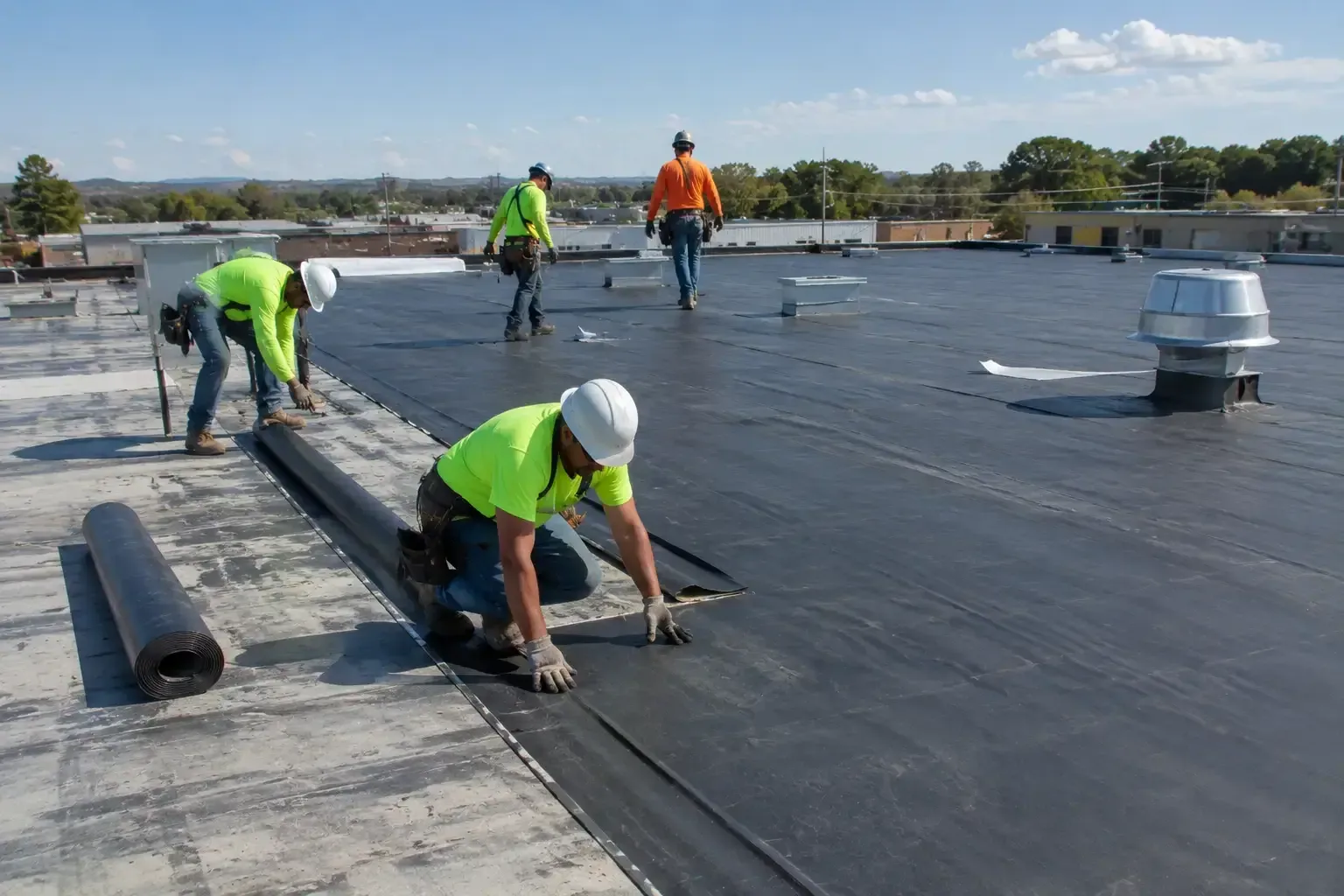
The roof surface, insulation thickness, and vapor retarder are chosen as one assembly. We avoid replacing only the membrane when the insulation underneath is wet or the retarder is damaged. Compatibility with exhaust from compressors and defrost cycles is checked, and the written scope states the sequence of removal and reinstall so the cold space stays protected.
Reroofing Without Warming the Room
Opening a cold storage roof exposes the insulation and, in a worst case, the interior. Work is staged in small sections that can be closed by day's end. Vapor retarder tie-ins are made before new insulation goes down, and every joint is photographed and sealed. Crews coordinate with refrigeration technicians so equipment is not disturbed.
Loading schedules, product rotation, and inspection dates shape the calendar. We communicate daily with the facility manager, and the file records weather windows, section dates, and readings. Owners can combine this planning with preventive roof maintenance after completion, so the assembly is checked each season. Buildings in Alamo, Mission, and nearby towns receive the same record, as do distribution centers with cooled bays.
Questions and Answers
Why can a frost spot inside a freezer point to a roof problem?
Frost forms where moist air meets a cold surface. If the vapor retarder or a penetration seal fails, humid air reaches the cold deck and freezes. A leak from above can also saturate the insulation and cool the deck. We check both paths before recommending a repair.
Can a cold storage roof be inspected without disturbing the product?
Yes. Most of the work happens on top. We walk the roof, run moisture meters, and take small core cuts that are patched at once. Interior checks are limited to visible frost, stains, and temperature readings near suspect areas, and the facility manager receives the findings in writing.
What should happen to insulation that tests wet over a freezer?
It is cut out, replaced with dry board, and tied back into the vapor retarder with sealed joints. Leaving wet board in place keeps heat transfer high and invites ice buildup. The moisture map shows the boundary, and we photograph the removed area before the new layers go in.
How does a cold storage owner prepare for a long power outage?
From the roof side, by keeping edges tight and drains clear so a storm does not add water to the problem. Records taken before the season let the owner see changes quickly. Inside, the refrigeration plan belongs to the facility team, and we coordinate access around it.
Is a reflective roof worth it on a refrigerated building?
A reflective surface lowers solar heat on the roof and can ease compressor demand during the long Valley summer. The amount depends on insulation, door traffic, and equipment age. We note existing roof color and unit condition in the file so an owner can compare operating records afterward.
Request a Cold Storage Roof Review
Ask for a visit to your Mission, TX cold storage building. We inspect penetrations, map moisture, record frost indicators, and deliver a written condition summary for budgeting or an insurance conversation.