
Commercial Roofing Services
Commercial Roof Replacement in Mission, TX
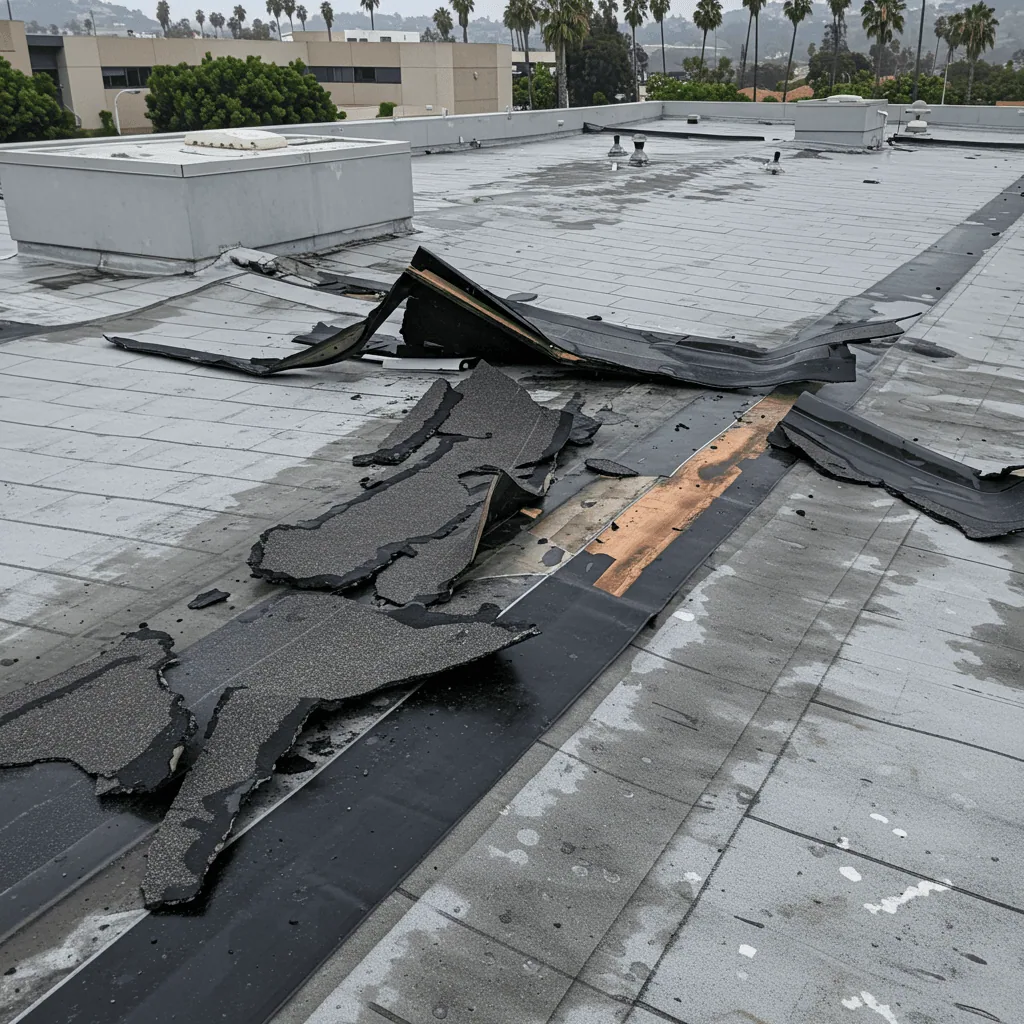
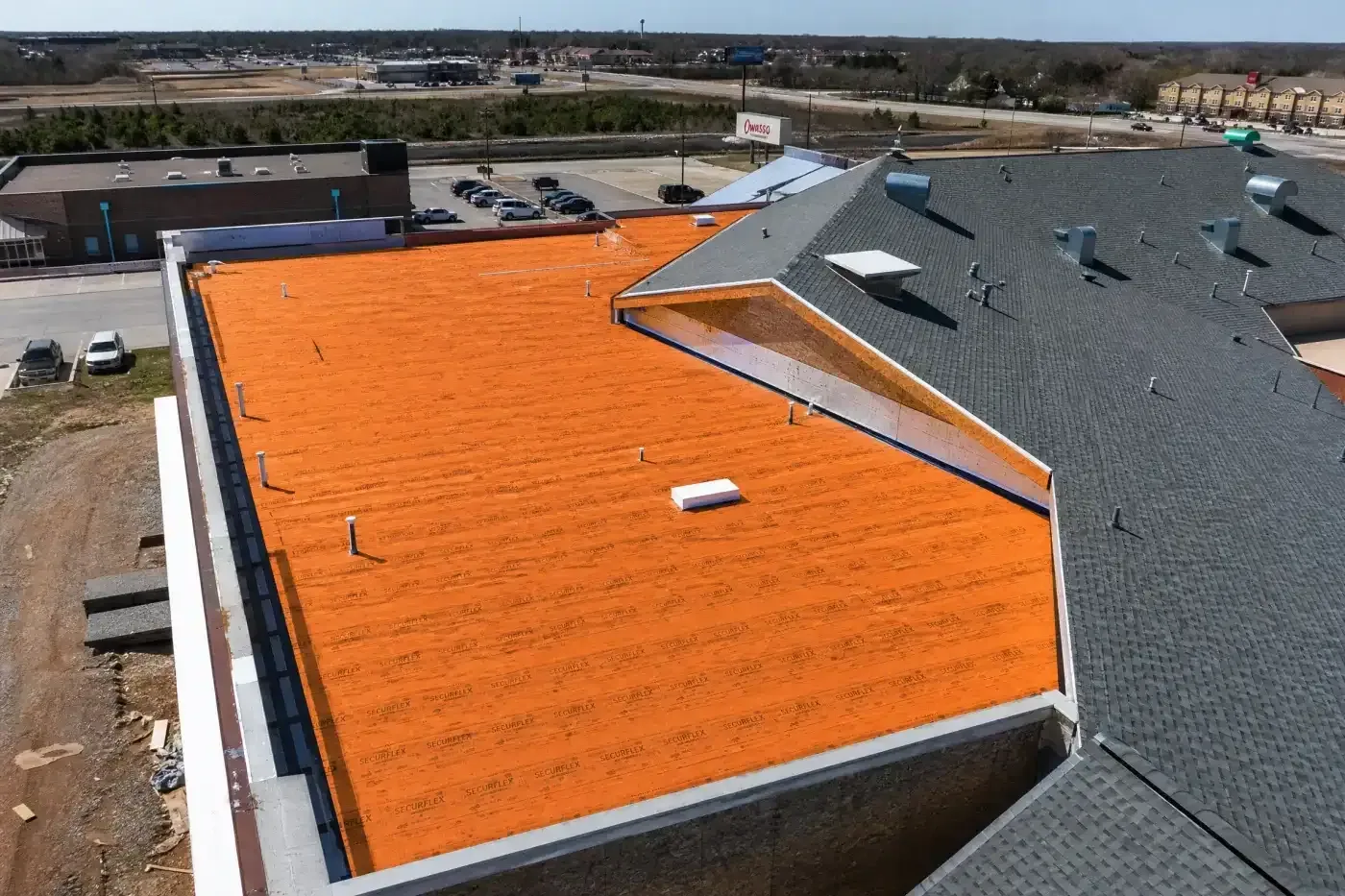
The decision to replace a commercial roof in Mission, TX starts with a written condition summary, not with a calendar year. Before a scope line is drafted, we walk the roof, photograph each section with a tag, and log what the membrane, seams, flashings, and drains are doing today. The Rio Grande Valley adds a long heat season from May through October, followed or overlapped by tropical weather from June through October, so a roof here is judged against months of sun load and the possibility of wind-driven rain. Replacement is the right call when the findings show that wet insulation, repeated failures, or an aged membrane have moved past what repair can hold.
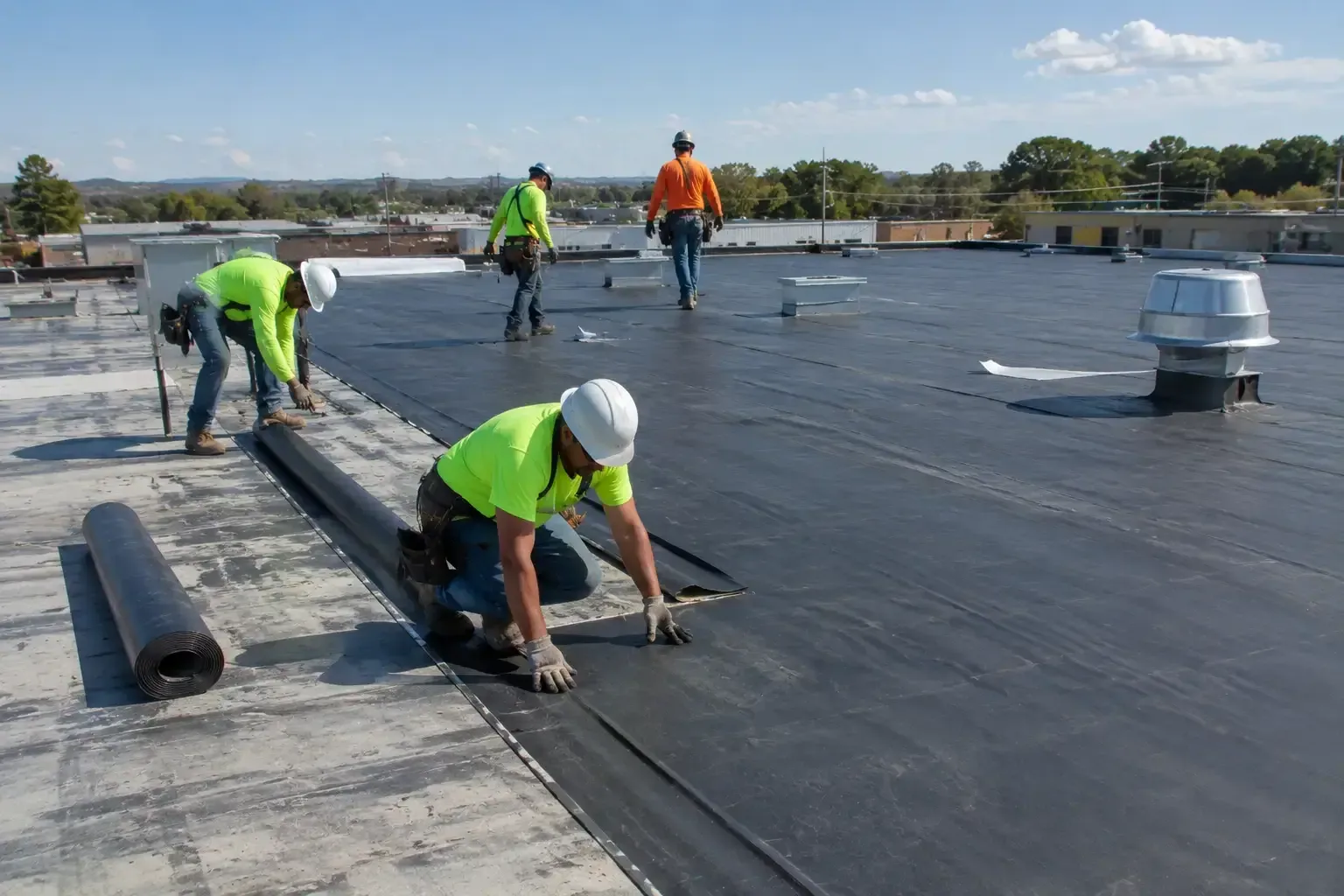
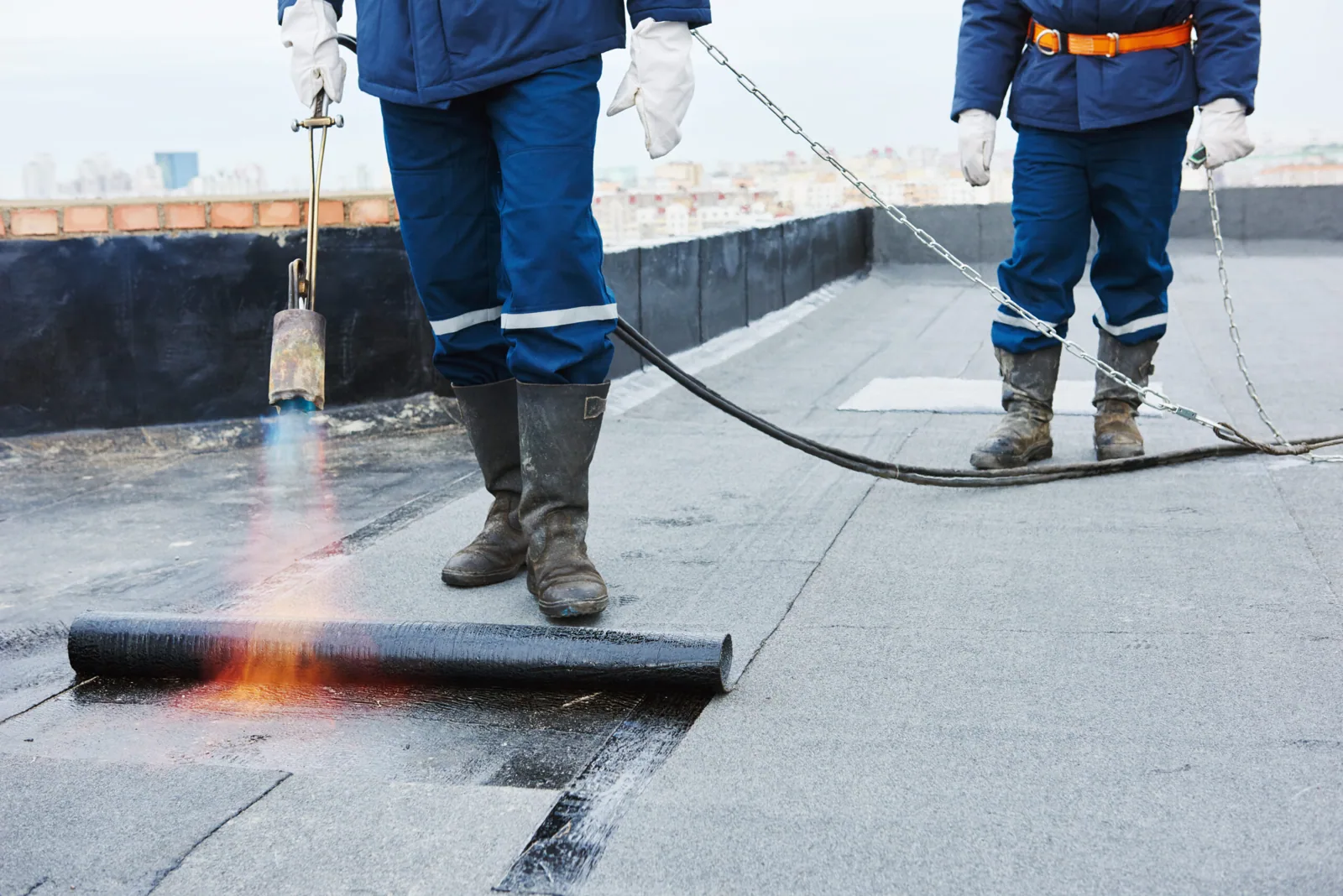
This work covers full tear-off and installation of a new TPO roof, PVC, EPDM, modified bitumen, built-up, or metal system on warehouses, offices, retail centers, medical buildings, and schools along the I-2 and US 83 corridor and the neighboring cities.
Findings That Point to Replacement
A repair addresses a defect. Replacement addresses a condition. The difference shows up in the record: if the open seams, split flashings, and soft spots sit in several roof sections instead of one, the repair boundary keeps widening and each visit costs more than the last. We tag each finding on a sketch and photograph it, then compare the count and spread against what the roof can reasonably carry forward.
Moisture is the deciding measurement. Wet insulation does not dry in place under a membrane, and it adds weight, loses its thermal value, and feeds corrosion in the deck. We use infrared imaging and core samples to draw a moisture map. When the wet area is a small, bounded patch around a penetration, a localized cut-out can work. When the map shows moisture spread under much of a section, the section is a replacement candidate whatever the surface looks like.
What the Valley Heat Season Does to an Old Membrane
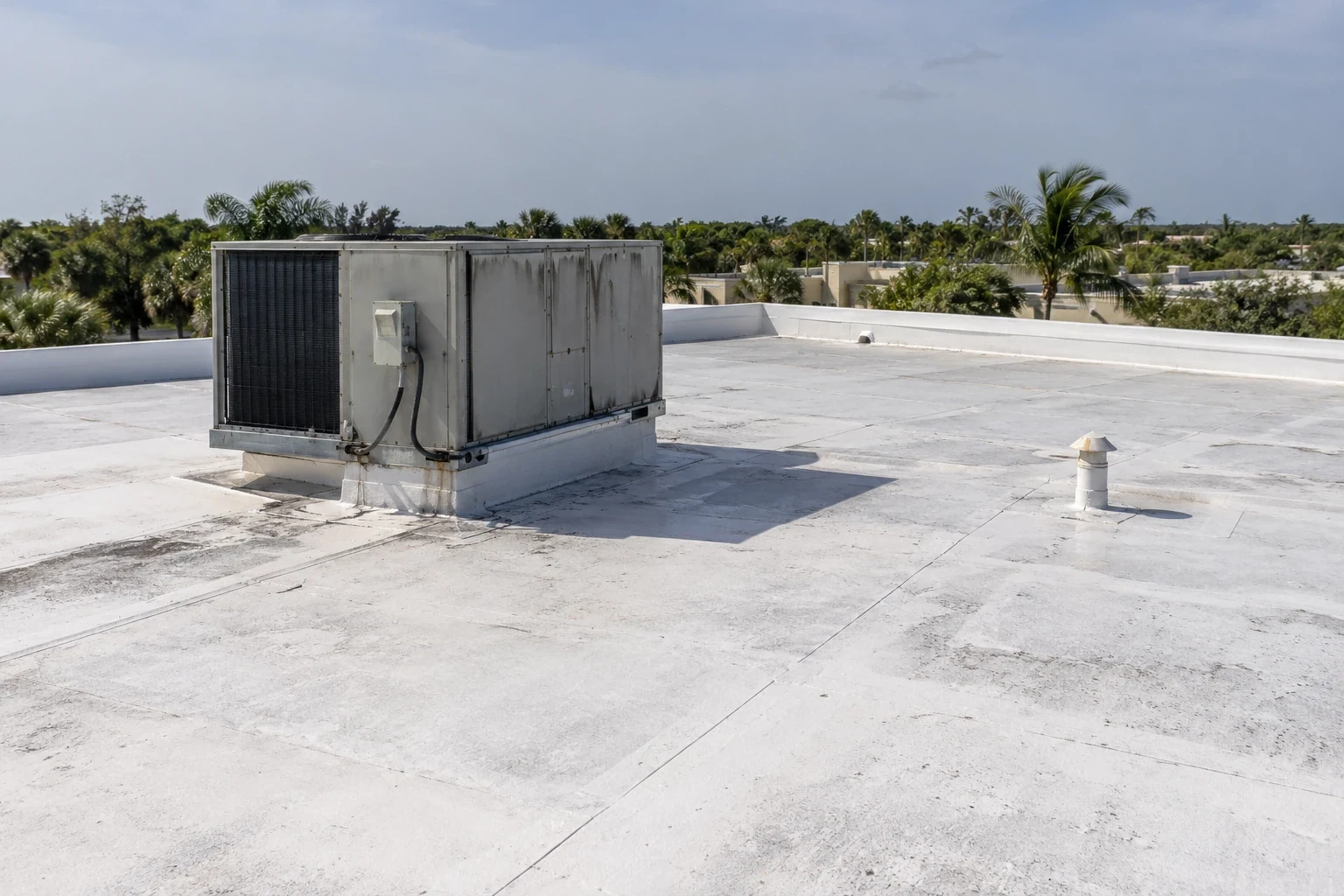
Brownsville forecasters treat May through October as the Valley's heat-safety season, and the roof sits under that exposure with no shade and little relief at night. Heat drives expansion and contraction at laps, flashings, and fasteners. Ultraviolet exposure thins the surface of single-ply membranes and lets coatings lose film. The effect is cumulative and usually quiet until a seam opens or a flashing pulls away from a wall.
For that reason, we record surface condition in the same terms on every inspection: seam probe results, fastener pull samples where a mechanically attached system is involved, and the state of sealants at corners and penetrations. A newer roof in Palmview or Alton and an older one on a Mission corridor are judged by the same heat record, not by building date.
Tropical Wind and Water on Existing Roofs
Hurricane Hanna in July 2020 gave the area a concrete comparison. Winds were estimated at 60 to 65 mph from the I-2 corridor northward, torn sheet-metal roofing was reported in McAllen, and a maintenance building belonging to a school district in Mission lost part of its roof. The National Weather Service also noted that hundreds of poorly built structures in the Valley were damaged, mostly at the roof.
Hurricane Dolly in 2008 did similar work farther east, where roofs were lifted near Weslaco, mainly on older structures. The pattern is consistent: edges, flashings, and previously repaired areas let go before field membrane does. When we replace a roof here, the perimeter receives as much attention as the field, with continuous cleats, fastener spacing matched to the edge zone, and metal that is secured to the wall and not only to the roof deck.
Drainage, Insulation, and the Scope Line
That same storm filled a Mission-area gauge with 14.40 inches, while flash flooding put about 12 inches of water across Shary Road. A roof cannot control the street, but it can control how quickly water leaves the deck. A replacement scope that restores slope to drains, adds tapered insulation where water has been standing, and sizes scuppers and overflows to the building is not a luxury item. It is the reason the new membrane does not repeat the old roof's seam failures.
The scope line names each item in order: tear-off layers, deck repair allowance, insulation type and thickness, cover board, membrane and attachment method, flashing details at walls and curbs, edge metal, drains, and walkway pads. A single bounded wet spot is a different case, handled by tracing and stopping the leak without a tear-off.
Replacement Compared With Recovery or Coating
A recover installed over the existing roof can make sense when the insulation is dry, the deck is sound, and the code allows another layer. A coating restoration can extend a roof whose membrane is intact but weathered. Both options depend on the moisture map. If the survey shows wet insulation across a large share of the roof, neither will hold, and replacement is the only way to remove the water from the assembly.
Our recommendation separates these options by finding, not by preference. For a dry roof with uniform weathering, a coating or a recover may reduce cost and disruption. For a roof with widespread moisture, the written recommendation says replacement, lists the findings that support it, and shows what the owner would be carrying if the roof were left alone: repeat repairs, interior damage, and the chance of a tropical-season failure.
Phasing Work Over Occupied Space
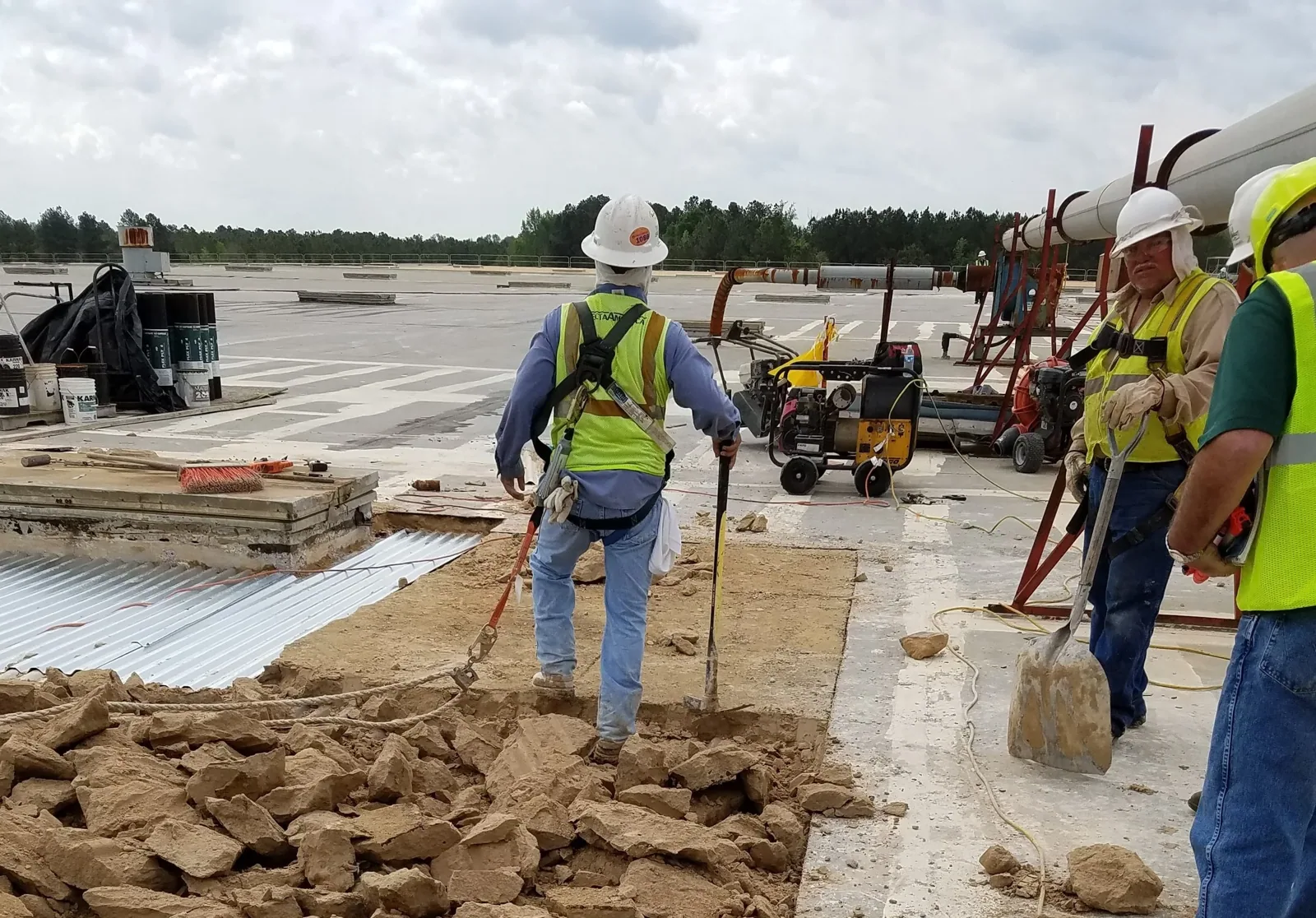
A commercial building can stay open during replacement. Clinics, offices, and retail suites cannot close for a week, and a warehouse on a freeway frontage may have dock doors working through the day. We phase by roof section, tear off only what can be dried in the same day, and stage material away from entrances and loading areas. Weather watch is part of the plan: during the June to October season, the crew follows forecasts and keeps temporary seals ready at each open edge.
Adhesive odor and access to rooftop equipment are scheduled with the property manager before work starts, and tenants receive a short written notice. The same sequencing logic applies to any occupied building reroof.
Questions and Answers
How do you decide whether a roof can be repaired one more time or has to be replaced?
The decision follows the moisture map and the spread of findings. If wet insulation is limited to a bounded area and the remaining membrane passes a seam probe, a localized repair with a dated photograph set is reasonable. If moisture covers a large share of a section, or the defects appear across several sections, we recommend replacement and list the findings that support it.
What does a replacement scope normally leave open to change after tear-off?
Deck condition and wet insulation depth are the two items that are only fully known after the old roof is opened. The scope includes a unit price for deck repair and notes the likely range based on core samples. Each concealed condition is photographed and tagged before it is covered, so the final adjustment matches a record and not a verbal estimate.
Can a new roof be installed during the Valley's tropical season?
Work can proceed from June through October when a forecast window supports it, but the plan follows the forecast. Tear-off area is sized to what can be dried in the same day, edge seals are staged, and the crew stops when a storm cell approaches. Higher-risk sections go first.
Do you replace only the membrane, or also the edge metal and flashings?
Edge metal and flashings are part of the scope whenever the inspection shows they are loose, corroded, or incompatible with the new system. These are the first details to let go in a wind event such as Hanna, so replacing a membrane while leaving original metal tends to put the new roof at the old roof's weakest point. We list each flashing and edge condition separately so an owner can see what is being replaced and what is retained.
Request a Documented Roof Inspection
Ask for a written condition summary on your Mission roof. We will tag each finding, map moisture, and state whether repair, recovery, coating, or replacement is supported by the record.