
Roof Systems
KEE Roofing in Mission, TX
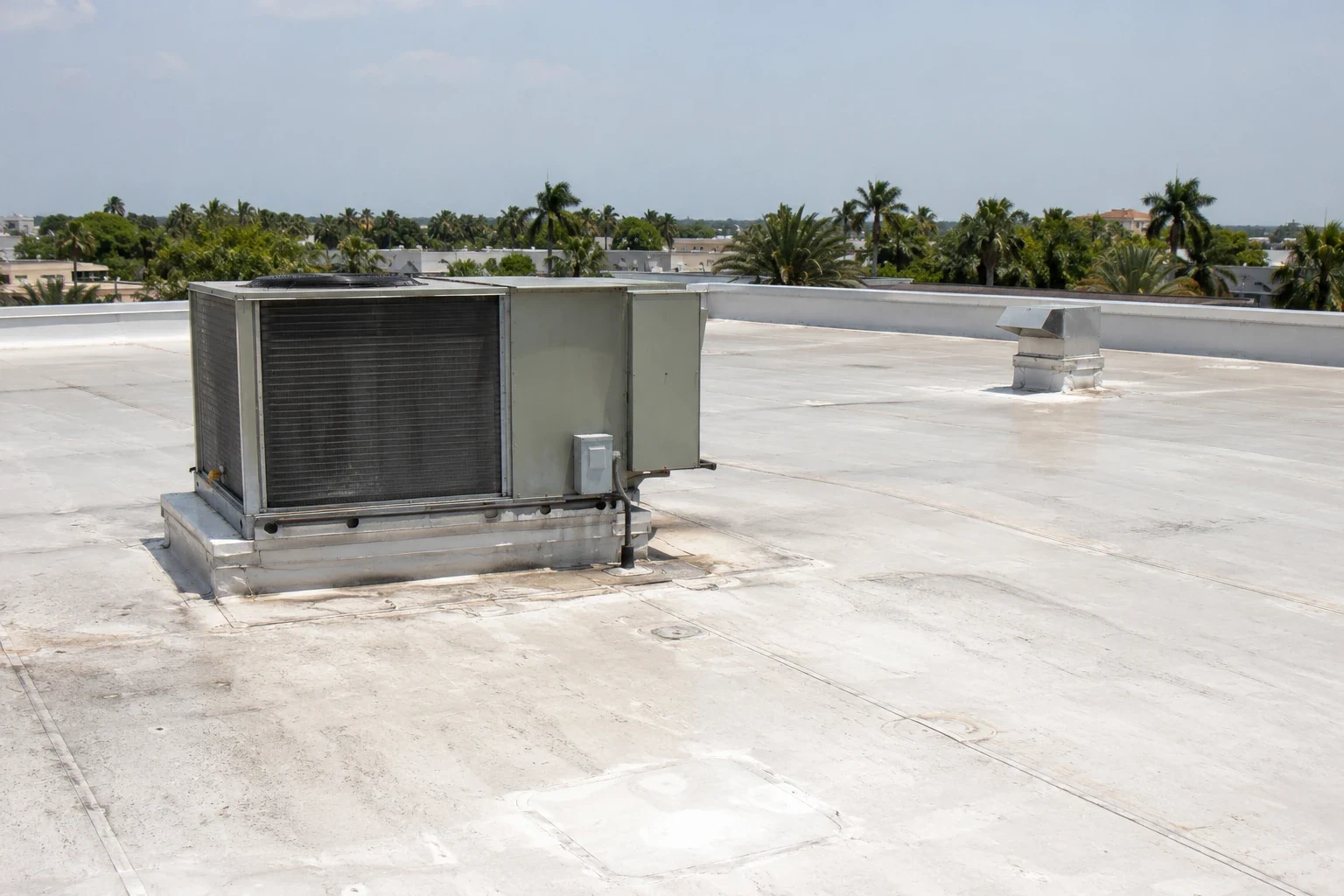
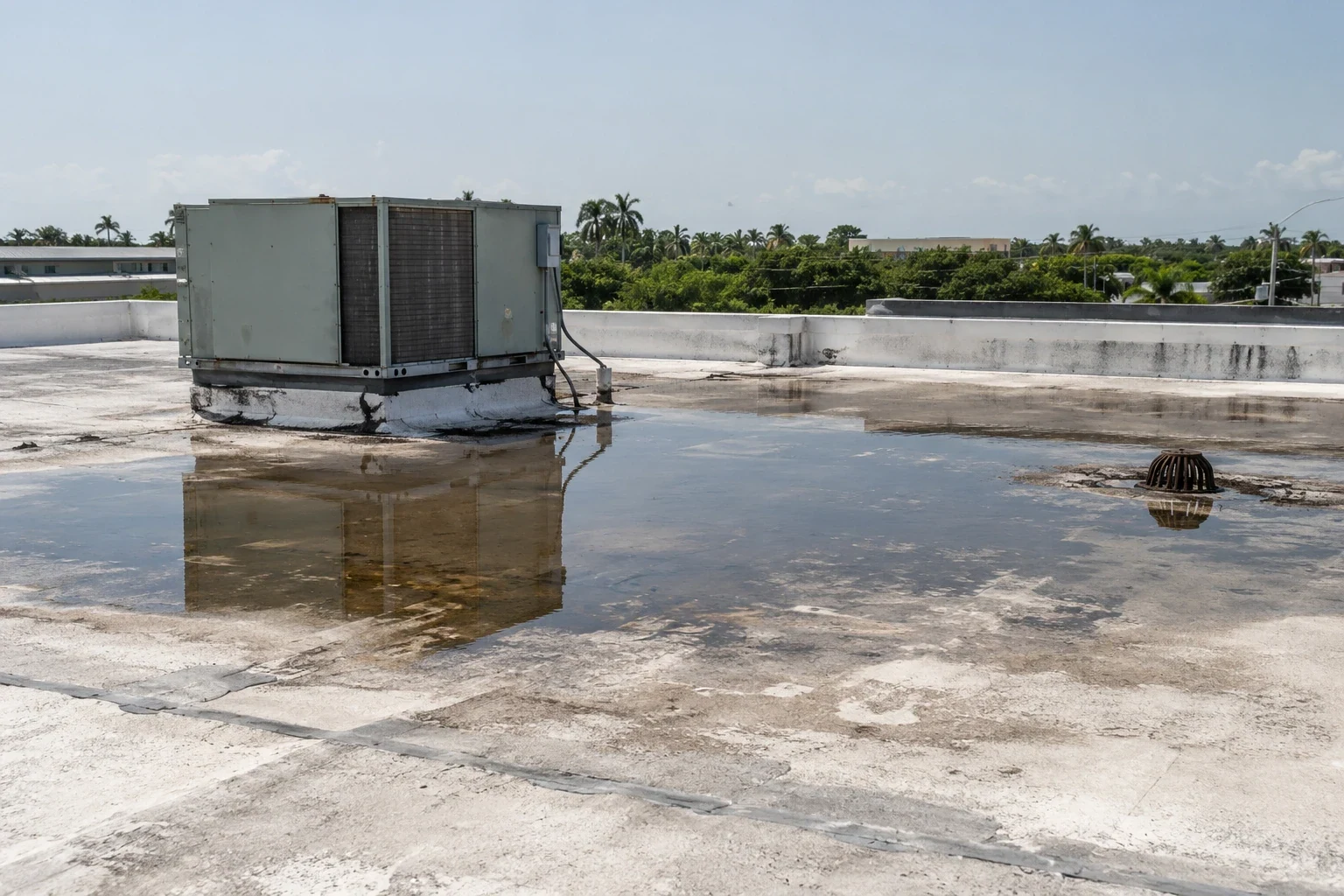
The line that matters on a KEE inspection sheet is a measurement of standing water. We lay a level across the low section of a Mission, TX roof, record the depth after the last rain, and photograph the stain ring left when the water recedes. KEE, a PVC-alloy membrane built for harsh exposure, is a candidate where those rings keep returning. The measurement supports a decision: correct the drainage, choose a sheet that tolerates the water, or do both and record the reasoning for the owner's file.
What the Alloy Adds to a PVC Sheet
KEE stands for ketone ethylene ester, a polymer blended into the PVC sheet in place of the liquid plasticizers used in standard formulations. Liquid plasticizers slowly migrate out of a membrane under heat and ultraviolet exposure, and the sheet stiffens as they go. A bonded polymer additive stays in the matrix, so the sheet keeps its flexibility longer and resists attack from oils, fats, and many chemicals.
The membrane is welded with hot air in the same way as other PVC, and it is typically reinforced with polyester scrim. Owners who already know PVC will recognize the field work. The difference lies in the sheet's reserve life, which matters for buildings owned long term and for roofs that are expensive to reach or to interrupt.
Thickness and scrim still matter. A heavier sheet gives more wear layer above the reinforcement, and a roof with frequent foot traffic from equipment service benefits from it. We record the specified thickness in the owner's file next to the weld settings and the test-seam results taken at the start of each day, so the roof can be compared against its own installation record years later.
Roofs That Hold Water
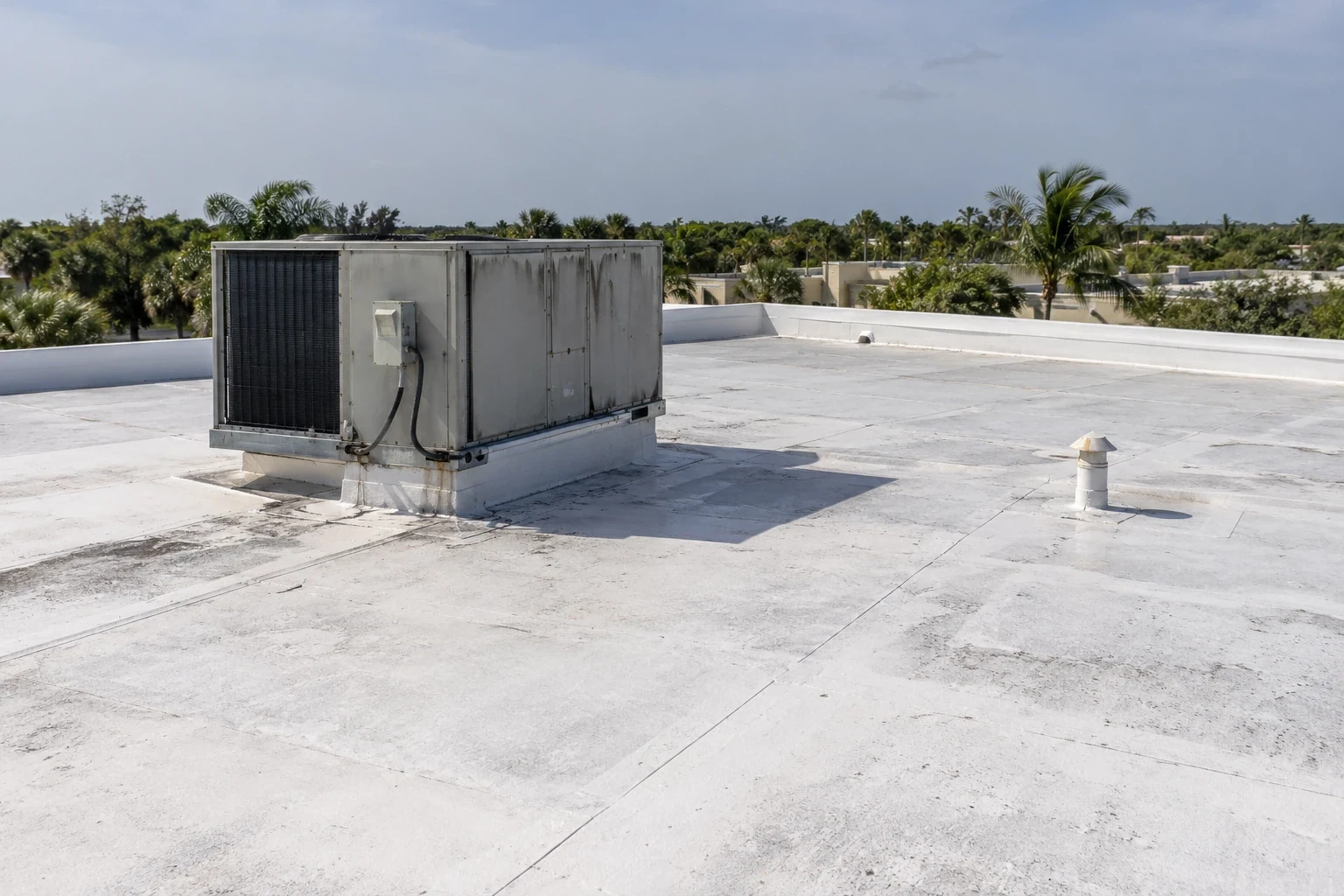
Ponding is a defect to correct where it can be, but not every owner can regrade a deck. A building with a long-span structural frame, a deflected steel deck, or a concrete slab that cannot take added weight may simply hold water after storms. In July 2020 Hanna filled a northwest Mission gauge with 14.40 inches, and poor drainage left deep water around La Joya and Sullivan City. A roof that drains slowly under that load will pond.
KEE does not make ponding good for a building, but its weld strength and chemical stability give the membrane more margin when water lingers. We pair the sheet with added drains or tapered board where the structure allows, and the ponding water repair analysis lists each low spot with its measured depth.
Timing of the reading matters. We take depth measurements the morning after a rain and again after two dry days, because a roof that clears in a day is a different problem from one that stays wet for a week. The second number shows whether the water is leaving through the drains or simply evaporating, and it tells the owner whether additional outlets would change the result.
Exhaust, Process Vapors, and Oils
Mission EDC names manufacturing, healthcare, technology, and retail among the city's thriving sectors, and it points to a label-printing manufacturer expanding production and a plant expansion. A printing or finishing operation vents solvent vapors and inks. A food processor vents fats and steam. These discharges collect on a membrane near the stack, and ordinary single-ply sheets can swell, stain, or lose seam strength there.
For each stack, fan, and relief vent, we log the location, photograph the surface, and record what the owner says leaves the building. The sheet recommendation then follows from what we see on the surface, not from a product catalog. Where discharges are mild, standard PVC may be adequate. Where oils or aggressive chemicals are routine, KEE gives a longer service record, and the manufacturing plant roofing scope names which sections justify it.
Heat-Season Wear and Surface Condition
Ultraviolet exposure works alongside heat. Even reflective surfaces take months of strong sun, and the edges of a sheet that sees reflected light from parapets or tall neighboring walls can age faster than the middle of the field. We compare edge color, gloss, and weld texture with the center of the roof and write down any difference.
Brownsville forecasters treat May through October as the Valley's heat-safety months. A KEE roof lives through that stretch every year, and surface checks follow a fixed order. We look for chalking, dirt pickup, loss of gloss at the welds, and any edge curling at flashings. Each finding is dated and tagged, and the photographs from year to year show the rate of change.
Cleaning helps. A reflective white membrane covered in dirt absorbs more heat, so a periodic wash restores reflectivity and gives the inspector a clear view of the welds. If the sheet is nearing the end of its life but the insulation is dry, coating restoration can be compared against replacement using the core cut results and the adhesion test.
Installation Sequence and Wind Detailing
The roof is torn off or prepared, the insulation is probed, and wet board is replaced. The KEE sheet is then rolled out, fastened or adhered according to the wind zone, and welded at every lap. Dolly in 2008 pushed gusts of 50 to 70 mph through populated Hidalgo County, and near Weslaco its near-hurricane winds raised roofs, chiefly on older buildings. Edge metal and corner zones therefore receive the strongest attachment on the roof.
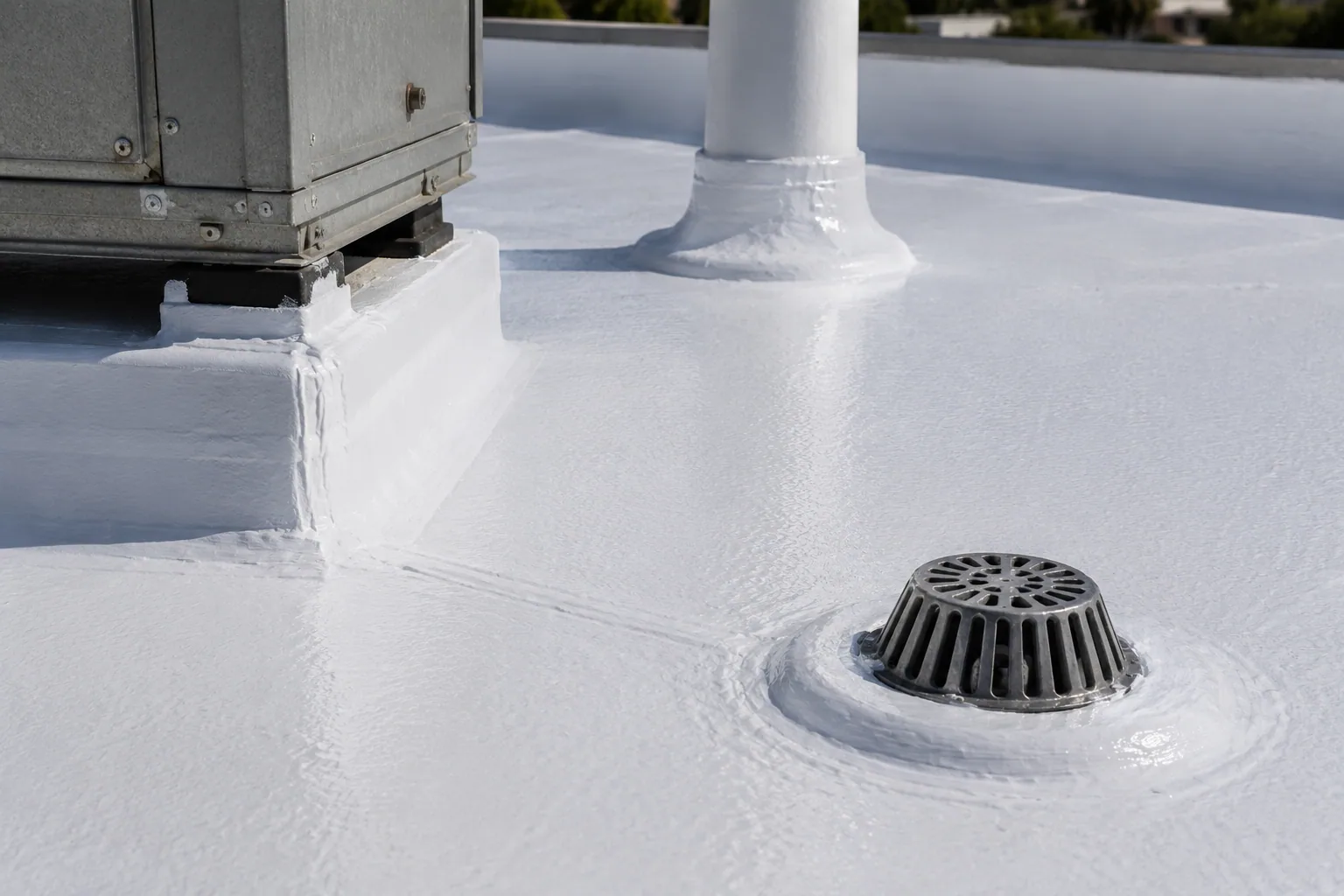
Each flashing, drain sump, and boot is cut from the same sheet and welded to the field. We probe all of them and log the count. The owner receives the fastener pattern, the probe log, and tagged photographs after completion. Work on occupied buildings is staged by roof area so tenants keep access to loading and parking, and noisy tear-off phases are scheduled away from sensitive hours.
Deck and insulation preparation take as much planning as the sheet itself. Fasteners are pulled and tested on a sample of the deck, damaged decking is replaced, and insulation joints are staggered so thermal bridging stays low.
Where KEE Is Typically Considered
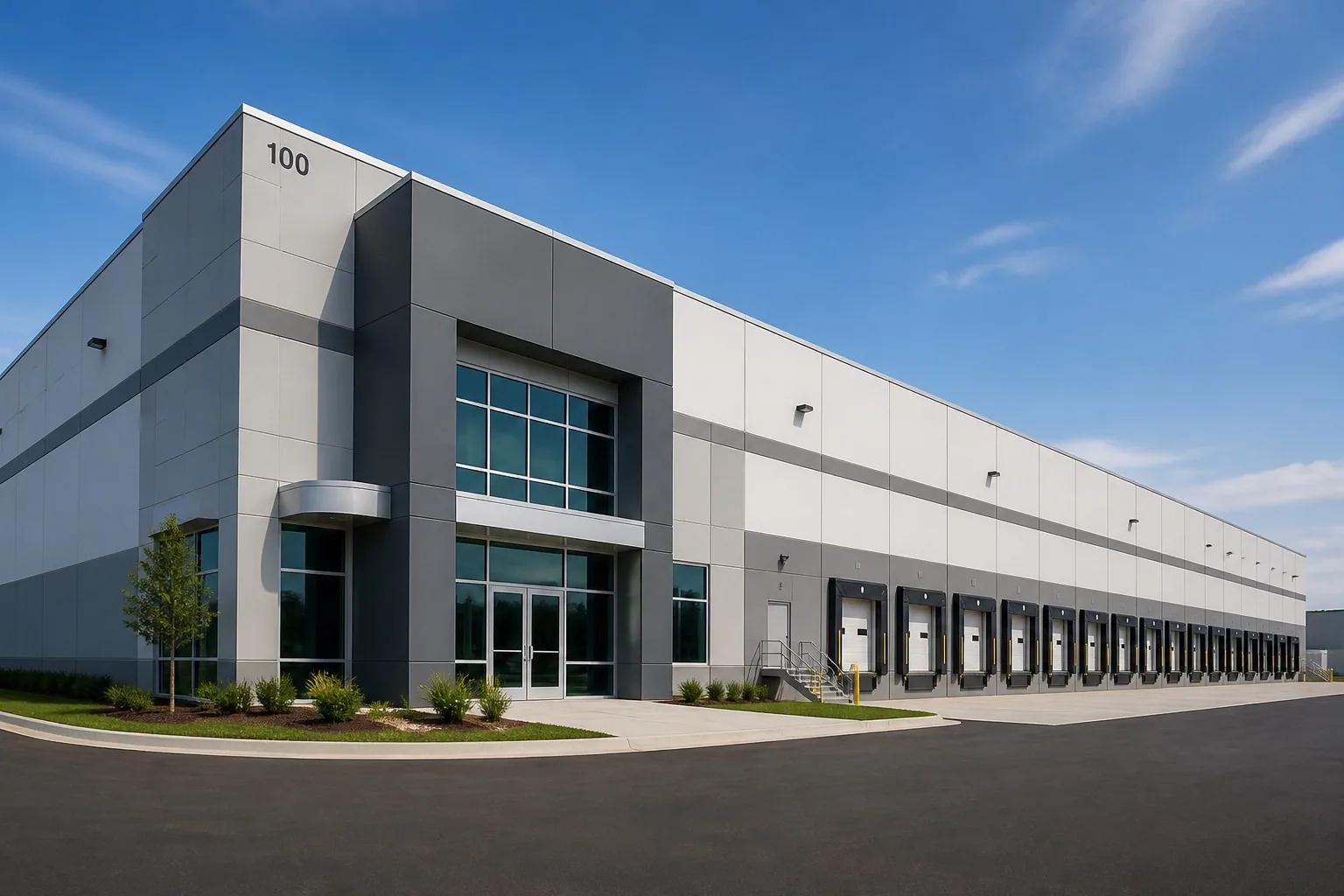
Distribution buildings connected to the McAllen Foreign-Trade Zone, cold storage roofs with condensation concerns, hospital sections near air handlers, and plants with oily exhaust are the usual candidates. Owners in Pharr, McAllen, and Mission receive a recommendation that compares KEE with TPO and with standard PVC for each roof area.
Questions and Answers
Does a KEE roof still need drains if the sheet tolerates standing water?
Yes. The sheet tolerates water better, but the deck and the insulation do not benefit from carrying extra load, and algae growth and debris collect where water sits. We still size outlets and overflows for heavy tropical rain and log their condition on every visit.
How do you confirm the chemical exposure before specifying KEE?
We walk the roof with the facility manager, mark every exhaust and vent, photograph the surfaces around them, and ask what is discharged. If a safety data sheet is available, we read it against the sheet's chemical resistance. Where exposure is uncertain, a small test patch can be welded and reviewed after a season.
Can KEE be installed over an existing membrane?
A recover is possible if the existing roof is dry, well attached, and the structure can carry the added weight. A separation layer or cover board usually goes between the two systems. Moisture mapping and core cuts show the condition below, and a recommendation is written either way.
Why would an owner choose KEE if standard PVC costs less?
The tradeoff is reserve life. Where oils, fats, or chemicals touch the sheet daily, a standard formulation may stiffen sooner and need patching or replacement earlier. A building held for the long term, or one where a roof tear-off would disrupt operations, often justifies the premium.
What happens at a KEE roof after a named storm?
We compare edge metal, seam welds, drain sumps, and flashings against the baseline photographs taken before the season. Lifted metal, punctures from debris, and any new ponding are marked and ranked. The owner gets a repair list with the urgent items separated from the ones that can be scheduled.
Request a KEE Roof Evaluation
Tell us what leaves the building through the roof and where water collects after rain. We inspect the Mission, TX roof, record ponding depths and discharge points, and deliver a written condition summary that supports budgeting or an insurance conversation.