
Property Types We Roof
Restaurant Roofing in Mission, TX
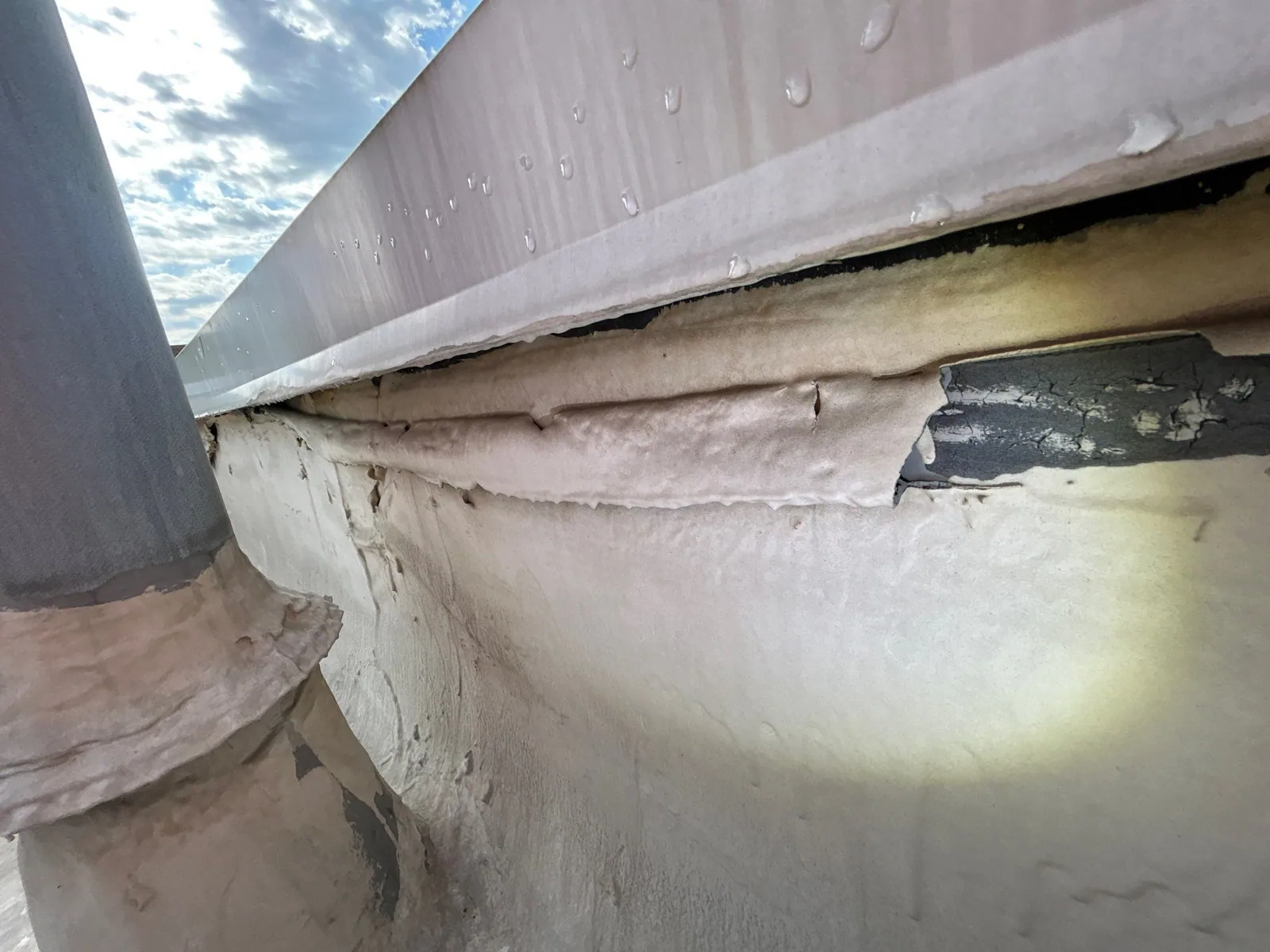
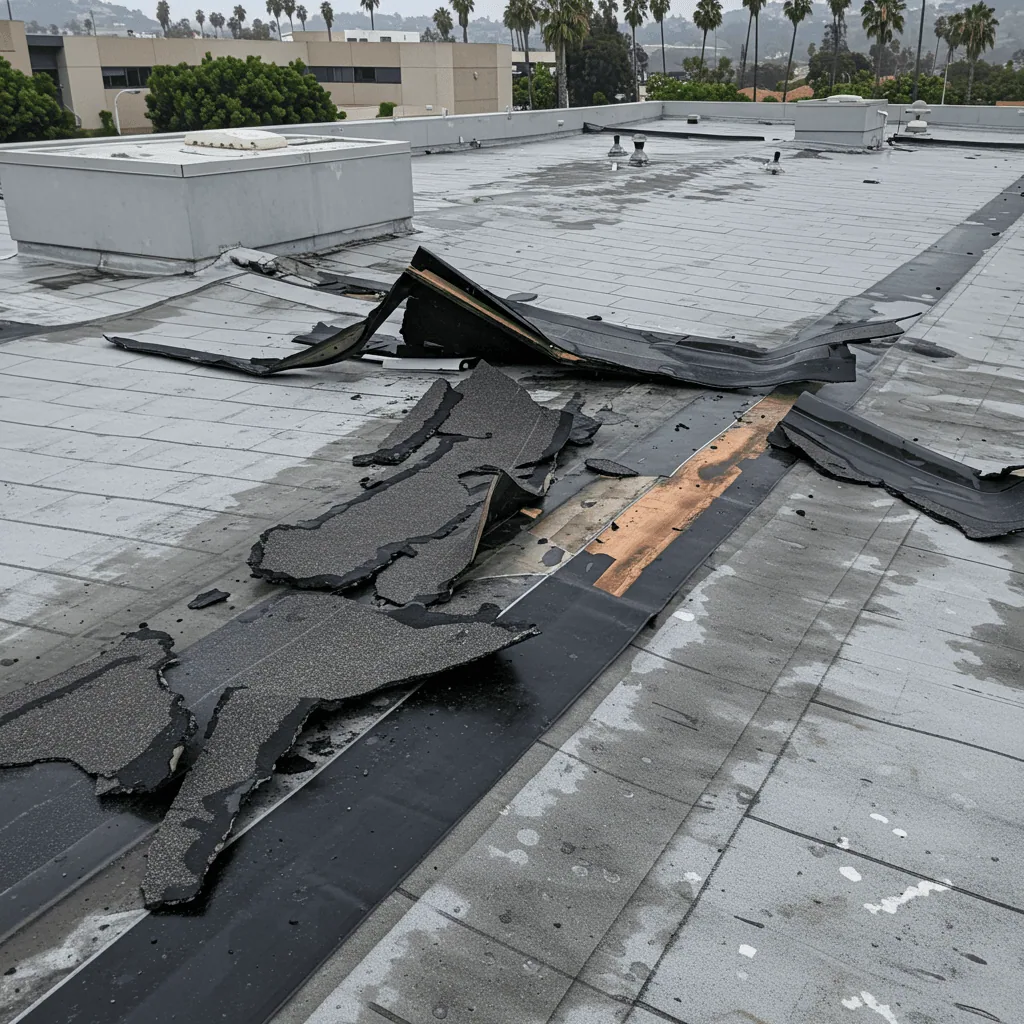
On a restaurant roof sheet in Mission, TX, the first entry is a dated photograph of the roof surface downwind of the kitchen exhaust fan. Grease leaves a film that darkens, softens some membranes and clogs drains, and the pattern on the roof shows how long the fan has been discharging and where the wind carries it. The inspector records the size of the stained area, presses the surface to test for softening and notes whether a grease containment tray is fitted. The recommendation that follows depends on that record, because grease damage is local and is repaired differently from age or storm damage.
The summary then runs through the rest of the roof, finding by finding.
Exhaust Fans, Grease and the Surface Around Them
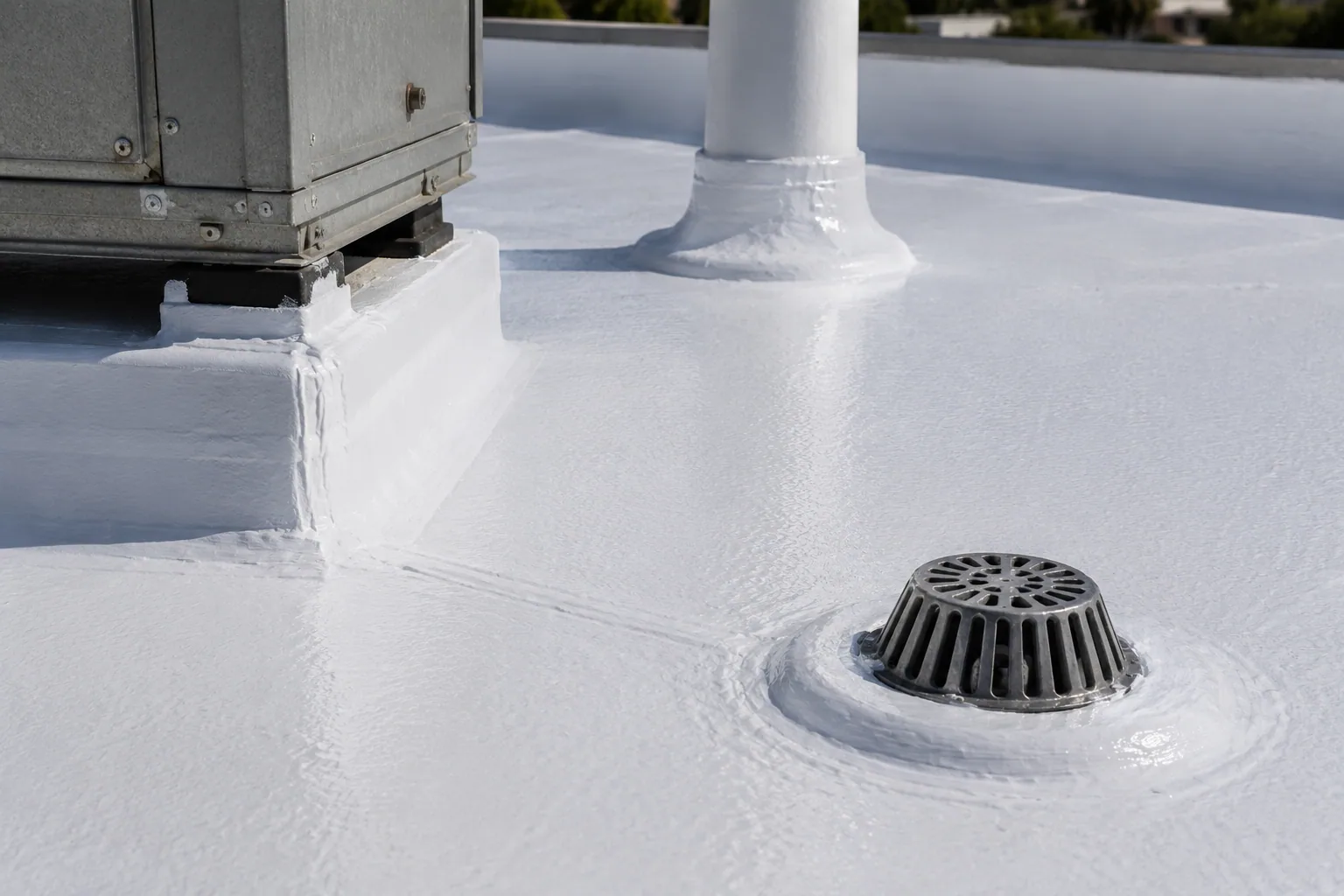
A restaurant roof carries one or more exhaust fans, makeup air units and often a walk-in cooler condenser. Each fan sits on a curb with a hinge kit or a base plate, and the curb flashing is the usual path for water into a kitchen ceiling. The inspection photographs each curb from two sides, tests the sealant and notes any rust or loose fasteners.
Grease gets its own table. The area, the direction of the stain, the membrane condition and the presence of a containment tray are logged, and the log records whether the discharge point has moved since the last visit. When the membrane has softened, the scope line calls for cutting out the affected area and replacing it with a material that tolerates grease, such as PVC roofing or a related chemical-resistant sheet.
Containment trays need emptying on a schedule, and the summary lists who is responsible, since a tray that overflows repeats the damage.
Fire Safety and Hot Work Limits
A restaurant is a building where fire risk is already part of operations, and roofing work must respect it. Torch-free methods are the default for a restaurant roof, and any open-flame step requires a fire watch, a clear zone and the owner's written approval. Kitchen exhaust is shut down or redirected before work begins near a fan, and the plan names who does it and when. A kitchen that must stay open at lunch gets the roof work at the front of the building first, and the area over the cooking line is saved for a closed day.
Adhesives and coatings carry fumes, and the sketch marks air intakes so that the crew can keep fumes away from dining rooms and kitchens. If a coating is chosen, the application is timed for hours when intakes can be closed and the dining room is empty. The coating film check afterward confirms thickness and cure before the system returns to full service.
Trade Seasons and Roof Work
Hidalgo County has moved from agriculture toward trade, health care, retail and tourism, and Winter Texan trailer and motor home courts grew to about 74 by the 1980s. Winter visitors have long been part of the local economy, so the roof schedule asks each operator for the busy months and keeps work out of them. A repair that can wait for summer is placed there, while a leak above a dining room cannot wait for anything.
The condition summary sorts findings into three groups for that reason: items that threaten the interior now, items that will fail in the coming season and items to watch. A restaurant manager can see at a glance which work needs a closed day and which can be done at night or during the slow weeks.
Drains, Flashing and Kitchen Leaks
Water that reaches a kitchen ceiling is rarely a mystery once the roof is mapped. The drain and scupper log records each outlet with a photograph of its strainer, the standing water around it and the condition of the sump. On small roofs, a single clogged drain can load one corner of the deck, and the corner is often the one above the cooking line.
Flashing is the second check. Wall bases, parapet caps and the junction between a main roof and a lower patio roof are photographed from fixed positions, and sealant is tested for adhesion. Where a flashing failure is found, the scope line names the detail, the materials and the order of work, and the repair is timed so it can be completed and closed in one visit. Kitchen ceilings are checked from below as well, since a stain pattern there helps confirm the roof findings above.
Baseline for Canopies, Signs and Patios
Restaurant roofs often include a porch canopy, a drive-through cover, a patio roof or a roof sign. These elements stand higher than the main field and catch wind. In 2008 Hurricane Dolly sent gusts between 50 and 70 mph across the populated parts of Hidalgo County and lifted roofs near Weslaco, mostly on older buildings, so a restaurant in an older building gets its edges and attachments checked first.
The pre-storm baseline photographs each canopy connection, each sign bracket and each fan hinge, and a fastener pull sample on a canopy bracket shows whether the attachment is still firm. After a storm, the same positions are photographed and compared, and the list of changes goes to the owner and the insurer.
Repair, Coating or Replacement for a Small Roof
Restaurants are usually small buildings, and a small roof makes the economics easy to read. A single leak at a curb is a repair. A roof with grease damage around a fan and sound elsewhere is a localized replacement. A roof with trapped moisture across several areas, or a membrane that has reached the end of its life, is a commercial roof replacement.
The scope lines state the finding that drives each option, the area from the moisture map and the likely duration, so that an owner or franchisee can compare cost against the days of disruption. Where an operator has several locations, the same sheet is used at each one, and the findings are ranked across them so the worst roof is repaired first. The ranking uses the dated photographs and moisture readings, which keeps the budget conversation on evidence.
The Owner's File and Franchise Records
The file keeps the sketch, tagged photographs, moisture map, grease log and drain log in one place. An operator with restaurants in Mission, McAllen and Pharr can compare sites on one scale, alongside a hotel or a grocery store in the same portfolio.
Questions and Answers
How can an owner tell grease damage from normal aging?
Grease damage is local and downwind of the fan, with a stain, a soft surface and often a clogged drain nearby. Normal aging is spread over the whole field. The inspection maps both on the sketch so the repair matches the cause.
Can a restaurant roof be repaired during service?
Small repairs can be done on the roof with interior protection and fume control, and noisy steps can be placed before opening. Larger work is scheduled for slow days or a closed day, and the plan is shared with the manager in advance.
Which membranes tolerate grease best?
Chemical-resistant sheets such as PVC are chosen where grease is a known exposure. The choice follows the finding, the fan location and the existing roof, and it is stated on the scope line.
What proof helps an insurer after a storm?
Dated photographs from marked positions taken before and after the storm, plus the moisture map and the list of changes. That separates new damage from earlier conditions.
Who empties the grease containment trays?
The restaurant, on a schedule written into the owner's file. The inspection notes the tray condition on each visit so overflow does not repeat the damage.
Related Roofing Work

Request a Documented Restaurant Roof Inspection
Ask for a documented inspection of your restaurant roof. The written condition summary will include a rooftop sketch, tagged photographs, a grease and drain log, moisture readings and scope lines you can reuse for budgeting or an insurance conversation.