
Property Types We Roof
Grocery Store Roofing in Mission, TX
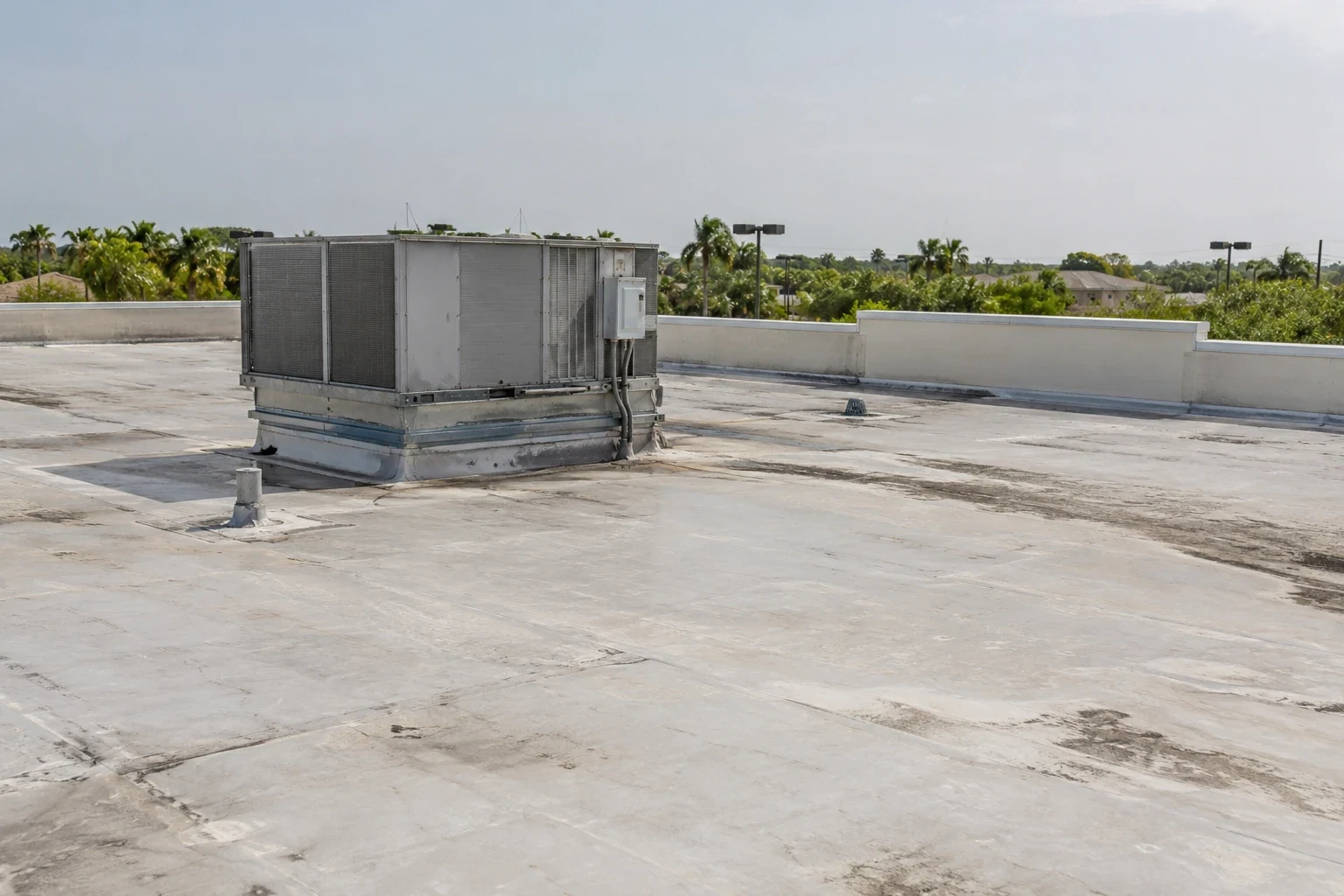
A surface temperature reading beside the refrigeration condensers is where a grocery roof sheet in Mission, TX begins, because that spot takes heat from the sun and from the equipment at once. The inspector records the reading with the time, photographs the membrane under the condenser frames and notes whether the walkway pads are intact. Food retail depends on one thing the roof can interrupt: cold storage kept cold. A leak into a cooler ceiling or onto electrical gear is a food-safety event as well as a repair, and the written record is arranged to show where that risk sits.
The summary then proceeds finding by finding, with a recommendation attached to each roof section.
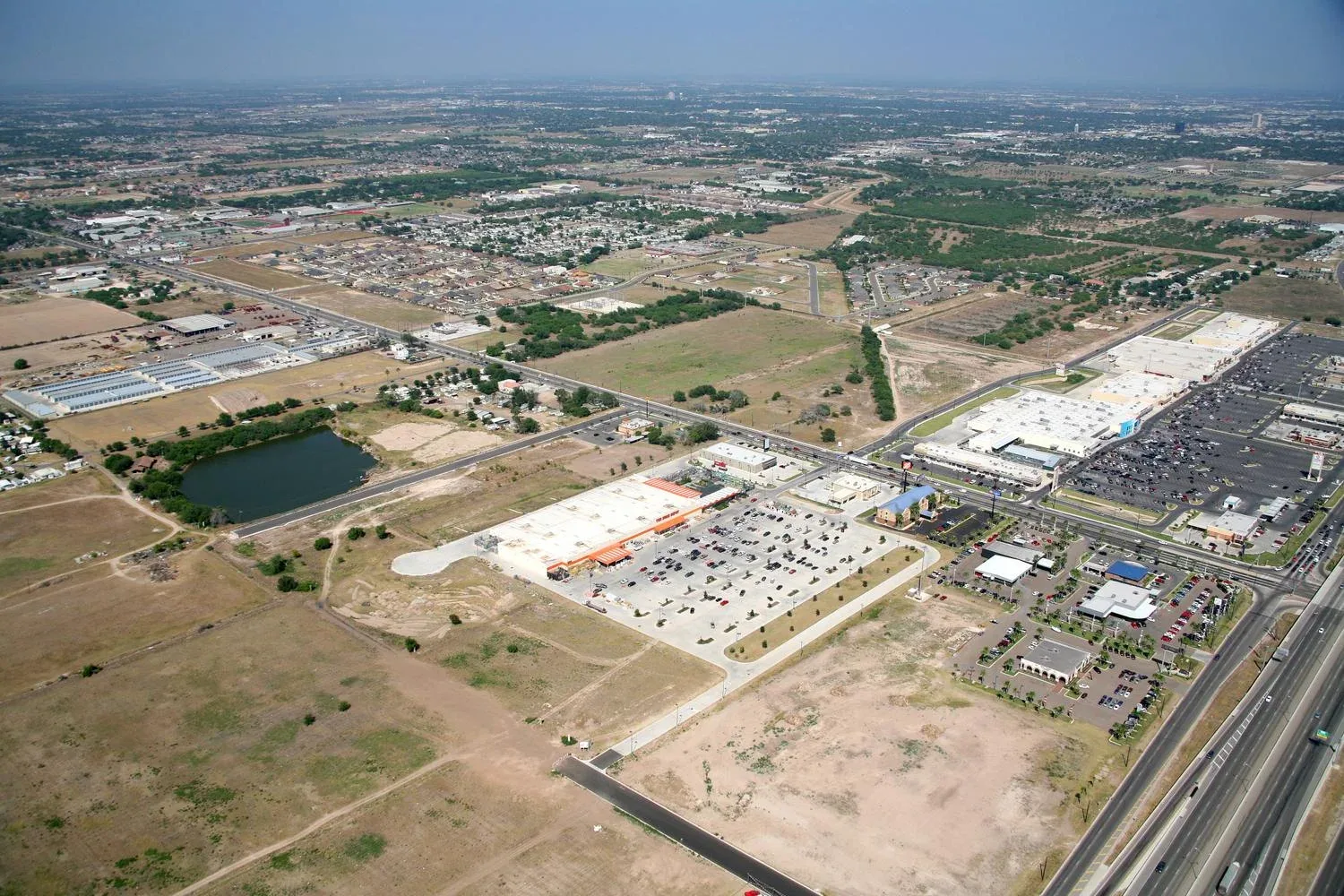
The Condenser Zone and the Membrane Beneath
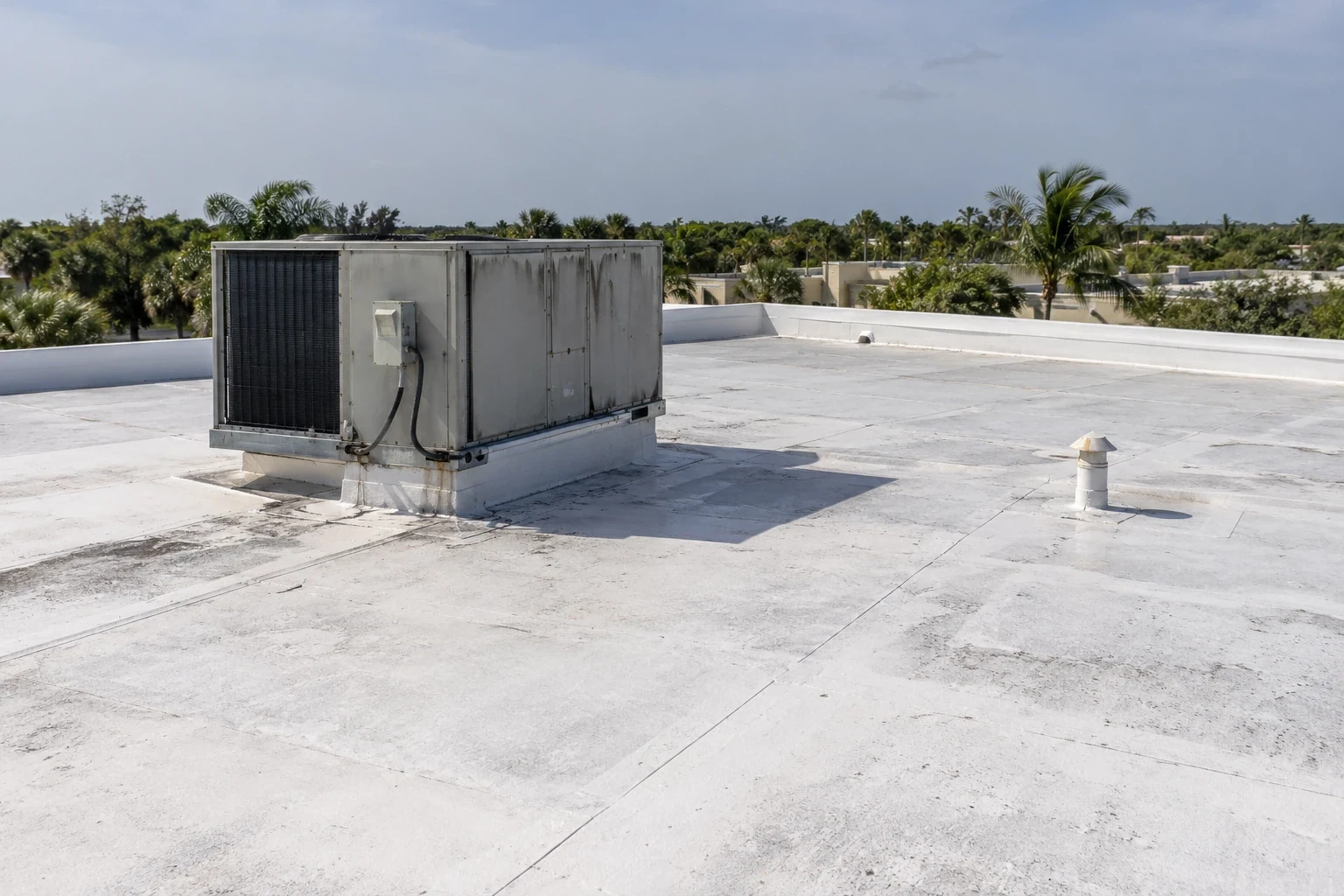
Condensers, compressor racks and their piping occupy a large part of a grocery roof, and technicians walk it often. The membrane under that traffic wears faster than the open field. The inspection looks for scuffing, punctures from dropped tools, crushed insulation under equipment frames and missing or displaced walkway pads, and each finding is tagged to the sketch.
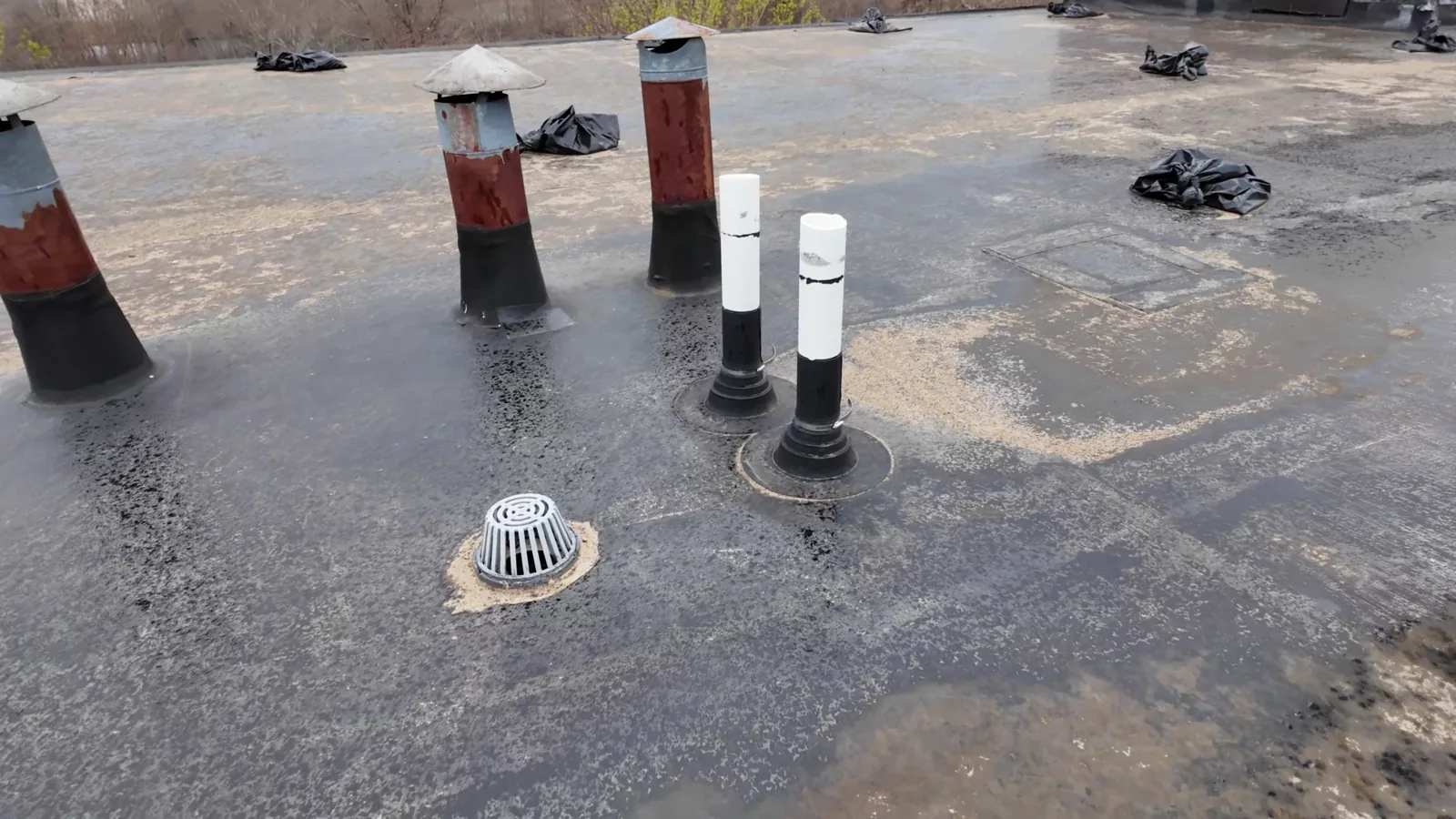
Refrigerant lines pass through the roof at penetrations that are flashed with boots, pitch pans or sealant. Those details are logged by number, with a photograph of the seal and a note on whether it has cracked or pulled away. A boot that has split in the sun lets water follow the pipe into the ceiling, so a penetration flashing scope line often appears early on a grocery sheet. Kitchen and bakery exhaust, where a store has them, add grease to the list of exposures, and the area downwind of each fan is photographed separately.
Heat Load Through the Long Season
Heat-safety season in the Valley runs May through October, by the Brownsville weather office's count. For a grocery store, those months put the highest demand on the condensers, and a roof surface that holds heat adds to that demand. The inspection records surface color, coating condition and any chalking, since a worn surface reflects less and a failing coating cannot protect the membrane beneath it.
Where the membrane is dry and sound, a reflective roof coating restoration can reduce surface heat and extend service life. A coating film check after application confirms the thickness, and the moisture map taken before the work confirms that the insulation under the coating is dry. Coating over trapped moisture is not recommended, and the summary says so wherever the readings show it. The coating is chosen with the surface color, the slope and the traffic pattern in mind, and walkway routes are protected with a heavier layer or a separate pad.
Condensate Lines, Drains and Standing Water
Refrigeration and rooftop cooling equipment shed water all year, and the water has to go somewhere. The drain and scupper log traces each condensate line from the unit to its outlet, with a photograph of where it ends. A line that discharges onto the membrane leaves a stain, feeds algae and wears the surface in a single spot, and in the Valley's heat the damp patch can last for days.
Standing water is measured with a level and marked on the sketch. Under equipment frames, water often stands where the insulation has compressed, and the crushed area becomes a low spot that holds water after every rain. The drain and scupper scope then lists the correction, such as a new outlet, a tapered saddle or a lifted frame, with the dimensions from the log. Overflow scuppers are tested with a flow check, because a clogged overflow offers no protection when a tropical rain arrives.
Power Outages and the Water Record
Hurricane Hanna in July 2020 pushed estimated 60 to 65 mph winds over McAllen and Mission, and the outages that followed reached up to half of the county's customers. A store that loses power loses refrigeration, and a roof that also leaks during the storm compounds the loss. The pre-storm baseline therefore includes the generator connection points, the condensate drains and the roof drains over refrigerated areas.
After the storm, the same positions are photographed and compared. The comparison notes whether water stood on the roof, whether a drain overflowed and whether any penetration took in water. That record supports a facility's own food-safety review and an insurance claim, and it identifies the roof findings that need repair before the next event.
Roof Work Above Food and Cold Storage
Roof work over a grocery store needs a plan that keeps food, shoppers and the roof crew apart. Interior protection goes up under any open section, dust and debris are contained at the roof edge and nothing is dropped through a chute that passes near a delivery door. Noisy steps are placed outside the busiest shopping hours, and the schedule shows the store manager what will be open each day.
Hot work needs its own plan. Torch-free methods are used where the store or its insurer prefers them, and any open-flame step is paired with a fire watch and clear access to the nearest extinguisher. Fumes from adhesives and coatings are directed away from air intakes, which are marked on the sketch before work begins. The store's receiving staff are told which door is closed each day, and the crew keeps its trucks out of the delivery apron during receiving hours.
Options by Section and Season
Each section receives options with the finding that favors it. A dry section with a worn surface suits a coating. A section with trapped moisture beside the condensers needs the wet insulation removed, and the summary shows the area in feet. Seams that are opening across a whole field may justify a recover or full replacement, phased so the cooler ceilings stay protected.
The order of work is stated: leaks over cold storage and electrical gear first, penetration seals second, drain corrections third and surface treatments last. The summary also states which work should finish before June, when the tropical season begins, and which can wait until after October.
The Owner's File for Food Retail
The owner's file keeps the sketch, photographs, moisture map, pad inspection and drain log together. An operator with stores in Mission, Alamo and Donna gets one format across sites, and a grocery inside a shopping center or sitting beside a restaurant gets scheduling notes for the neighbors that share its access.
Questions and Answers
Why are walkway pads part of a grocery roof inspection?
Technicians walk to the condensers regularly, and pads protect the membrane along that route. Missing or displaced pads are logged with a photograph, and replacing them is a small scope line that prevents punctures.
Can a leak over a cooler be repaired without closing the store?
Usually yes. The repair is done in a small section with interior protection below and a drain-to-ground check afterward. The store manager receives the time window before work starts.
What does a condenser-zone finding look like in the report?
A tagged photograph, a position on the sketch, the surface reading and a note on the membrane condition. The scope line states the repair, such as a patch, a new pad or a section replacement.
How does the roof record help after a power outage?
It shows whether water entered the building during the event and where. That supports the store's own review and an insurance claim, and it lists the roof items to repair first.
Is a reflective coating suitable above refrigeration equipment?
On a dry, sound roof it can lower surface heat during the May-to-October season. A moisture map confirms the roof is dry first, and the film check confirms the thickness afterward.

Request a Documented Store Inspection
Ask for a documented inspection of your store's roof. The written condition summary will include a rooftop sketch, tagged photographs, moisture readings, a condenser-zone and penetration log and scope lines you can reuse for budgeting or an insurance conversation.