
Roof Damage Repair
Ponding Water Roof Repair in Mission, TX
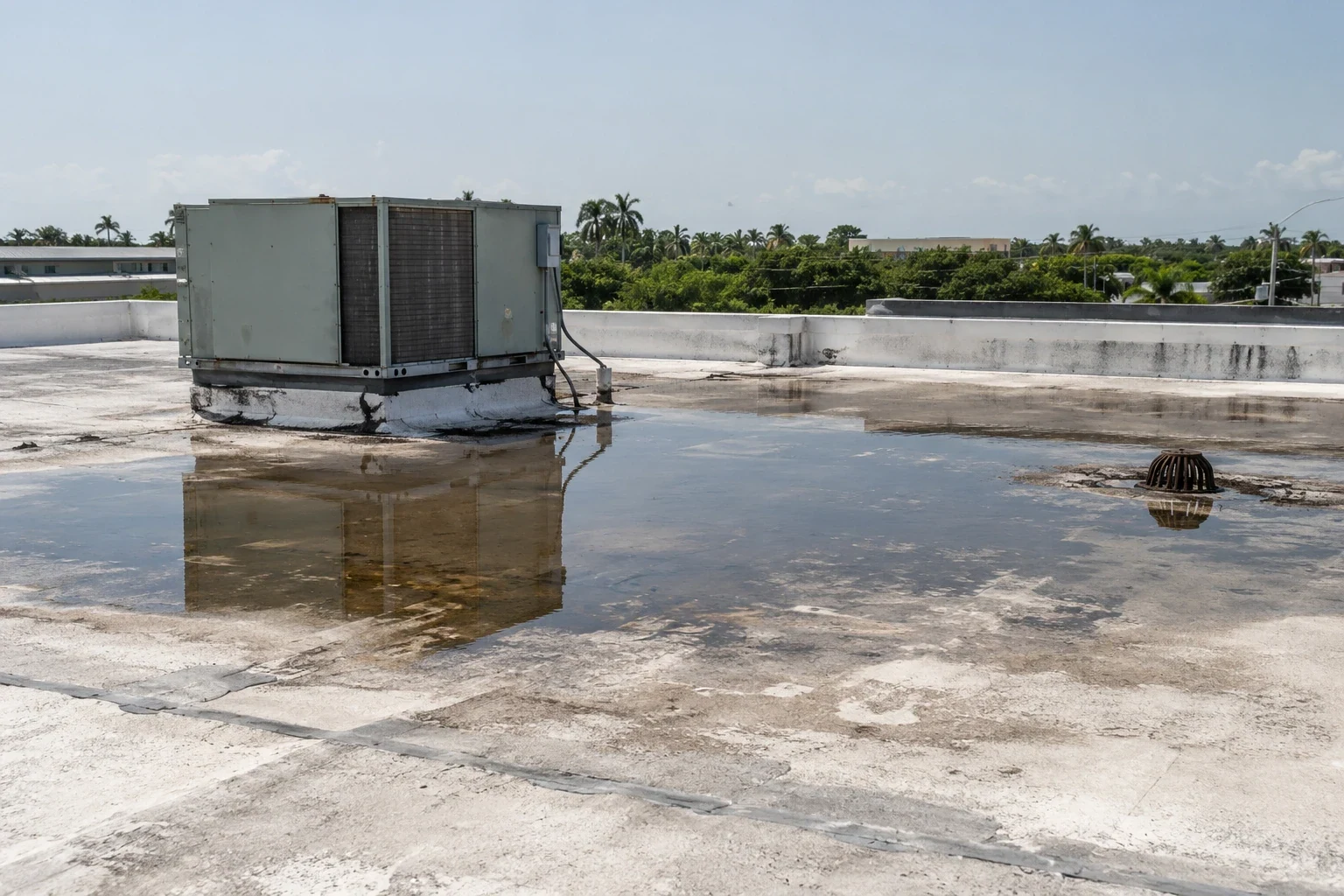
The entry that matters on a ponding inspection is a depth reading taken at the low spot, written next to the time of day and the date of the last rain. Standing water is a finding that can be measured, and a measured finding supports a decision where a general impression does not.
On a flat commercial roof in Mission, TX, ponding combines three conditions: a structure or slope that leaves a low area, drains that are not removing water at the rate the roof delivers it, and a membrane that has to survive the resulting soak. Each condition has its own repair, and the order of repair depends on what the readings show.
Measuring the Low Spot
We walk the roof after rain, or after a hose test when the weather has been dry, and mark the outline of every area where water remains. Depth is measured at the center and edge of each pool, and the dimensions go on a rooftop sketch with the nearest drain or scupper noted. Photographs are tagged to the roof section and dated, so the same pool can be measured again after repair.
Not every wet patch is a ponding problem. A film of water that dries within a day is normal on many flat roofs. Water that remains for more than two days, leaves a dirt ring or supports algae is a pattern, and it is logged as one. The distinction matters because the first needs monitoring and the second needs a scope line. Every depth reading carries a date, so a second reading after the repair can be set beside the first without relying on anyone's memory of how the pool looked.
Why Water Stands
Four causes account for most findings. A deck that has deflected under load leaves a dish between supports. Insulation that has compressed or settled does the same thing at a smaller scale. A drain set above the surrounding membrane, or a blocked drain basket, holds water that should leave. And a roof that was designed with little or no slope relies on drains working every day of the year.
Hurricane Hanna showed what happens when drainage is overwhelmed. In July 2020 a rain gauge northwest of Mission recorded 14.40 inches, and in the Sullivan City and La Joya area standing water ran from 18 inches to 4 feet where drainage was poor. A roof does not see those depths, but the same rule applies on a smaller scale: water that cannot leave will find the weakest detail.
What Standing Water Does to the Membrane
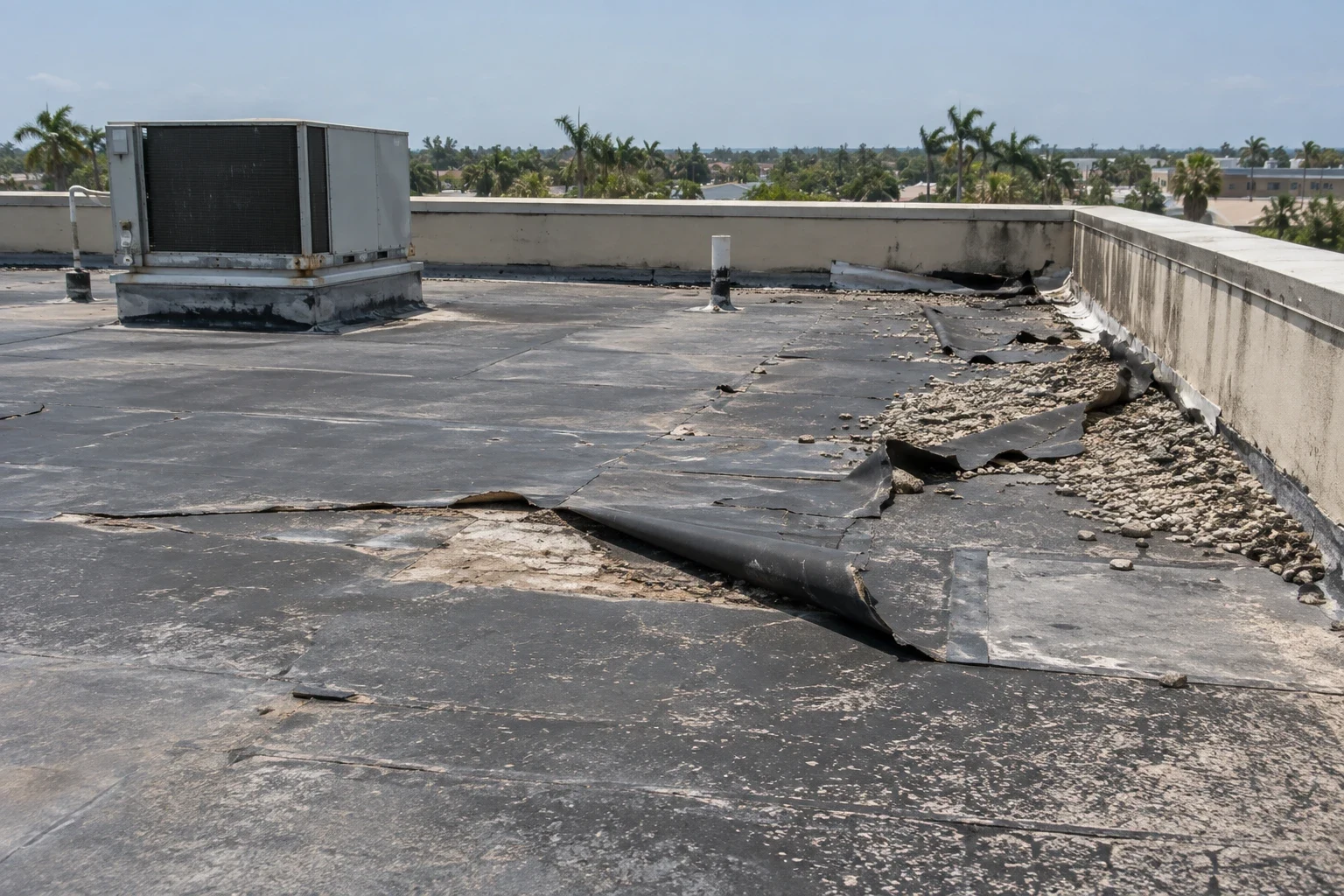
Heat is the second load on a ponded roof, since the Valley's heat-safety season runs May through October. Some single-ply sheets also soften or lose surface material where water sits, and algae growth holds moisture against the surface after the pool has shrunk.
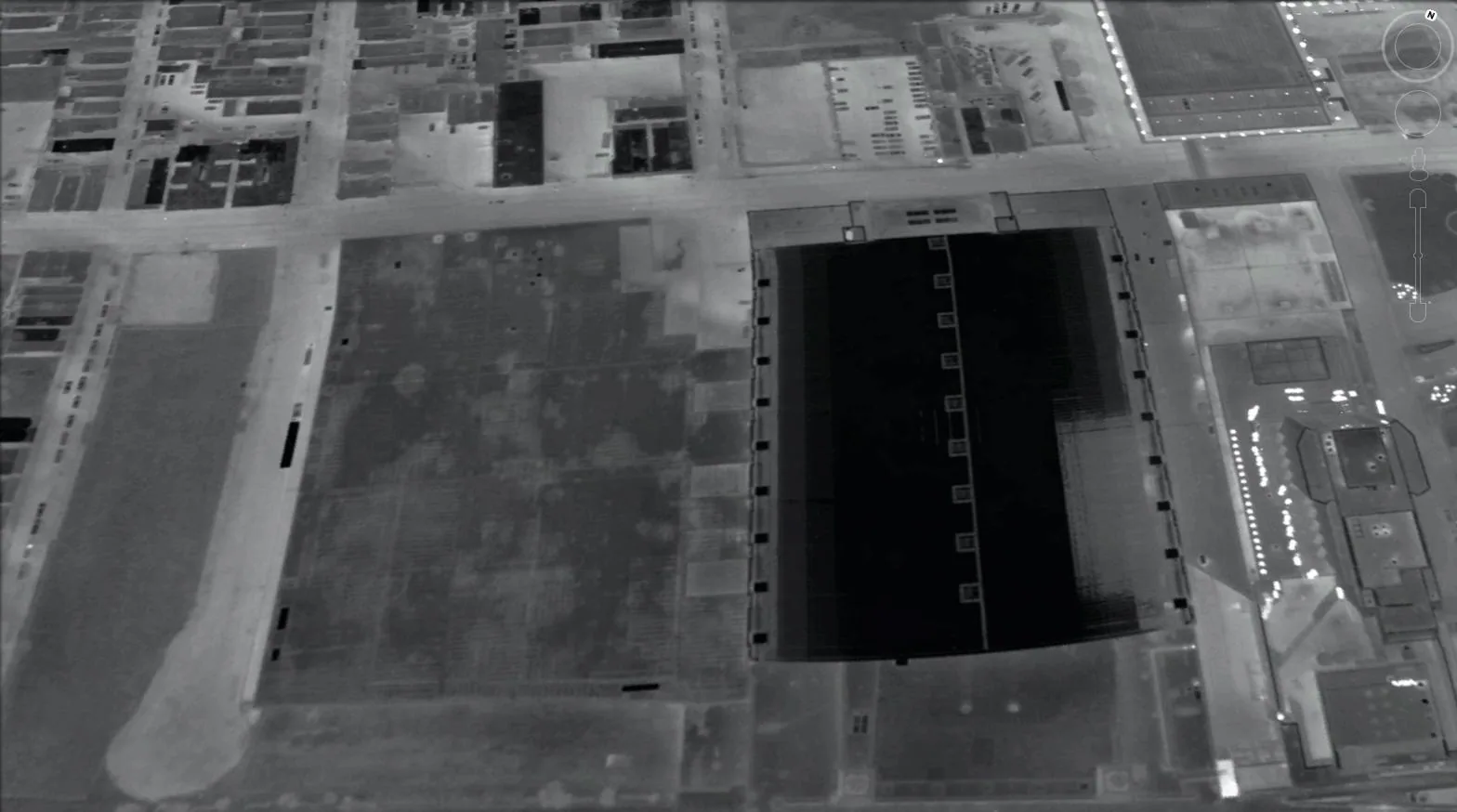
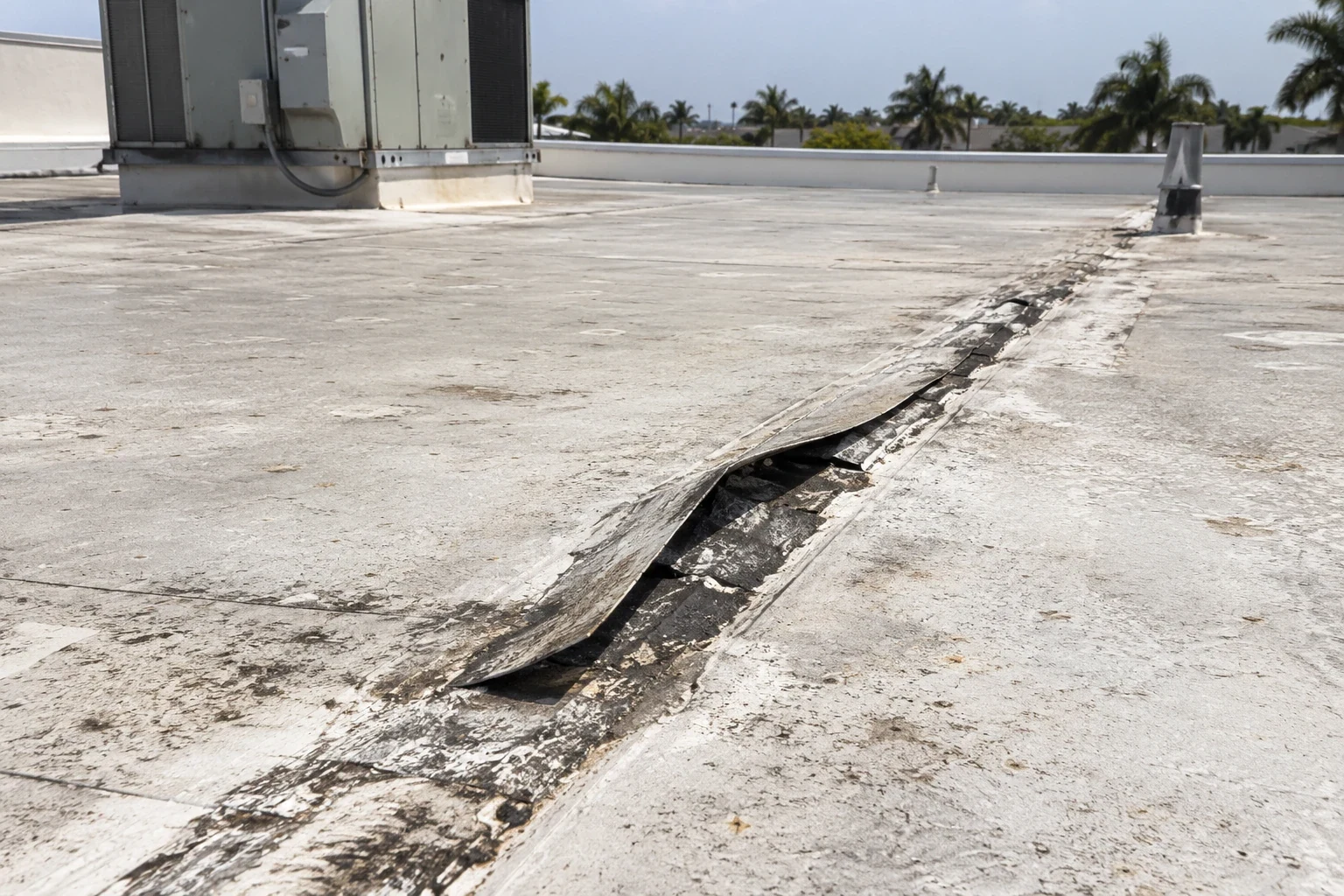
We probe seams inside every ponded area along their full length. Seams that sit under water are the first to show bond loss, and a split seam under a pool is a direct path into the insulation. Where we find soft spots, we use an infrared moisture survey to find out whether water has already traveled beyond the visible pool.
Drains, Scuppers and Debris
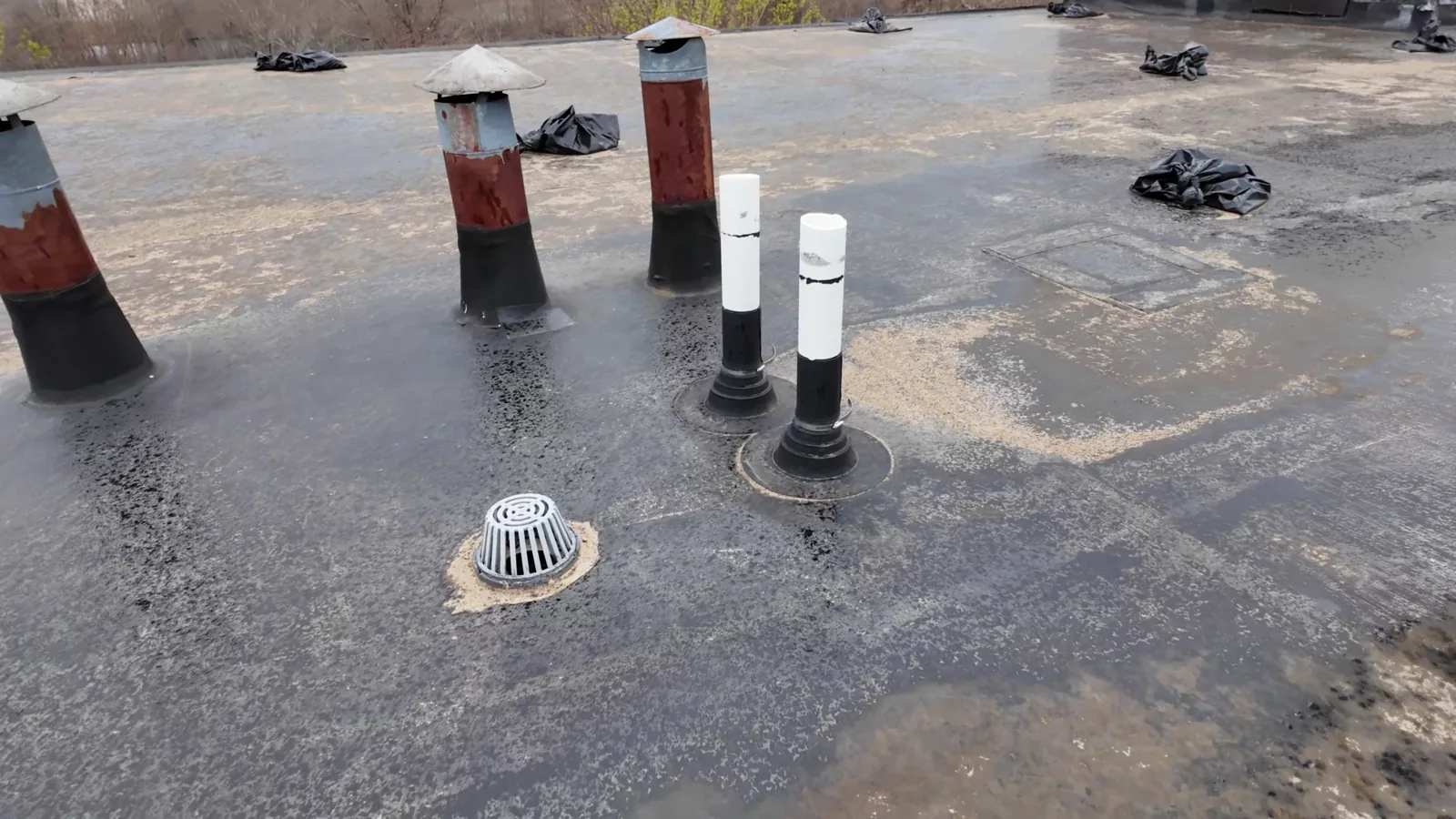
Drains and scuppers are logged in their own record. Each entry notes whether the basket is clear, whether the outlet is free, and whether the unit sits flush with the membrane. A drain that has been buried in debris after a storm can turn a normal rain into a pond within hours.
Cleaning is the first repair and often the least expensive. When the drain itself is the problem, the fix may involve resetting the sump, adding a secondary drain, or installing a scupper through the parapet at the low point. Work of that kind belongs with roof drain and scupper service, and it should be done before the membrane is patched, since a new patch under a new pool wears out early.
Repair Options and Their Limits
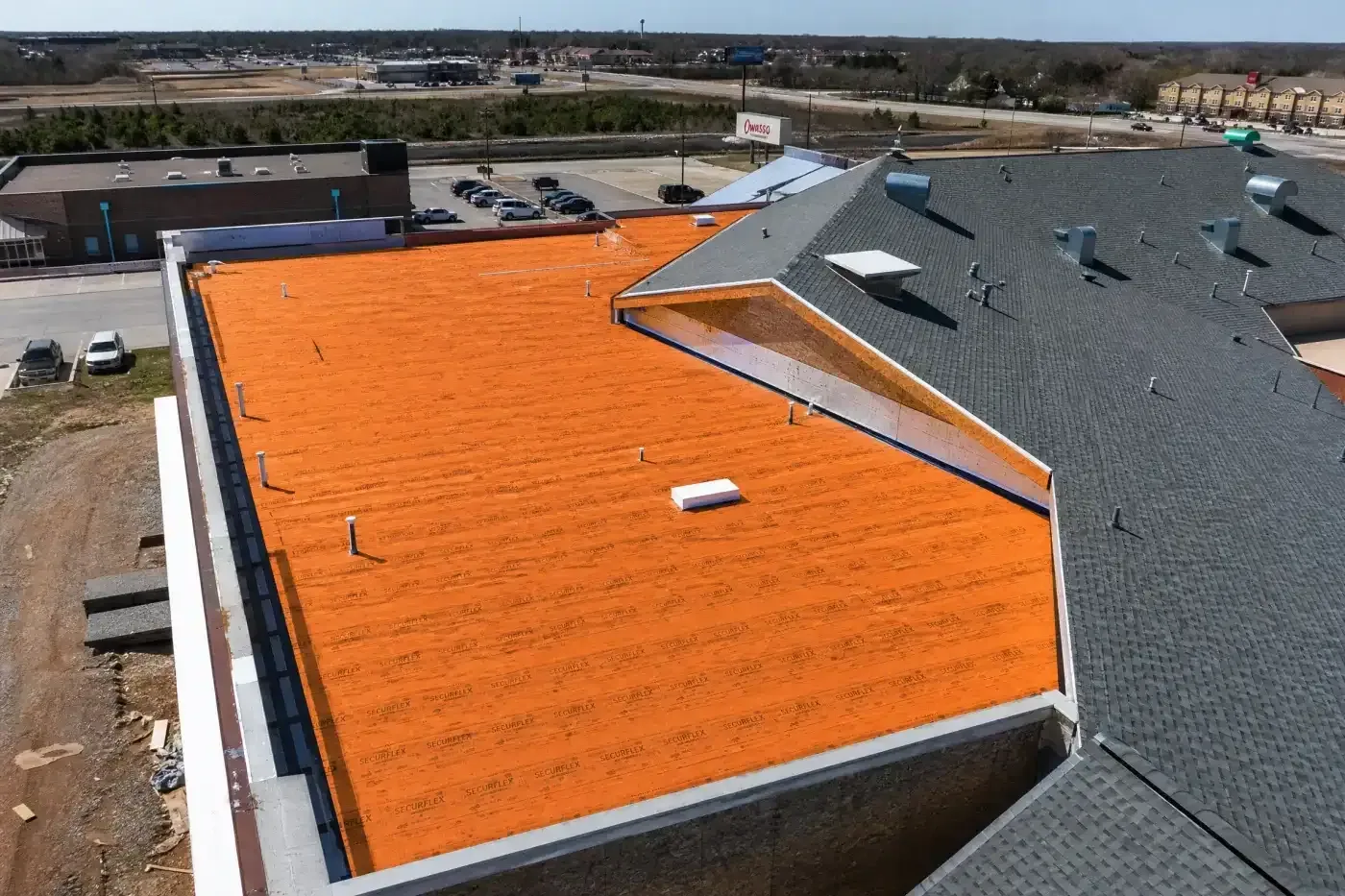
The least invasive repair adds tapered insulation or a cricket to move water toward a drain, with new membrane over it. Where the pool is shallow and the membrane sound, a liquid-applied coating with ponding-water resistance can protect the surface, though it does not remove the low spot. When the deck has deflected, correcting it requires structural review and usually larger scope.
A written recommendation sets out each option, the finding that supports it and the findings that are only monitored. If a roof has several ponded areas and widespread wet insulation, the cost of repeated patching can pass the cost of a recover or a replacement, and the report shows both numbers so the owner can compare them.
Post-Storm Comparison
After Hanna, drainage questions were not limited to the street. On Shary Road near Griffin Parkway, Mission measured about 12 inches of flash-flood water during Hanna, and neighborhood streets drew water rescues. A roof with a drain log from before a storm can show which scuppers were clear, which were partly blocked and which pools are new. Without the log, the answer has to be reconstructed from stains.
That is the practical argument for a baseline. The depth readings from a dry-season visit show how much of a pool is the roof's normal behavior, and the readings after a storm show what the event added. A pool that is two inches deeper than the record, or one that now touches a seam that was dry before, points to a specific repair. A pool that matches the record points to a drainage correction that has been waiting.
Keeping the Record Useful
After repair, the same pools are measured again and the readings are filed with the originals. Before the June-to-October tropical season, drains and scuppers are checked again so that the first heavy rain does not find them blocked. A short condition summary supports the next budget discussion and helps the next inspector see what changed on the roof. Related work on seam failure and hurricane damage uses the same sketch and photograph set, and a roof in La Joya or Sullivan City gets the same steps.
Questions and Answers
How long can water stand before it becomes a problem?
Water that dries within a day is normal on many flat roofs. Pools that remain for more than two days, leave dirt rings or grow algae are treated as findings and measured. The depth and location decide the repair.
Will a coating fix a ponded area?
A coating can protect the membrane under a pool if the membrane is sound and dry below, but it does not remove the low spot. The recommendation says whether drainage, tapered insulation or a coating fits the findings.
Can ponding cause a leak even if the membrane looks intact?
Yes. Water that stays on seams, flashings and sealants tests them every day. A seam under a pool can open without visible damage elsewhere, and probe tests along its length are the way to find it.
Do drains need cleaning even if the roof has no ponding now?
Yes, before the tropical season. A drain that is partly blocked may not pond on a normal day but will on a heavy one. Logging the drains gives a baseline to compare after the next named storm.
Should ponding be repaired before replacement is considered?
Only if the roof under it is sound. If the insulation is wet across wide areas, repairing the pond treats a symptom, and the report will show the cost of repair against replacement.
Request a Documented Ponding Inspection
Send us the building address and the area where water stands. The written condition summary will include depth readings, drain logs and moisture findings, and it can be reused for budgeting or an insurance conversation.