
Commercial Roofing Services
Roof Insulation and Cover Board in Mission, TX
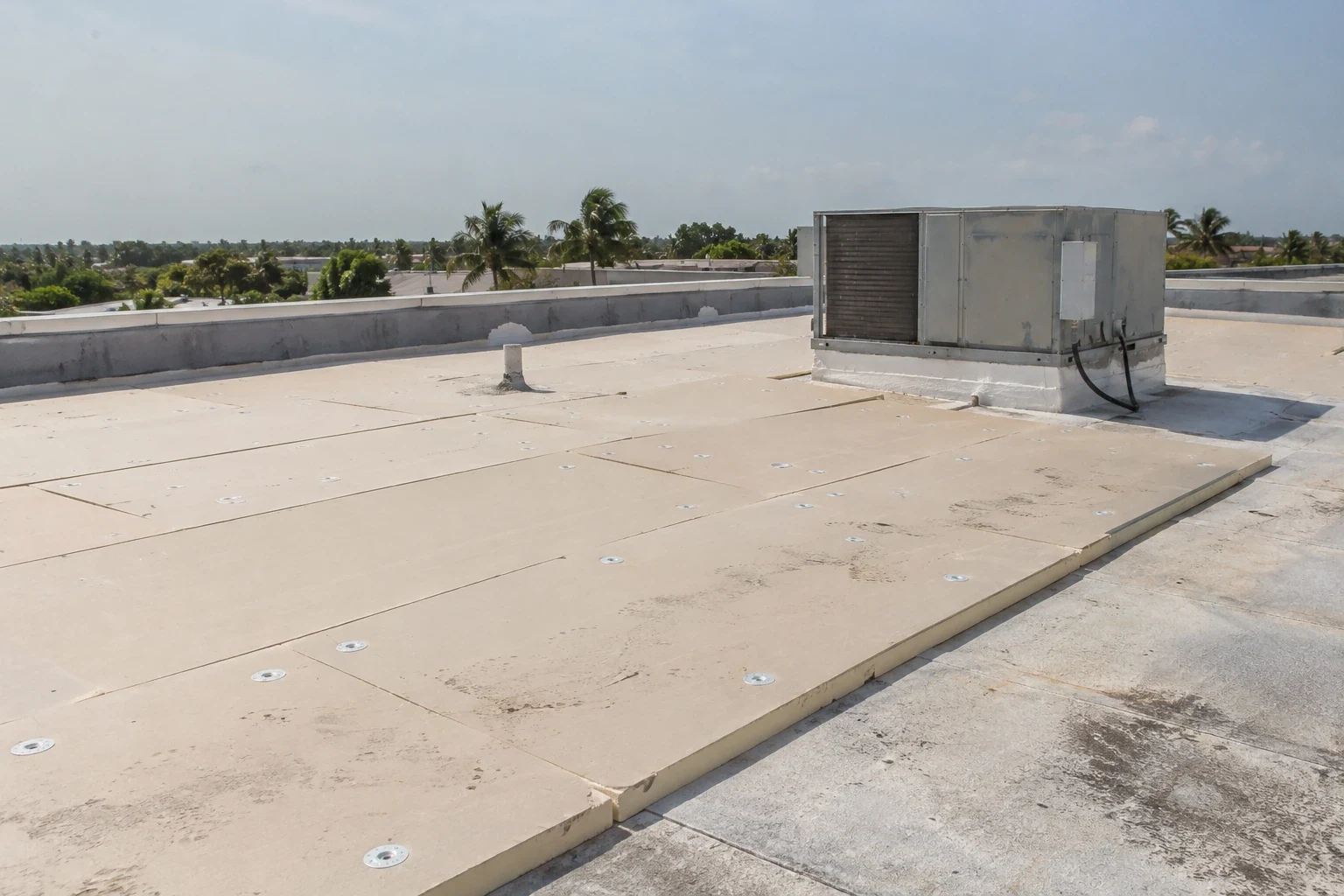
Insulation is the layer an inspector cannot see until a core is cut, so the first entry on a Mission, TX insulation record is a measured sample: type, thickness, number of layers, and whether it is dry. That sample decides a great deal. It tells us what thermal value the roof has now, whether the layers are bonded or loose, and whether the board under the membrane has absorbed water. Everything else in the insulation scope follows from it.
Core Samples and the Insulation Record
A core cut is a small round plug taken through the membrane and insulation down to the deck. We take cores at locations chosen from the moisture map, plus a few at dry areas for comparison. Each plug is photographed beside a ruler and logged with its location, so the roof's layering is documented rather than assumed.
Common findings are polyisocyanurate, extruded or expanded polystyrene, perlite, and wood fiberboard, sometimes in two or three layers installed in different decades. Wet or crumbling board is flagged for removal. Dry board with an intact face is checked for compressive strength, because a soft board under foot traffic or a hail strike will dent and bruise the membrane above it. Each core hole is repaired the same day with a patch matched to the membrane, and the repair location is added to the sketch so a later survey does not mistake it for a defect.
Thermal Value in a Long Heat Season
Insulation in the Valley works against heat gain for much of the year, since Brownsville forecasters put the heat-safety season at May through October. Rooftop air conditioning loads follow the roof surface temperature. A roof with compressed or partly wet insulation lets more of that heat into the building, and the equipment below runs harder.
Thermal performance is not only about thickness. Gaps between boards, a poorly sealed deck edge, and thermal bridging through fasteners all reduce the effective value. We note these conditions on the sketch. When a replacement is planned, we discuss the thickness and layering that fit the building's use. Over a refrigerated space, as in cold storage roofing, the insulation detail carries even more weight, because every lost degree is paid for around the clock.
Tapered Systems and Drainage Layouts
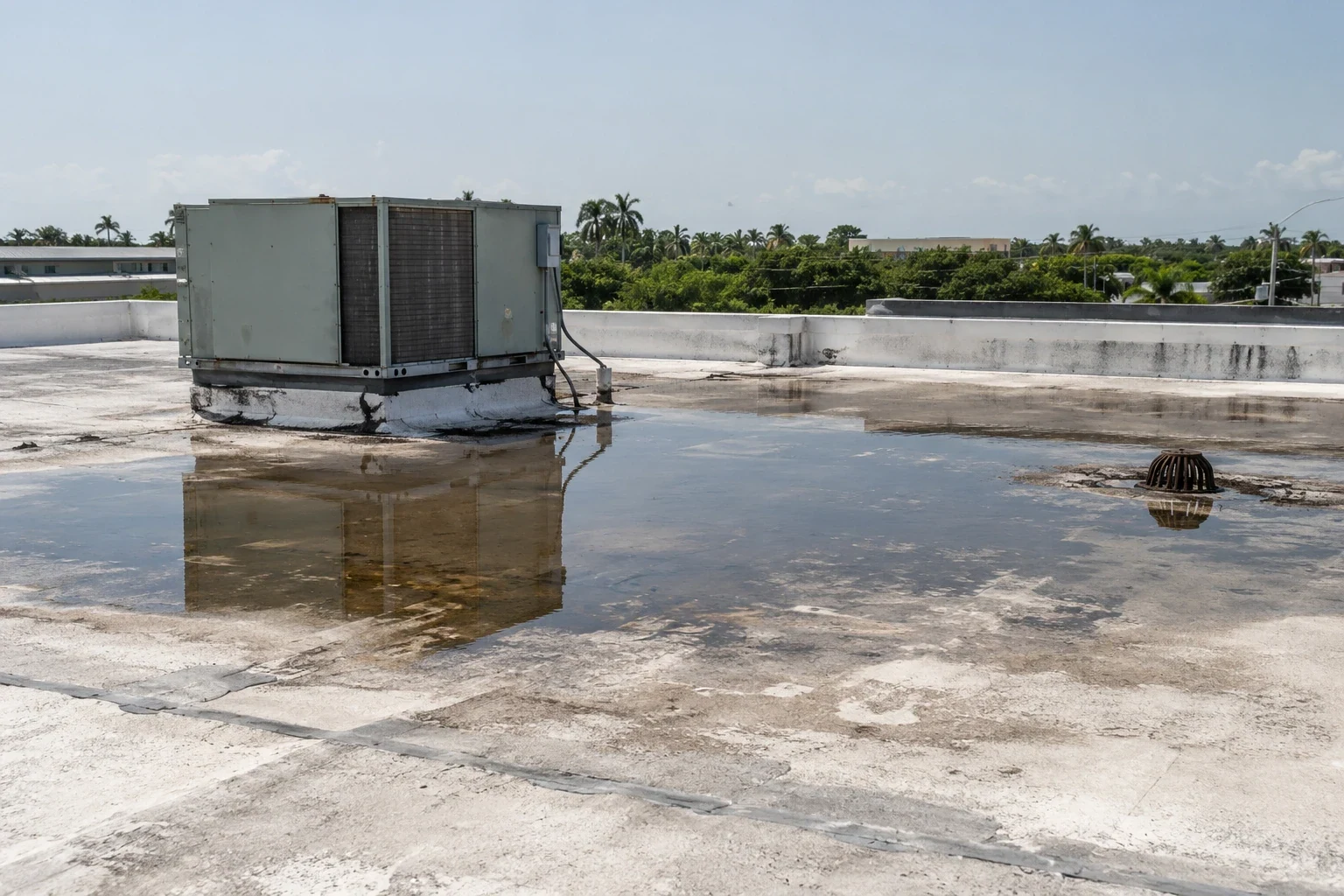
Tapered insulation builds slope into a flat roof by using boards of varying thickness, arranged to a drawing that sends water to the drains. When ponding is a repeated finding, a tapered layout often addresses it better than coating or patching. The drawing shows each board type, each thickness, and each cricket, so the installer can place them in the right order.
A tapered design also reflects the actual drain locations. In Hurricane Hanna's July 2020 rain a Mission-area gauge logged 14.40 inches, and the same lesson applies on a roof: water leaves only as fast as the slope allows. The layout is matched to the roof's existing outlets and to any added ones, so the drains and scuppers and the slope are designed together, and any low area that keeps ponding water gets its own crickets.
Cover Board Between Insulation and Membrane
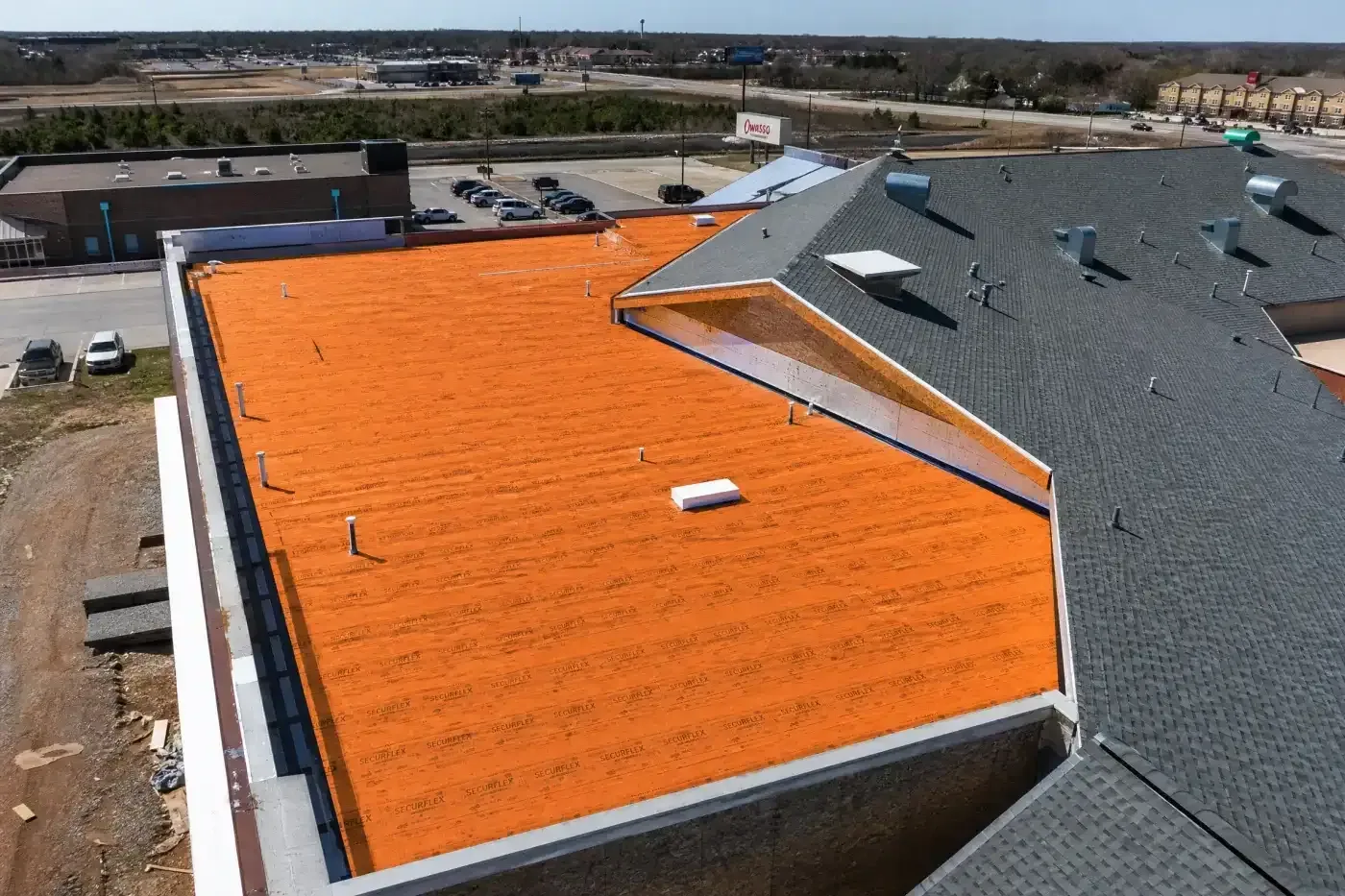
A cover board is a thin, dense panel laid over the insulation before the membrane goes on. Gypsum-based, fiber-cement, and high-density fiber boards are common choices. The board spreads foot-traffic loads, resists punctures, gives adhered membranes a stable surface to bond to, and improves fire and hail performance compared with bare foam insulation.
We recommend a cover board where the roof sees regular foot traffic from mechanical service, or where the membrane will be fully adhered. It also helps over old, uneven insulation during a roof recover, because a rigid board bridges small irregularities. The cost is modest next to a membrane replacement, and the choice goes into the scope with the reasons stated.
Attachment matters as much as material. Cover board is fastened or adhered according to the membrane system above it, with fastener patterns that respect wind uplift requirements at corners and perimeters. We record the pattern used, since a later inspection can then check it against the design instead of guessing.
Wet Insulation and What to Do About It
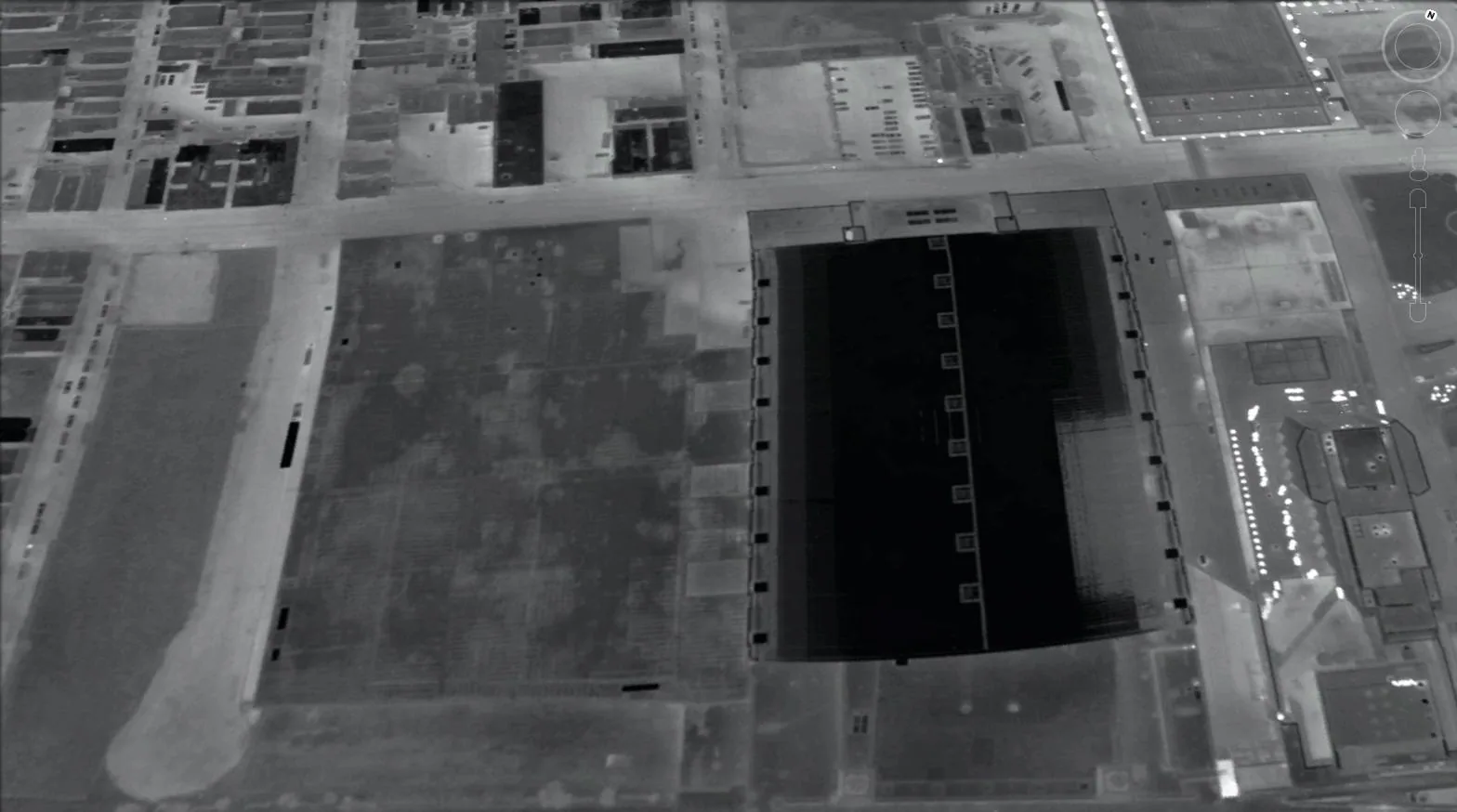
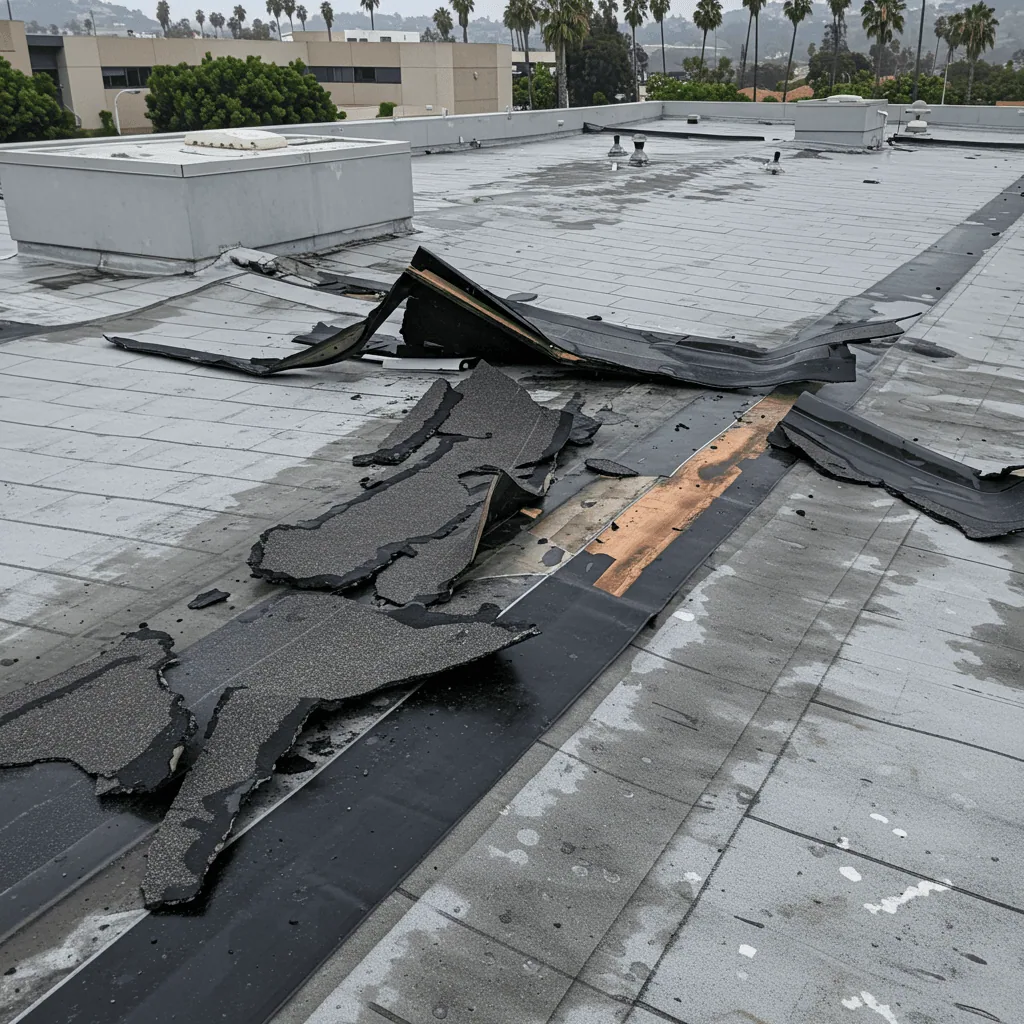
Water trapped in insulation does damage for years. It reduces thermal value, softens board, rusts fasteners and metal decks, and carries into the building when the roof heats and cools. Infrared surveys and core cuts show the extent, and the findings decide the next step. A moisture survey before any insulation scope is the best way to size the work correctly.
Small wet areas are removed and replaced with board matched to the surrounding thickness and attached to the deck. Where wet insulation has spread across much of the roof, the cost of patching soon outweighs the benefit, and a tear-off becomes the practical path. That decision is spelled out with the moisture readings in the owner's file, along with options such as roof replacement with new insulation.
Insulation Needs by Building Type
Different buildings call for different insulation choices. Warehouse and distribution buildings, the kind that support the Foreign-Trade Zone south of McAllen, have wide roof planes with few outlets, so tapered layouts and drain placement matter most. Offices and clinics prioritize thermal value and interior comfort. Retail roofs with heavy rooftop equipment benefit from cover board and walkway pads.
On warehouse roofs we price from the cost drivers: board type, thickness, attachment method, access, and the extent of tear-off. A written scope lays out every item so bids can be compared on equal terms. Work in Mission and nearby cities is scheduled with the weather in mind, since insulation needs to stay dry until the membrane covers it.
Questions and Answers
How can wet insulation be found without tearing off the roof?
Infrared scans taken at the right time of day show temperature patterns that suggest moisture, and capacitance or nuclear meters confirm it. Core cuts then verify the readings with a visible sample. Together these produce a moisture map that marks wet and dry areas, so the repair covers only what is actually affected.
Does adding insulation during a recover change the roof's wind resistance?
It can. Added layers change the attachment pattern and the fastener length required, and the edge and parapet heights may need to be raised. We review the attachment design and the edge details before adding thickness, since a thick recover over weak edges is exactly the arrangement that wind exploits.
Is tapered insulation worth it on a roof that only ponds in one corner?
For a single low corner, a local cricket or a small tapered area usually does the job without touching the rest. A full tapered system is reserved for roofs with widespread ponding or when the membrane is being replaced anyway. The sketch shows the extent and the cost, so the owner can pick the scale.
What is the difference between cover board and extra insulation?
Cover board is a protective layer, not a thermal one. It adds strength and a bonding surface for the membrane, with little added insulation value. Extra insulation raises the thermal resistance. Many roofs use both: insulation sized for energy performance and cover board added for durability.
Can old insulation be left in place when the membrane is replaced?
Only when it tests dry and sound across the roof. Cores and moisture readings confirm that. If the old board is wet in places, crushed, or poorly attached, it comes off with the membrane, since new roofing over weak insulation inherits its problems. Dry areas can stay, with replacement boards filling the gaps.
Request an Insulation Assessment
Send us the address and the roof type. We will take core samples, map moisture, and give you a written condition summary describing what is under the membrane and which insulation option fits the building.