
Commercial Roofing Services
Roof Drains, Scuppers, and Ponding Correction in Mission, TX
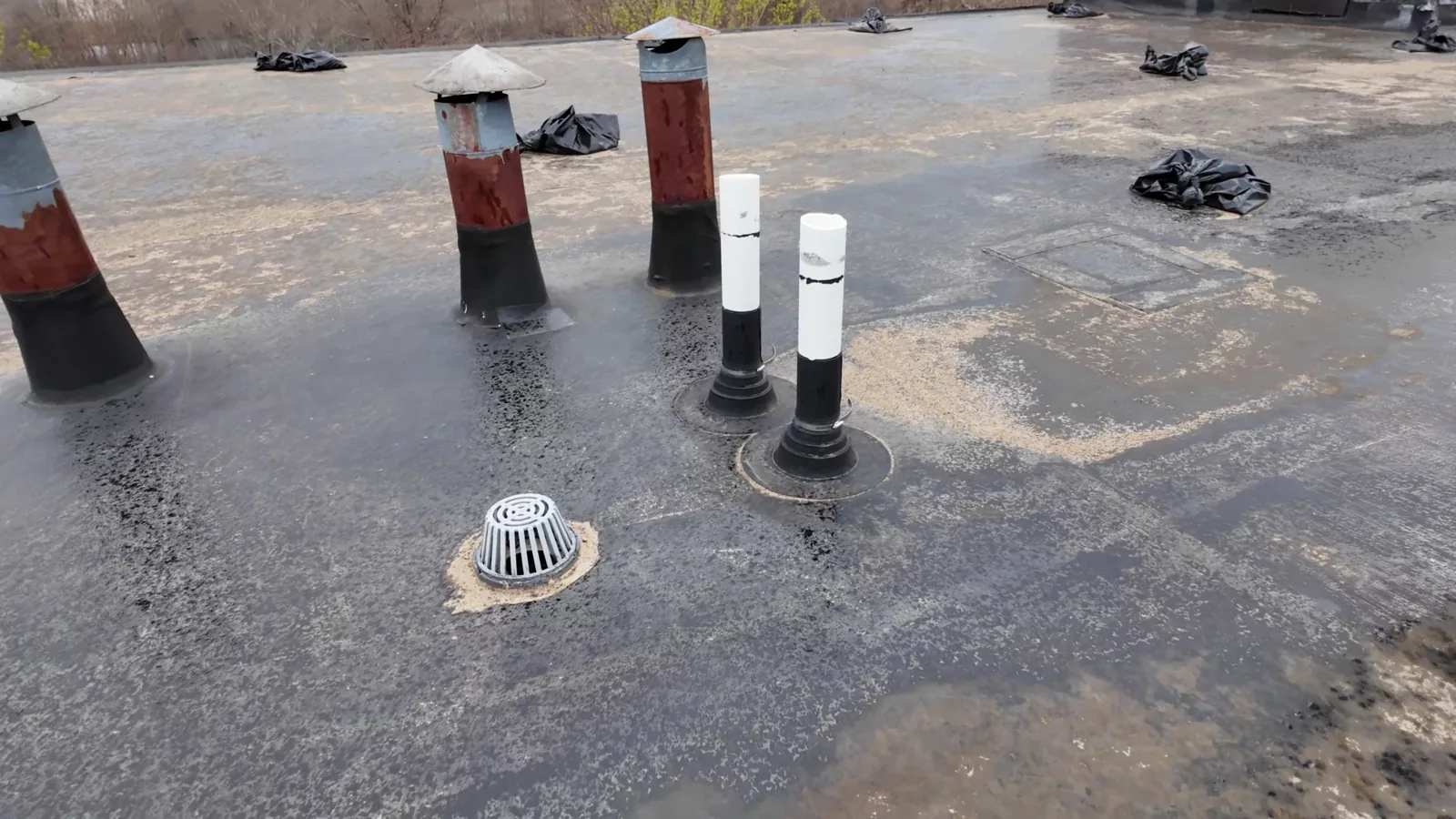
The drain and scupper log is the shortest document in a roof file and often the most revealing. It lists each outlet, its size, what was found in the bowl, and how deep the water stood nearby. On a Mission, TX roof, three lines in that log can explain a ceiling stain more clearly than a page of membrane notes. Water that cannot leave quickly finds seams, laps, and penetrations, and every one of those fails sooner when it sits underwater.
Taking Inventory of Every Outlet
The first correction is knowing what the roof has. We count and locate every primary drain, overflow drain, scupper, and downspout, then compare them against the roof's slope pattern. Some roofs have fewer outlets than the area needs. Others have the right number, but a rooftop unit or a later addition has changed where the water travels.
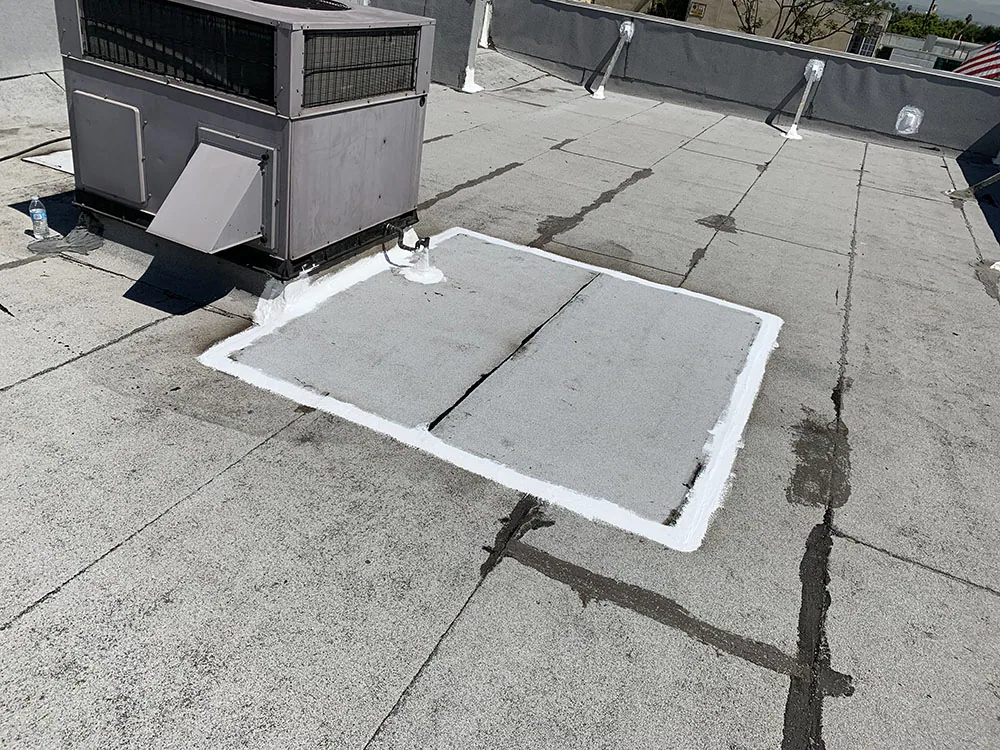
Each outlet is photographed, measured, and tagged on the rooftop sketch. We check the strainer, the clamping ring, the seal between membrane and drain body, and the piping below where it is accessible. A cracked drain bowl or a loose clamping ring can leak without any sign on the surface, so those details go into the log along with the debris notes. Missing strainers get replaced on the spot, since a drain without one pulls in gravel and loose insulation fragments that block the line.
Why Valley Rain Tests Every Outlet
Rain in the Rio Grande Valley can arrive faster than a drain can pass it. Hanna's July 2020 rain filled a Mission-area gauge to 14.40 inches, while flash flooding left roughly 12 inches of water on Shary Road near Griffin Parkway. Poor drainage in parts of Mission, La Joya, and Sullivan City left water 18 inches to as much as 4 feet deep.
The National Weather Service Brownsville office lists flood preparedness as a year-round concern, with hurricane season from June through October. A roof built to move normal rain can still be overwhelmed if outlets are half blocked. Overflow scuppers are the roof's second line, and they must sit at the right height with clear openings or they do nothing.
For that reason the pre-season visit includes a simple water test on suspect areas. A hose run at a drain shows how fast the bowl takes water and whether the line below backs up. A slow drain that looks clear from above usually has a restriction in the piping, which is a plumbing item and goes to the right trade with the photograph and the test time attached.
Ponding, Crickets, and Tapered Corrections
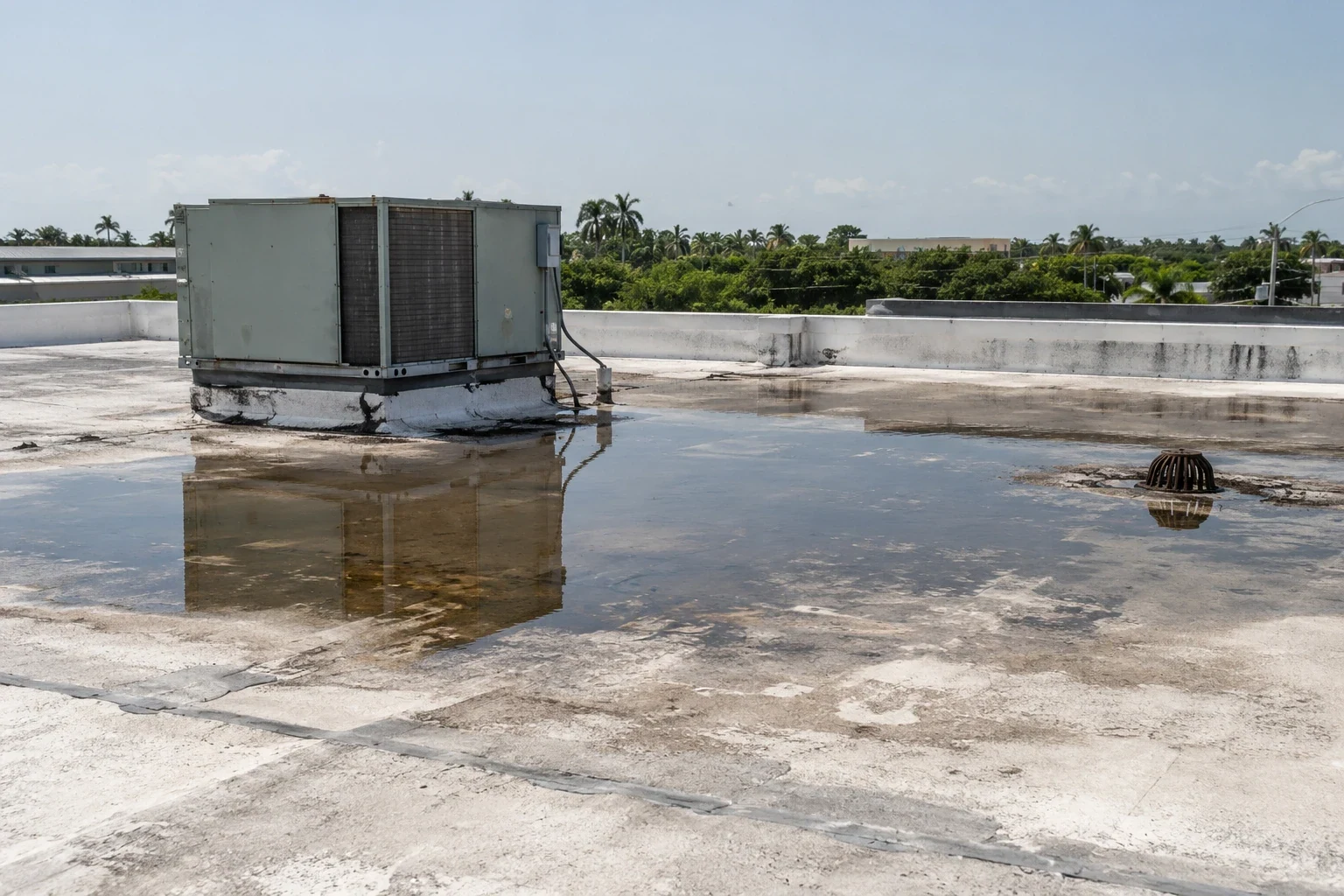
Ponding is water that remains on the roof long after rain stops. It stresses membranes, accelerates dirt buildup, and adds weight where the structure may already be deflecting. The cause is usually one of three things: a blocked outlet, a low spot where the deck has sagged, or a flat area that never had enough slope to begin with.
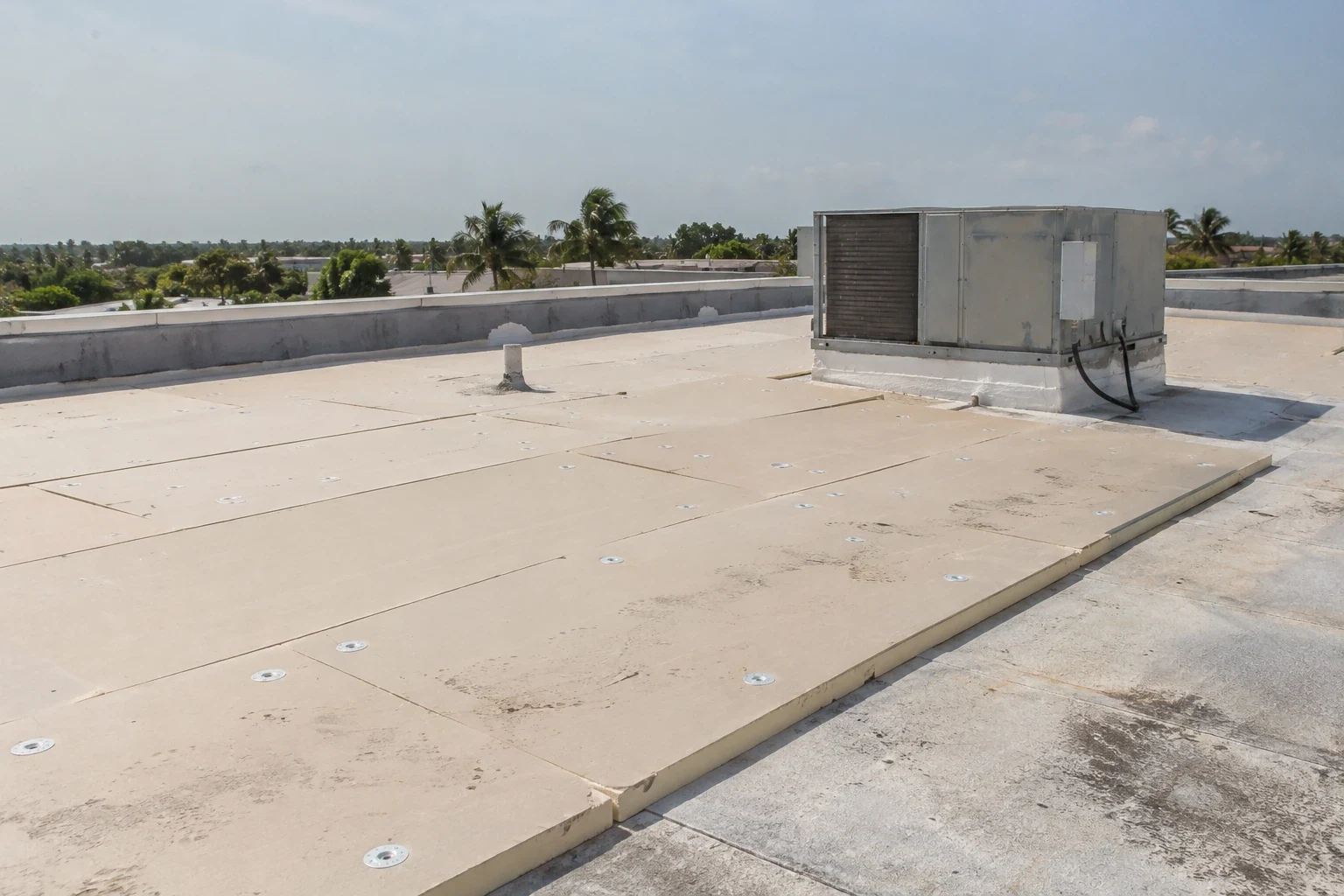
The correction depends on the cause. Blocked outlets are cleared and screened. Low spots can be filled with tapered insulation laid to a slope plan. Where water collects behind a curb or a wall, a cricket (a small sloped saddle) diverts it toward the drain. Each option is recorded with its location, and the owner sees which fix is quick and which one needs a larger scope. Spots that keep ponding after the outlets are clear move into ponding water repair, where the membrane damage gets its own scope.
Scupper Details and Downspout Connections
Scuppers pass water through a parapet or edge wall. Their weak points are the flashing around the opening and the sealant at the metal liner. A scupper set too high allows ponding, and one set too low can leave the membrane under the opening wet. We check the sill height, the liner seams, and the cant strip behind the opening, and note whether a downspout or collector head catches the discharge.
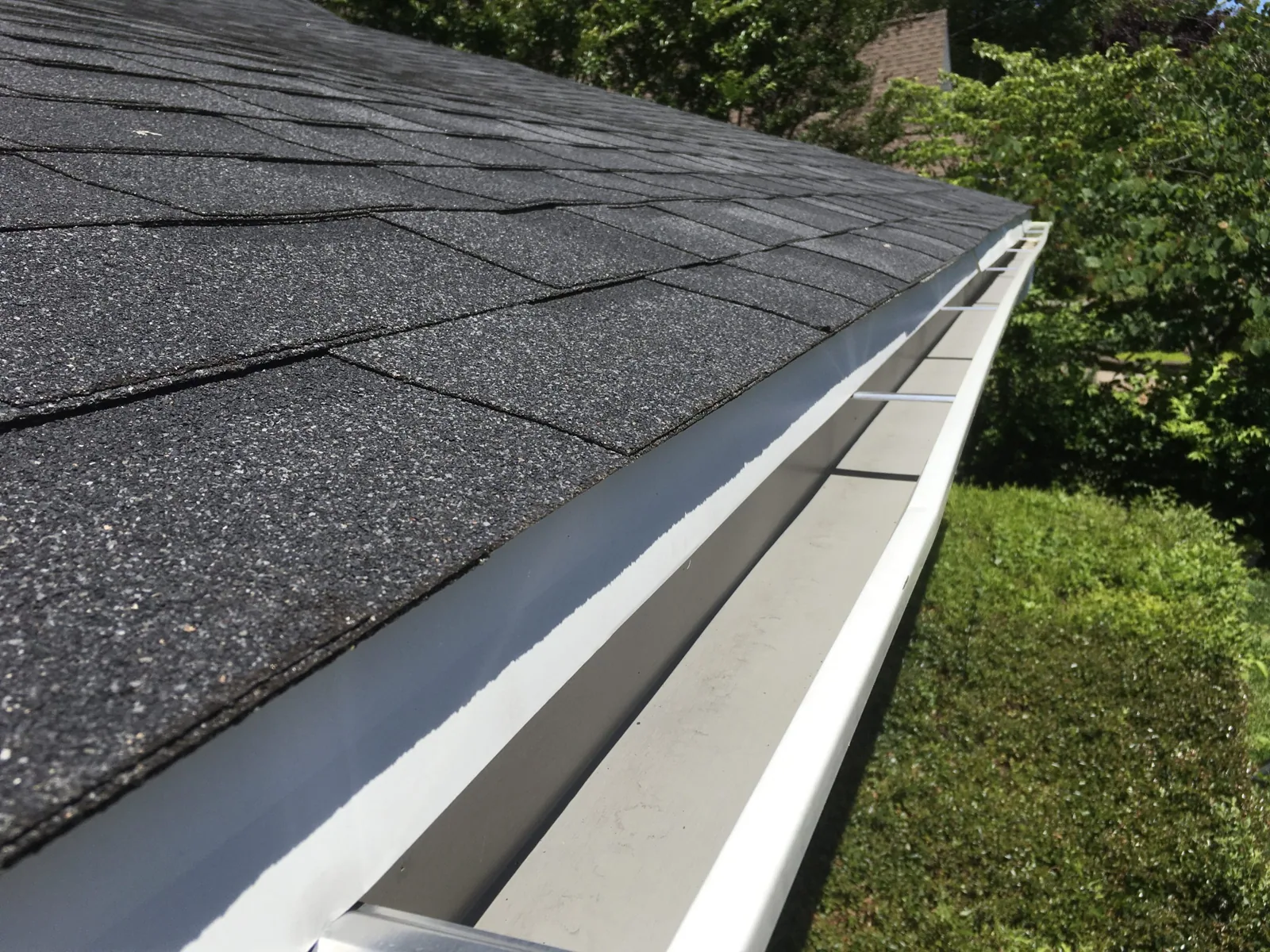
Where scuppers connect to gutters or leaders, we look for loose joints, rusted straps, and clogged elbows. Water that exits the scupper and then spills against a wall can soak masonry and stain the finish. Edge components like those in coping and gutters often share these details, so the two repairs are frequently planned together.
When to Add or Resize Outlets
Sometimes the cleaning and sealing are not enough. A roof with large unit areas or a long run to the nearest drain may need an additional outlet or a larger scupper to keep water depth within reason. Adding a drain involves cutting the deck, running piping, and coordinating with the plumbing trade, so we raise the possibility early and put it into the budget conversation.
Warehouse and distribution buildings, where large roof planes can funnel water to a few low points, can be such cases. An added outlet at the right low point can do more than repeated patching around the same stain. We provide the drainage observations; the engineering of any new outlet is coordinated with the building's design professional.
Keeping Outlets Clear Between Storms
Most drain trouble is debris: leaves, windblown trash, gravel from ballasted areas, and sediment. Tree lines near the roof and construction nearby increase the load. A maintenance program that clears outlets before hurricane season and again afterward keeps most drains working, and the log shows whether the interval is right.
The same log supports owners comparing buildings across a portfolio, since it shows which roofs repeatedly hold water. It also feeds the roof condition reports that owners in Mission and the surrounding cities use for budgeting. When a rain event comes, the log answers a simple question: were the outlets clear and working before the water arrived?
Questions and Answers
How long can water stand on a flat roof before it becomes a problem?
Water remaining for more than a day or so after rain points to a drainage deficiency. Short-lived puddles are normal on many membranes. Water that persists feeds algae, deposits dirt, and works at seams. We measure the depth and the drying time, record both, and propose a correction only when the pattern repeats.
Is a clogged drain a repair or a maintenance item?
Clearing it is maintenance, and costs very little. If the clog caused damage, such as a lifted seam or a wet area of insulation, then repair is added to the bill. We separate those items in the written scope so the owner can see the expense of neglect against the cost of a scheduled visit.
Can scuppers be cut in later if the roof lacks overflow?
Often they can, through a parapet or edge wall, with proper flashing and a liner. Placement matters: the sill must sit at a height that limits depth but still protects the roof edge. Local code and the building design professional may set requirements, so we coordinate the opening size and location before cutting anything.
What does a tapered insulation correction involve?
Tapered boards are laid over the existing roof or during a replacement to build slope toward the drain. They are cut to a layout drawing that shows where each thickness goes. On an existing roof it is normally combined with a recover or replacement, since a localized slope patch can create new edges for water to follow.
Do coatings help if my roof ponds?
Some do. Silicone coatings tolerate standing water better than most alternatives, which makes them a reasonable stopgap on a roof that ponds in a few places. They do not repair the drainage problem itself, and they do not replace a clear outlet. We usually recommend correcting the water path first, then deciding on a coating.
Request a Drainage Review
Send us the address and the area where water stands. We will log every drain and scupper, measure standing water, and give you a written condition summary showing what to clear, what to correct, and what to budget.