
Roofing Manufacturers
Duro-Last Roofing Systems in Mission, TX
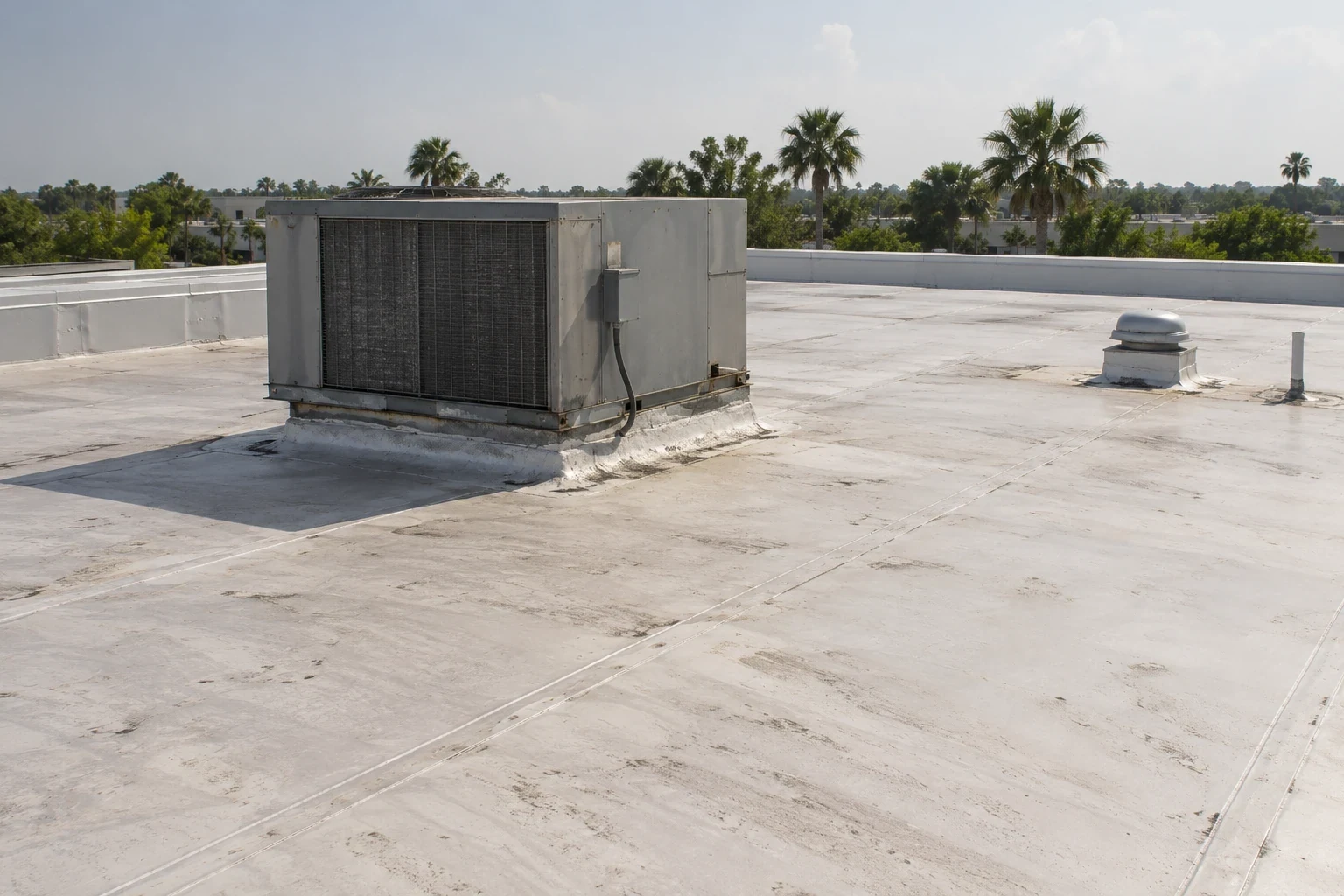
A measured sketch is the first document on a Duro-Last roof in Mission, TX. Duro-Last makes PVC membranes that are fabricated to the dimensions of the roof before they reach the site, so the quality of the measurements decides how well the panels fit. When we inspect an existing prefabricated roof, we compare the sketch with the building, mark the panel seams and note each flashing detail. The panels are only as good as the roof they were measured from, and any mismatch shows up at the edges.
An existing sketch may be old. Walls get added, curbs move and units are replaced, so we measure again at the inspection and mark differences. If the roof has changed since the panels were made, the owner learns where the sheet is stretched or short, and the repair line shows how it will be corrected.
With the sketch drawn, the inspection moves to the seams, the penetrations and the drains, each logged with a dated photograph.
Prefabricated Panels and Field Seams
Because the membrane is fabricated in panels and shipped to the roof, many of the seams are made in a factory, and fewer are made on site. Field seams remain at panel joints and flashing details, and those are the places where an inspector probes. A hot-air weld is the standard method, and a probe along the weld shows whether it has fused. We record the length of each field seam, test it and note any stretch that needs rework. Welds near panel corners, where three layers meet, receive extra attention because the heat has more material to move through there.
Prefabricated boots and corners fit pipes and curbs, but they must be measured correctly. If a boot sits loose, or a corner is stretched, the sketch marks it and the repair line names the fix.
Heat Load and PVC Behavior
During May through October, the Valley's heat-safety season, a PVC sheet takes that heat on its surface every day. White and light-colored sheets reflect much of it, which can lower rooftop temperature. Plasticizers in the sheet slowly migrate over the years, and the membrane can stiffen. We check for stiffening at flashing, where the sheet bends, and log any cracking, because a sheet that cracks at a fold will leak there first. A small crack is repaired with a welded patch, and the patch is probed at its edges. Widespread stiffening is noted as an aging finding for the owner's budget.
Surface condition is logged too. Dirt and algae in low spots reduce reflectivity, and a gentle cleaning can restore some of it. We note which areas have collected dirt, recommend cleaning where it helps and mark the areas where staining points to ponding rather than ordinary dust. The cleaning method is chosen to suit the sheet and the age of the surface, and we avoid anything that would leave residue in a seam.
Rain and Wind in the Valley Record
Hanna in July 2020 dropped 14.40 inches at a Mission gauge, with winds near 60 to 65 mph along I-2. Hanna damaged hundreds of poorly built Valley structures, mostly at the roofs. The edge details matter most, since a panel that lifts at the perimeter lets wind under the whole sheet. We photograph each perimeter length, record the fastener spacing and note the metal edge and its sealant.
Drains get the same attention. A drain log lists each outlet and its condition before and after heavy rain.
Repair, Recover or Replacement
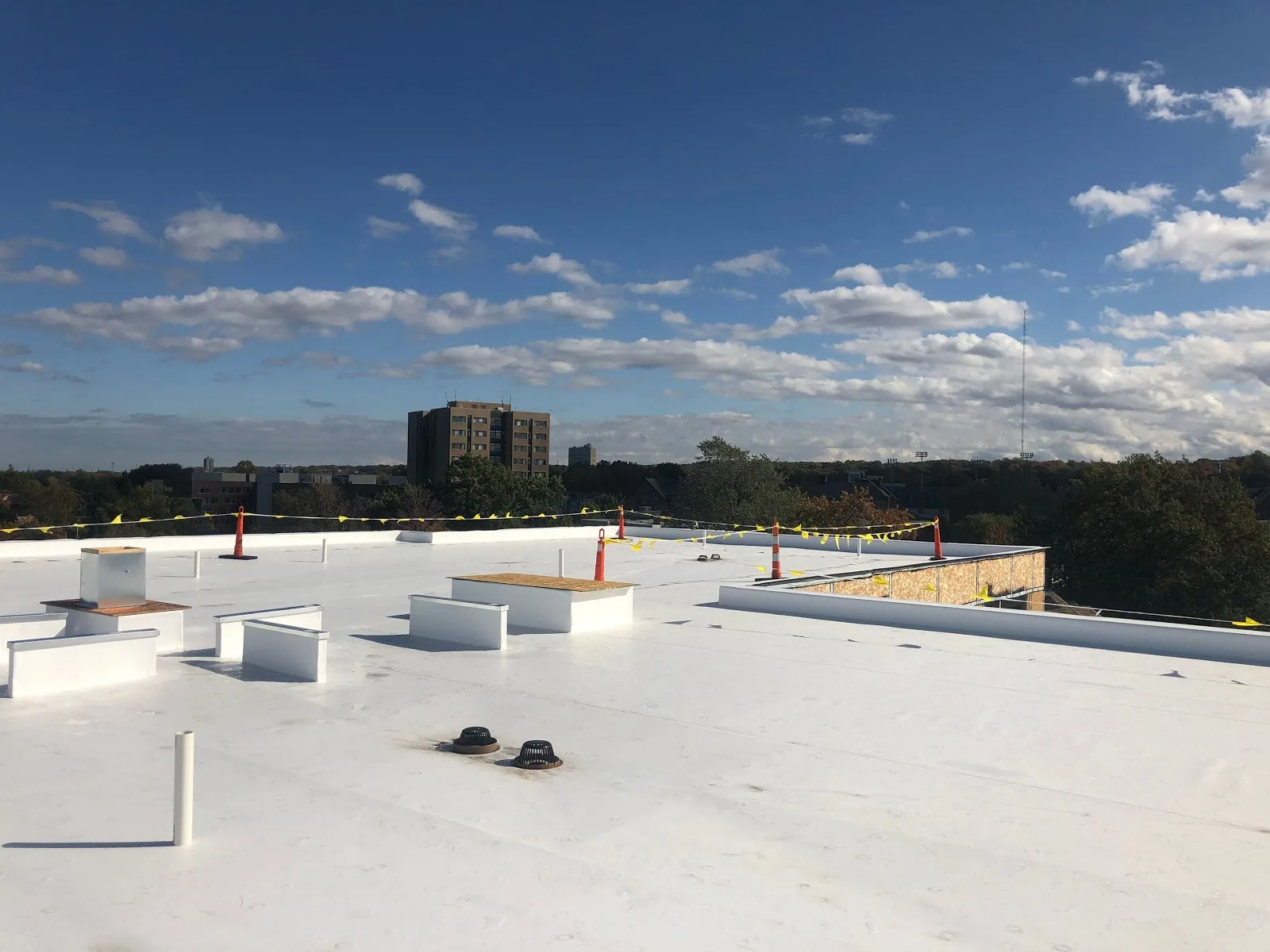
A repair addresses a seam, boot or corner. A recover adds a sheet over a dry roof, though a prefabricated recover still needs a fresh measurement of every wall and curb. Replacement removes the system. Cost rises with area, penetrations, insulation replaced and a longer dry-in window. The schedule states when the measurement is taken, when the panels are expected and when the tear-off begins.
A replacement that waits for panels leaves the old roof exposed, so we plan temporary repairs for the interval and record them. Tarps, sealed seams and protected drains keep the building dry until the new panels arrive, and the temporary work is removed or integrated when the new sheet goes down. The owner receives photographs of each temporary repair so there is no question about what was done, along with the date it went in and the date it came out.
Curbs, Pipes and Rooftop Units
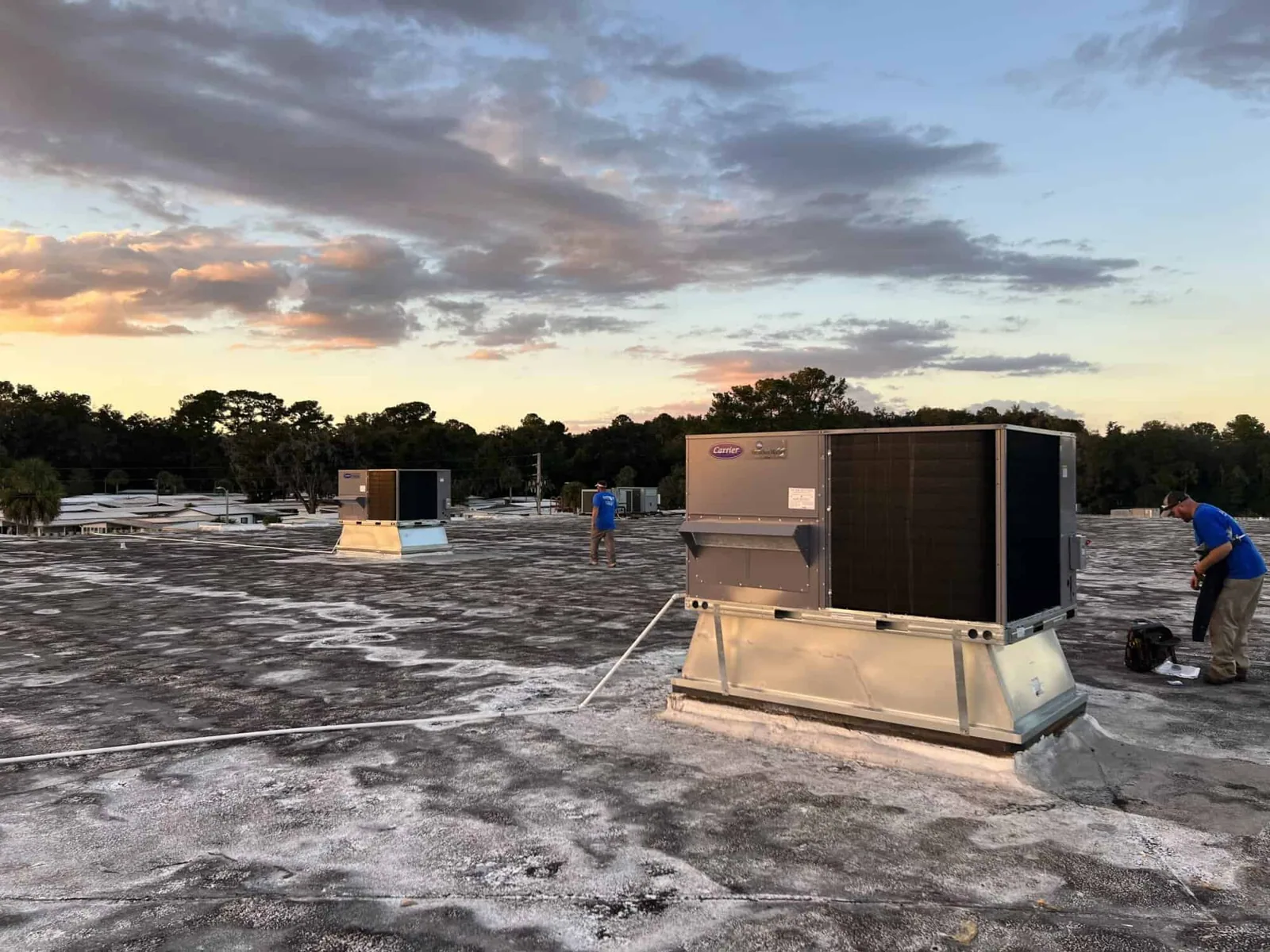
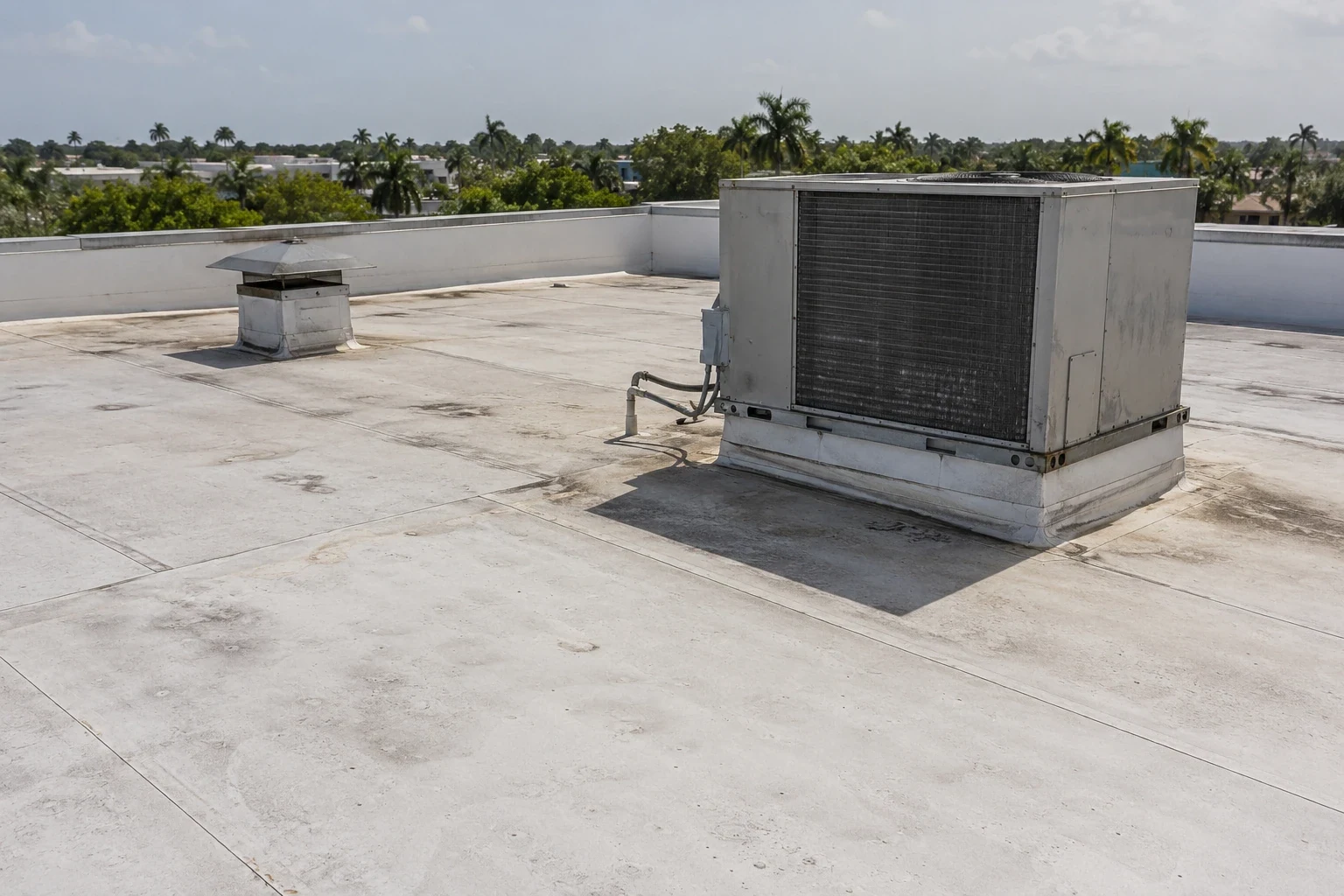
Every curb, pipe and unit on the roof needs a measured boot or flashing, and the measurements for a replacement are taken on the roof, not from a drawing. Units that are moved or added after installation leave unflashed screws and sealant lines, and each exposed screw becomes a possible leak path until it is sealed or removed. We photograph each one, number it and note its condition. A curb and equipment support scope can accompany the repair when a unit must be reset.
Buildings Across the Corridor
A prefabricated PVC sheet suits a roof with many curbs and pipes, and the building use sets the phasing plan. A restaurant needs grease handling at the exhaust curb, with a cleaning date in the maintenance calendar. A warehouse needs dock traffic protected. An office needs tenant comfort kept in view. Owners along the corridor from McAllen to Pharr and Mission get the same sketch-first record.
Scheduling a prefabricated replacement takes more steps than a field-built one. First comes the survey and the measured sketch. Next comes ordering, with a lead time that depends on fabrication. Then come the tear-off sections, each dried in with the new panels the same day. At each handoff, someone is named: the owner's representative, the crew lead and the person who signs the daily closeout. If rain moves a day, the schedule is reissued with new dates and the affected sections are protected in the interim, so tenants and managers always hold the current plan.
The Owner's File
The final set holds the measured sketch, the seam probe log, the penetration log, the drain log and the next visit dates. An owner who also holds Sika Sarnafil or Versico roofs finds the entries in the same order, so a mixed portfolio can be ranked on one page.
Questions and Answers
Why does a measured sketch matter?
Prefabricated panels are cut from measurements. A sketch that does not match the building leaves gaps or tension at the edges, and every repair starts from that sketch, so we check the drawing against the roof before anything else is priced.
Can prefabricated panels be repaired on site?
Yes. Small defects are cleaned and welded with hot air after a trial weld on scrap. Bigger defects can need a replacement panel or a field-welded patch, probed and photographed before the crew leaves the roof.
Why do bend points crack on an aging PVC sheet?
Over time the softening agents in a PVC sheet can move out of the membrane, leaving it stiffer. We check bend points for cracking and record the condition, and an owner with a stiff, cracking sheet can use the record to plan a replacement year.
How long does a replacement take once panels are ordered?
Lead time depends on fabrication and shipping. The schedule shows the measurement date, the expected delivery and the start of tear-off, and temporary repairs protect the old roof until the new panels arrive.
Can a loose boot be fixed without replacing the panel?
Often yes. A new boot can be welded in place if the surrounding sheet is sound and the pipe or curb has not moved. If the sheet is stretched or the pipe has shifted, a larger repair may be needed, and the scope line says.

Request a Documented Inspection
Ask for a visit to your Mission, TX roof and receive a written condition summary with tagged photographs, a measured sketch and a moisture map. The summary can be reused for budgeting or an insurance conversation. Start from the contact form.