
Roofing Manufacturers
Versico Roofing Systems in Mission, TX
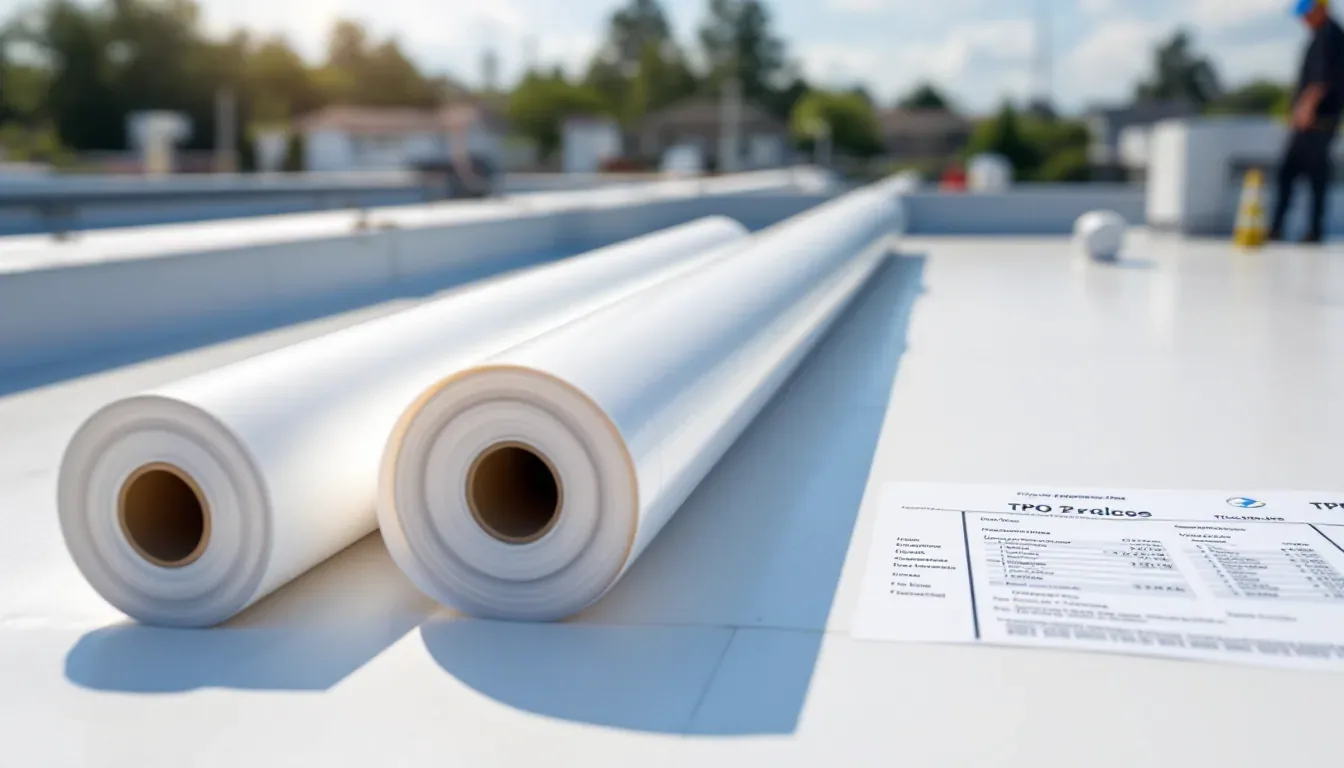
Before the tropical season begins, the number that matters most on a Versico roof in Mission, TX is the fastener pull result. Versico manufactures single-ply membranes, including thermoplastic and rubber sheets, along with insulation and accessories, and the way those sheets are attached to the deck determines how they behave in wind. We pull a set of samples across the field, the perimeter and the corners, record the result by location and mark the weak areas on the rooftop sketch.
That sketch, with its dated photographs, is the baseline. When the next named storm passes, the second set of photographs sits beside the first and the owner sees exactly what moved.
Single-Ply Sheets and How They Attach
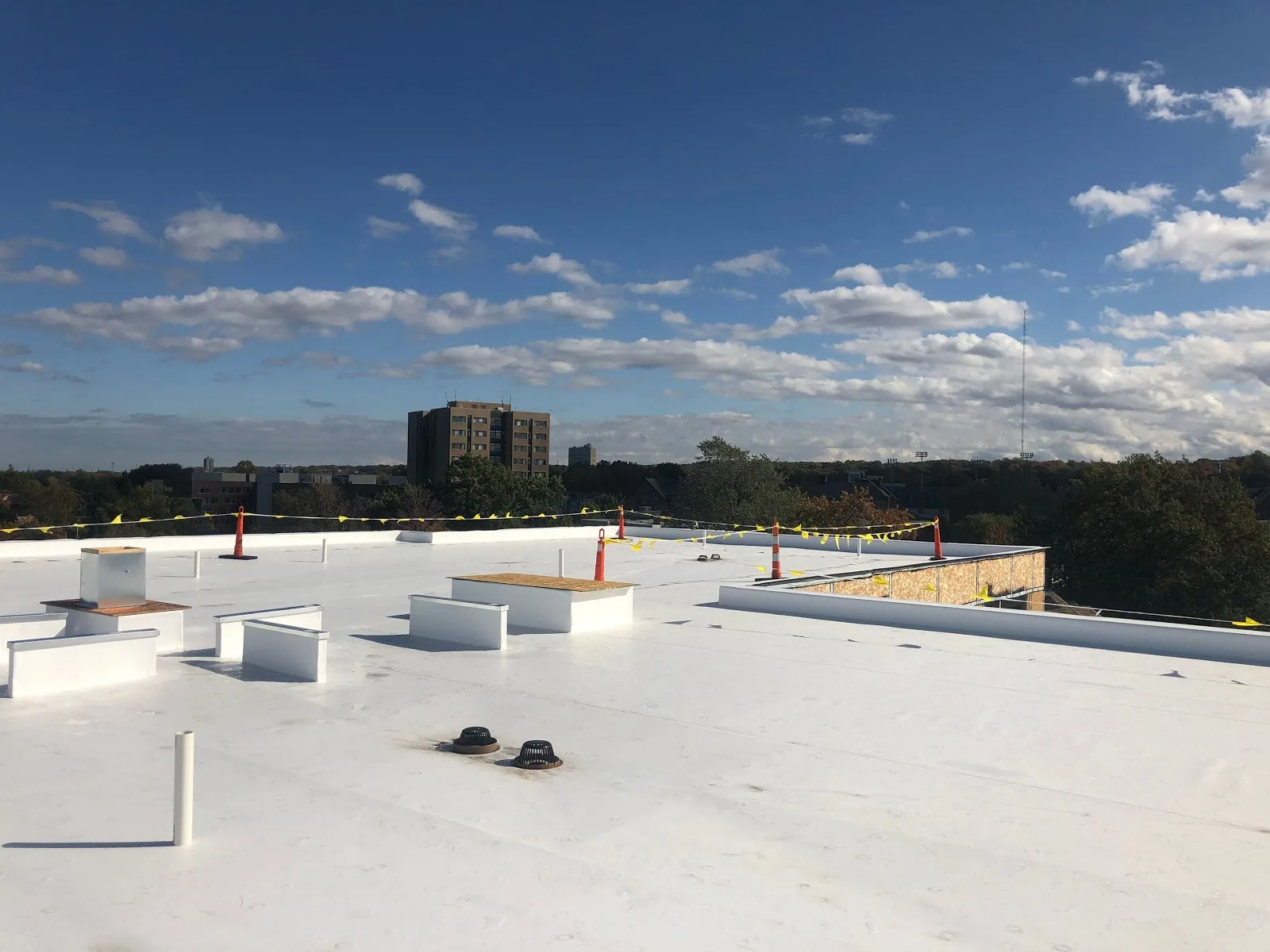
Single-ply sheets are attached by mechanical fasteners, by adhesive or by ballast. A mechanically attached sheet is held by plates and screws at the seams, and the density of the fasteners rises at the corners and edges where uplift is highest. An adhered sheet is bonded to the substrate across the field. A ballasted sheet relies on stone or pavers to hold it down. Each method has its own failure signs, and the inspector reads them differently.
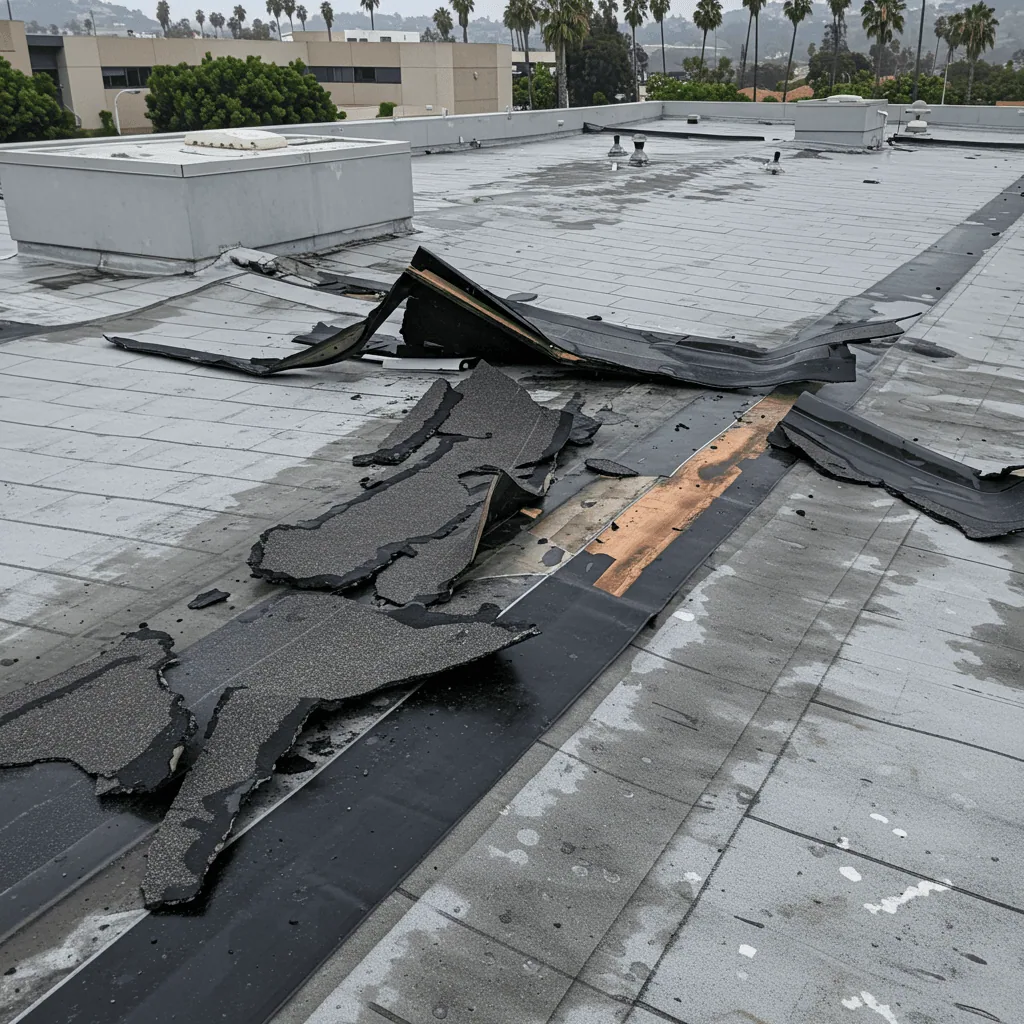
On mechanically attached roofs we look for billowing, fluttering and fastener back-out. On adhered roofs we look for bubbles and loose edges. On ballasted roofs we look for scoured or displaced stone around drains and edges. Every sign gets a photograph, a date and a place on the sketch.
Hanna and the Wind Record
July 2020 brought Hanna to the Valley, with winds estimated at 60 to 65 mph near I-2, and the roofs absorbed most of the harm to hundreds of poorly built structures. For a commercial owner, the useful question after a storm is not whether wind blew, but whether the roof moved. The pull samples and edge photographs from before the event answer that question, and the owner can show them to an insurer along with the post-storm set.
If the baseline shows a loose edge at the northwest corner and the post-storm photograph shows the same edge with a gap, the repair is documented as storm related. If the gap was there before, the record says so, and the owner can plan the repair as maintenance.
Heat Cycling and Seam Behavior
The Valley's heat-safety season, set by the Brownsville weather office, covers May through October. Through those months, a roof surface may reach temperatures far above the air, and thermal movement works on every seam. On thermoplastic sheets, welds at laps are probed. On rubber sheets, splices are checked for lifted edges and tape wear. In either case, we mark open stretches on the sketch and note how long they are.
Short open stretches may be repaired in a visit. Longer ones are measured, photographed and priced as a line repair, with a trial weld or splice on a clean test area before the work begins. Seam stretches that reopen after a repair are logged a second time, and a repeat finding moves the recommendation toward a larger section.
Edges and corners get a separate pass. A corner flashing carries more movement than a straight lap, and a corner that has opened is a leak path even when the rest of the seam is tight. The corner photographs are taken from two angles, so the gap is visible in both, and the angle of each photograph is written on the sketch for the next visit.
Insulation Under the Sheet
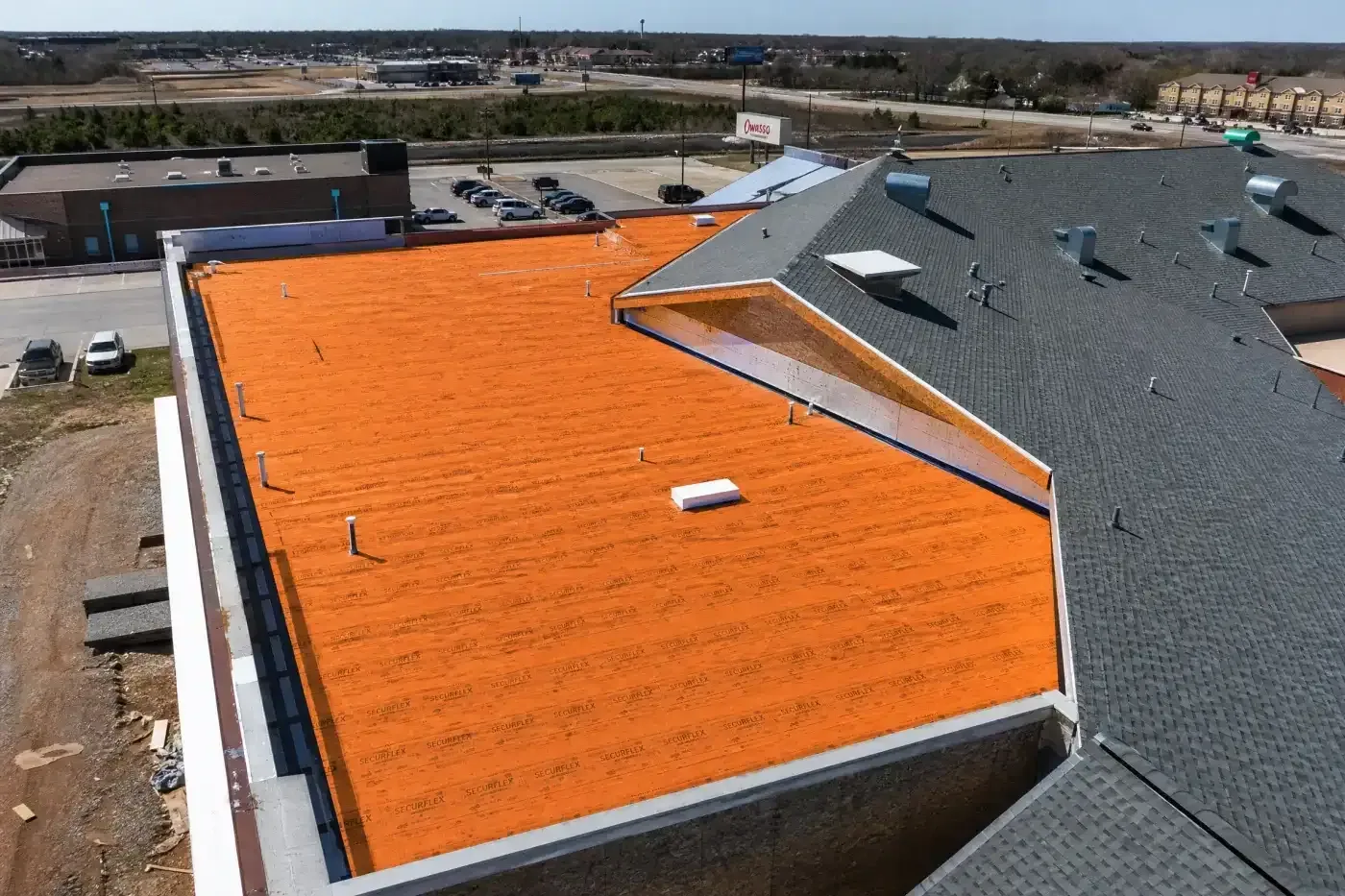
Under the sheet sits insulation, often polyiso, held by fasteners or adhesive. If water gets in, it travels along the board and surfaces away from the actual leak. A probe at the surface stain misses the source more often than it finds it. We run a moisture meter or infrared camera across the field, draw the wet area and trace it back to the likely entry. The entry may be a flashing split, a failed seam or a drain with a gasket gap.
The moisture map separates a repair from a replacement. A small wet zone near a penetration is repaired. A wide wet zone under a field of seams points toward tear-off.
Repair, Recover or Replacement
The options follow from the findings. A repair addresses a local defect. A recover adds a sheet over dry insulation. A replacement removes the system and rebuilds it. Cost depends on the area, the penetrations, the insulation replaced and how long the roof can stay open.
Where the pull samples are weak, a recover is a poor choice, since new fasteners must go into a deck that will hold them. The pull sample is therefore part of the cost estimate, not a separate step.
When a replacement is chosen, the attachment plan is drawn by zone: field, perimeter and corner. Each zone has its own fastener density, and the sketch shows where the heavier pattern goes. A reader comparing two bids can look at the zone drawings and see whether both address the corners. The tear-off sequence follows the zones as well, so the most exposed edges are closed first.
Buildings Across Hidalgo County
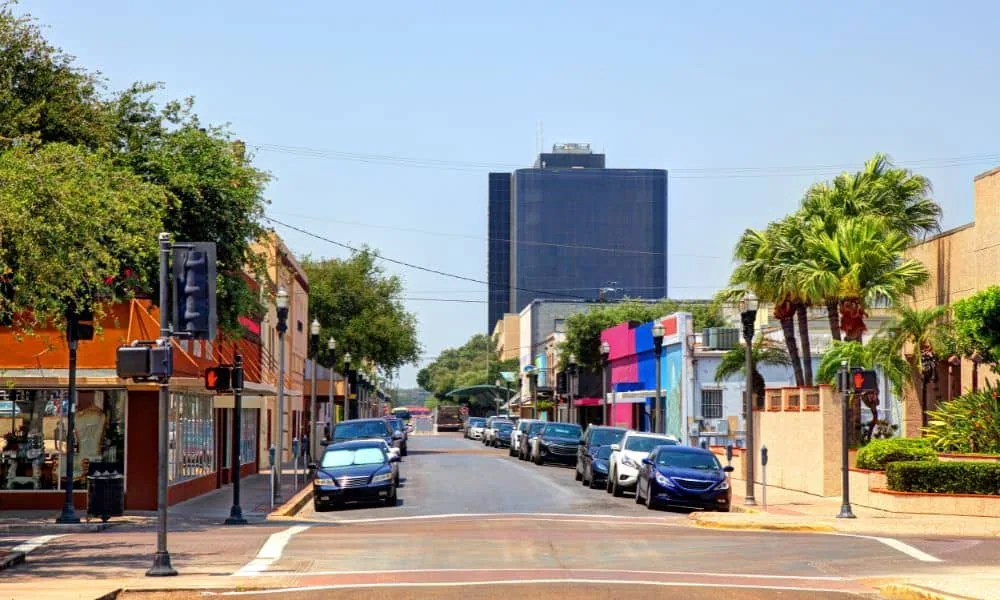
Single-ply roofs suit warehouses, schools, offices and retail, and the owners of those buildings have different priorities: a warehouse manager worries about dock traffic, a school facilities lead about the calendar, and a retail manager about the customers. A warehouse roof carries long runs and perimeter exposure. A school roof carries summer work windows. A retail center carries many penetrations and customer traffic. The sketch, the sample and the closeout adapt to each, whether the building stands in Pharr, Mission or McAllen. At a warehouse, we also photograph the dock-side parapet, where wind turns a corner and tends to lift the sheet. At a school, we photograph the gym roof and the covered walkways separately, since they sit at different heights and see different exposure. At a retail center, we number every curb and every unit support, so a mechanical contractor and a roofer work from the same list.
The Owner's File
The owner leaves with the baseline photographs, pull sample results, seam log, moisture map, drain log and the next visit dates. If the owner also holds Holcim Elevate or GAF roofs, the entries follow the same order, which makes a portfolio easier to rank. A program covering several buildings can turn the sheets into roof condition reports that set repair priorities.
Questions and Answers
How does a fastener pull sample work?
A pull sample tests how much force it takes to remove a fastener from the deck. Low readings show where the attachment is weak and where a new plan needs heavier fastening.
Why record edges before hurricane season?
Edges are where wind starts. A dated photograph of each edge before June lets the owner compare conditions after a storm and tell storm damage from older wear.
Can a mechanically attached roof be recovered?
Sometimes. The deck must hold new fasteners and the insulation must be dry. Pull samples and moisture readings decide whether a recover is safe.
What causes billowing in a single-ply roof?
Billowing comes from wind pressure lifting the sheet between fasteners. It shows that the attachment is spaced too widely or that fasteners have loosened.
How is a ballasted roof inspected?
We check stone distribution, scour around drains and edges, and the condition of the sheet where stone has moved. Ballast removal is planned in sections if repairs are needed.
Request a Documented Inspection
Ask for a visit to your Mission, TX roof and receive a written condition summary with tagged photographs, a pull sample log and a moisture map. The summary can be reused for budgeting or an insurance conversation. Start from the contact form.