
Roofing Manufacturers
Sika Sarnafil Roofing Systems in Mission, TX
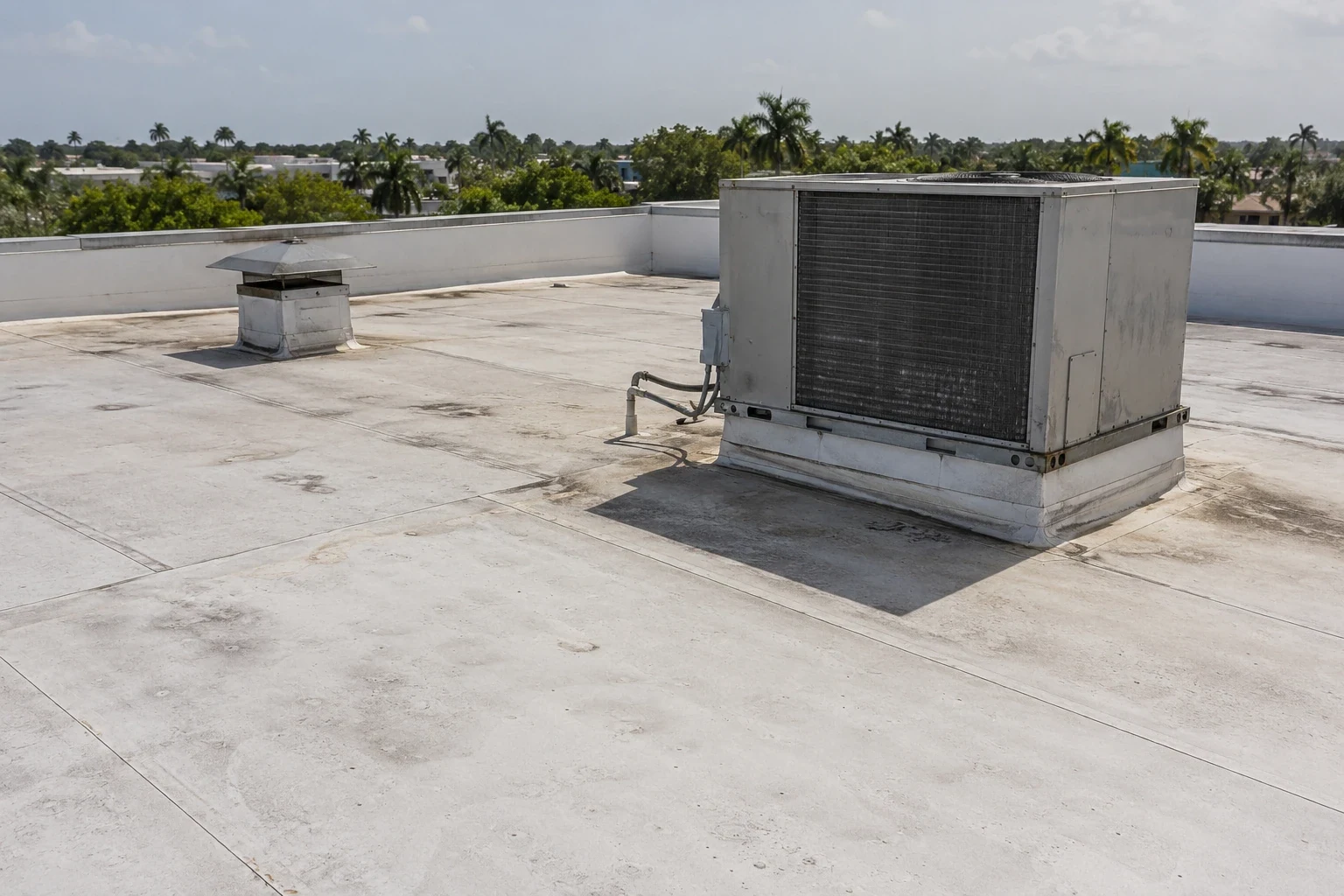
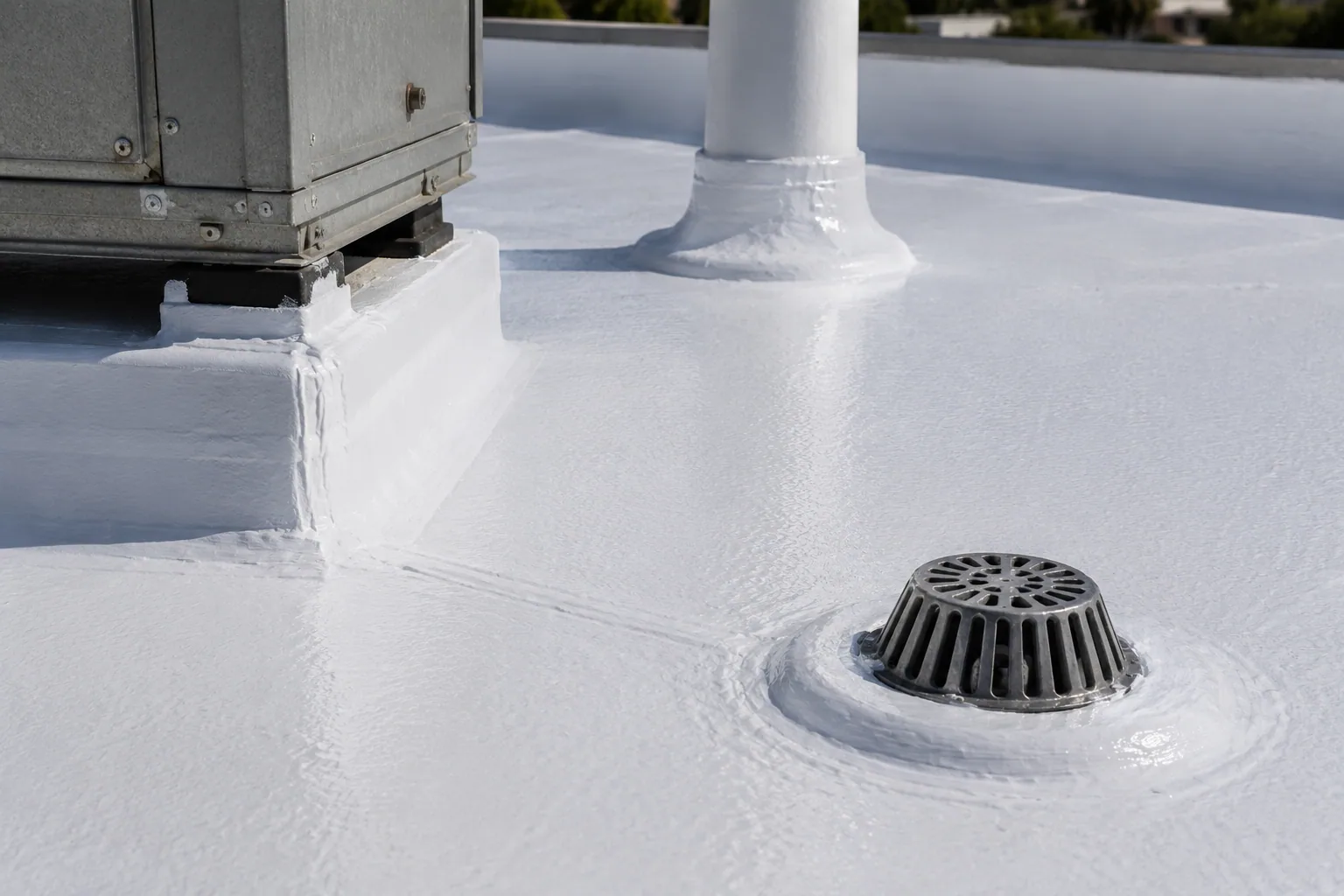
The drain log comes first on a Sika Sarnafil roof in Mission, TX, because a thermoplastic sheet is only as durable as the water path it sheds. Sika Sarnafil makes heat-welded thermoplastic membranes, and the Valley's rain events test every outlet. We photograph each drain, number it on the rooftop sketch and describe it as clear, partly blocked or blocked, then compare the log with stain lines on the surface. A blocked drain explains ponding faster than any theory about slope.
From the drain log the record moves to seams, flashing and edge metal, then to the moisture map. Each section ends with a recommendation tied to the finding.
What a Heat-Welded Thermoplastic Sheet Offers
A heat-welded sheet forms a continuous membrane at the laps, and the welds are the strength of the system. PVC and related thermoplastics resist many oils and fats, which is why they appear on restaurant roofs and on buildings with kitchen exhaust. They also take color and reflect sun. The sheet is not indestructible. Foot traffic, dropped tools and poorly cleaned laps all leave marks, so the inspector probes each seam and logs the results.
Every repair on these systems begins with cleaning and a trial weld on a scrap area. The trial goes in the file.
Rain and Drainage Across the Valley
Flood readiness never lapses in the Valley, and Hanna in July 2020 showed why: a gauge at La Joya read 13.92 inches, and poor drainage put deep water through parts of Mission, La Joya and Sullivan City. A roof that cannot shed water quickly adds load and stress at seams. Scuppers and drains are logged before the season, tested during rain and logged again after, so the comparison shows which outlets failed and which held.
Where outlets are undersized or set high, the recommendation may include new drains, tapered insulation or additional scuppers. We price each as a separate scope line.
Flashing and Penetration Details
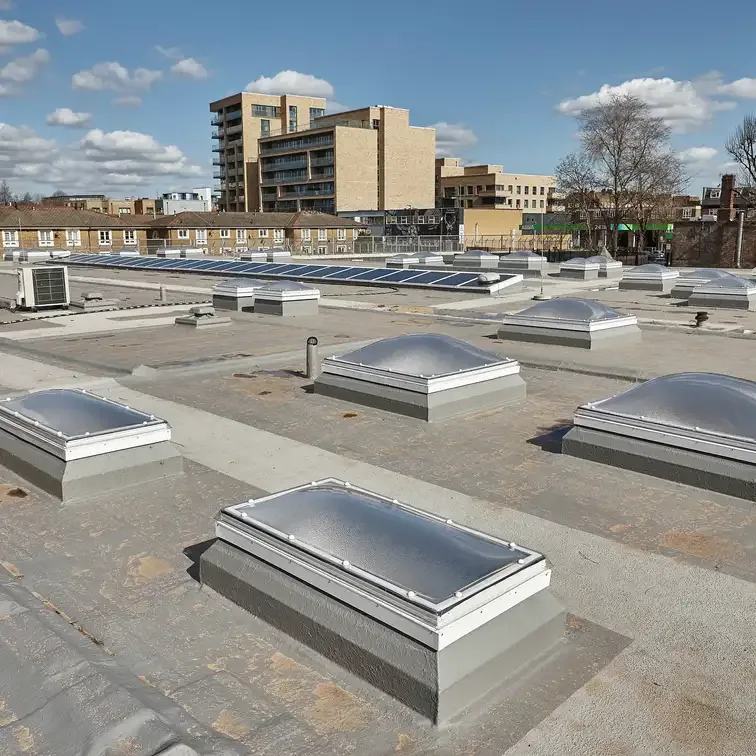
Pipes, curbs and equipment supports are where a thermoplastic roof leaks first. Each is flashed with welded boots or prefabricated corners, and the sealant at terminations ages in the sun, so a termination that looked sound last year may show a gap this year. Because sealant is cheap and a leak is not, we recommend resealing any termination that shows a hairline gap, and we record the date so the next inspector knows how old the bead is. We log each penetration by number, photograph it and note its condition. Rooftop equipment that has been moved or added leaves a trail of screws and sealant, and we mark those spots on the sketch. A skylight and penetration flashing scope can run alongside the field repair.
Curbs deserve attention because water collects at the upslope side of any raised unit. A saddle or cricket there sheds water around the curb, and without one the flashing sees the full load of every rain. We note whether a saddle exists, photograph the curb corners and recommend a saddle where water pools. The price is listed beside the flashing repair so the owner sees both.
Wind and Edge Performance
Hanna's winds, near 60 to 65 mph along I-2, left their worst mark on the roofs of hundreds of poorly built Valley structures. Edge metal and perimeter attachment are the first line of defense, and they are the first place we look after a named storm. We pull fasteners at the edge, check coping joints and sealant lines, and photograph the termination of the membrane on each side of the building. The same photographs, taken before and after a storm, show what wind did.
Perimeter attachment is a design choice as well as a repair. A thermoplastic roof can carry heavier fastening at the corners and edges, where uplift is greatest, and the scope for a replacement states the attachment pattern by zone. A reader can follow that pattern on the sketch and see where the extra fasteners go and why. An owner in Pharr or elsewhere along I-2 can hold bids against the same zone drawing.
Repair, Recover or Replacement
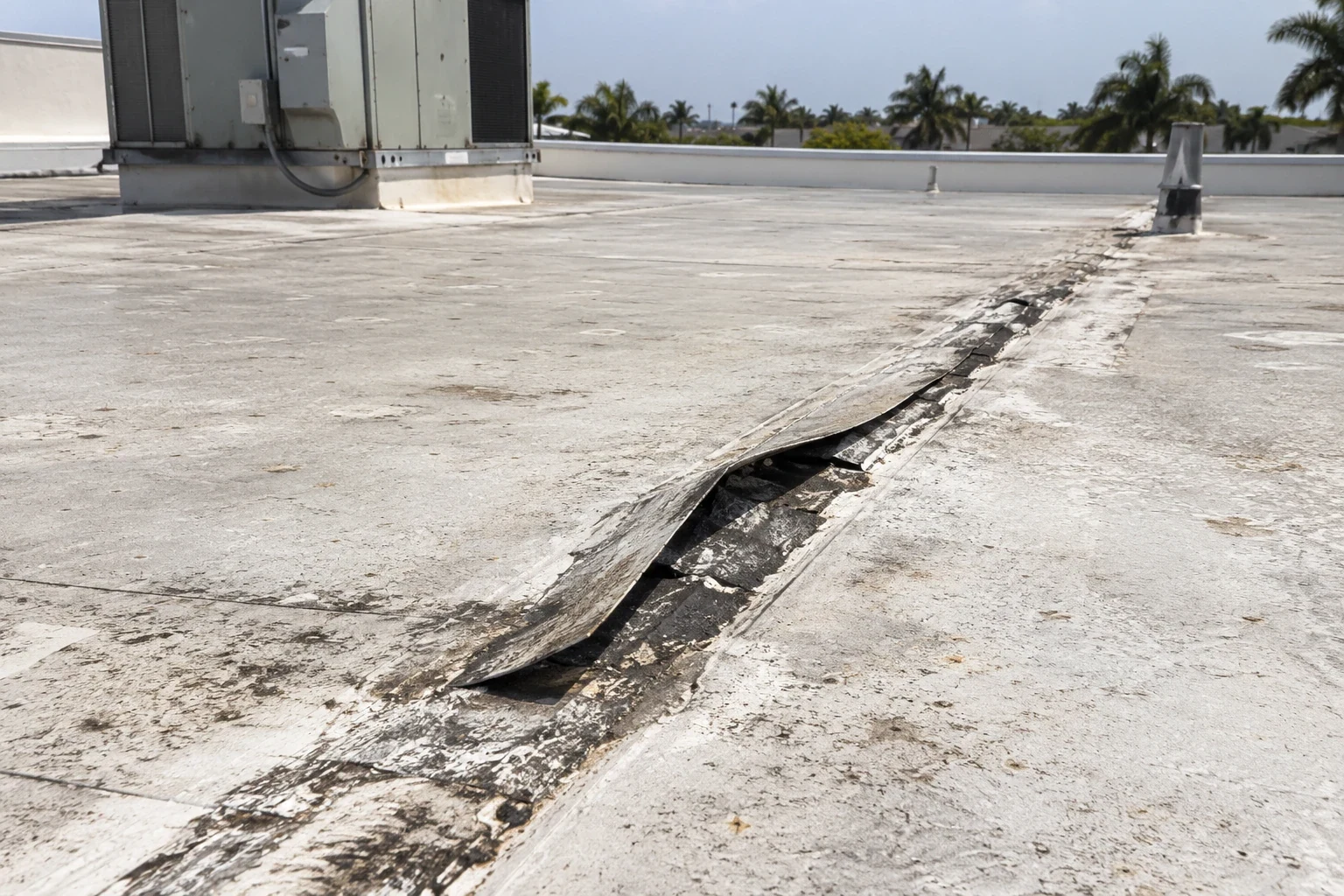
A sound sheet with local damage calls for repair, which costs least. If the insulation is dry and the sheet is spent, a recover may follow. If moisture has spread, replacement is the scope. Price moves with area, penetrations, insulation depth, access and the length of the dry-in window. A PVC roof that opens at a seam goes to seam failure repair: clean, trial weld, hot-air weld and probe.
A survey on a thermoplastic roof uses three tools. The first is the eye, aided by a camera and a dated sketch. The second is the probe, which finds unfused welds and soft spots. The third is the moisture meter or infrared camera, which finds water where the surface looks dry. We take readings in a grid across the field, mark each reading on the sketch and draw a boundary around any wet area.
Then the findings are sorted. Items that let water in now go to the repair list with a price. Items that will fail inside a budget cycle go to the capital list. Items that need only watching go to the maintenance calendar. An owner can hand the capital list to a lender and the repair list to a crew with no further explanation, and the sorting is repeated at each visit so the lists stay current, with every item dated and every price updated to the current scope.
Restaurants, Retail and Warehouses
A thermoplastic sheet suits restaurants, retail centers and light industrial buildings, and the building use sets the plan. A restaurant needs grease handling at exhaust curbs, and the cleaning schedule goes into the file with the next inspection date. A retail center needs work scheduled around customers, as in McAllen or Mission. A warehouse needs dock traffic protected. The phasing plan names each constraint.
The Owner's File
The final file holds the sheet identification, the seam probe log, the drain log, the moisture map and the dates of the next visits. It can be reused for a budget request or an insurance conversation. A Duro-Last or Carlisle SynTec roof gets its own entries in the same order.
Questions and Answers
Why log drains before looking at slope?
Blocked or low outlets are a common cause of ponding on thermoplastic roofs. The log shows the cause quickly and cheaply before any slope correction is priced, and it often turns a proposed tapered insulation package into a drain cleaning and a small resetting job.
Can a PVC roof handle kitchen exhaust?
PVC resists many fats and oils better than some other sheets, but grease still needs a plan. We log exhaust curbs and recommend cleaning and protection where grease reaches the surface, such as a grease containment tray and a routine cleaning date written into the maintenance calendar.
How is a weld repaired?
The area is cleaned, a trial weld is made on a scrap area and the repair is welded with hot air. The weld is then probed and the result is logged.
Does foot traffic harm thermoplastic roofs?
Repeated traffic scuffs the surface and can cut a sheet at an exposed corner. Walk pads along service routes limit that wear, and we place them where technicians already walk to reach units, so the finished roof stays protected without adding steps to anyone's route.
What does a post-storm comparison include?
Edge photographs, drain photographs and seam probe results, each compared with the baseline. Putting the sets side by side separates storm effects from older conditions, so a small repair is not priced as a storm loss and a real loss is not missed.

Request a Documented Inspection
Ask for a visit to your Mission, TX roof and receive a written condition summary with tagged photographs, a drain log and a moisture map. The summary can be reused for budgeting or an insurance conversation. Start from the contact form.