
Commercial Roofing Services
Roof Insurance Claim Assistance in Mission, TX

A claim on a commercial roof lives or dies on dates and photographs. The adjuster needs to see what the roof looked like, what changed, and when. For a Mission, TX building, we build that record from the first site visit: tagged deck photographs, a rooftop sketch with each finding marked, moisture readings where water is suspected, and a scope line that separates storm findings from older wear. We prepare the documentation and the repair estimate. The coverage decision stays with the insurer, and we never suggest otherwise.
What We Provide and What We Do Not
The service has clear boundaries. We inspect the roof, record conditions, prepare a written scope and estimate, and answer technical questions from the adjuster, the property manager, or the owner's representative. We can walk the roof with the adjuster and point out each finding on the sketch.
We do not interpret the policy, negotiate on the owner's behalf as a public adjuster, or promise that any amount will be approved. If an owner wants policy advice, that belongs with the insurance broker or a licensed adjuster. Keeping the roles separate protects the owner, because a clean technical record does not become tangled with coverage arguments.
Building the Evidence File
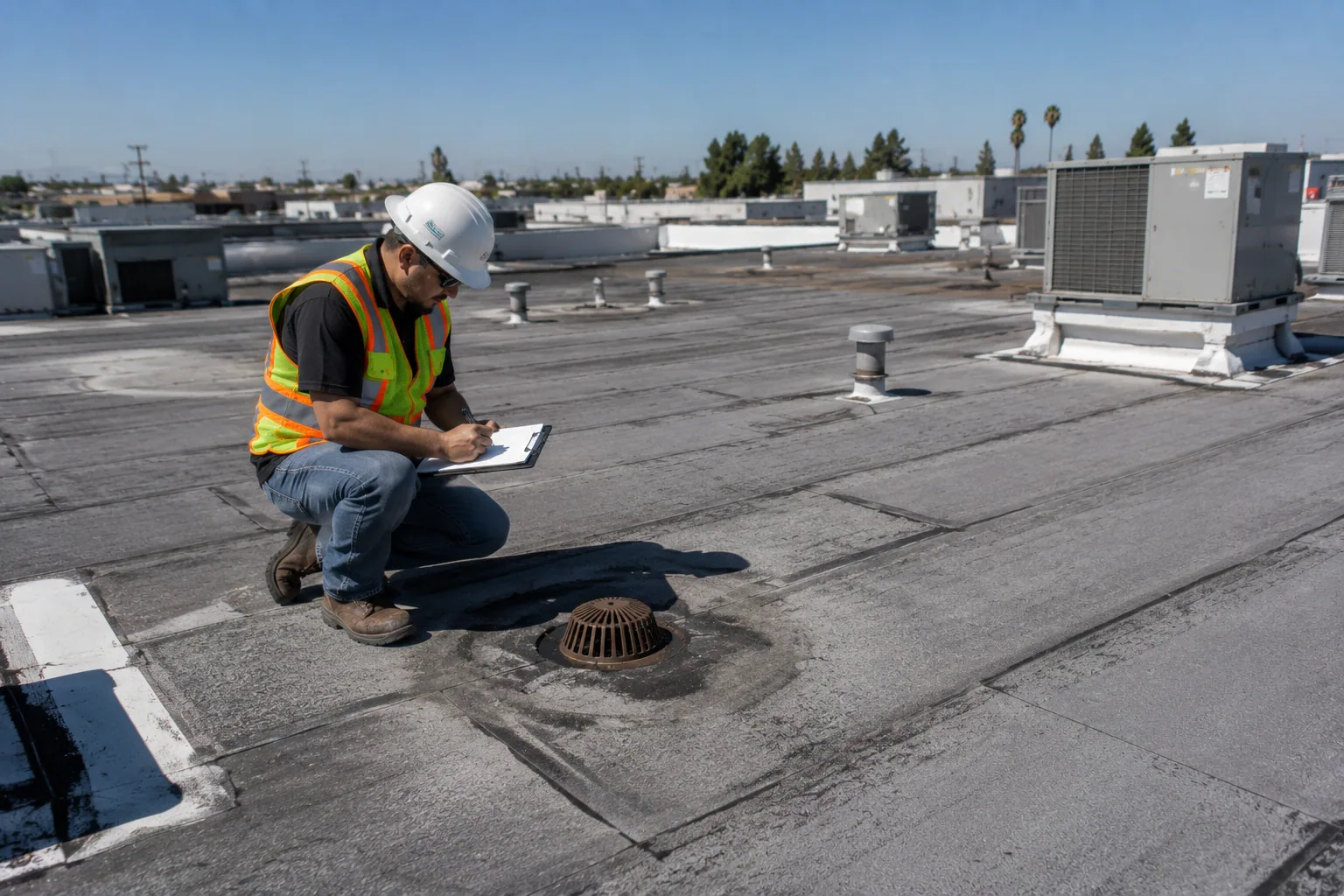
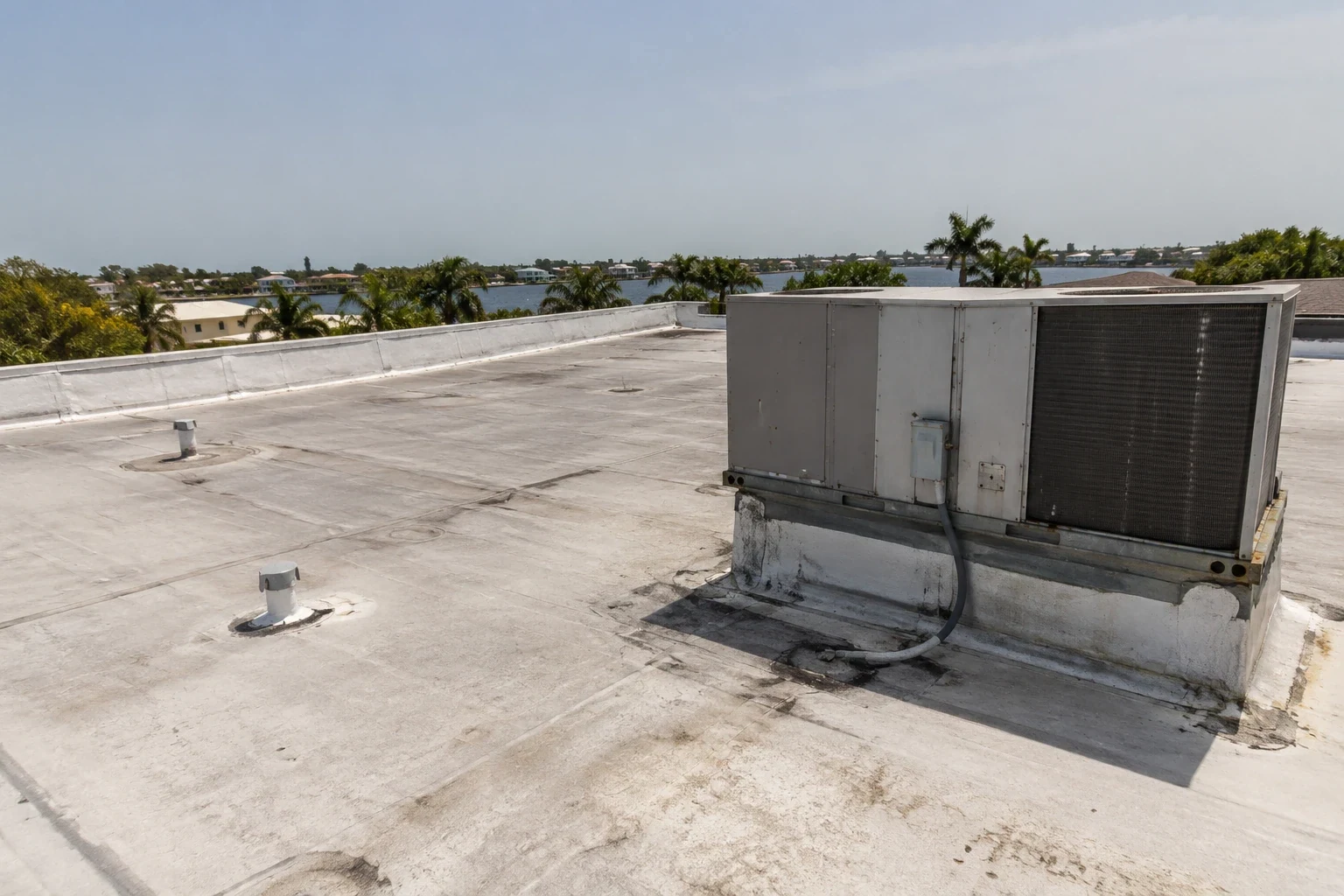
The file starts with the visit date and the weather event that prompted it. Photographs follow a fixed order: wide shots of each roof section, then close-ups of every finding, each with a visible date and a location tag on the sketch. Moisture readings from infrared or capacitance scans are mapped, and core cuts confirm wet insulation where it matters. Drain and scupper conditions are logged, since water that could not leave the roof is often central to a loss.
When the owner already has earlier records, such as past inspection reports or a pre-storm baseline from a commercial roof inspection, we place them in the file beside the new photographs. A before-and-after comparison on the same roof section is strong evidence, and it saves a long argument about the starting condition.
Access matters as well. Roof hatches, ladders, and fall protection points are noted in the file, along with any tenant restrictions on when the crew can be on the roof. An adjuster arriving without that information can lose a morning, and a clear access note lets the walk happen once rather than twice.
Valley Storms and the Claims That Follow
Mission owners have two recent reference points. Hanna came through in July 2020 with estimated winds of 60 to 65 mph near Mission and McAllen; hundreds of poorly built Valley structures were damaged, mostly at the roofline, and a school district maintenance shed in Mission lost roof sections. In 2008 Dolly sent gusts of 50 to 70 mph through populated parts of Hidalgo County; near Weslaco, the roofs that lifted were mainly on older structures.
The National Weather Service Brownsville office lists hurricane season as June through October, so claim conditions arise most often in a defined window. Owners who prepare the file before June, with a clean baseline and a hurricane damage roof repair plan on hand, can move quickly when weather arrives.
Separating Storm Damage from Pre-Existing Wear
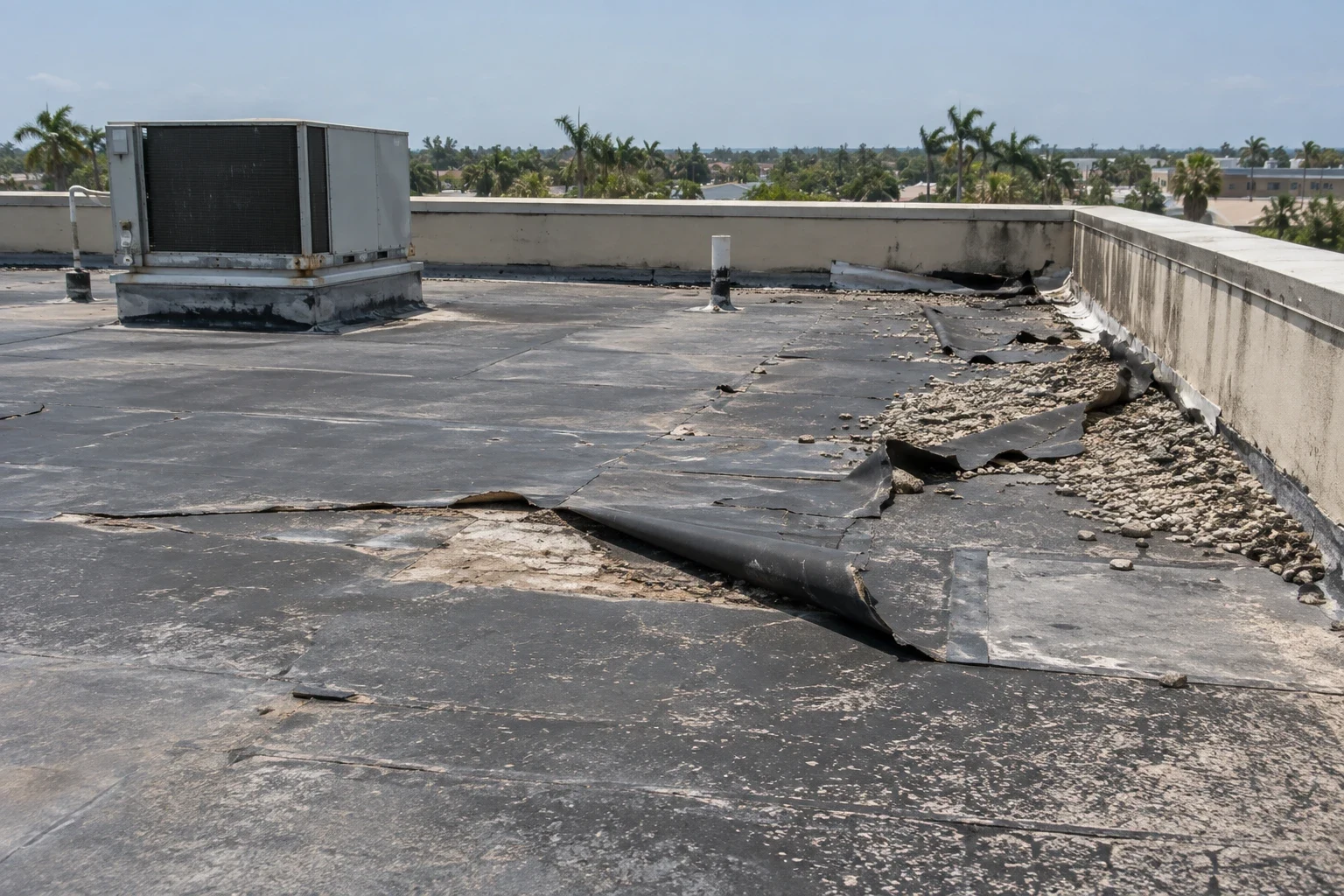
An adjuster has to distinguish fresh storm damage from age, and the roof usually shows both. Fresh wind damage tends to appear as torn membrane at the edge, bright metal where coating has been scraped, and displaced debris pointing in one direction. Pre-existing wear shows as weathered sealants, dirt-filled cracks, and long-standing ponding stains.
Our scope line marks each finding as storm-related, aging-related, or undetermined, and states the reasoning in a sentence. Where the evidence is mixed, the line says so and names the reading that would settle it, such as a core cut at the suspect area. The repair recommendation covers the whole roof need, and the insurance-related items can be separated for the claim.
This split also protects the owner from overspending in the wrong place. A roof with a storm-damaged corner and a worn field may call for a corner repair paid through the claim and a separate maintenance budget for the field, and the written scope keeps those two decisions apart.
Repair Estimates the Adjuster Can Check
The estimate lists quantities and methods in plain terms: linear feet of edge metal, square feet of membrane to be replaced, number of flashing details, drain hardware, and any insulation that has to come out. Each line ties back to a numbered finding in the file, so the adjuster can match a price to a photograph. Temporary protection is itemized separately from permanent repair.
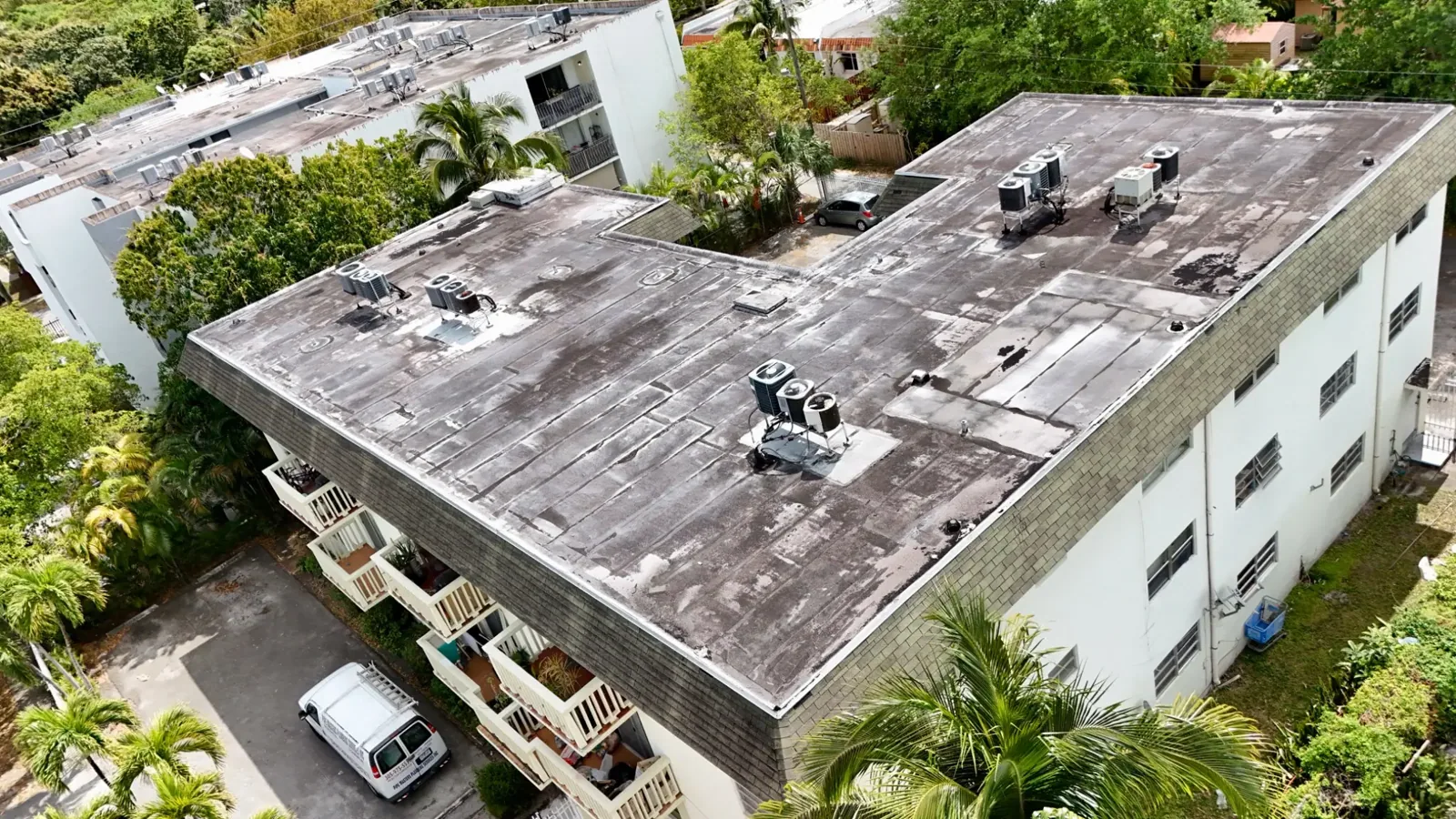
If an adjuster questions a line, we respond with the technical reason: attachment requirements, compatibility with the existing system, or the point at which a repair becomes a replacement. Large losses may involve more than one visit. A drone survey can supplement a walk when parts of the roof are unsafe, and the aerial images are filed with the rest of the record.
Coordinating With Managers, Brokers, and Contractors
Commercial claims usually involve several parties. A property manager in Mission or Edinburg may hold the building files, an owner's representative signs off on scope, and a broker handles the policy. We send the same documentation package to each party who needs it and keep a list of what was sent and when.
Our reports are written so a carrier, a loss adjuster, or a firm in insurance restoration can read them cold: numbered findings, measured quantities, and photographs that match each line from the first page. Emergency dry-in, if needed first, is part of the same record rather than a separate paper trail.
Questions and Answers
What should we do before we call the insurer?
Make the building safe, limit further water entry, and photograph visible damage without climbing on the roof. Then have the roof walked so the full extent is recorded. Many policies set notice deadlines, so read the policy or ask the broker how soon the carrier must hear about the loss. Our documentation can be ready as soon as the claim number arrives.
Will you tell us whether the claim will be approved?
No. Approval depends on the policy terms, the deductible, and the insurer's reading of cause and extent, and none of those are ours to predict. We describe the roof condition, the cause as the evidence suggests it, and the work needed. That gives the owner and the adjuster a shared factual starting point for the coverage discussion.
Can temporary repairs be done before the adjuster visits?
Reasonable temporary measures to stop water are expected and are usually part of the owner's duty to limit loss. We photograph the damage before tarps or patches go on, keep the receipts, and label each item as temporary. Permanent repair should wait for the adjuster's inspection unless the carrier has said otherwise in writing.
What if the adjuster disagrees with our scope?
We review the specific lines that differ and respond with the technical reasoning, such as attachment, compatibility, or moisture readings. Sometimes the disagreement is about quantity and a measured sketch resolves it. If the owner decides to bring in a public adjuster or an attorney, our documentation is available to them as it stands.
Do older storm-damaged roofs complicate the claim?
They can. An older roof carries more pre-existing wear, so the line between storm damage and aging gets harder to draw. A dated baseline helps a great deal, which is why we recommend routine inspection and keep prior photographs on file. Without a baseline, the scope line leans on visible evidence at the time of loss.
Start a Claim Documentation File
Send us the address and the date of the weather event. We will walk the roof, photograph and sketch each finding, and prepare a written condition summary and repair scope that your broker or adjuster can use directly.