
Industries We Serve
Roofing for Insurance Adjusters and Restoration Firms in Mission, TX
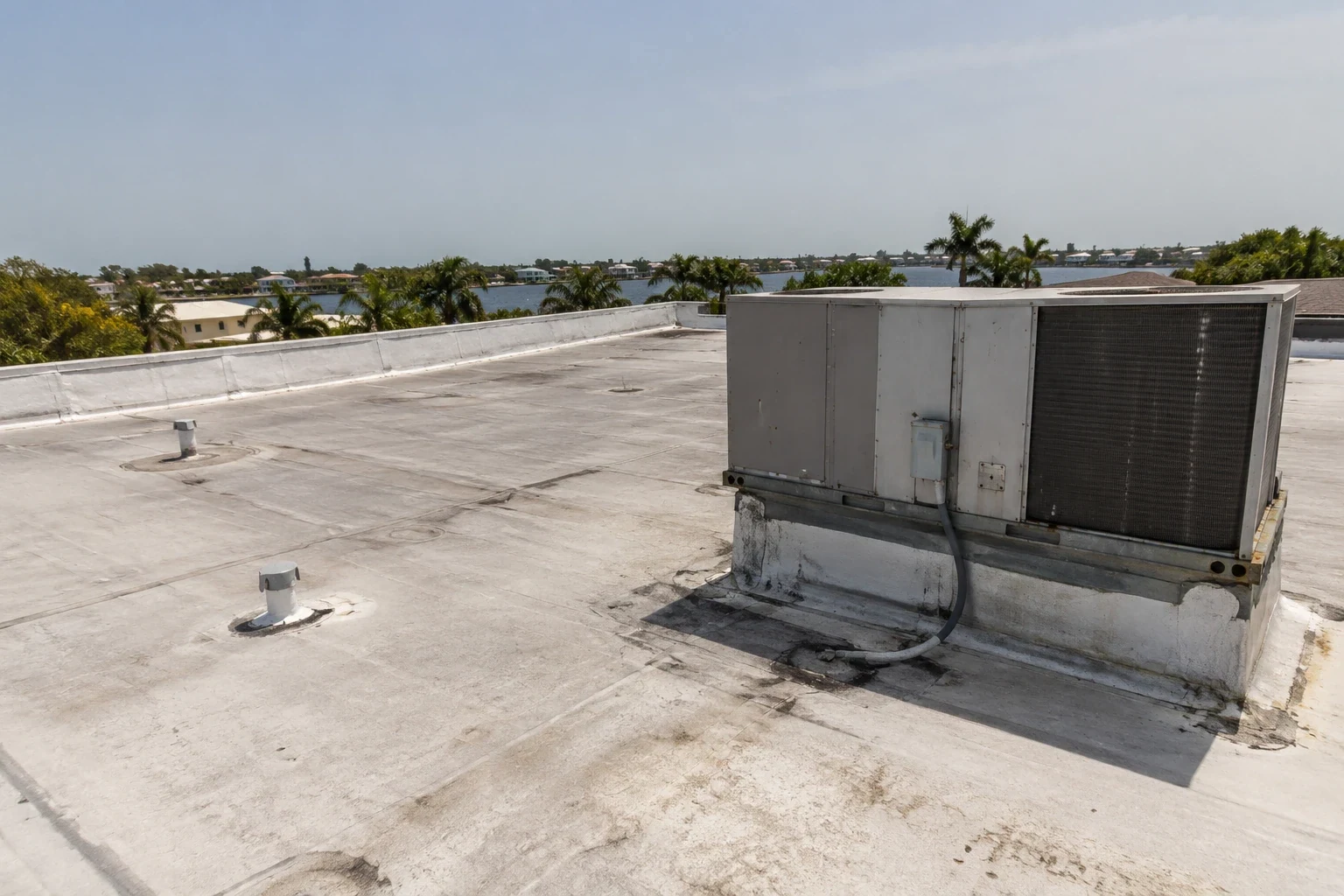
An early question on any commercial roof claim is what the roof looked like before the storm. Our records answer with a dated photograph of the same edge, the same seam and the same drain, taken from the same position in the spring before the loss, and the new photograph beside it. Differences are findings, and similarities are findings too, since they show what the storm did not do.
Adjusters and restoration firms working commercial claims in Mission, TX need roof evidence that separates storm damage from wear. Claim records proceed finding by finding: tagged photographs, a rooftop sketch, a moisture map and a drain log, with coverage decisions left to the carrier.
Separating Storm Damage From Older Wear
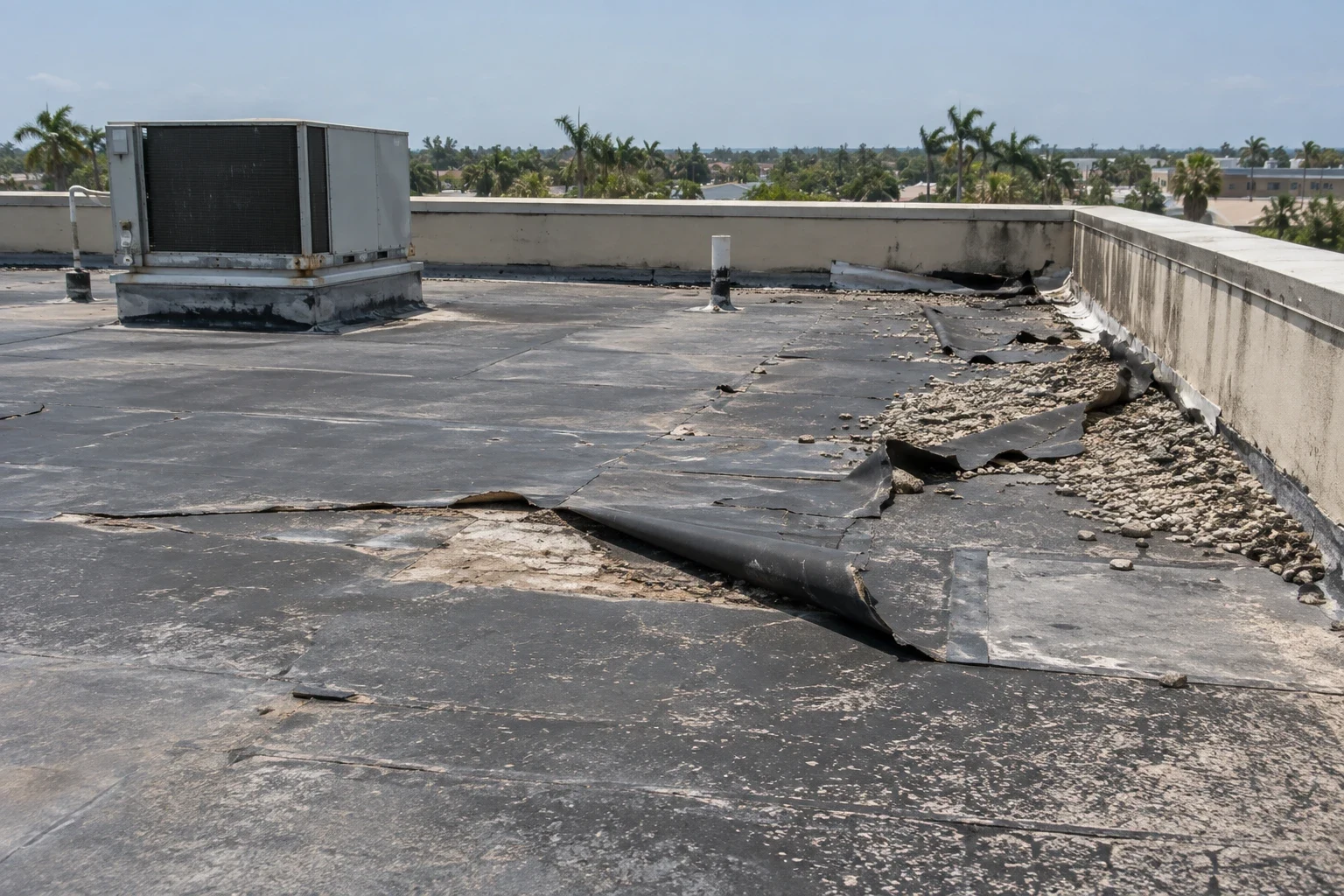
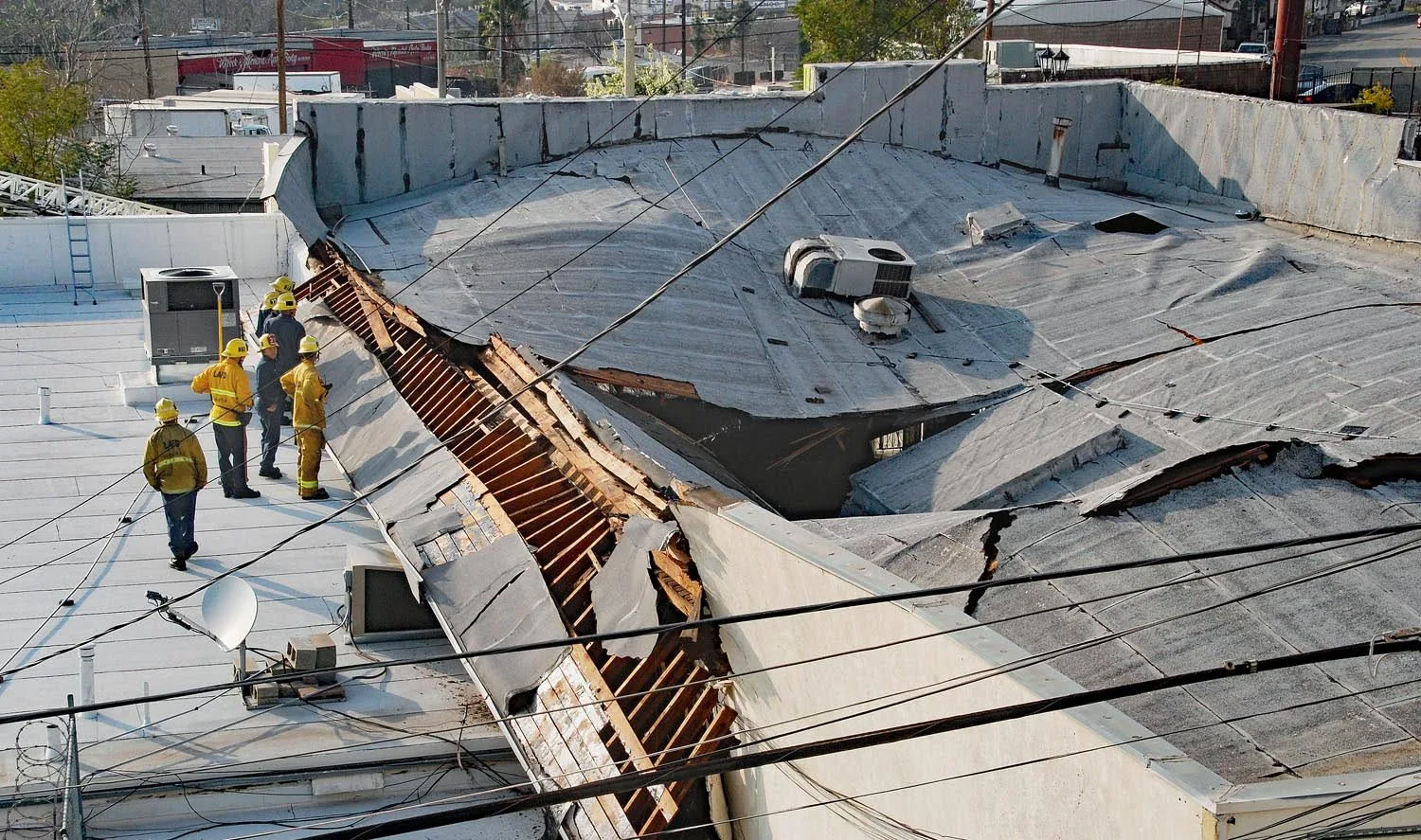
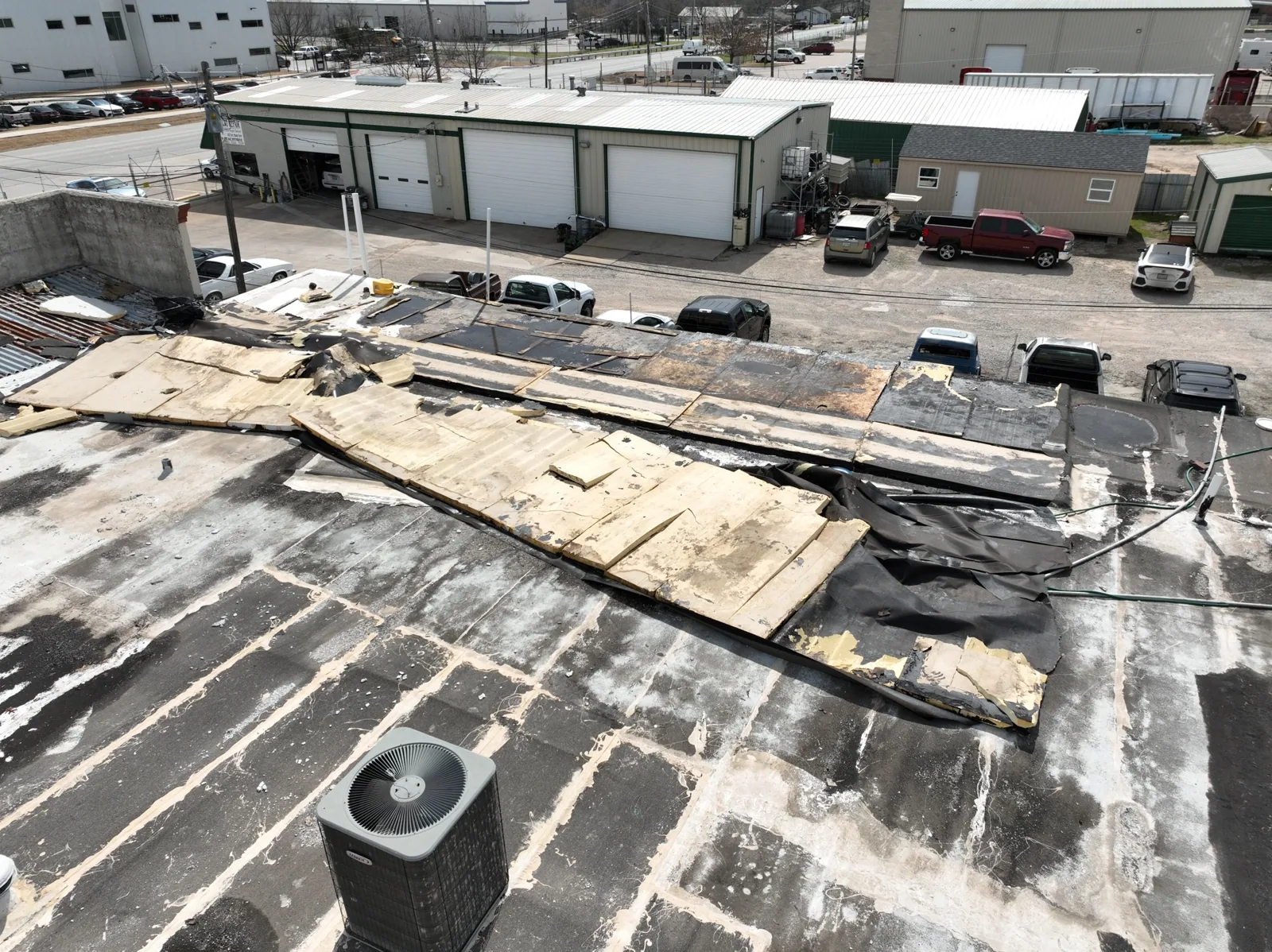
Wind and water leave marks that age does not. Wind lifts edge metal and peels membrane from edges inward. Impact leaves fractures or dents in a direction. Flooding leaves stained insulation and silt at drains. Heat and age leave crazing, shrinkage and open laps spread across a field.
Each mark is photographed with a scale, tagged to a section and rated. Where the cause is unclear, the summary says so and names the test that would settle it, such as a core sample, a moisture map or a fastener pull sample. Naming the open question keeps the rest of the report reliable.
Debris marks matter. Branches, signage and loose roofing stone leave scars in the direction they traveled, and each mark is photographed with a scale and a compass direction. A cluster of marks on one side points to an event, and scattered marks across a field point to age or traffic.
Interior evidence completes the picture. Ceiling stains, wet insulation and damp walls are photographed and matched to the roof section above, so the repair scope goes to the opening and the claim narrative names it.
The Claim File and Its Contents
The file holds the baseline photograph set when one exists, the post-storm set, the rooftop sketch with moisture readings, the drain log and the scope lines. It further notes anything that could not be inspected, with the reason. A prior-condition entry draws on earlier inspections to show the roof's state before the loss.
A claim documentation package built this way reads the same to everyone: the adjuster, the restoration firm, the owner and any engineer open the same photographs and reach the same locations. The package is organized in the order the work happened.
Chain of custody applies to samples. A removed fastener or a cut sample is labeled with date, location and the person who took it, and the label appears in the photograph. Nothing leaves the roof unnumbered, so a later reviewer can find the source of any sample.
Scope Lines That Match the Estimate
Restoration firms need scopes that line up with the adjuster's estimate. A line cites its finding and the wet area on the moisture map, then names the system, the insulation, the flashing and the drain work, with the condition that triggers it. If a carrier's estimate omits an item, the file shows the evidence for including it.
Temporary protection is its own line. It lists the material, the area, the date placed and the date removed, and each piece is photographed. A permanent repair follows after the carrier releases the area, and the scope separates the two so that emergency work is not mistaken for the final fix.
Supplements are expected when demolition reveals more than the estimate showed. The file's baseline lets the restoration firm and the carrier compare what was visible before with what was found, and photographs from each stage support the supplement.
Access and permits are listed in the scope so the carrier can see what each line involves: a lift, a crane pick, scaffold, a permit or an engineer's letter. A line that needs one of them states which and why.
The Pre-Storm Baseline as Evidence
A baseline taken in spring, before the tropical season that the National Weather Service in Brownsville places at June through October, is strong evidence for an owner to give an adjuster. It records edge metal, seams, sealants, drains and scuppers while the roof is dry, with a fastener pull sample at the perimeter.
Owners who have a baseline can show the roof's condition on a given date. Owners who do not can still use the first post-storm walk as a baseline for the next event, and the summary notes that the earlier condition is unknown.
Heat belongs in the file. The Brownsville office calendars the Valley's heat-safety season as May through October, and a roof that has baked for months can show softened membrane or lifted laps that resemble storm damage. The baseline separates the two.
Post-Storm Comparison and the Hanna Record
Along I-2 in July 2020 Hanna's winds, estimated at 60 to 65 mph, left hundreds of poorly built Valley structures with roof damage. Rain gauges at Mission 3.5 NW and La Joya recorded 14.40 and 13.92 inches, and in parts of the Mission, La Joya and Sullivan City area poor drainage left between 18 inches and 4 feet of water.
Dolly in 2008 drove 50 to 70 mph gusts across populated Hidalgo County, lifting older roofs near Weslaco. For a claim, those events set a range of what is plausible. The comparison shows what a given roof did within it, and the file links to the hurricane damage and wind damage records.
Drains and scuppers are flow-tested after the storm. A drain that failed under load is a finding, and its log entry shows whether the cause was debris, a crushed line or an undersized outlet.
Options, Recommendation and Closeout
Each damaged section is offered repair, section replacement and replacement, with the finding that favors each. It also lists the maintenance the owner should perform to protect the repair. Open items remain on the list with a date and an owner until they are closed or declined in writing.
An emergency roof repair crew may place the temporary protection, and the restoration firm, the general contractor and the adjuster all receive the same file. Claims in Weslaco, La Joya and Sullivan City follow the same sequence, and property managers can pass the file on unchanged.
The recommendation closes with the owner's decisions: what the carrier covers, what the owner chooses to upgrade and what is deferred. Each decision is listed with a date, so the file shows who decided what and when.
Questions and Answers
What evidence best separates storm damage from wear?
Dated before-and-after photographs from the same positions. We recommend adding a rooftop sketch, a moisture map and a fastener pull sample, since each answers a different question the carrier may ask.
Do you decide coverage?
No. The carrier decides coverage. We document condition and likely cause and note what remains uncertain. We recommend sending the file in the order the work happened.
When should temporary protection go on?
As soon as the area is safe and the damage is photographed. We recommend logging each piece of protection with its date and location, and removing nothing until the carrier has released the area.
What if the owner has no baseline?
The first post-storm walk becomes the baseline, and the summary says the earlier condition is unknown. We recommend taking a baseline each spring after.
How do supplements work with a documented roof?
The file shows what was visible before demolition and what the tear-off found. We recommend photographing each stage, so the supplement rests on dated evidence.
Can the file be reused after the claim?
Yes. It becomes the owner's baseline for the next storm. We recommend keeping the closeout set with the warranty paperwork.

Request a Documented Inspection
Ask for a documented inspection of a damaged or at-risk roof. The written condition summary will include tagged photographs, a rooftop sketch with moisture readings, a drain and scupper log and scope lines you can attach to a claim or reuse for budgeting.