
Service Areas
Commercial Roofing in Edinburg, TX
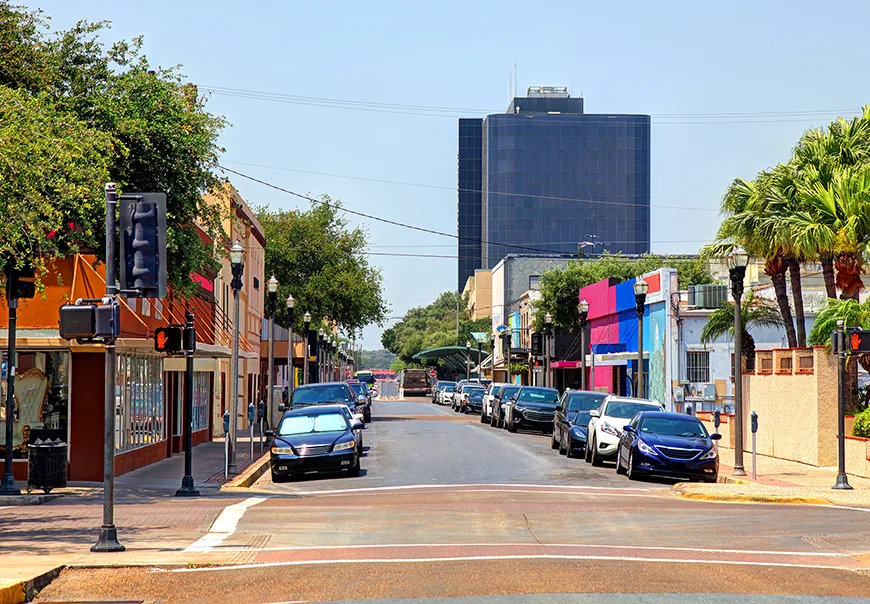
Edinburg, TX is the Hidalgo County seat, with 100,243 residents in 2020, and the second-largest city in the county. Its roof work spans three groups: the public buildings that come with a county seat, the institutional roofs of a university campus, and commercial properties on the main highways. The first line on any of those inspection sheets is a dated photograph and a number, because an owner who answers to a board or a budget committee needs a roof record that can be carried into the meeting.
Education and Institutional Roofs
The main campus of the University of Texas Rio Grande Valley is in Edinburg, and its presence adds large institutional roofs to the city's building stock. A campus-scale owner typically manages many roof sections on one site, each with its own age, equipment, skylights, and walkways, and work must be scheduled around terms, exams, and events.
For a college or university roof, our first deliverable is a section-by-section survey. Each roof area gets a number, a photograph set, a moisture reading, and a ranking. The ranking lets a facilities department fund the worst roofs first and defer the sound ones, and the dated record shows what changed between budget cycles.
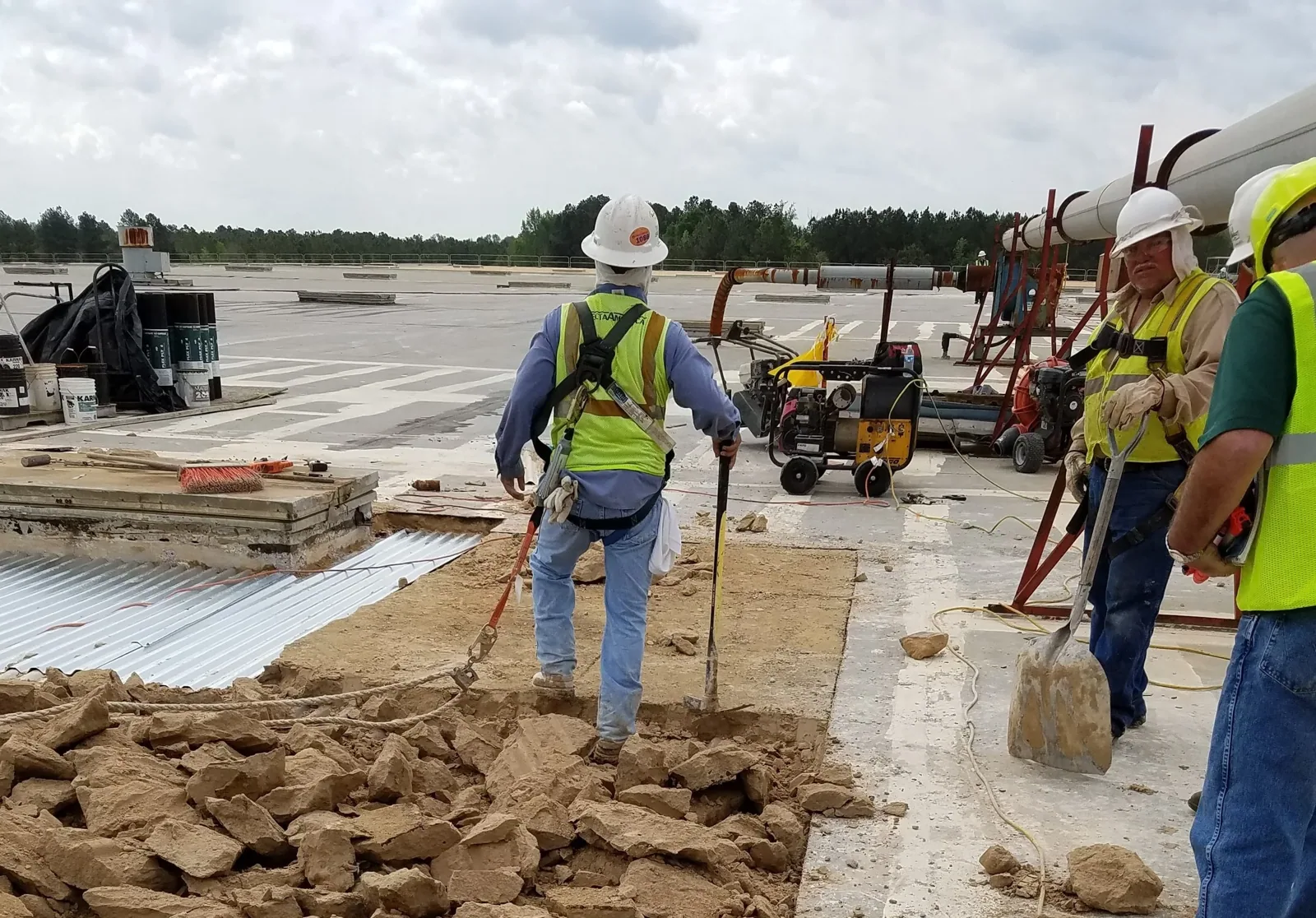
Older roof sections on a site can hide the biggest surprises. Where a core cut shows two or three layers of past roofing and insulation, we record each layer, the total weight, and the condition of the deck. That information decides whether a recover is allowed, whether tear-off is required, and how the new insulation should be stepped to meet adjoining sections at the same height.
County Seat and Public Buildings
A county seat has public buildings, and a government building roof has extra paperwork around it: procurement rules, scope documents that must be clear enough to bid, and records that withstand a public audit. We write scope lines with measured quantities and photographs for each item so bids can be compared on equal terms.
Public offices and service counters cannot close for a reroof, so phasing and interior protection are part of the plan. For public agencies managing several roofs under one budget, a multi-site roof program gives a single schedule and a single reporting format across all of them.
Budget planning is easier with that format. Each roof carries a condition rating, a recommended action, and a timing window, such as repair this year, coat in a later budget year, or replace when funds allow. Because the ratings come from measured readings, an owner can defend each line to a board, and the figures change only when new findings are recorded.
Highways and Commercial Frontage
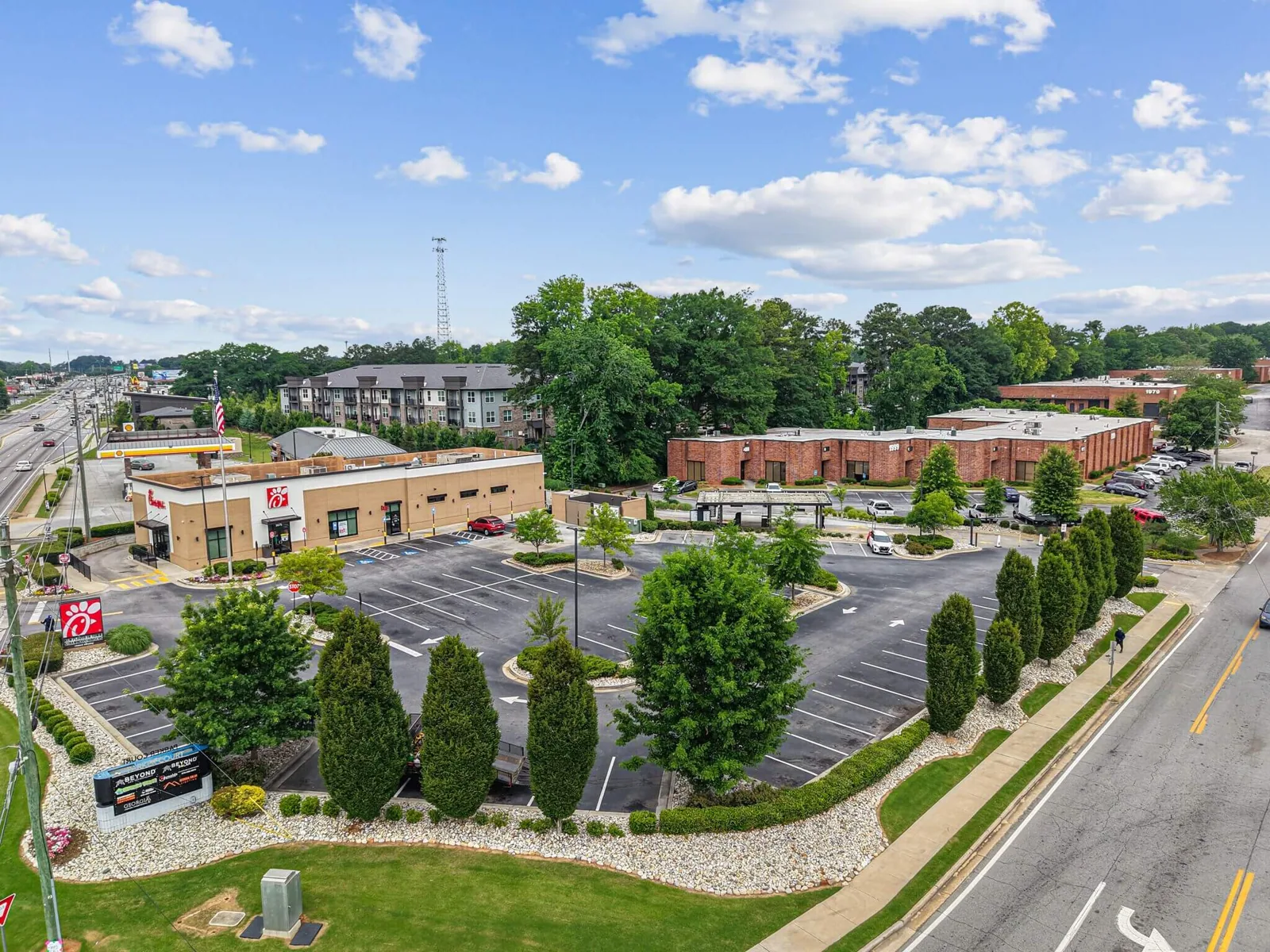
US 281 (I-69C) runs along the east side of Edinburg, and State Highways 107 and 336 also pass through. A commercial building on those routes is visible to passing traffic, so a loose coping cap or a stained parapet shows, and a leak over a customer area costs business.
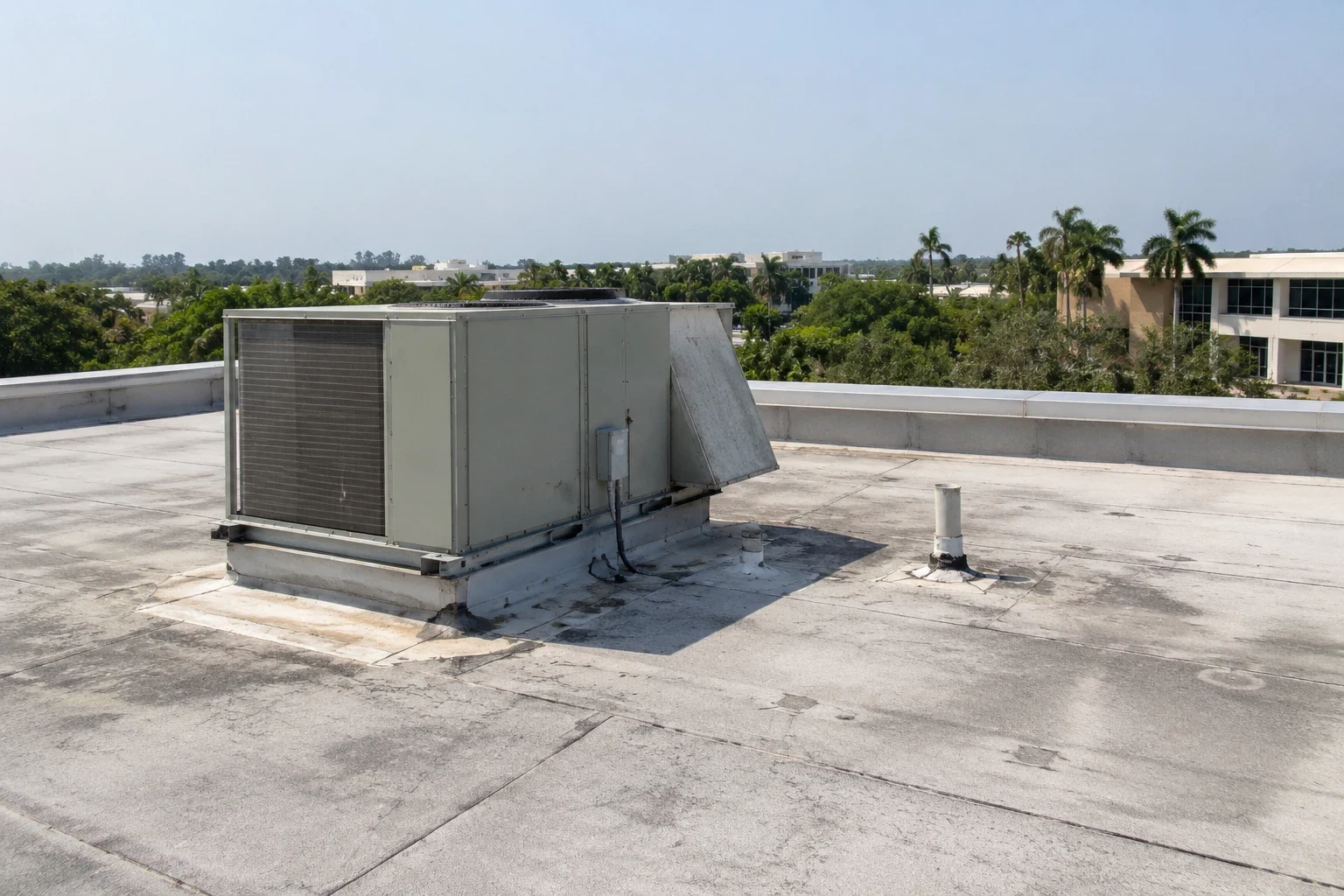
On a highway-frontage building we photograph the full perimeter first, since edges are where wind and thermal movement do their work. Rooftop units get a curb and flashing check. Drains are logged, because a flat roof that holds water after a rain eventually shows the stain on the ceiling tile below. The result is a short ranked list the owner can act on without reading a technical report. Where a building has tenants in separate bays, the list is grouped by bay, so each tenant's roof section is visible and the landlord can assign work accordingly.
Wind, Rain, and Heat Records
Hurricane Dolly in 2008 brought gusts of 50 to 70 mph to populated Hidalgo County, including Edinburg, where it caused minor damage. Hanna's July 2020 winds were estimated at 60 to 65 mph along I-2, and a gauge northwest of Mission read 14.40 inches. Brownsville forecasters put hurricane season at June through October and the heat-safety season at May through October.
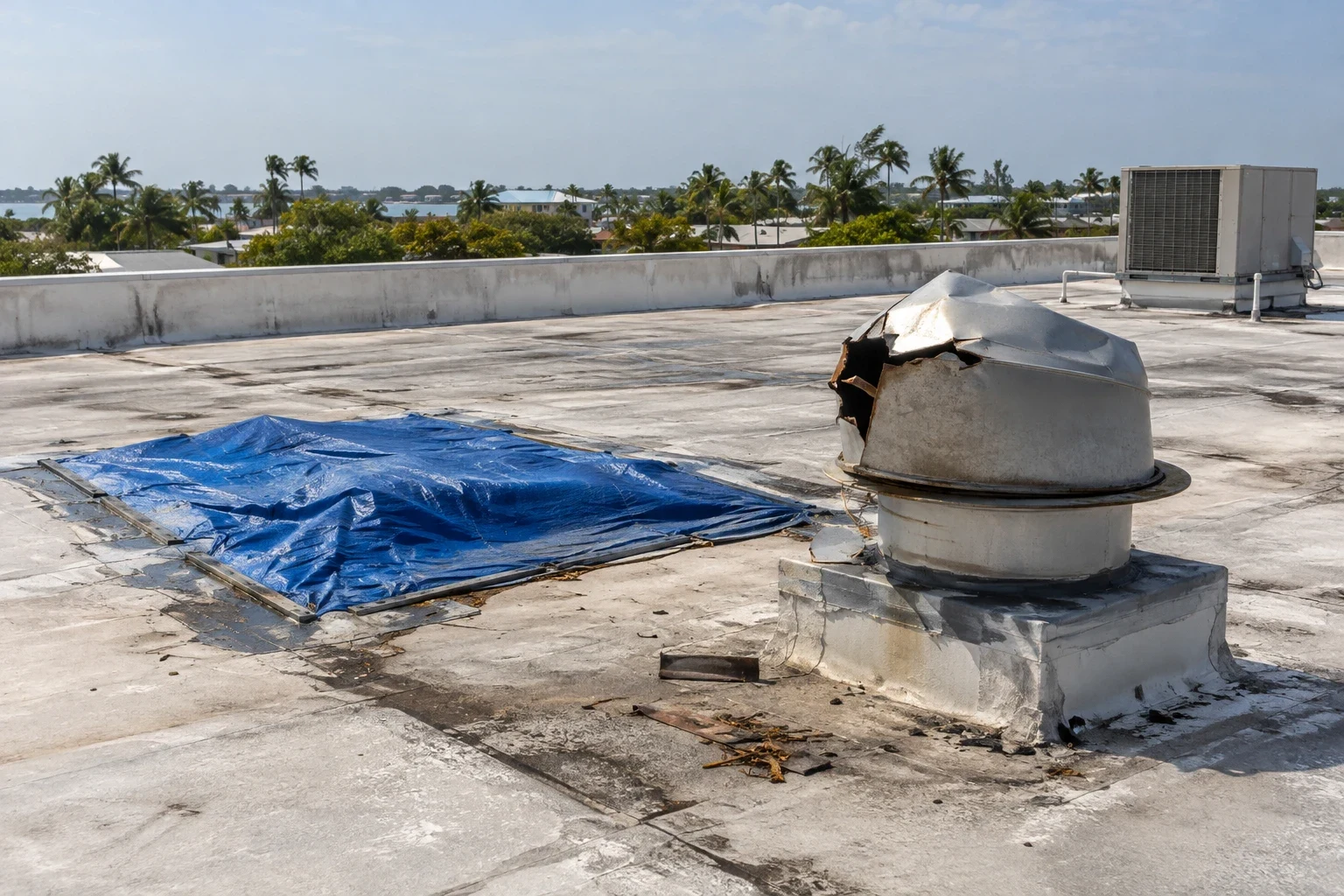
For an Edinburg owner, those dates define the maintenance calendar. A visit in April checks seams, sealants, and coatings before the heat. A visit in November reads what the summer did. In between, a short pre-storm pass photographs edges, drains, and equipment covers. When a named storm does arrive, the comparison photographs make a storm damage repair walk faster and the findings clearer.
Phasing Work Around Terms and Operations
Education and public buildings share a scheduling problem: the roof is needed dry every day, but the building cannot easily empty. The answer is phasing. A large roof is divided into sections, each torn off and dried in on the same day, with interior protection beneath. Noisy work is timed for breaks, evenings, or weekends where the owner agrees.
The same approach applies in an occupied building of any kind. We map occupancy under each section, protect air intakes, and post a short notice before each phase. School and district roofs fit well with summer scheduling, and school districts that plan a year ahead can match roof work to the break.
Nearby Cities and Shared Planning
Edinburg sits about 8 miles north of San Juan and 11 miles west of Elsa. Owners with properties in more than one of these cities can run a single maintenance cycle. The same condition summary format works at every address, which makes it practical to compare roofs and fund the weakest first.
Cost and timing drivers are consistent across all of them: roof area, access for lifts and materials, penetration count, amount of wet insulation to remove, and the hours available. We list each in the written scope. A roof that tests dry and sound can often be repaired or coated, while one with widespread moisture is better replaced, and the readings make the call plain.
Questions and Answers
How do you survey a campus with many roofs?
Each roof area is numbered, photographed, moisture-tested, and scored on the same sheet, so the results can be sorted into a ranked list. The facilities team then funds the worst roofs first. Dated photographs from each visit give a trend line for the roofs that are being monitored rather than repaired.
What documents do public owners need for roof bids?
A scope with measured quantities, photographs for each item, a list of materials, and a schedule. We prepare the technical portion in a form that a procurement office can bid from and a board can approve. Procurement rules vary by agency, so the owner supplies the contract language and we supply the roof facts.
Can a reroof happen during a school term?
It can, with phasing and protection, but summer break is the easiest window. Sections are torn off and closed within the same day, noisy work is scheduled around classes, and entrances stay clear. For a roof in poor shape, waiting until summer may cost more than starting earlier in a controlled way.
How do I know if my highway-frontage roof needs a full replacement?
A moisture map and core cuts show how much insulation is wet and how many seams are failing. Limited moisture and an intact membrane point to repair or coating. Widespread moisture or repeated failures point to replacement. The written summary lists the readings behind whichever path it recommends.
Does a storm with minor damage still need an inspection?
Yes, a walk after any strong wind event is worthwhile. Minor damage, such as a loosened coping or a lifted membrane edge, lets water in during later rain. A post-storm record, compared with earlier photographs, catches those findings while the repair is still small.

Request an Edinburg Roof Survey
Send us the building address and the number of roof sections you manage. We will walk each roof, photograph and rank every finding, and give you a written condition summary that works for budgeting and bidding.