Roof Damage Repair
Fire Damage Roof Repair in Mission, TX
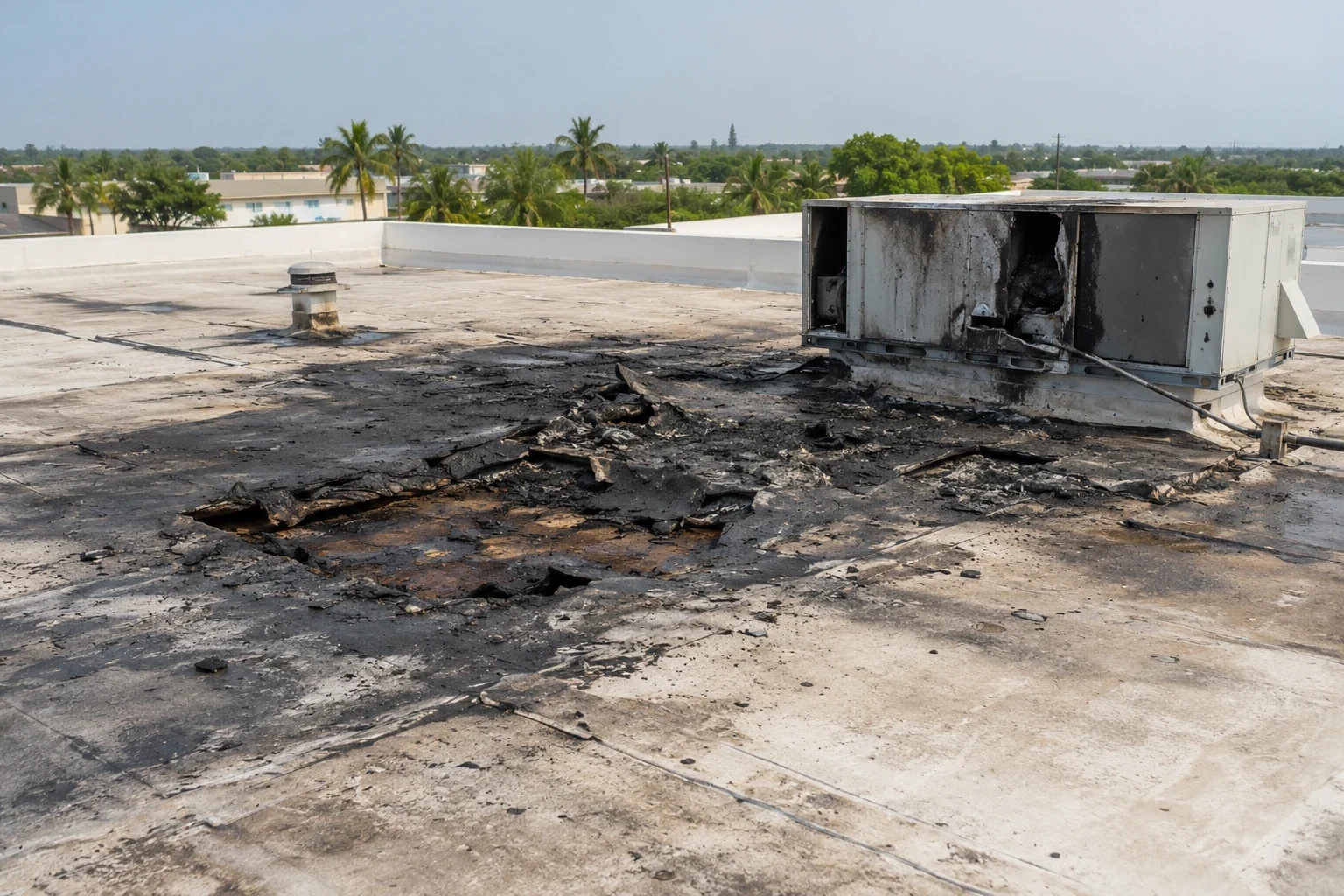
On a fire-damaged roof, the first entry is a boundary: a line drawn on the sketch around the area that shows heat, char or melted membrane, with photographs from the edge inward. Everything outside the line is then examined to find out how far heat traveled through the assembly, which is often farther than the visible damage.
On a commercial roof in Mission, TX, a fire below or on the roof leaves a record that has to be read carefully. The surface may look repairable while the insulation under it is charred or the deck has lost strength. The decisions that follow depend on what the inspection shows, and several parties will want to read the same evidence.
What the Inspection Records
We begin with safety. The deck is checked for deflection, soft spots and exposed fasteners before anyone steps onto it, and areas that are not safe to walk are marked and photographed from a distance. Where the structure has been cleared by others, that clearance is noted in the file.
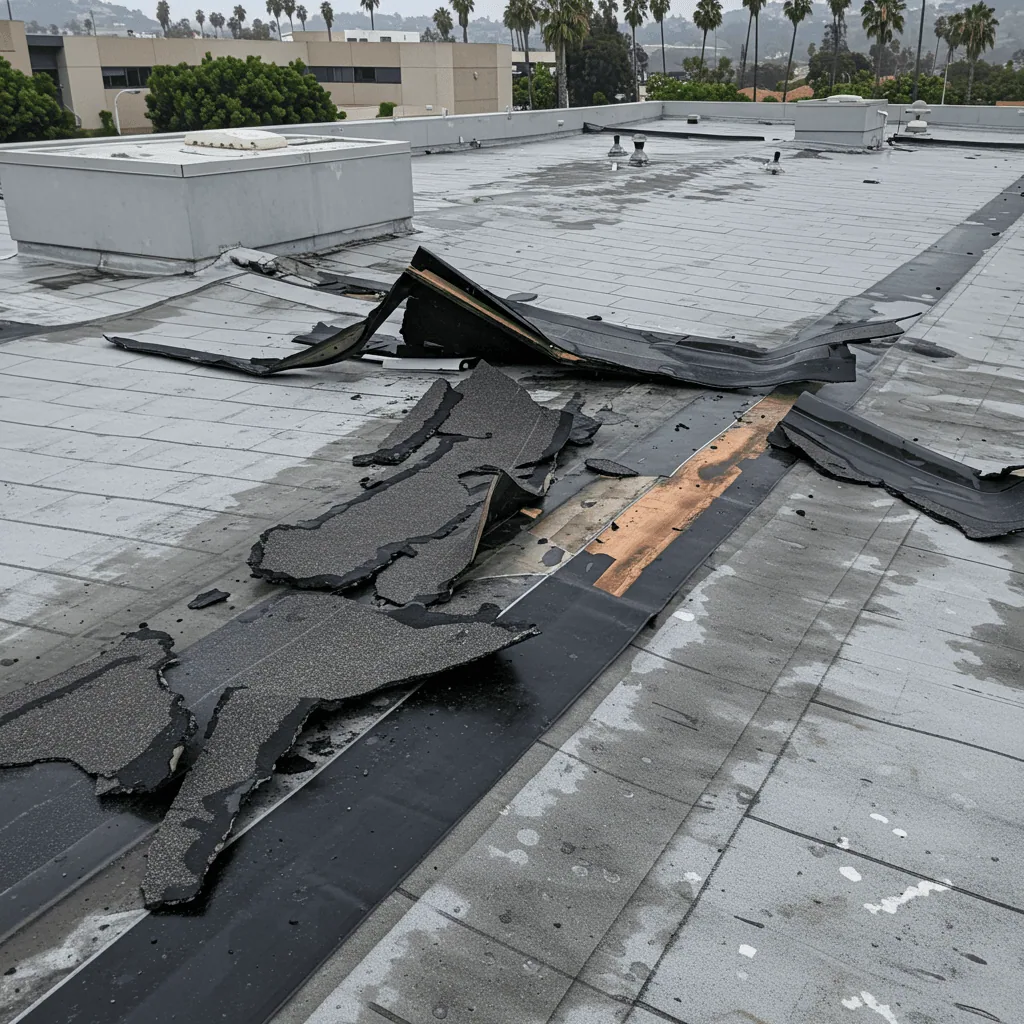
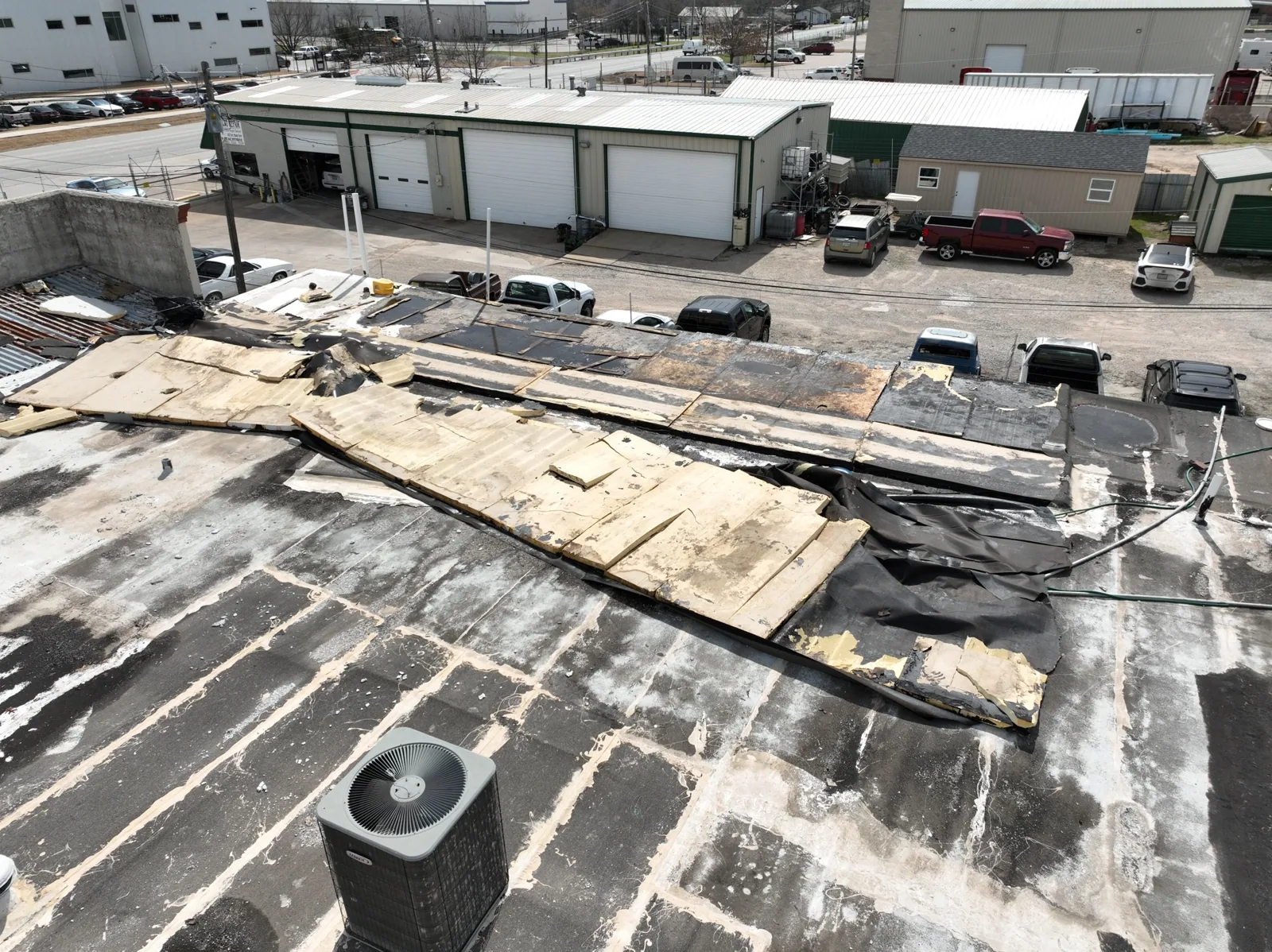
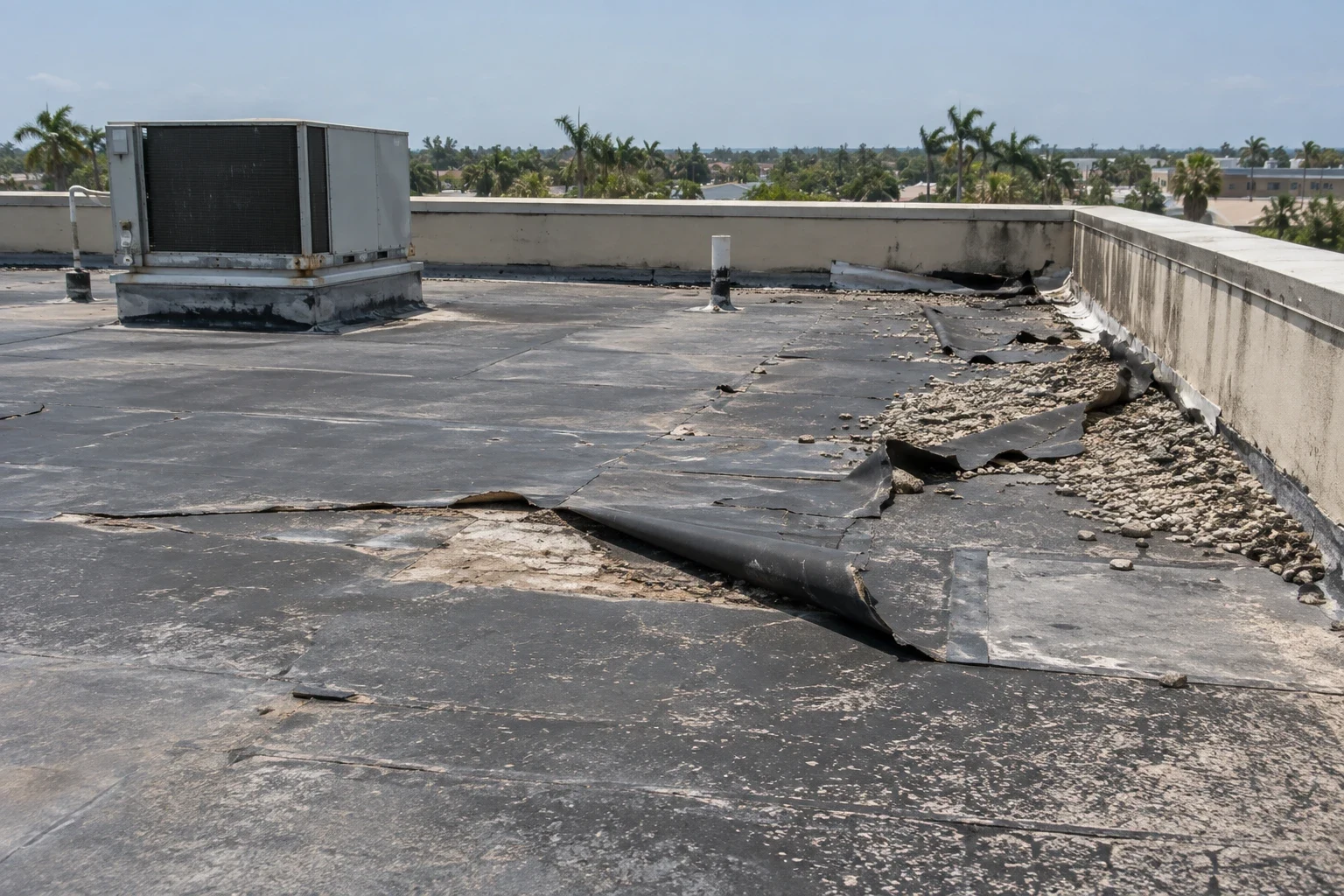
Surface findings are logged next: blistered, melted or shrunken membrane, burned flashings, damaged coping, scorched insulation edges and soot or smoke staining. Each item is photographed with a scale card and a date, and its location is placed on the rooftop sketch. Core samples are taken at the edge of the damage and a few feet beyond it to find where the insulation is sound.
How Far Heat Traveled
Heat does not stop at the visible edge. Foam insulation can shrink and char beneath a membrane that looks intact. Fasteners can lose their grip as the deck warms. Metal flashing can warp, and sealants can fail without any sign on the surface. The inspection extends past the apparent boundary until readings show unaffected material.
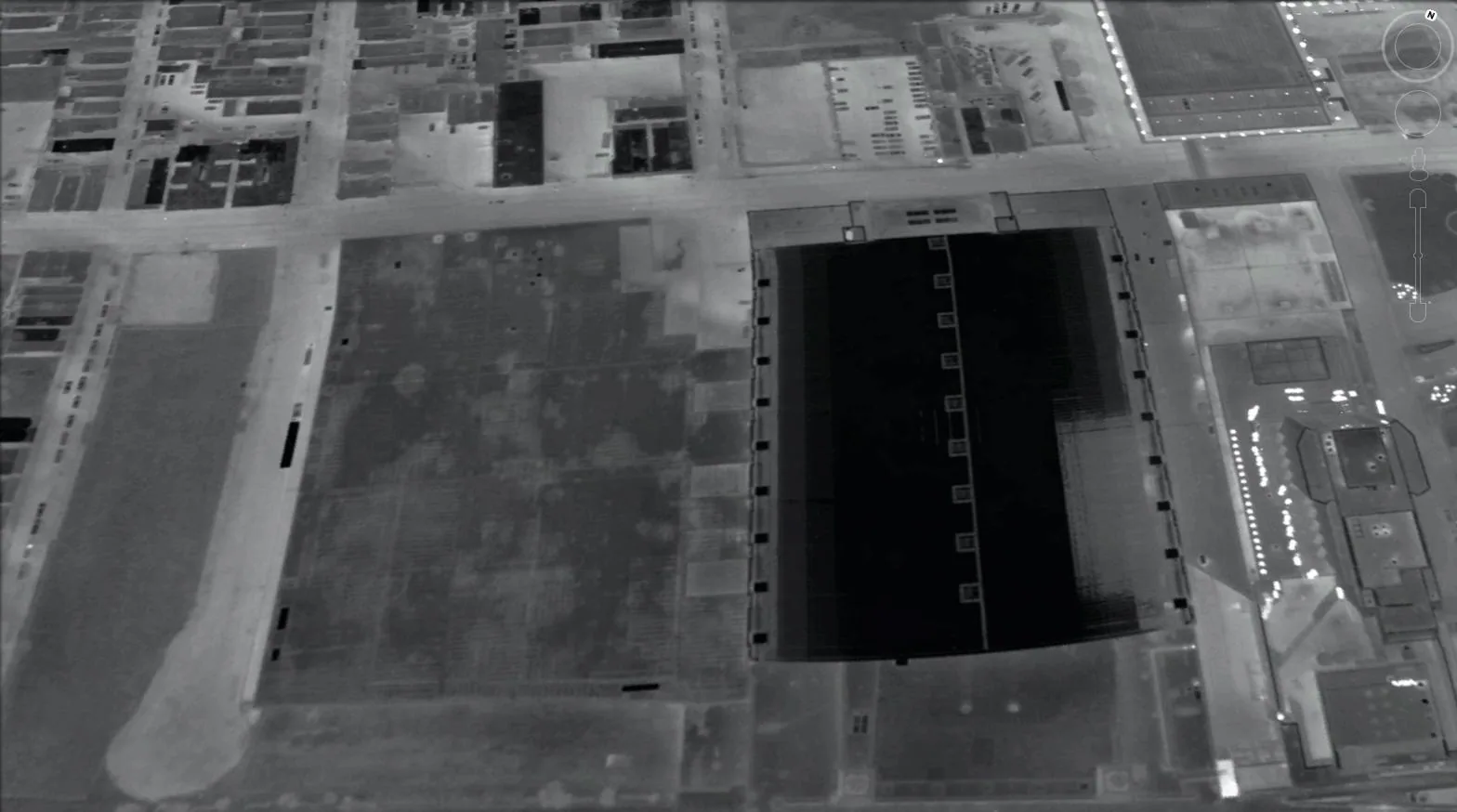
An infrared moisture survey is useful in a second way after a fire, since firefighting water often soaks the roof assembly. Wet insulation under an undamaged membrane is a common finding, and removing it is part of the scope even where the fire itself did not reach it.
Fire Exposure in Valley Building Types
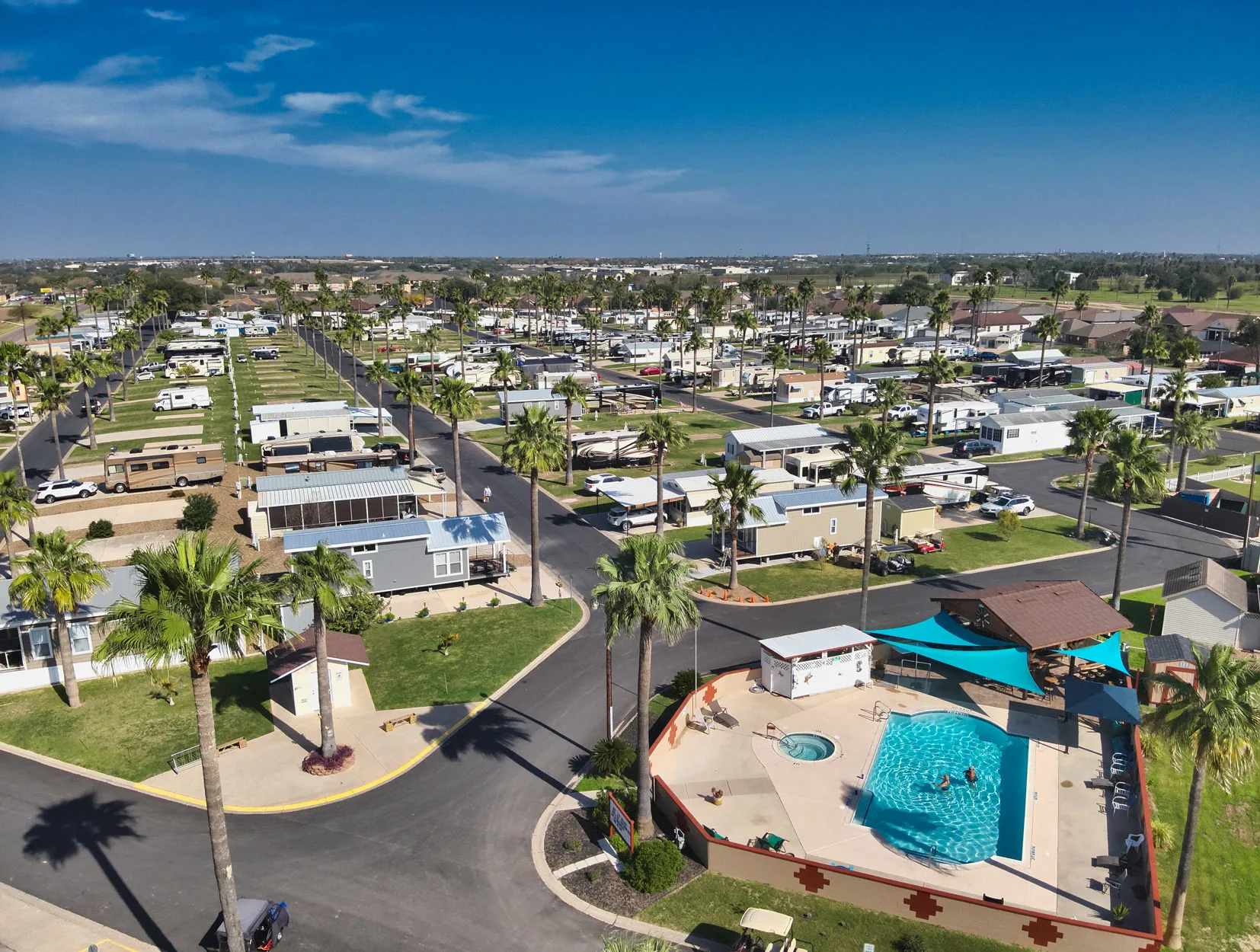
Mission's economic development office names manufacturing, healthcare, technology and retail among its sectors, and its commercial buildings sit along Interstate 2 / US 83. Roof assemblies on buildings like these vary widely, and so does the way fire interacts with them. A fire call from Donna or the river towns gets the same boundary-first record.
We do not assume what the roof holds. The inspection identifies the membrane, the insulation type and the deck, and the report states each. A roof with combustible insulation and a roof with mineral-fiber board behave differently, and the repair path changes accordingly.
Repair, Partial Replacement and Replacement
Small, local damage, such as a scorched flashing or a burned patch near a rooftop unit, can be repaired by cutting out the affected area, replacing the insulation and installing new membrane tied into the existing roof. Details are rebuilt to match the system.
When heat has reached the deck, when insulation is charred across a wide area, or when the membrane has shrunk across a section, the scope grows to partial or full roof replacement. The written recommendation lists the findings that drive the choice, the options with costs, and the sections that are only monitored. If a roof is to be left in service during the claim, temporary protection is installed first.
Dry-In and Temporary Protection
The first physical work on a fire-damaged roof is usually protection, not repair. Open areas are covered with temporary membrane or tarps secured to the deck, loose debris is removed, and drains are cleared so that rain has somewhere to go. Each step is photographed, and the date and time go into the file.
Temporary cover is a bridge, not a result. It has to hold in wind, and in the Valley that means securing edges to the deck rather than weighting them with whatever is at hand. The inspection returns to the covered areas after the first rain to confirm that nothing has moved, and the log notes how the cover performed. If the insulation under it is wet, the cover buys time but does not solve the problem.
How long a roof can stay under temporary protection depends on the findings: the condition of the deck, the amount of wet insulation and the forecast. A short-term cover over a dry, sound deck is a different situation from cover over charred insulation, and the written recommendation says which one applies.
Records for Insurers and Contractors
A fire claim involves many hands. The roof file includes dated photographs, the sketch, core results and moisture readings, along with a short narrative of what was found and in what order. Our claim documentation follows the order an adjuster uses, and the file can be shared with the owner's other consultants.
We separate fire damage from earlier conditions. A roof with older ponding or seam problems may also show them, and the report notes which came from the fire and which were already there. That separation also protects the owner when the claim closes, since the older items stay on the maintenance list with their own dates. That keeps the claim focused and the owner's budget realistic.
Timing and the Tropical Season
A roof opened by fire is exposed to weather until it is dried in. Hurricane season runs June through October, flood preparedness is a year-round matter, and Hanna in July 2020 dropped between 12 and 14 inches of rain across Mission and McAllen. A damaged roof that is still open when a storm like that arrives will take on water quickly.
Where possible, work is sequenced so the roof is closed before the tropical season. The pre-storm baseline for the repaired area is recorded, and the next named storm brings a post-storm comparison. Related work on hurricane damage and heat and UV degradation uses the same file, and Mission owners can reuse it for budgeting.
Questions and Answers
How soon should a roof be inspected after a fire?
As soon as the structure is cleared for access. Early photographs capture the damage before weather changes it, and an early moisture survey finds firefighting water before it spreads through the insulation.
Can a roof be repaired after a fire, or does it always need replacement?
Small localized damage can be repaired. Wide charring, shrunken membrane or a compromised deck usually moves the scope toward replacement. The recommendation lists both options and the findings behind each.
Why do you test insulation outside the visible damage?
Heat and water travel through the assembly beyond the visible edge. Core samples and moisture readings find where the insulation is sound, which sets the true boundary of the repair.
What records does an insurer expect for roof fire damage?
Dated, tagged photographs, a rooftop sketch, core and moisture results and a clear narrative of findings. The condition summary organizes them so they can be sent as one file.
Will smoke staining require roof work?
Staining alone is cosmetic on most membranes, but it can hide heat damage underneath. We probe stained areas and note the result so the owner knows whether cleaning is enough.
What happens to rooftop equipment after a fire below the roof?
Units, curbs and supports are checked for heat damage, warped frames and failed flashing. Equipment that has to be disconnected for roof work is coordinated with the mechanical trade, and the connection details are photographed before and after so the file shows what was disturbed.
Request a Documented Fire Damage Inspection
Send us the building address and the date of the fire. The written condition summary will include damage boundaries, core results and moisture readings, and it can be reused for budgeting or an insurance conversation.