
Service Areas
Commercial Roofing in Donna, TX
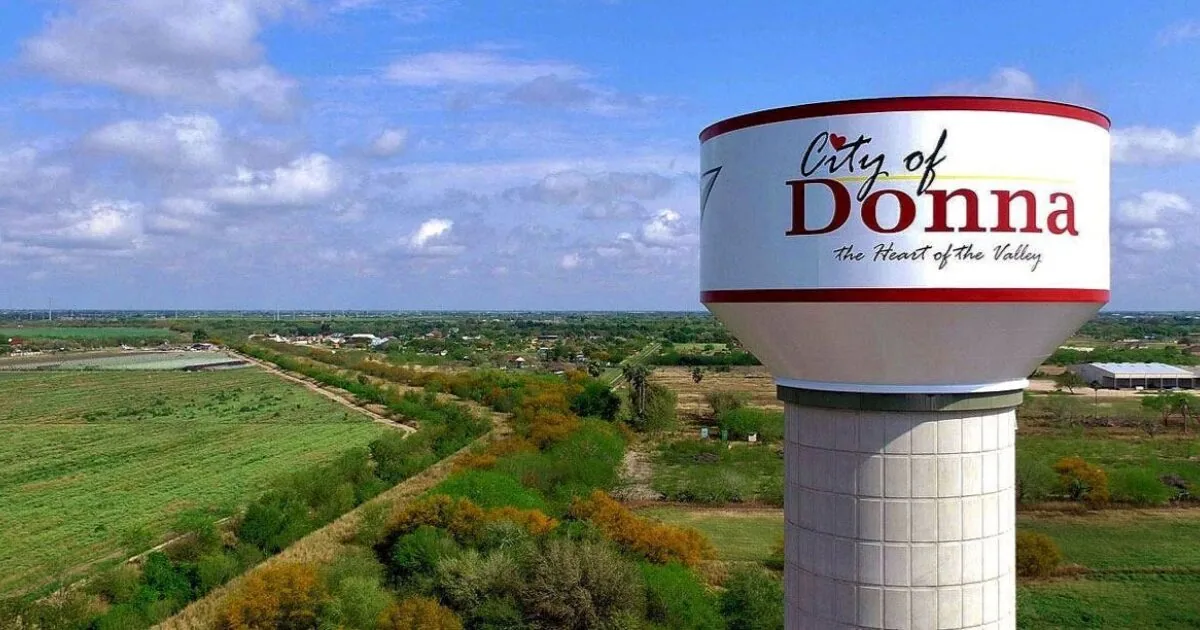
Donna, TX has an economy that has long rested on citrus, vegetables, and Winter Texan tourism, with I-2 / US 83 along the north side of town and Hooks Avenue through the center. Those facts point an inspector toward three kinds of roof: buildings tied to agriculture, buildings on the main road, and properties facing the freeway. Each gets its own first-page entry on the roof sheet. A shared storefront roof gets a note on parapet and drainage. A storage building gets a fastener count. A freeway-facing property gets a photograph of its full perimeter edge.
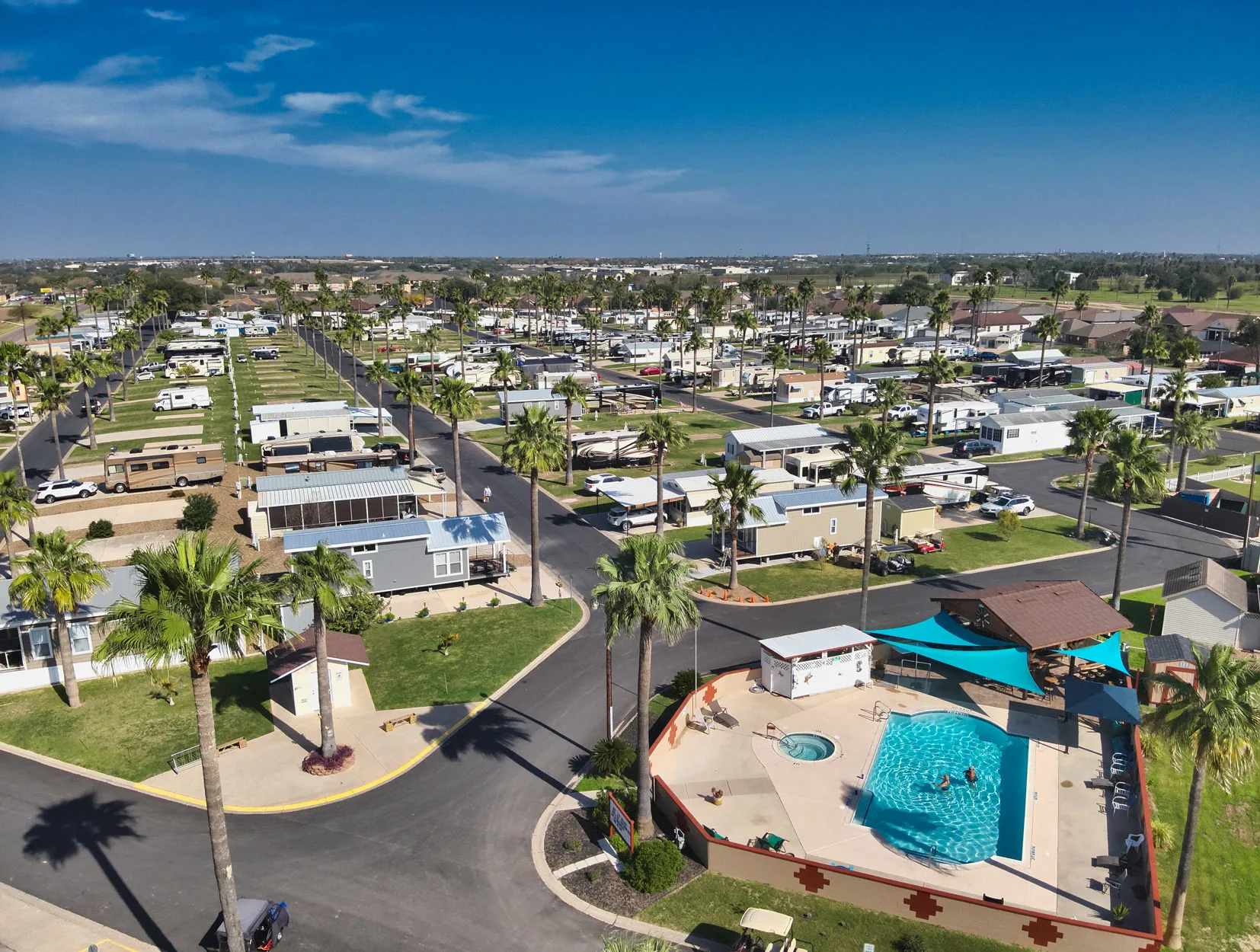
Donna's Layout and What It Means for a Roof Visit
Donna is about 11 miles east of McAllen, bordering Alamo to the west and Weslaco to the east, with 16,797 residents counted in 2020. I-2 / US 83 runs along the north side of town, and Hooks Avenue is the main road through the center.
For a roof visit, that layout keeps the routing simple. An owner with a building on Hooks Avenue and another near the freeway frontage gets both walked in one trip and written up in one summary, and the same format carries over to buildings in Alamo and Weslaco.
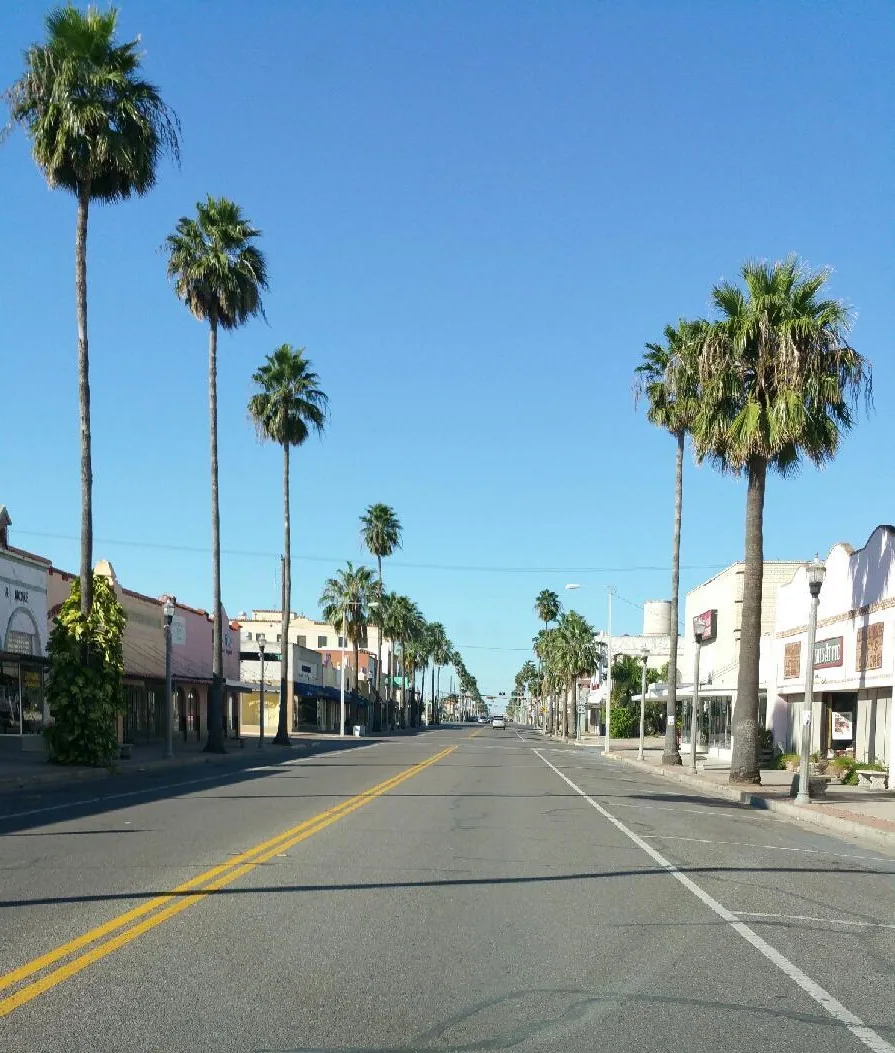
Storefront Roofs Along the Main Road
A roof over a storefront row has a pattern of its own. When several bays share one roof, divided by walls and ownership lines, a leak in one bay can start in another. Parapet walls, scuppers, and rooftop units that serve individual tenants all need checking. Where water leaves the roof matters too, since a scupper that discharges onto a sidewalk can create a hazard of its own.
We number the bays on the sketch and log each drain and scupper by bay. That makes it possible for the landlord to see which tenant's section is leaking and for each tenant to see what is being done. A drain and scupper correction often solves the water problem before any membrane repair is needed, and the log shows whether it did.
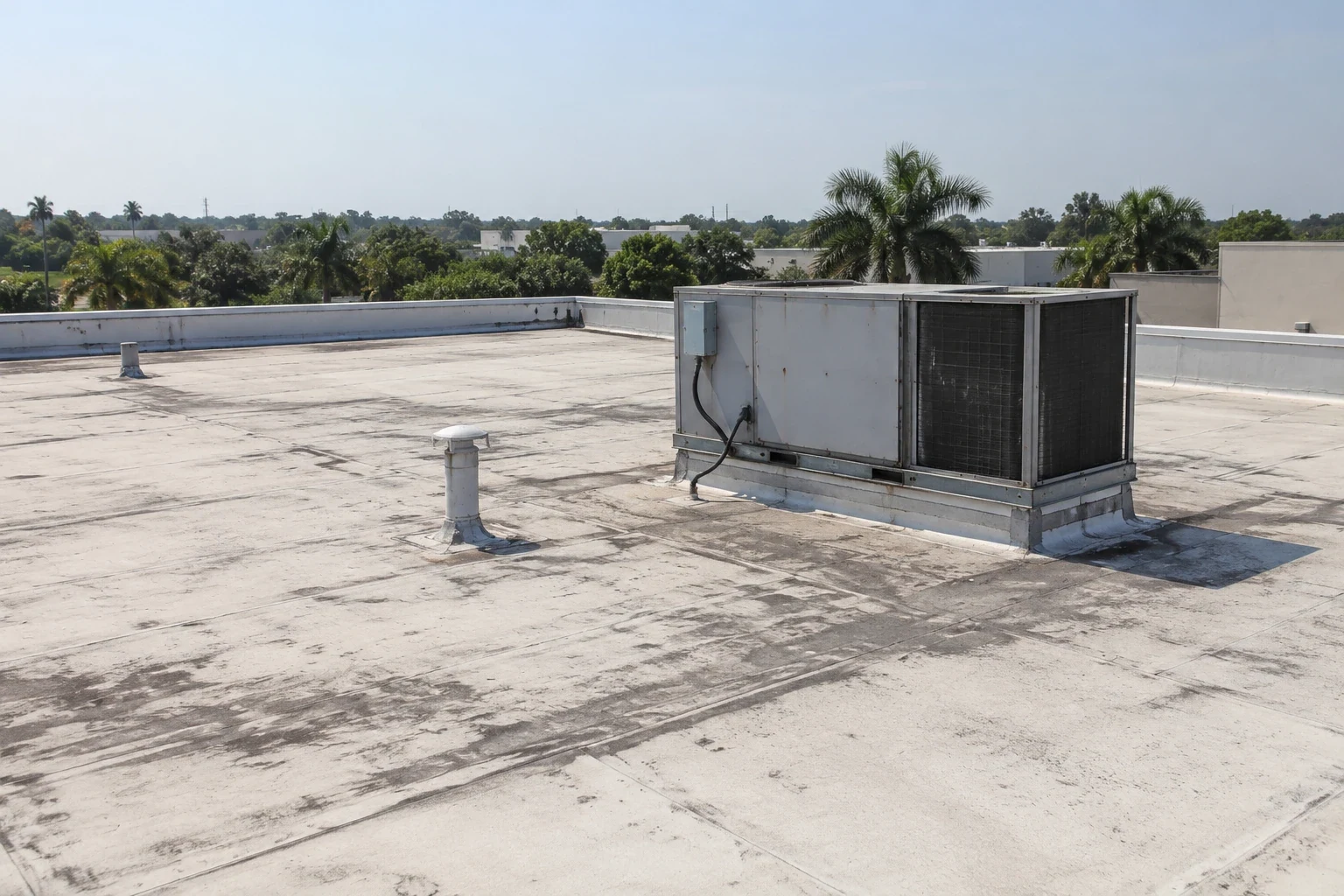
Rooftop units on a shared roof get the same bay-by-bay treatment. Each unit's curb, condensate line, and electrical conduit is photographed and tagged to the tenant it serves. When a unit is replaced, the curb height and flashing are reviewed before the new equipment is set, so a mismatched curb does not leave a gap for water to follow.
Citrus, Vegetables, and Agricultural Buildings
Donna's economy has long rested on citrus, vegetables, and Winter Texan tourism, with cotton gins and a sugar mill in its history. Buildings that serve farming and handling, such as sheds, storage structures, and packing spaces, can carry metal roofs over long spans, where wind and fastener condition decide the roof's life.
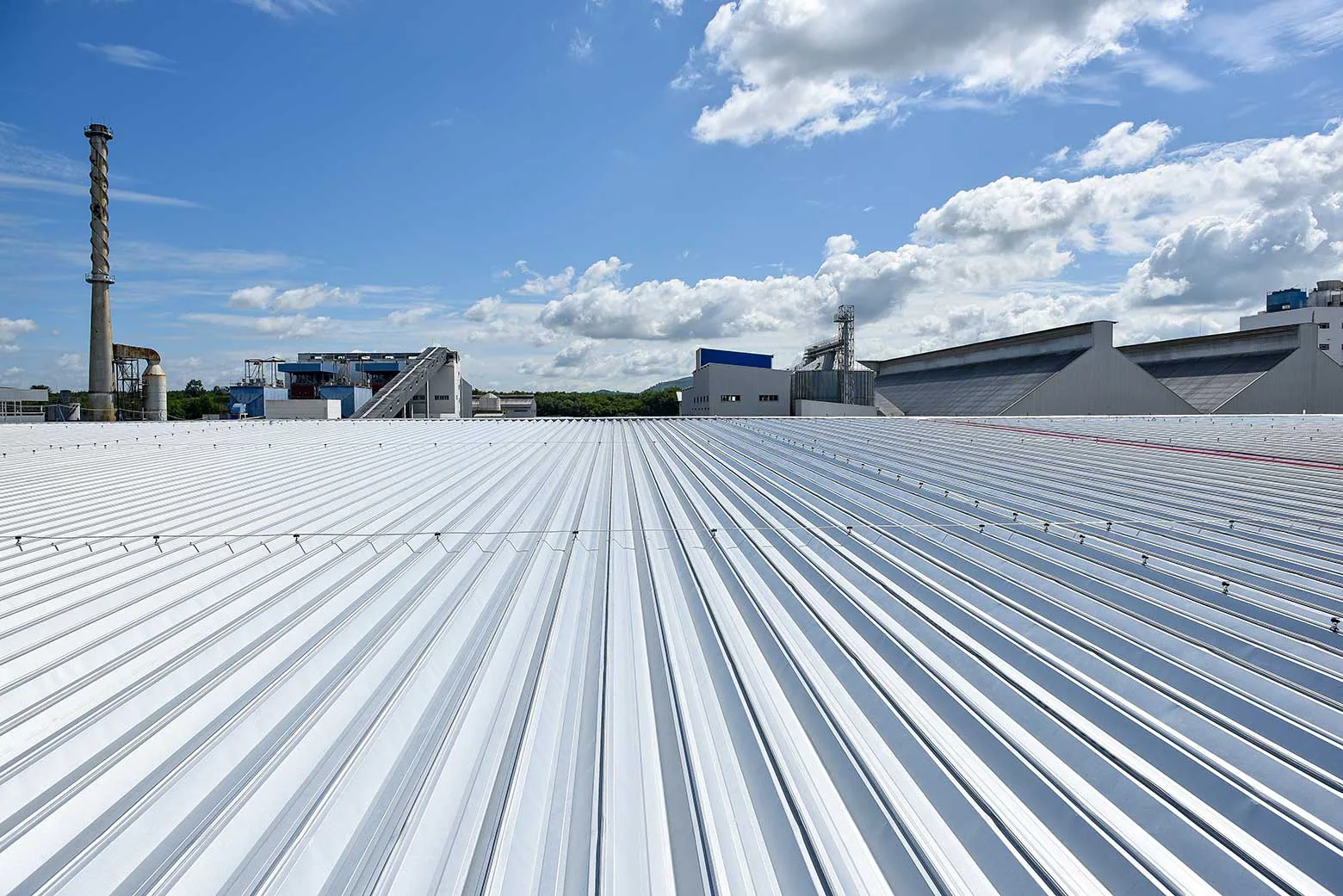
On a metal roof we walk the panels, check the fasteners and washers, and look at the lap sealant. A leak at a fastener can be repaired, but a roof with widespread corrosion calls for a metal roof retrofit or replacement. Where a building stores produce or equipment, we ask about the contents, because a dry space is worth more than a clean roof surface and the leak response should reflect.
Gutters and downspouts are the other recurring item on a farm-type structure. Where water discharges directly against a wall or slab, it can undermine the foundation and soak stored goods, so the scope notes the discharge point of every downspout and recommends extensions or splash blocks where the water lands badly. These small items take little time, and the dated photographs show the owner exactly where water was going before and after.
Freeway-Side Properties and Flex Space
With I-2 / US 83 on the north side, properties facing the freeway have visibility that other buildings do not. A peeling edge or a stain running down a wall can be seen by passing traffic. A flex industrial roof may have office, showroom, and warehouse sections under one structure, each with its own roof details.
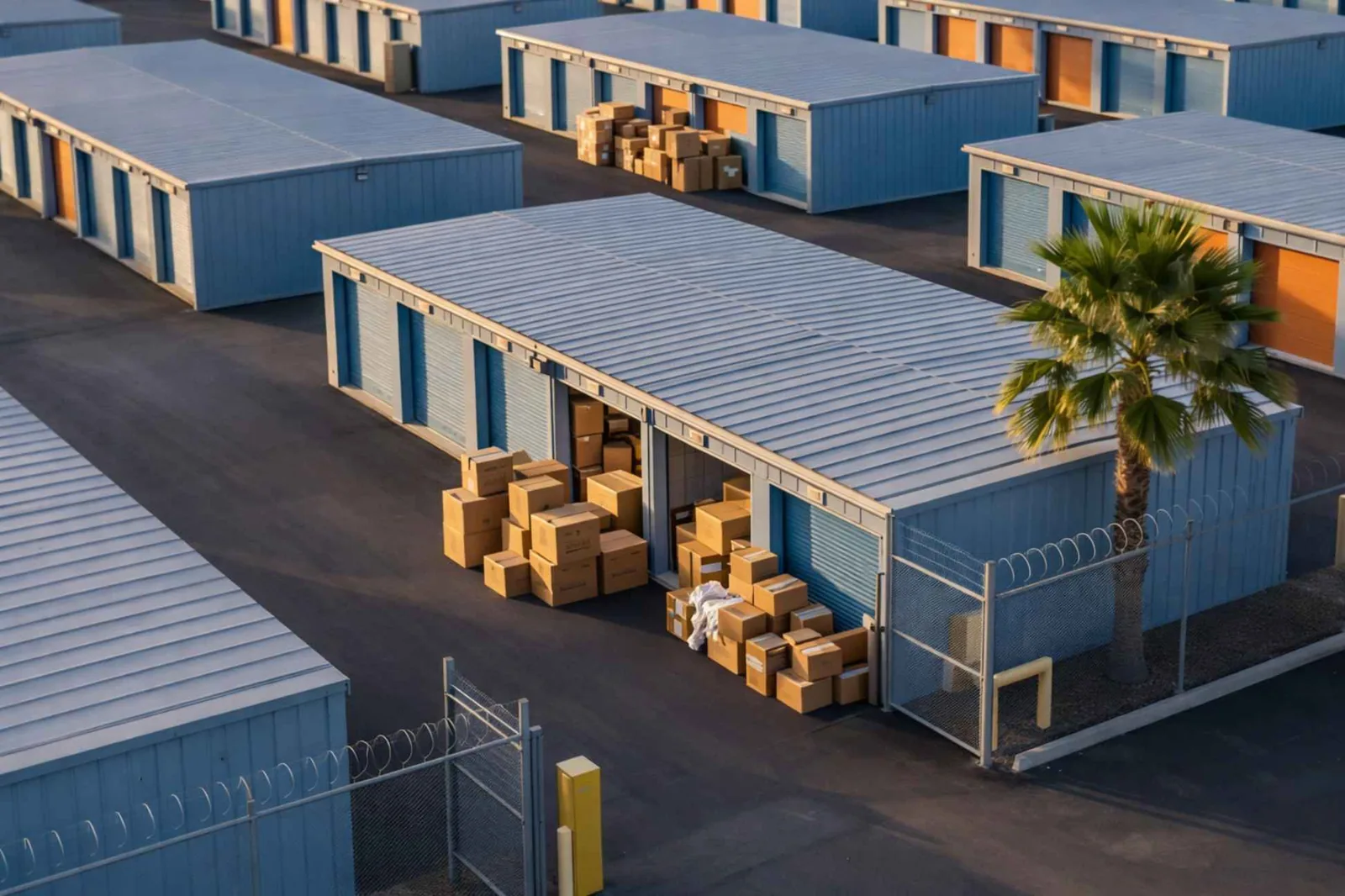
The first walk covers the edges and the transitions between sections, where different roof levels meet and flashing details concentrate. We note the roof area over the office portion separately, because a leak there is a different kind of problem than one over a warehouse floor. Self-storage and similar low-profile buildings, which call for their own approach to self-storage roofing, get a fastener and seam check on every panel line.
Heat, Tropical Rain, and Drainage
The Valley's heat-safety season spans May through October, hurricane season spans June through October, and flooding can hit in any month. In July 2020 Hanna filled a gauge northwest of Mission with 14.40 inches, and the rain tested drainage across the region. A Donna roof lives through the same pattern of long heat followed by sudden water.
That sequence is hard on a roof. Heat stiffens sealants and shrinks membranes. Heavy rain then finds the gaps. We recommend a heat-season check before May, a pre-storm pass in early June, and a post-season walk in November. Each adds to the owner's file, and a preventive maintenance program turns those visits into a routine instead of a reaction.
Choosing Between Repair, Coating, and Replacement
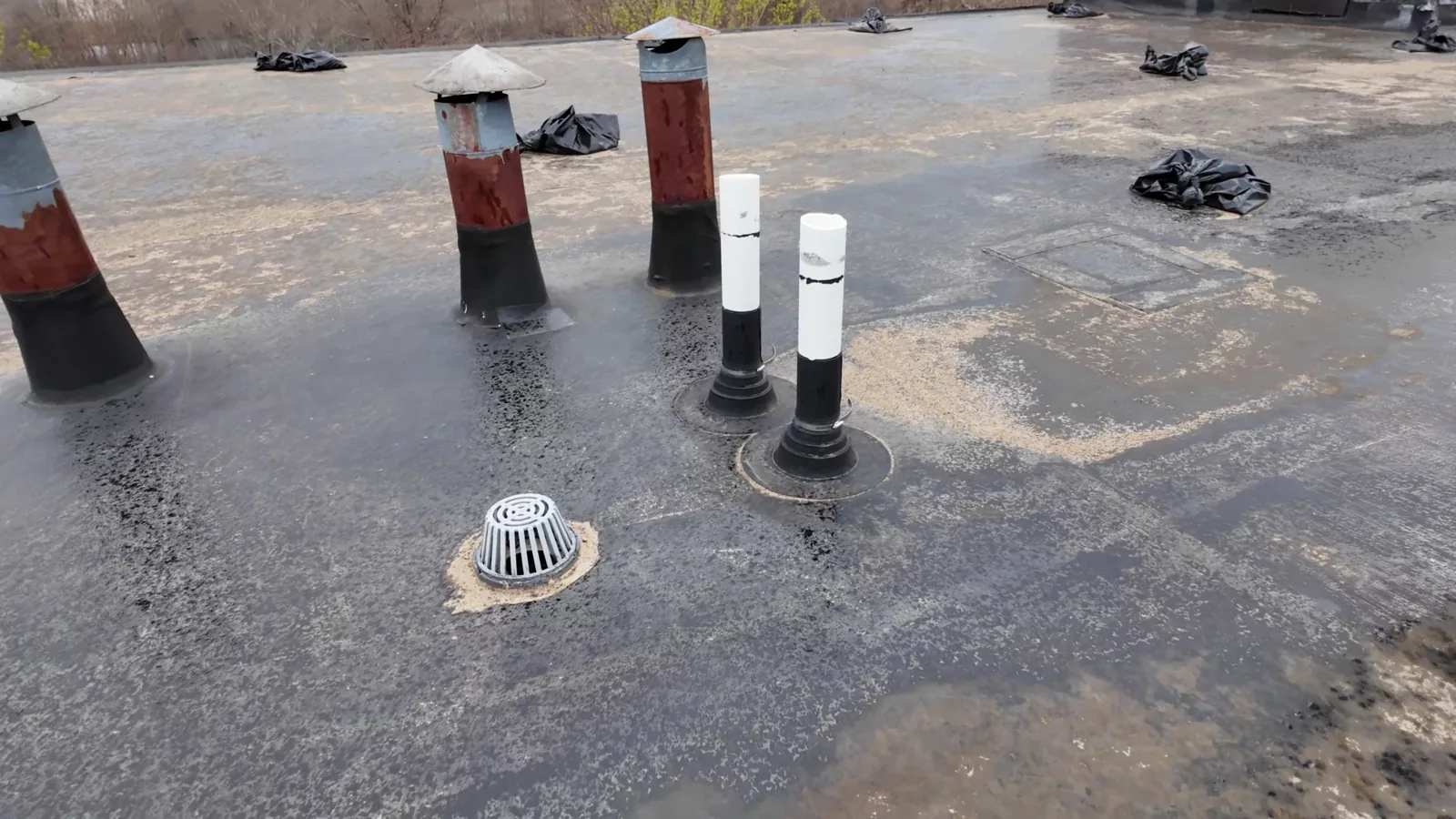
Evidence picks the path. A moisture survey and a few core cuts show whether insulation is dry. A dry roof with a sound membrane can be repaired or coated. A roof with isolated wet areas can be patched and watched. A roof with widespread moisture needs more than a patch, and ponding that does not clear is a drainage question that belongs in ponding water repair before any coating decision.
The cost drivers are consistent: roof area, penetrations, the amount of old material to remove, access, and the hours available. We write them into the scope in plain terms. Calls at any hour, holidays included, get a crew whose first visit dries the building in and photographs the damage.
Questions and Answers
How are storefront roofs shared between tenants checked?
We number each bay on the roof sketch, log each drain and scupper by bay, and photograph every wall and parapet. A leak that appears in one tenant's space is traced back across the shared roof, since the source is often in the next bay. The landlord receives one summary, and tenants can see what applies to their section.
What roof problems show up on metal agricultural buildings?
Backed-out fasteners, failed washers, corroded trim, and open laps are the usual findings. Long spans catch wind, so edges and corners matter. We test fasteners at several points and report the results by roof section. The scope separates tightening and sealing from larger corrections like panel replacement.
Does a coating make sense on an older metal roof?
It can, if the panels are structurally sound and rust is limited. The surface needs cleaning, rust treatment, and sealed fasteners before a coating goes on. If rust has perforated panels, coating will not hold, and replacement or a retrofit is the better path. Test patches and fastener checks settle which applies.
Can work be done while a storefront stays open?
Usually it can, in sections. We keep entrances clear, shield air intakes, schedule noisy tasks for quiet hours, and give tenants advance notice. Each section is closed in against weather the same day. The plan is written down so the landlord and each tenant know the sequence.
What happens when a storm is forecast mid-project?
Open sections are closed first, loose materials are secured, and equipment is tied down. After the weather passes, we walk the roof and photograph its condition. The record shows what changed, which helps with repair planning and with any insurance conversation that follows.
Schedule a Donna Roof Inspection
Send us the address and tell us what the building holds. We will walk the roof, photograph each finding, and give you a written condition summary with a ranked list of repairs.