
Roof Damage Repair
Heat and UV Roof Damage Repair in Mission, TX
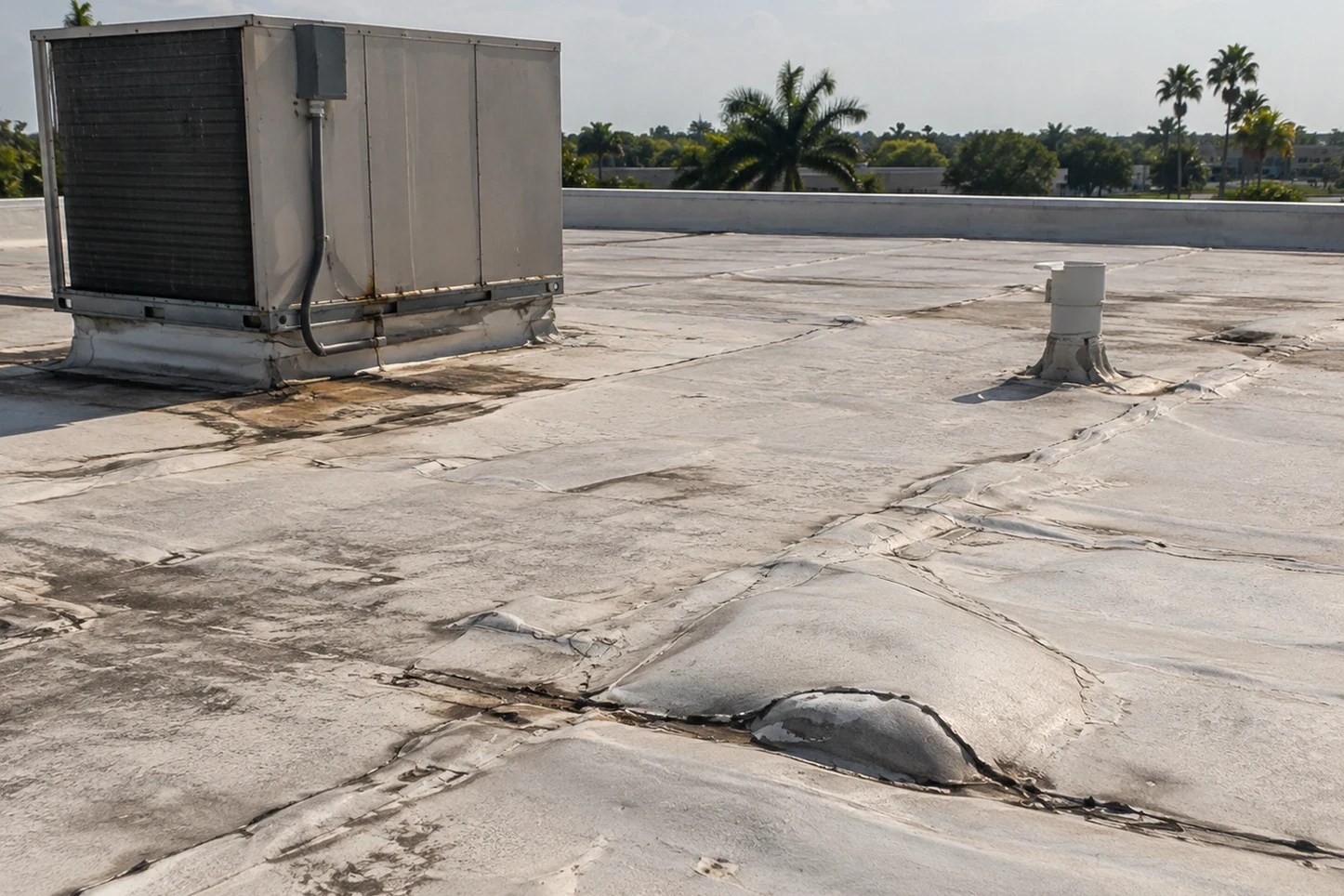
A heat inspection starts with a dated photograph of the surface itself: chalky residue on a white membrane, a crazed pattern along a seam, a curled edge at a wall. The note beside it records how much of the section shows the same condition, because wear that covers a whole elevation calls for a different decision than wear confined to a corner.
On commercial roofs in Mission, TX, sun is the steady load. It does not arrive as an event, so the damage it causes is easy to dismiss until a leak appears. The record we keep turns slow wear into a measurable trend that supports a budget decision.

The May-to-October Load
The Brownsville forecast office treats May through October as the Valley's heat-safety season. For a roof, that is six months of direct solar exposure, with surface temperatures well above the air and sharp swings between afternoon and night. Every material on the roof expands and contracts along that cycle, and each cycle takes a little from the bond between layers.
Ultraviolet light adds its own damage. It breaks down the surface of membranes and sealants, removes plasticizers, and leaves a brittle skin. Reflective surfaces slow the process, though they accumulate dirt and lose reflectivity as they age. By the end of a heat season, the surface findings are visible to a trained eye, and a spring inspection catches them before the next one.
Rooftop equipment contributes to the load. Exhaust and condenser heat blows across the membrane near units, so the surface around them often ages ahead of the rest of the section. We note those zones on the sketch and compare them with the field. A difference of one grade between the zone and the field is a useful finding, since it points to where repairs will be needed first.
What the Surface Shows
We log a short list of conditions. Chalking leaves white powder on the hand or on a wipe test. Crazing appears as fine cracks across the surface. Shrinkage shows as a membrane pulling away from walls and curbs, leaving bridged corners and exposed flashings. Granule loss on cap sheets exposes the asphalt beneath. Sealants harden and crack, and metal edges show finish failure.
Each condition is photographed with a scale card, tagged to its roof section and entered in the sketch. Where we can, we measure the amount of shrinkage at walls and the width of cracks. The numbers do not have to be exact; they have to be repeatable, so that the same measurement next year shows whether the trend is moving.
Heat at Seams, Flashings and Edges
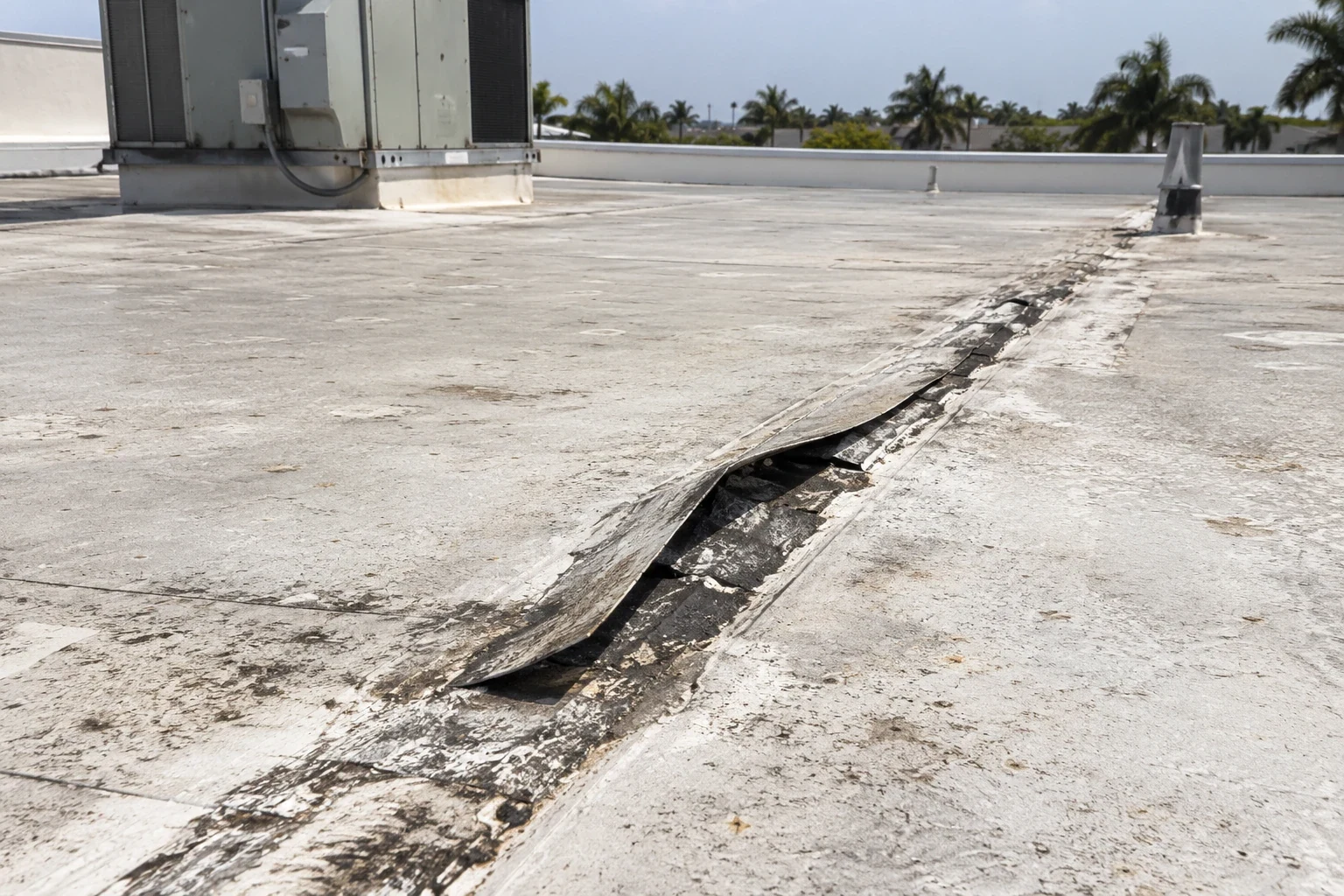
Surface wear is the first sign. The expensive failures come at details. Heat-stiffened seams lose flexibility and open under movement, which is why seam failure is often a heat finding. Flashings pull at their terminations as the sheet shrinks. Sealants lose adhesion and let rain in at the edge.
We probe seams along the full length of each exposed elevation, check termination bars and sealant, and record each defect. A roof in Palmhurst or Hidalgo gets the same checklist as one in Mission. Where a coating is already on the roof, a coating film check tells us whether the film is intact and how much of its original thickness remains.
Weakened Material Meets the Tropical Season
Heat damage sets up storm damage. A membrane that has become brittle tears more easily under debris, and a seam that has stiffened may open in the wind. Hurricane season, June through October, sits entirely inside the heat season. Older structures near Weslaco lost roofing in Dolly, and Hanna's damage fell on poorly built roofs.
For that reason a late-spring inspection looks at both. A membrane with moderate surface wear but sound seams can go into the season. One with deep cracking and weak details is a candidate for repair or recoating first. A pre-storm baseline records which category the roof was in, and the post-storm comparison shows whether a brittle sheet tore or a stiffened seam opened. That record separates the damage the storm caused from the wear that was already on the roof.
Repair and Restoration Options
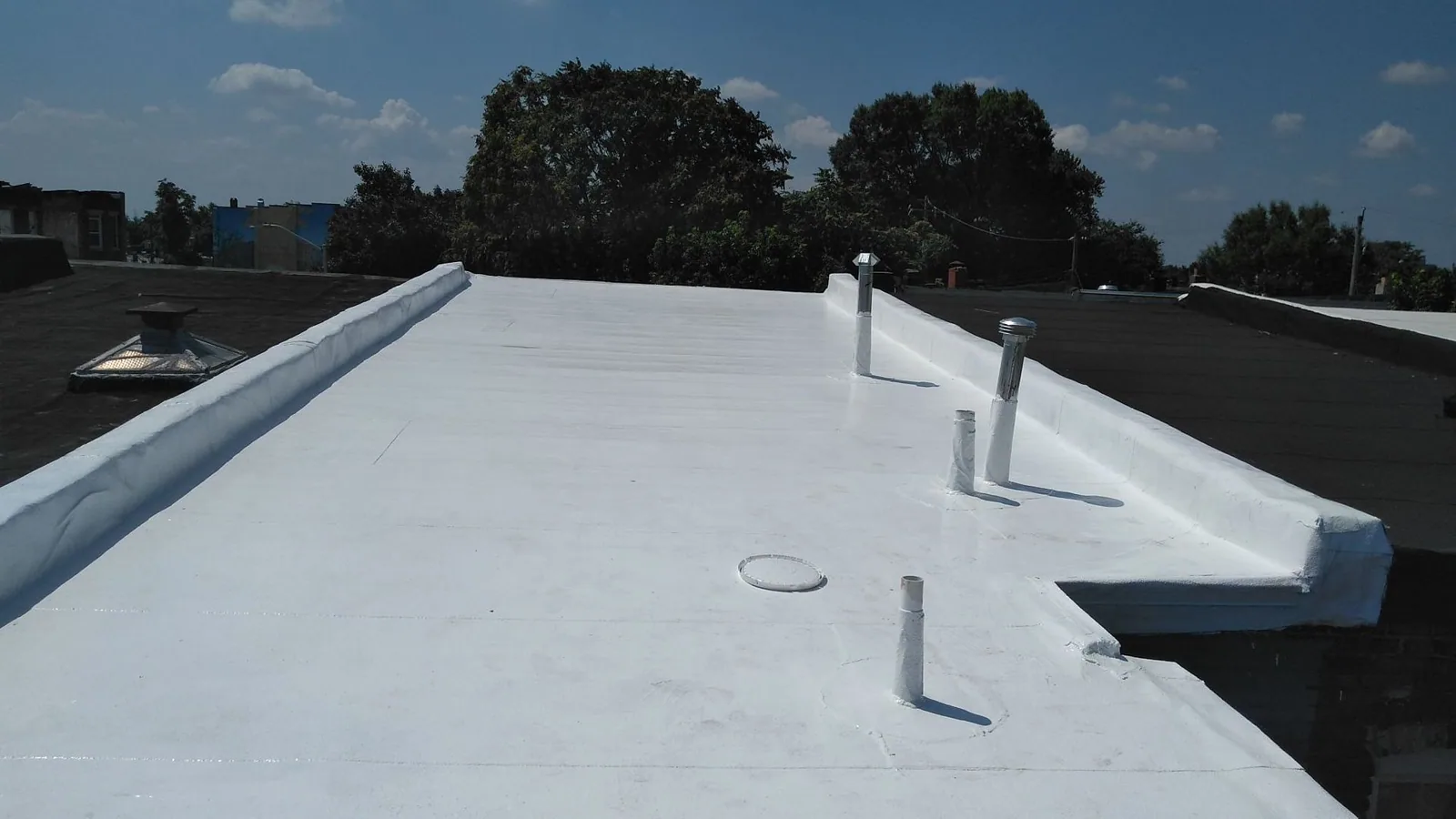
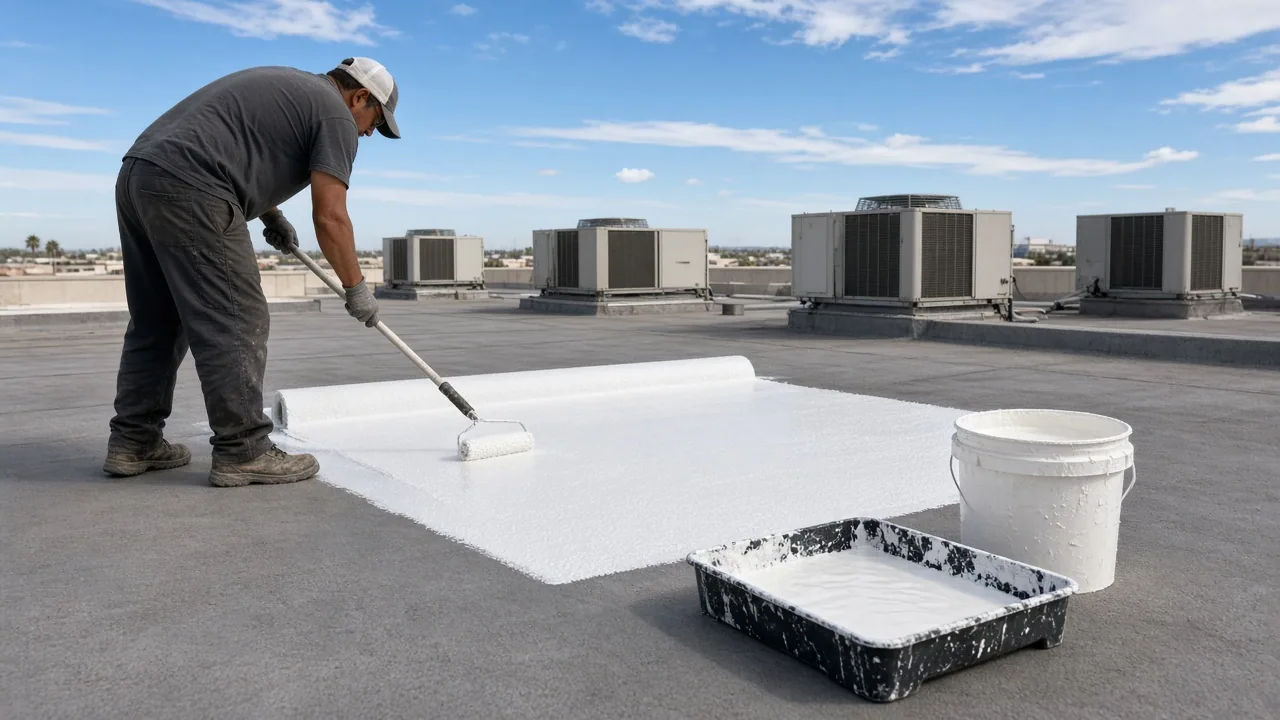
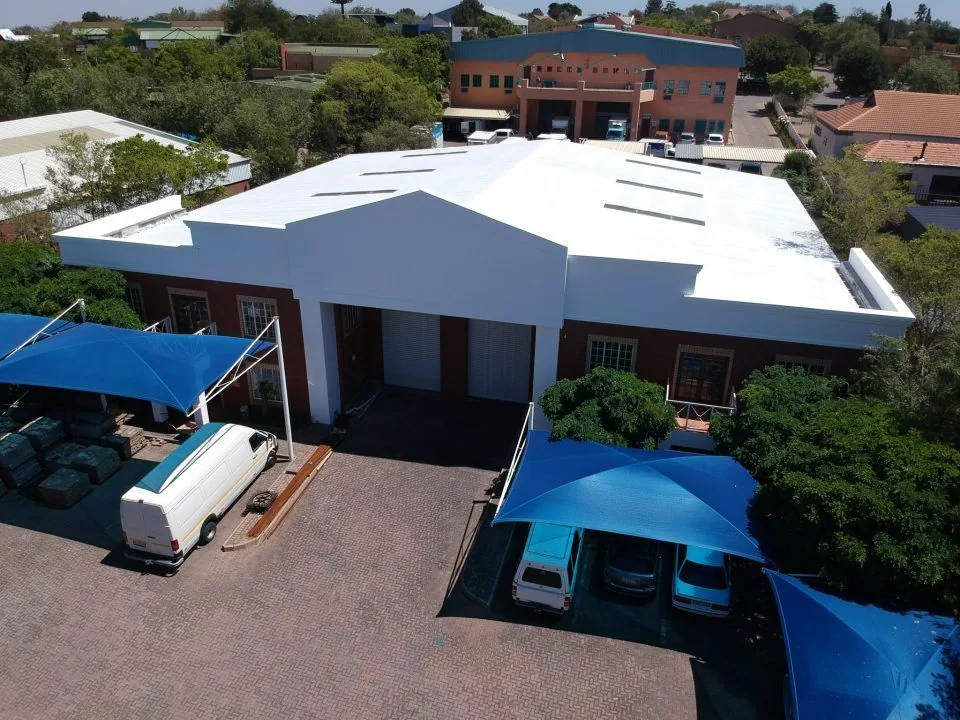
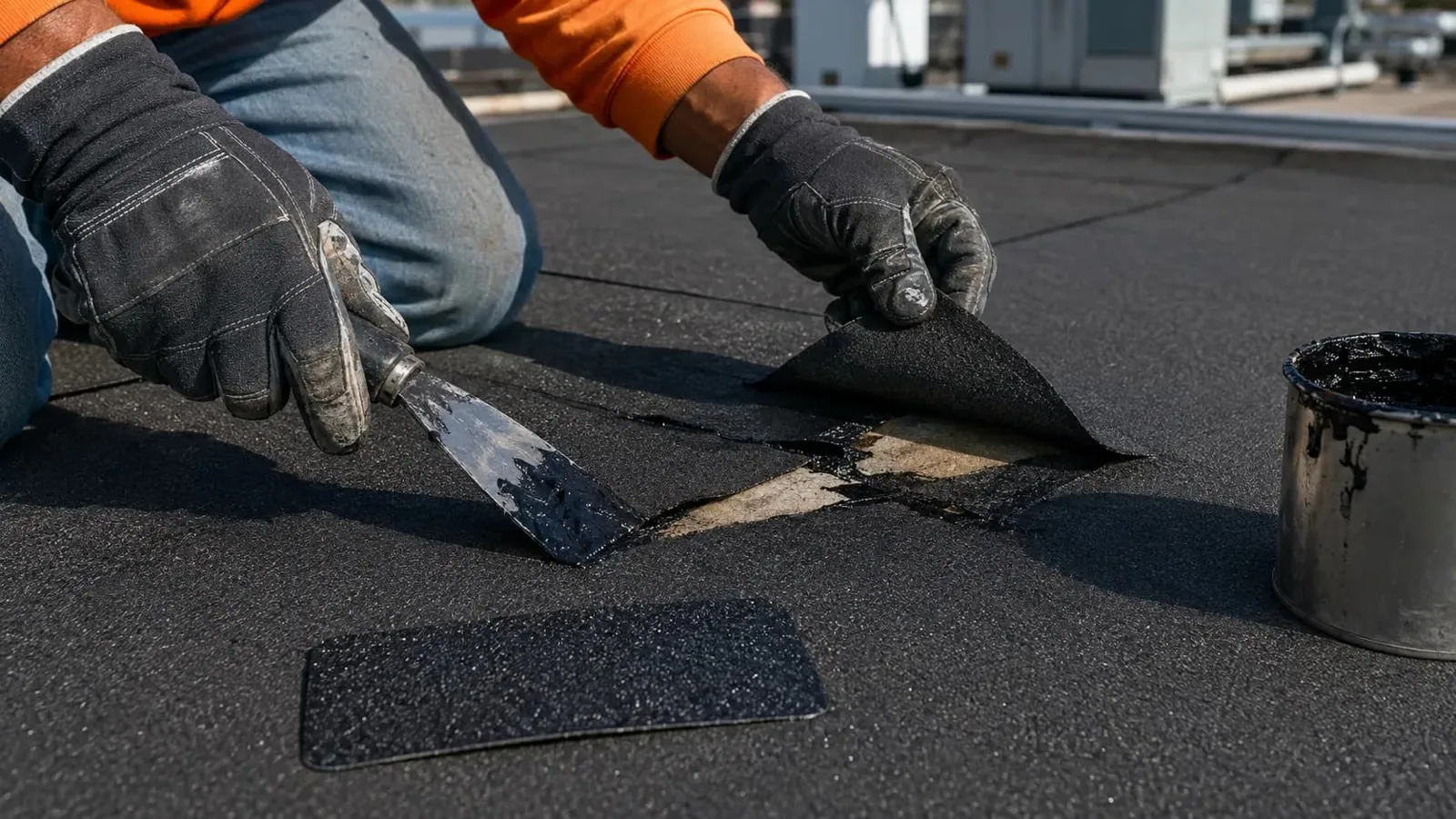
Minor surface wear is monitored and photographed. Localized cracking is repaired with compatible patches and sealant. Where wear is widespread but the insulation is dry and the membrane is sound underneath, coating restoration can extend service life: silicone where ponding is a factor, acrylic where the slope drains well. The coating film is checked for thickness after application.
When the membrane has lost too much material, or moisture surveys find wide wet areas, recoating stops being the right answer and the scope moves to recover or replacement. A cool roof system can lower surface temperatures in the next installation. The written recommendation gives the findings behind each option and the cost comparison.
Preparation decides how well a coating holds. The surface is cleaned and tested for adhesion, seams and flashings are repaired first, and any ponded area is addressed before the film goes on. A coating over a dirty or failing surface peels, and a coating over a wet roof traps the water. The inspection therefore comes before the quote, not after it, and the moisture map is attached to both.
Keeping the Heat Record
The condition summary lists the surface findings, the details affected and the recommended action, with the monitored items dated. Repeating the inspection each spring builds a trend. If chalking is advancing slowly, the roof can wait another season. If cracking has spread since last year, the schedule moves up. Repeating the inspection each spring also gives the owner a documented history to hand to a lender, a buyer or an insurer without gathering photographs after the fact. Nearby findings such as a membrane puncture are logged in the same visit, and owners in Mission can reuse the file for budgeting or an insurance conversation.
Questions and Answers
How can I tell whether surface wear is cosmetic or serious?
Cosmetic wear stays on the surface and leaves seams, flashings and insulation unaffected. Serious wear shows cracks through the membrane, shrinkage that exposes flashings, or moisture readings that show water has entered. The probe and moisture checks decide.
Will a reflective coating fix heat damage?
A coating can protect a sound membrane and slow further wear. It cannot restore a membrane that has lost its structure or hide wet insulation. The inspection determines whether coating is appropriate.
When in the year does heat wear show most clearly?
By the end of the heat season in October, and a spring inspection catches what built up over the previous summer before the next one begins. Comparing each year's photographs shows the rate of change, which is more useful than any single observation.
Does heat damage affect the warranty?
It can, depending on the terms. Some warranties require maintenance records or exclude certain wear. We record the system and condition so the owner has what is needed to read the terms.
Can heat damage be repaired in place without a full replacement?
Often yes, when the damage is moderate and the insulation is dry. Patches, sealant replacement, flashing repair or a coating can extend service life, and the report compares each against replacement.
Are some surfaces more vulnerable to Valley heat than others?
All exposed surfaces age in sustained sun, but the way they show it differs. Single-ply sheets chalk and shrink, asphalt cap sheets lose granules, coatings thin, and sealants crack. The inspection identifies the system first so the findings are read against the right signs.
Request a Documented Heat Inspection
Send us the building address and the roof type. The written condition summary will record surface wear, seam and flashing condition and moisture readings, and it can be reused for budgeting or an insurance conversation.