
Roofing Manufacturers
Soprema Roofing Systems in Mission, TX
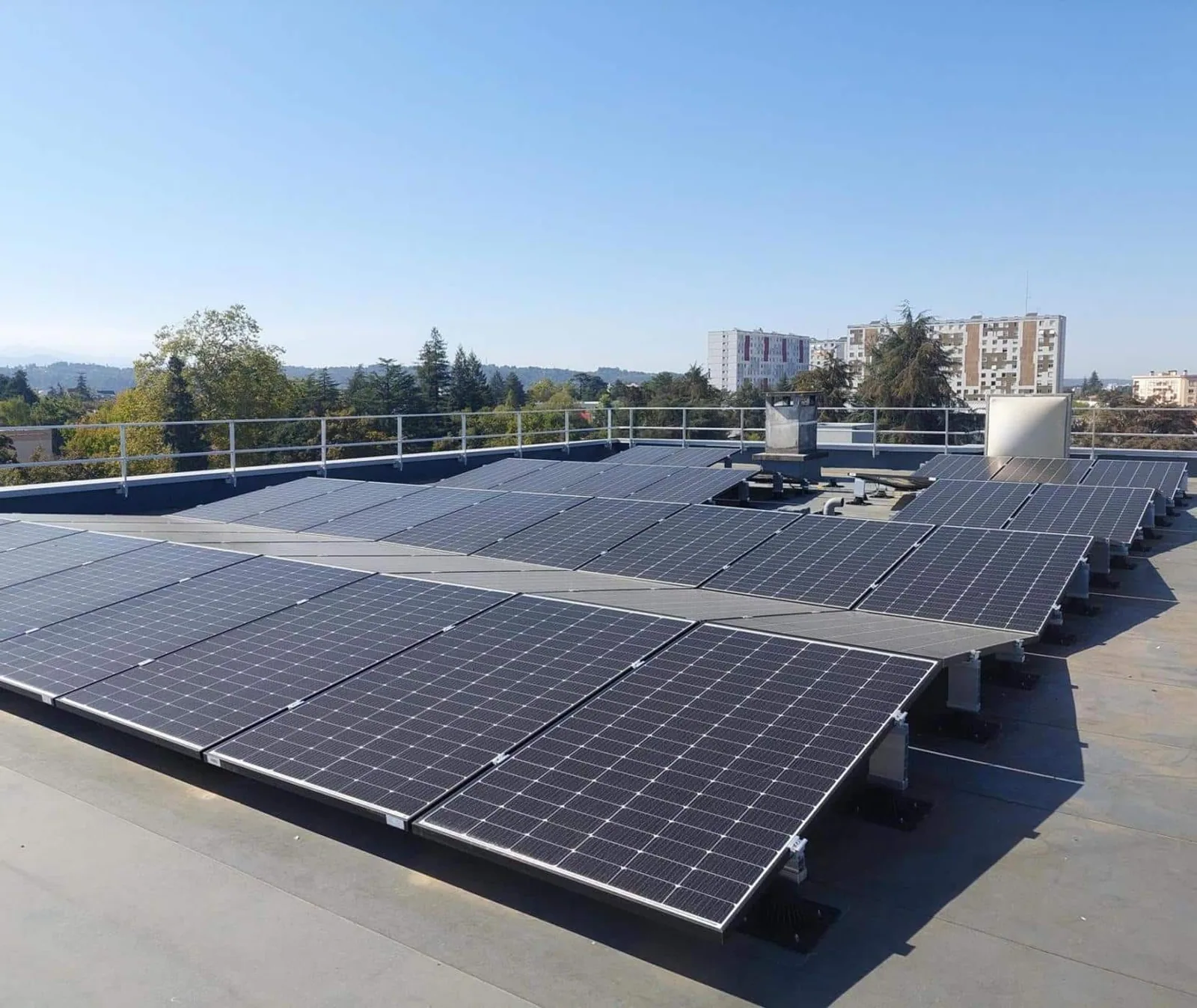
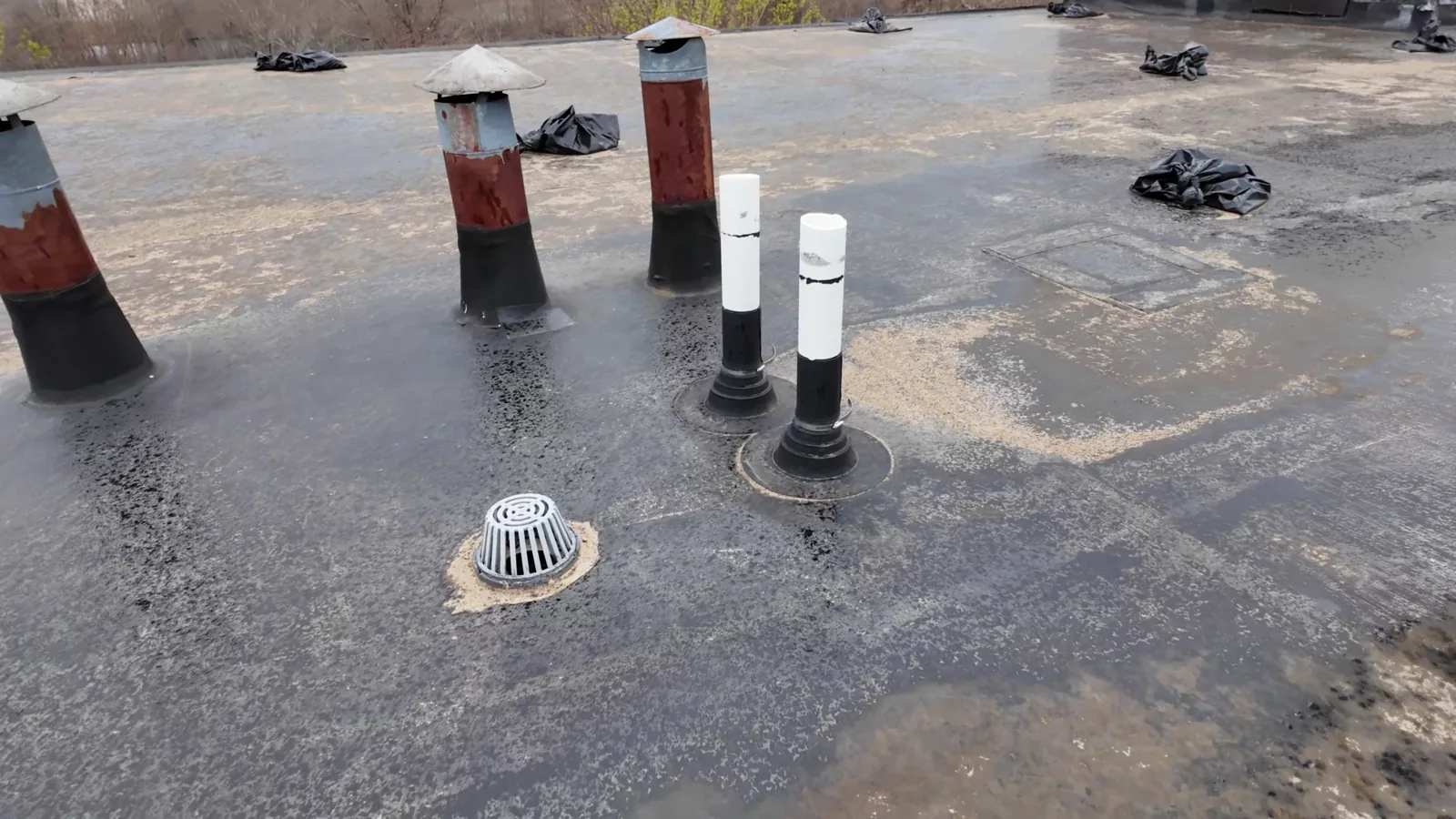
The flashing log opens the inspection of a Soprema roof in Mission, TX, because most leaks start at a detail rather than in the field. Soprema manufactures modified bitumen membranes, liquid-applied flashing resins such as Alsan and related waterproofing products. Those materials meet at curbs, pipes, walls and drains, and each meeting is a place where a record is worth more than an opinion. We number the details, photograph them and describe each as sound, worn or failed.
The field of the roof is read afterward. A modified bitumen sheet shows its age in granule loss, blistering and lap splits, and the findings join the flashing log on the same sketch.
Modified Bitumen Sheets and Their Laps
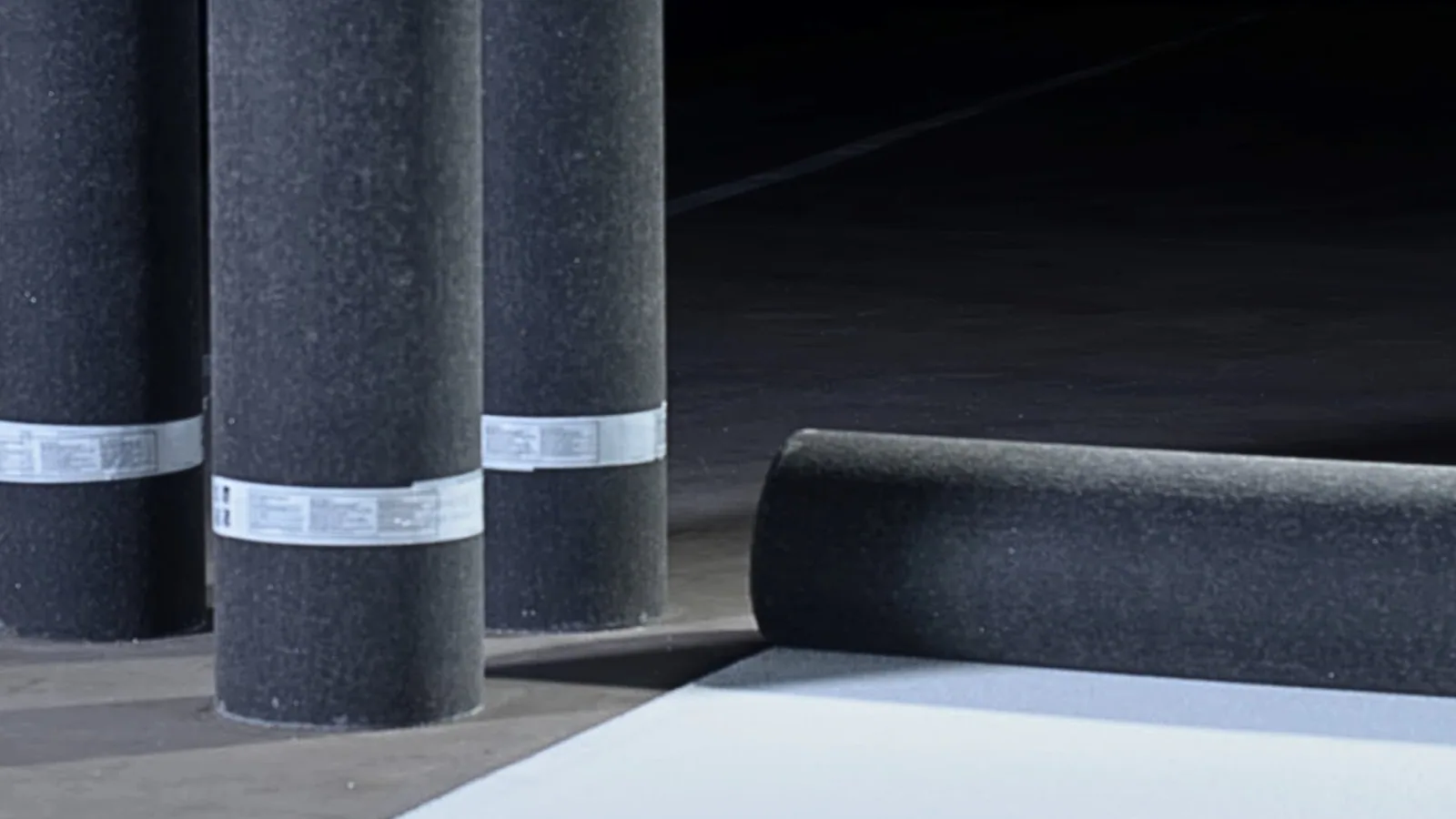
Modified bitumen is an asphalt-based sheet reinforced with polyester or fiberglass and modified with polymers for flexibility. It may be torch-applied, mopped or self-adhered, and the laps are the weak points. Over years of Valley sun, laps can open, granules can wear away and the surface can blister. We probe laps, map blisters, and note any place where the surface has lost its protective layer.
Torch-applied work requires a hot work permit and a fire watch, so the choice of method influences the schedule. Cold-applied and self-adhered systems avoid open flame and may be better for buildings with sensitive tenants. The scope line states the method and the reason.
Base sheets and cap sheets are separate layers, and the inspector checks both where a repair exposes them. A cap sheet worn through to the reinforcement lets water reach the base, and the base is harder to repair than the cap. When we cut a test square, we photograph each layer, measure its thickness and record the condition of the adhesive or asphalt between them. The result tells the owner whether the roof can take another repair or whether the layers have lost their bond.
Liquid-Applied Flashing Around Penetrations
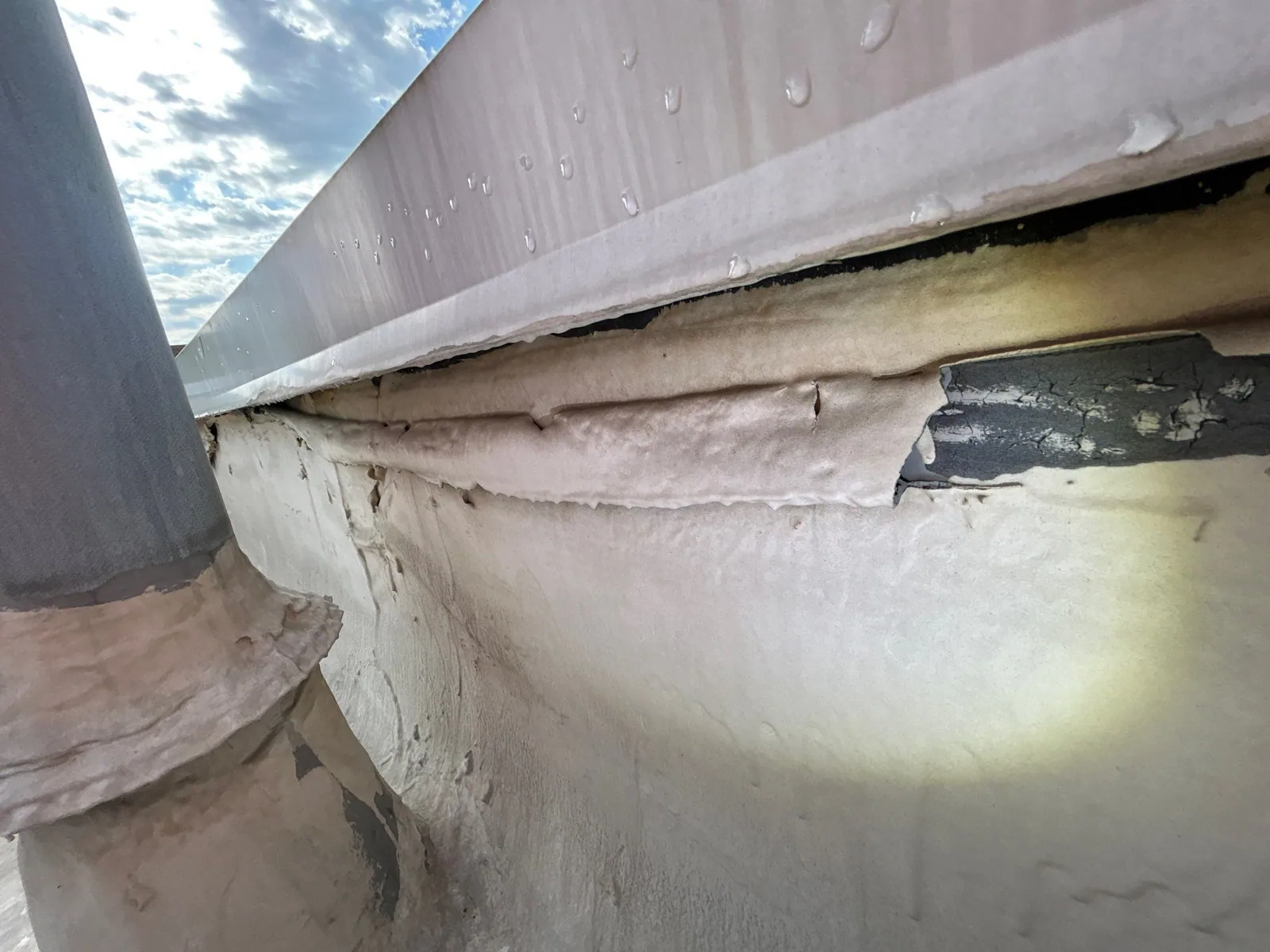
A liquid-applied flashing resin cures in place into a continuous membrane. It conforms to odd shapes, such as clustered pipes or irregular curbs, where a cut sheet would leave seams. The resin is only as good as the surface it bonds to, and a damp or dusty substrate is the usual reason it peels, so cleaning and priming come first, and a small adhesion test confirms the method. We record the product type, the preparation steps and the cure time in the file.
A cured resin flashing is inspected by eye and by touch, with the resin's thickness checked at the corners and at the top edge where it terminates on a wall. We look for pinholes, thin areas and edges that have lifted, and we log each one with a photograph. A small defect is repaired with the same resin. A wide failure points to a surface problem that must be corrected before any new resin is applied.
Resin detailing also helps at transitions between different materials. Where a bitumen sheet meets a metal curb, a masonry wall or an old pipe boot, liquid flashing can create a continuous seal that a cut sheet would struggle to make. The detail is photographed before and after, the product and thickness are recorded, and the cure time is noted so the roof is not walked or rained on too soon.
Wind and Rain Events in the Record
In 2008 Dolly sent 50 to 70 mph gusts across populated Hidalgo County and lifted roofs near Weslaco, mostly on older structures. Hanna in 2020 dropped 12 to 13 inches of rain on parts of McAllen and tore back several sheet-metal roofs there. For a roof with modified bitumen, the lesson is to check laps and edge terminations before the season and again after, because wind and water find them first. Photographs taken before June give the owner a baseline, and the post-storm set shows changes.
After an event, the first walk looks at three things: whether metal edges stayed tight to the substrate, whether laps lifted at the leading edge of the wind, and whether any drain was blocked by debris. Each finding is dated and tied to the sketch, and the owner gets the comparison within a few days of the storm.
Drains, Scuppers and Water Management
Water that stays on a bitumen roof ages the surface and finds weak laps. A drain and scupper log lists each outlet, its condition and its relation to ponding marks. We recommend cleaning schedules and note any outlet that sits above the surrounding membrane, which holds water by design. Where correction is needed, tapered insulation or a re-set drain body may be the answer, and the price is listed on its own line. The drain and scupper scope can be added to any repair or replacement.
Repair, Recover or Replacement
Where the sheet is sound and the problem sits at a detail, repair is the answer. A worn field over dry insulation points to a coating or a recover, while spread moisture makes replacement the scope. Price follows the roof area, how many penetrations it has, how much insulation comes out, how the crew reaches the roof and how long a section can stay open.
Buildings Where These Details Matter
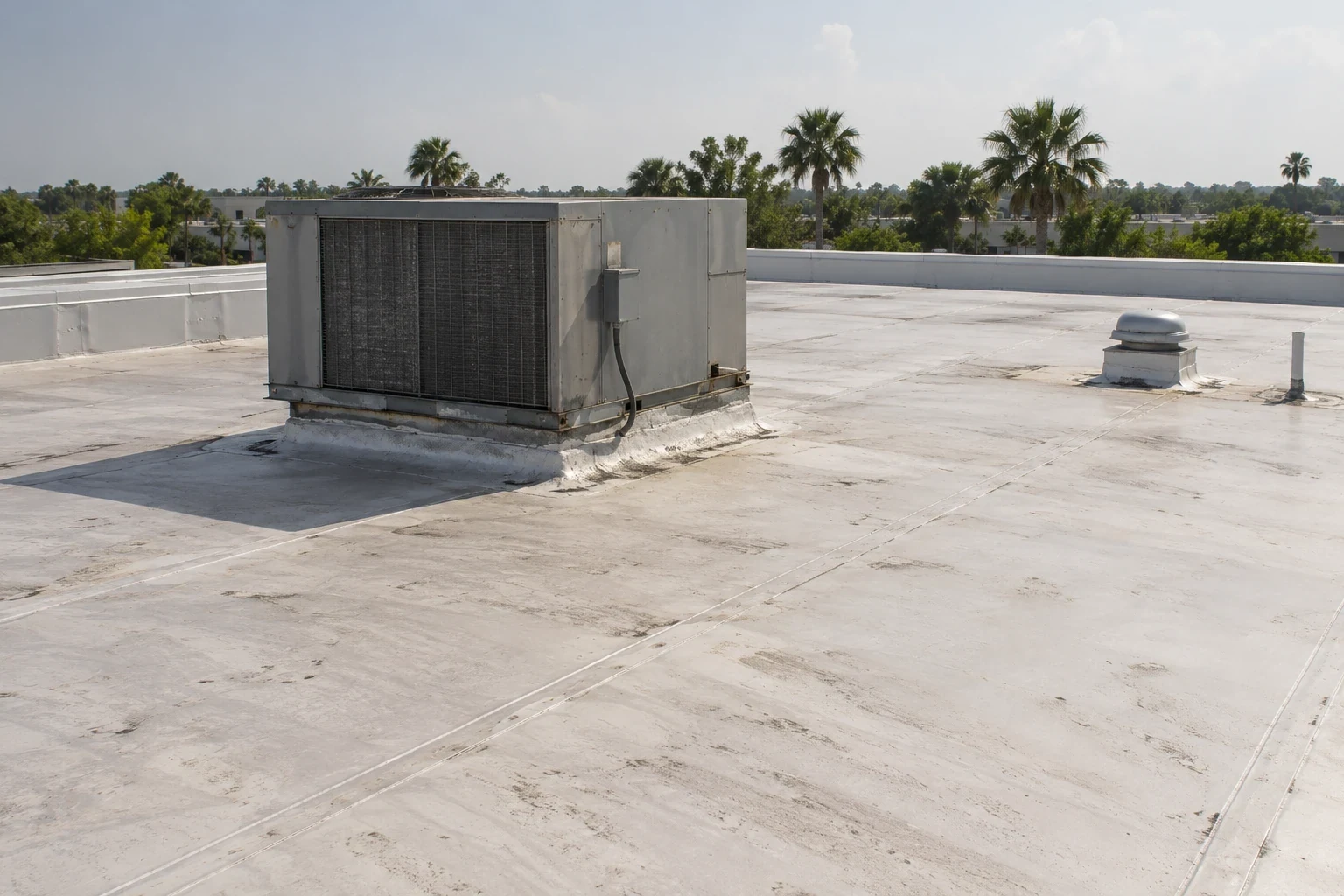
Roofs with many penetrations depend on flashing quality, and hospitals, offices, restaurants and schools all fit that description. A school roof can carry a long run of vents and drains. An office roof carries rooftop units on curbs. A restaurant roof carries exhaust. The flashing log tracks each of these, and because details age at different rates, every entry is dated so the oldest repairs are visible at a glance. When a detail fails, the fix is a flashing failure repair at that one location, logged again at the next visit. For a facility manager in Mission or McAllen, the log doubles as a list to work from during every quarterly walk.
The Owner's File
The owner's closeout set holds the detail log, lap probe results, blister map, drain log and next visit dates. A building with a Duro-Last thermoplastic section gets its own entries in the same order, and a built-up section from Johns Manville gets lap and surfacing entries on the same sketch.
Questions and Answers
Why start with flashing instead of the field?
Most leaks begin at a penetration, a wall or a drain. Logging flashing first finds the likely entry points before the larger field is read, and it often shows that a leak blamed on the whole roof belongs to one pipe boot or one corner of a curb.
Is torch-applied work still used?
It remains an option on some roofs, with a hot work permit and a fire watch. Cold-applied and self-adhered methods avoid open flame and are often chosen for occupied buildings, where fumes and fire risk near tenants weigh on the decision.
What does a liquid flashing need to bond?
A clean, dry, sound surface and the right primer. A small adhesion test proves the method before the full detail is coated, and the file records the date and surface temperature of the test.
How can blisters be handled?
Small blisters are only logged and watched; those that have split or grown are cut open, dried and patched with compatible material, and clusters call for a moisture survey, since a field of blisters can mean trapped moisture between layers.
When is a coating suitable over modified bitumen?
When the sheet is sound, the laps are tight and the insulation is dry. A moisture map and a lap probe confirm those conditions first.

Request a Documented Inspection
Ask for a visit to your Mission, TX roof and receive a written condition summary with tagged photographs, a flashing log and a moisture map. The summary can be reused for budgeting or an insurance conversation. Start from the contact form.