
Property Types We Roof
Shopping Center Roofing in Mission, TX
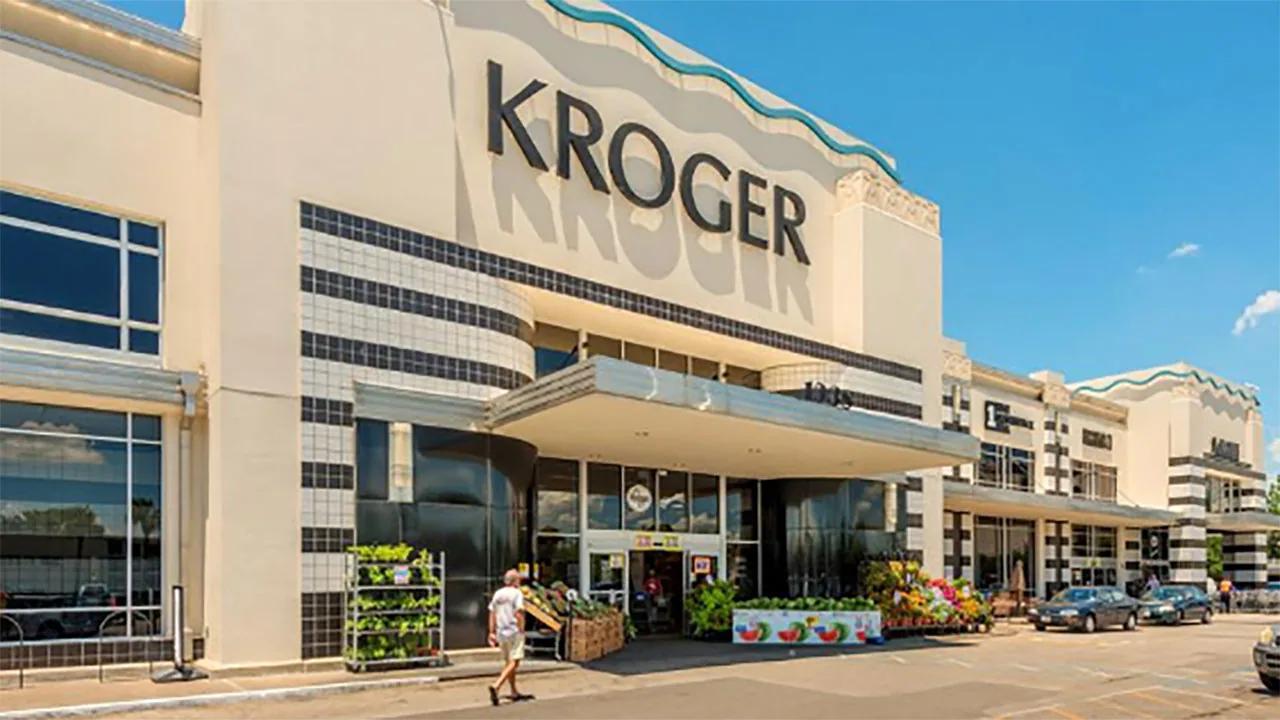
The first sheet for a strip center in Mission, TX is a tenant map laid over a roof sketch, because a leak report names a suite and the cause sits on a roof section that may cover three of them. The inspector marks each suite number on the sketch, photographs the roof above it and records which drains serve which bay. That overlay answers the question a property manager asks first: whose ceiling is under which membrane, and which findings belong to which part of the budget.
From there the condition summary runs finding by finding, with tagged deck photos and a recommendation attached to each roof section.
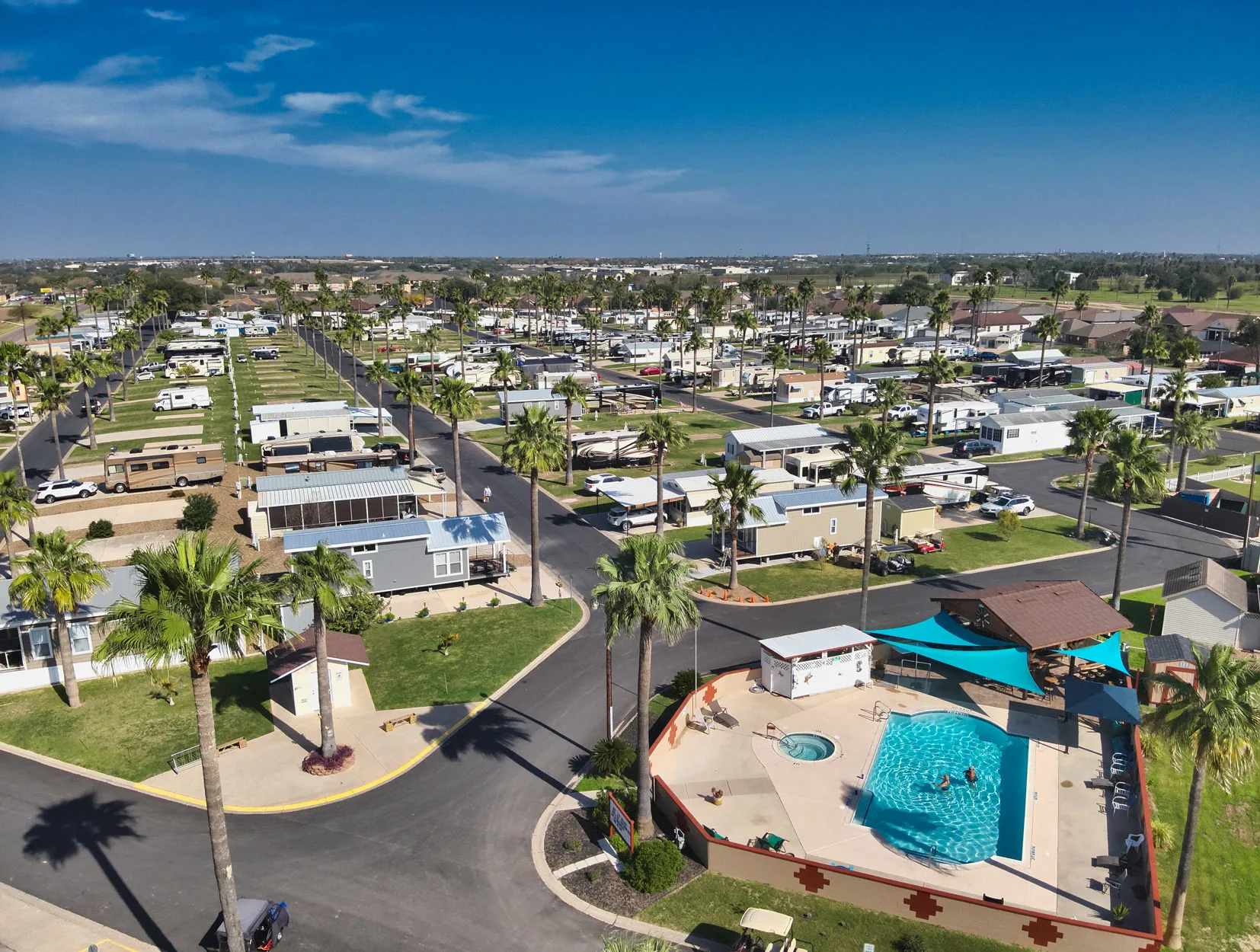
Findings by Suite and by Roof Section
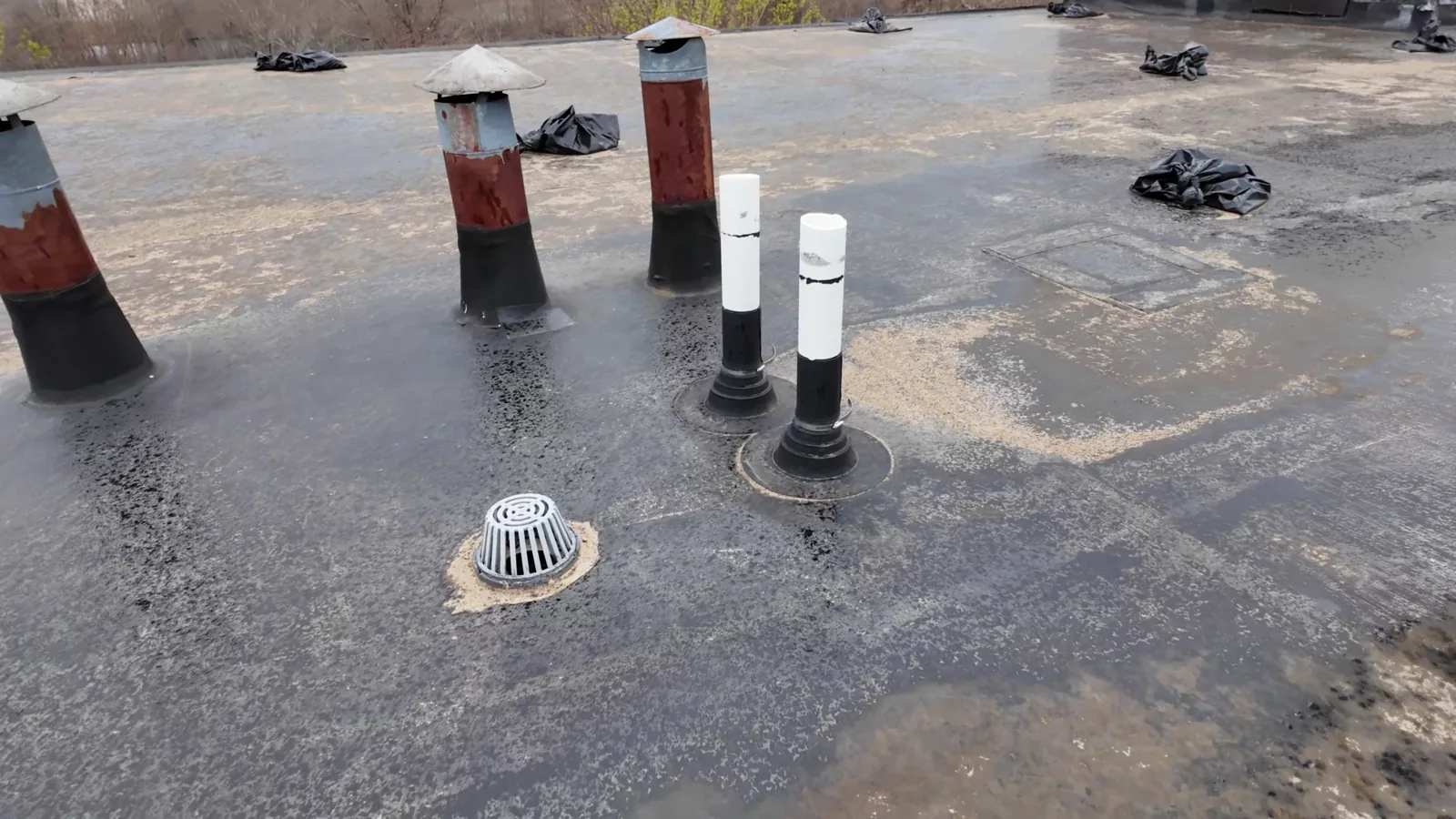
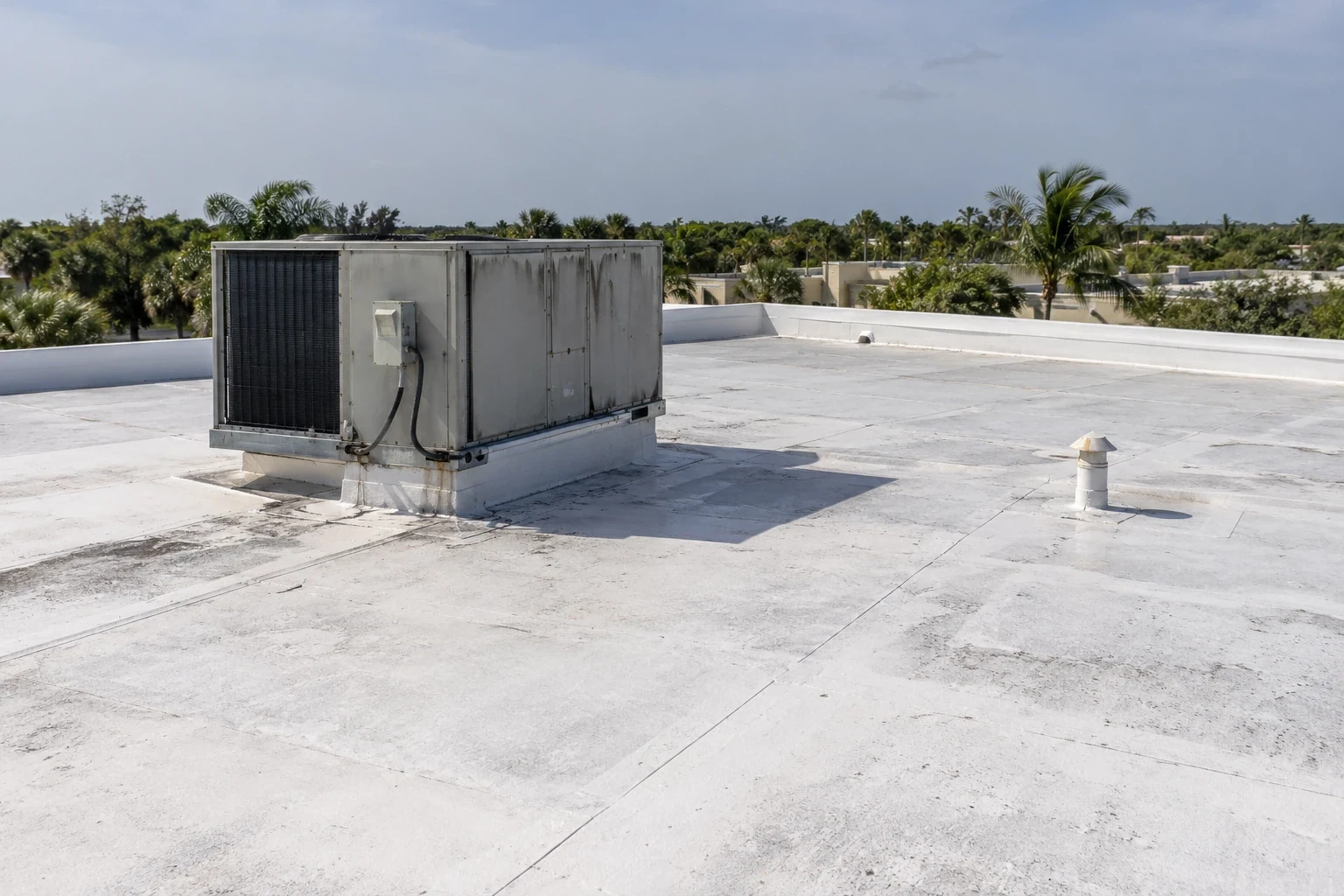
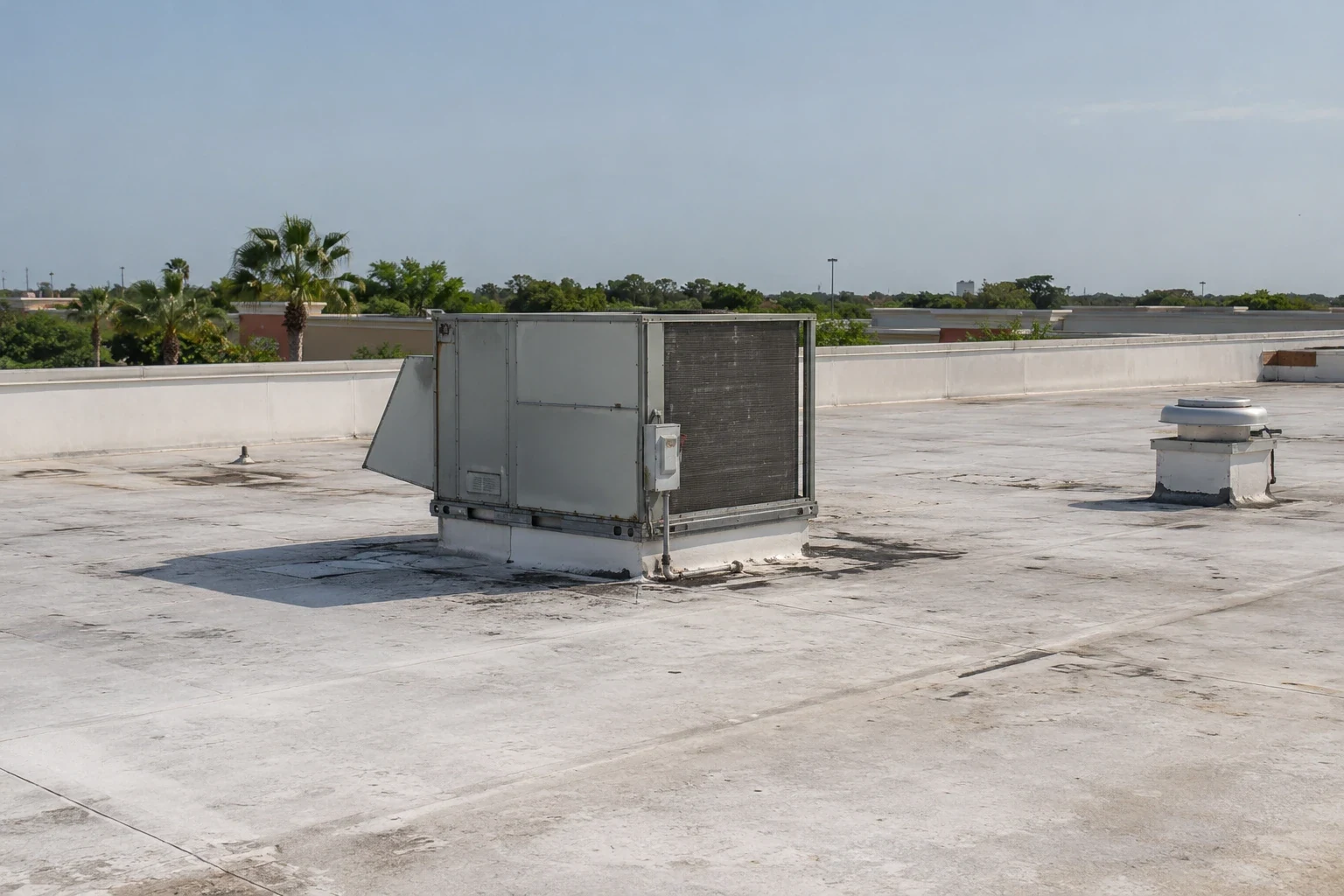
Retail roofs collect small defects. Rooftop units were added suite by suite, each with its own curb and condensate line, and every addition cut a new set of penetrations through the membrane. The inspection photographs each curb, notes the sealant condition and records whether the unit sits on the original curb or a later one.
Parapet walls and storefront canopies are logged next. A parapet that is cracked at the cap lets water into the wall and down into the suite, and the stain appears below long after the cause starts. The tagged photo shows the crack, the sketch shows its position, and the scope line names the repair, such as recapping the parapet or reflashing the base.
Where tenants have patched leaks over the years, the patches themselves become findings. A cluster of patches in one bay points to a drain or a seam, not to random bad luck, and the log connects them. Each patch is described by its size, its material and its position, and a patch placed over a wet area is flagged because it hides the moisture it was meant to stop.
Freeway Frontage and Retail Growth
Interstate 2 and US 83 run 46.8 miles through Hidalgo County, passing Palmview, Mission, McAllen, Pharr, San Juan, Alamo, Donna and Weslaco, and Mission's commercial buildings along it have direct freeway frontage. The town's economic development listings name retail among its thriving sectors and cite a 100,000-square-foot retail development. New centers and older ones share the same weather, which is why the record format matters: an owner with one older strip and one newer center can compare them on the same scale.
That comparison is practical. A newer center may need only a drain log and an annual check of sealants, while an older one may need a staged replacement. The sheet states which findings drive each recommendation, so a lender or buyer can read the roof without a walk-through. The sheet also lists any section whose age or condition could not be established, with the test that would settle it, such as a core cut or an infrared pass over a larger area.
Drainage and Parking Lot Runoff
Retail roofs are large and flat, and the lot below is paved. Hurricane Hanna in July 2020 dropped 13.92 inches at La Joya, and water that could not drain flooded parts of Mission, La Joya and Sullivan City. A shopping center sheds that rain from a roof into scuppers and downspouts that discharge onto pavement, and any blockage on the roof shows up quickly.
The drain and scupper log lists every outlet by number, with a photograph of the strainer, the water line and the size of the opening. Overflow scuppers are tested, not assumed, and standing water is measured with a level so that low spots can be corrected with tapered insulation or an added drain. The roof drains and scuppers scope is written from that log. Where a downspout discharges across a drive aisle or a sidewalk, the log notes it, since water that crosses a customer path becomes a liability as well as a drainage issue.
Pre-Storm Baseline and Signage
Before the tropical season, the baseline records edge metal, coping, canopy connections and the mounts for roof signs. Hurricane Dolly in 2008 produced gusts of 50 to 70 mph in populated Hidalgo County, and roofs on older structures near Weslaco were the ones lifted. A center with older roof sections should have those sections checked first.
Roof signs and tall unit screens catch wind, and their attachment to the deck is checked for loose bolts and failed sealant. A fastener pull sample on an edge or a screen post shows whether the attachment still holds. After a storm, the same positions are photographed and the two sets are compared, which keeps an insurer conversation tied to dated facts. Tenants receive a plain summary of what was found above their suite, and the property manager keeps the full sheet. A tenant who asks about a stain gets a dated answer based on a photograph, not a general assurance.
Repair, Coating or Replacement by Section
Each section receives options and the finding that favors each. A section with dry insulation and a worn surface can take a roof coating restoration, which also reduces heat load during the May-to-October season the National Weather Service lists for the Valley. A section with trapped moisture needs removal of the wet area. A section with widespread seam failure may justify a recover or a full replacement.
Timing follows leases. Work above the larger tenant suites is scheduled outside peak trading days, noisy steps are placed before opening, and the lot is staged to keep customer parking and fire lanes clear. The summary lists the order of work so that tenants can be notified by suite. Dumpsters and lifts are placed away from storefront doors, and a path to every entrance stays open for deliveries and shoppers throughout the work.
The Owner's File and Tenant Notices
The owner's file keeps the sketch, the suite overlay, the moisture map and the logs in one place, and it follows the center through a sale or refinance. Owners with big-box retail roofs or a restaurant pad on the same parcel can keep them in the same record, and centers in Mission and Pharr share one format. When a center changes hands, the buyer's inspector can read the same sheet the seller used, which shortens due diligence on the roof and keeps the discussion on findings that carry dates and photographs.
Questions and Answers
How do you trace a tenant's leak to the right roof section?
With the suite overlay on the roof sketch and a moisture map. The overlay shows which section sits over the suite, and the map shows where water has collected, so the repair goes to the cause rather than the stain.
What can a property manager reuse from the condition summary?
The scope lines, the photographs and the cost ranges. They can go into a budget request, a lender package or an insurance file, and the dated record shows how the roof stood on each visit.
Do added rooftop units create roof problems?
Each unit adds a curb and penetrations, and those are where seals fail. The inspection logs every curb, and if a unit is replaced, the curb flashing is renewed with it.
How is work scheduled so stores stay open?
By section, outside peak trading hours, with the lot staged to protect customer parking and fire lanes. Tenants are notified by suite, and each section is closed before the crew leaves.
When does a coating make sense for a strip center roof?
When the insulation is dry, the seams are sound and the surface is worn. A moisture map confirms the first condition, and a coating film check after application confirms the thickness.

Request a Documented Center Inspection
Ask for a documented inspection of your center's roofs. The written condition summary will include a suite overlay, tagged photographs, moisture readings, a drain and scupper log and scope lines you can reuse for budgeting or an insurance conversation.