
Property Types We Roof
Big-Box Retail Roofing in Mission, TX
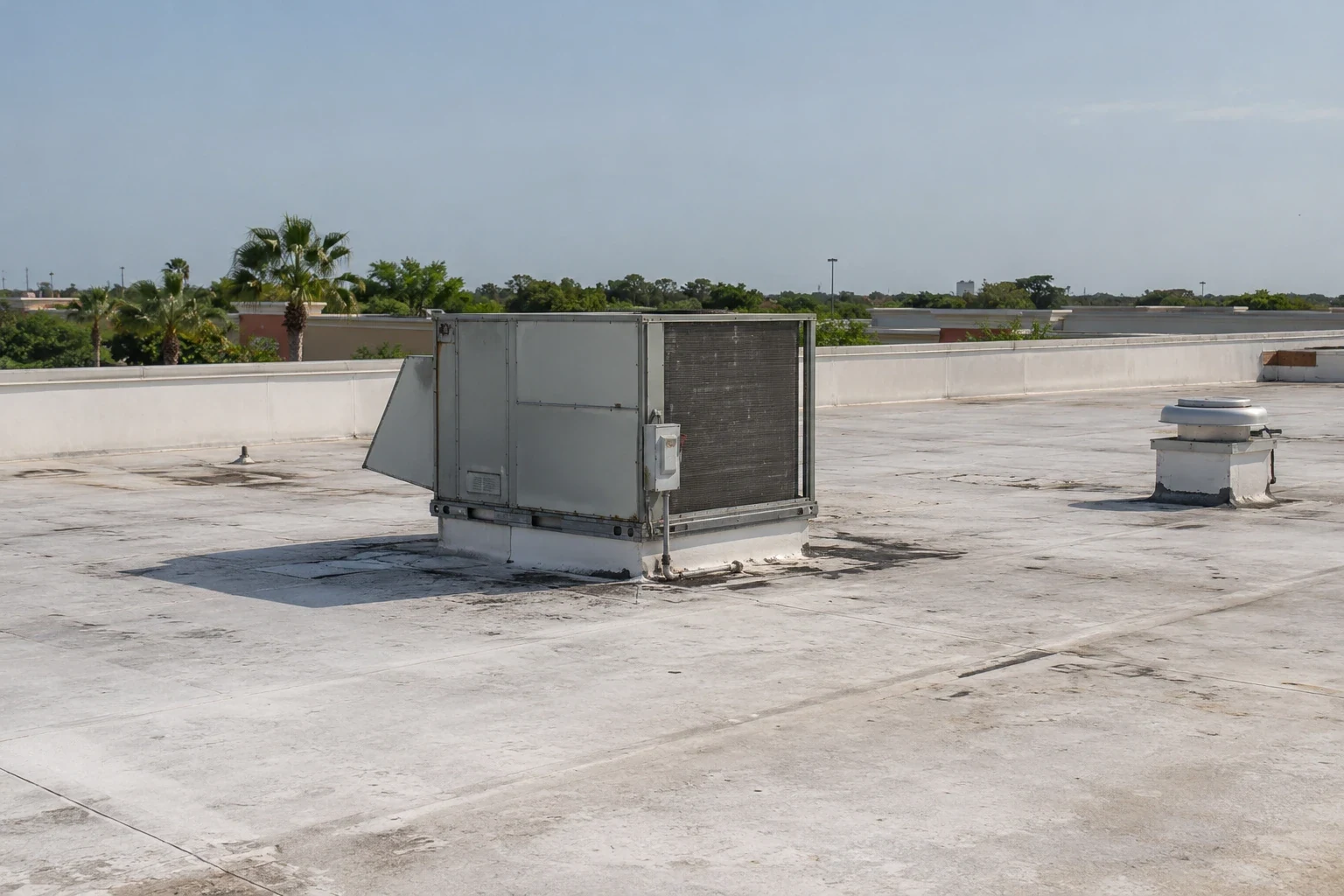
The unusual first entry on a big-box roof sheet in Mission, TX is a fastener pull sample, and it is a practical one. Large stores sit on wide, flat roofs where wind lifts the membrane from the perimeter inward, and the sample shows whether the attachment still holds at the edge and the corners. The inspector records the pull value, the location on the grid and the date, then moves to the drains. A big-box roof is a wide flat field with few outlets, so the pull sample and the drain count usually shape the rest of the recommendation.
The condition summary that follows is written grid square by grid square, so a regional facilities manager can read it without visiting the store.
Grid Sketches for Wide Flat Roofs
The roof is divided into a lettered and numbered grid that matches the column lines inside the building. Every finding takes a grid reference: a split seam at C-7, a patch at F-2, a ponding mark near the third drain. Photographs are tagged to the grid, and the moisture scan covers the whole field in lanes, so that a wet area is drawn on the sketch in feet and not described in words.
The grid also controls cost. When the east third reads wet and the rest reads dry, the scope line replaces one third and leaves the remainder under watch, with the readings attached. When wetness is widespread, the summary says so, and a full replacement becomes the better figure to budget. In both cases the store manager receives a sheet that can be compared with the next visit.
Penetrations are counted by type on the same grid: exhaust vents, plumbing stacks, conduit and skylights. Each one is a flashing detail, and the count tells the owner how many details a replacement must rebuild. A roof crowded with penetrations costs more to replace than a clear field of the same size, and the summary shows that difference before bids are requested.
Interstate Frontage and Store Operations
Mission's economic development office points to a 100,000-square-foot retail development in the city, and Interstate 2 / US 83 gives commercial buildings direct freeway frontage. Big-box stores combine long trading hours with receiving, stocking and customer traffic. The roof schedule therefore has to fit around all three at once.
Roof access is usually from a ladder at the back or an interior hatch near the stockroom, and either one passes through a working area. The plan names the route, the hours and the person who opens it, and any lift or hoist is placed away from the receiving dock. Interior protection above merchandise is arranged with the store manager before the first section opens.
Rooftop Units, Refrigeration and Curbs
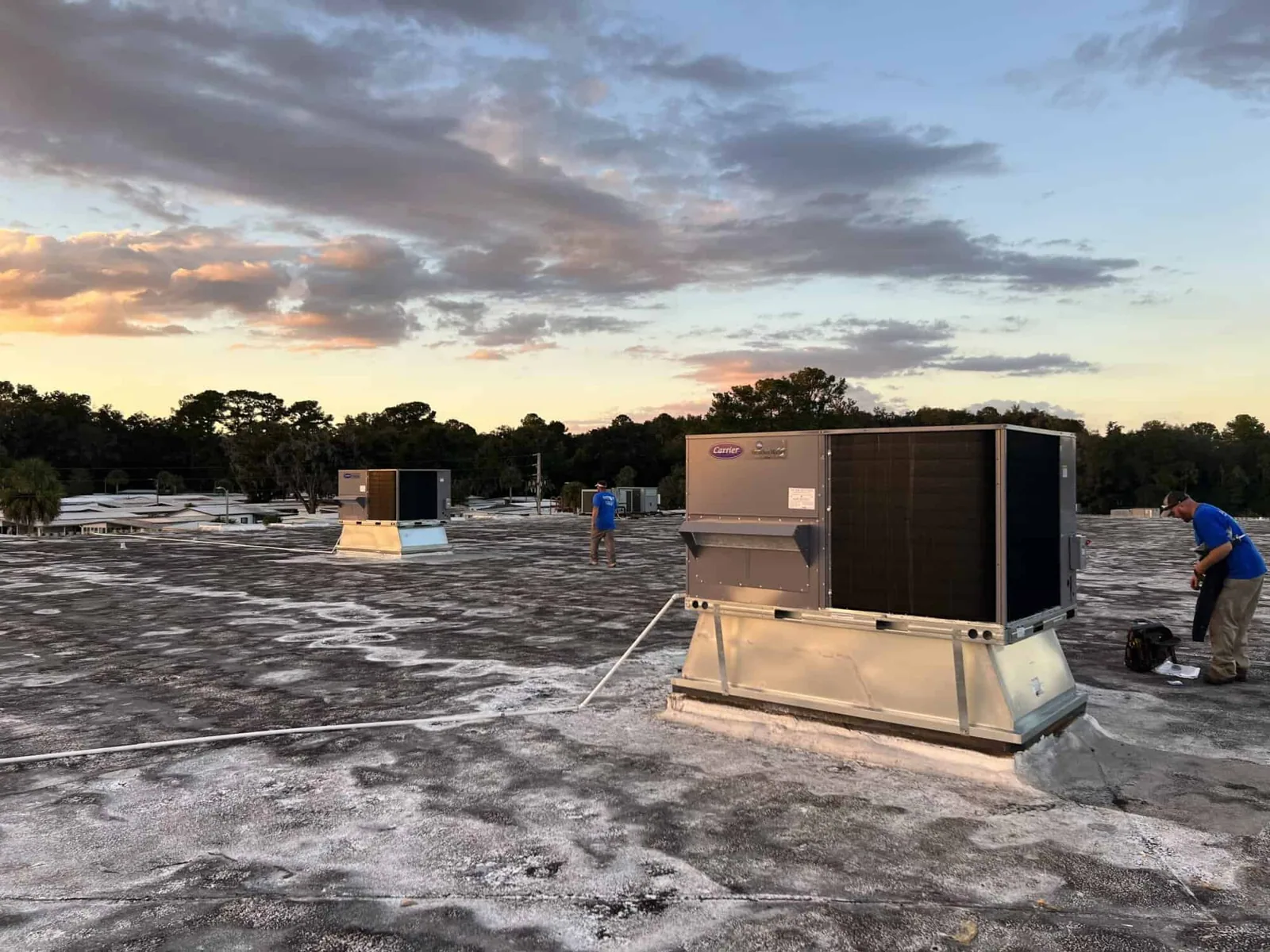
A large store carries a long row of rooftop units, with refrigeration condensers over the grocery or cold sections. Each unit sits on a curb or a rail, and each curb is a place where sealant ages under months of sun. Brownsville's weather office counts May through October as heat-safety season for the Valley, and that heat bakes mastic and caulk faster than the membrane around it.
The inspection logs the curb count, the sealant condition at each and any pitch pocket that has settled. Condensate lines are traced to their outlets, since a line that drains onto the roof surface leaves a stain, grows algae and wears the membrane at one point. A rooftop equipment curb and support repair is written as its own scope line, because it can be done between larger projects. A curb that is leaking now can be reflashed this month without waiting for the capital cycle that will eventually replace the field, and the repair is photographed so the later contractor knows what was done.
Wind History and the Perimeter Baseline
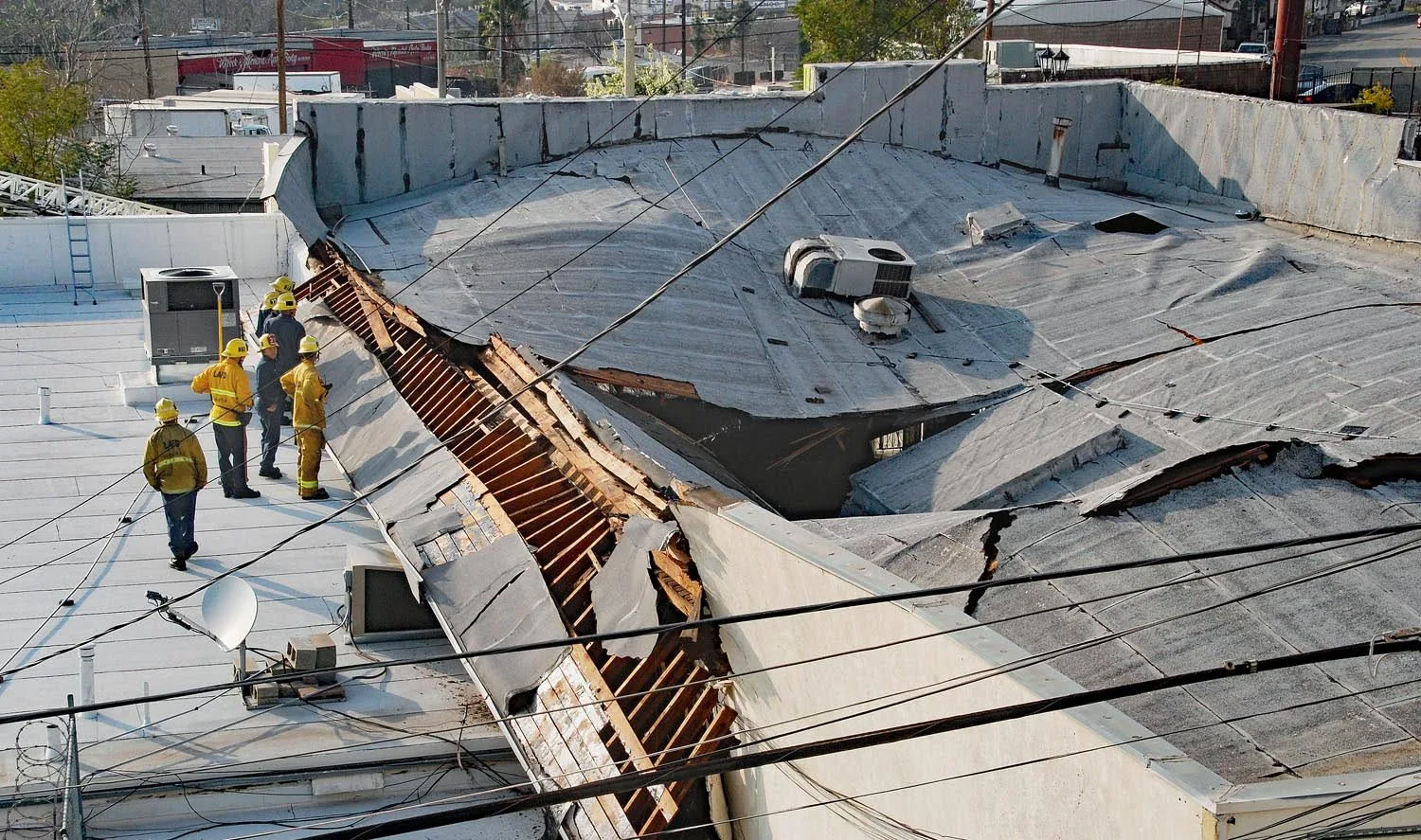
Hurricane Hanna produced estimated winds of 60 to 65 mph along I-2 and points north, including McAllen and Mission, and damaged hundreds of poorly built Valley structures, mostly at the roofs. A big-box store has a long perimeter and tall walls, and the edge is where uplift concentrates. The pre-storm baseline records every coping joint, termination bar and gutter bracket, with a photograph from a marked position.
Once a named storm has passed, those marked positions are photographed again, and a wind damage roof repair scope lists only the items that changed. The comparison separates new damage from earlier conditions, which shortens an insurance review and tells the facilities manager which repairs cannot wait. Power outages after Hanna reached up to half of county customers, so a store that lost refrigeration also needs its roof drains and rooftop equipment checked for water that entered while the building was dark.
Recoat, Recover or Replace at Store Scale
On a roof this size the options differ in cost by large amounts, so the summary shows each with its supporting finding. A dry roof with an aging surface suits a reflective coating, which also cuts heat gain inside the store. A dry roof with a sound deck suits a recover. A roof with trapped moisture across several grid squares suits partial or full replacement.
For a regional chain, the recommendation also states the order in which stores should be handled. Roofs with active leaks over merchandise come first, roofs with failing perimeter attachment come second and roofs with aging surfaces come third. That ranking goes straight into a capital request, and the dated photographs back it up. If a landlord is responsible for the roof under the lease, the same sheet supports the request for repair or replacement, and the tenant can point to the finding and the date.
The Owner's File for a Multi-Store Owner
A chain that owns or leases several stores receives the same sheet for each. Stores in Mission, McAllen and Edinburg can be compared on the same grid, alongside a shopping center or a grocery store in the same portfolio. Each store's file keeps its own pull sample history, so a facilities manager can see whether edge attachment is holding year over year and can plan perimeter work before a named storm instead of after one.
Questions and Answers
Why does a big-box roof inspection start with a pull sample?
Because wind loads concentrate at the edges, and a weak attachment there is the most expensive finding to miss. The sample shows whether the membrane or panel is still held down, and it sets the order of the rest of the inspection.
Can a store roof be repaired while the store trades?
Yes, in sections, with interior protection above merchandise and a clear route for deliveries. The schedule states which sections open on which days and who is the on-site contact.
How many drains should a large flat roof have?
The count comes from the drainage design and the roof area, and the log records what the roof actually has. If a few outlets serve a large area, the summary notes overflow scuppers and recommends added drains where the readings show ponding.
What is included in the written summary for a chain?
A grid sketch, tagged photographs, moisture readings, a drain and scupper log, pull sample results and scope lines with a ranking across stores. It can be used for capital requests or an insurance conversation.
Does a reflective coating help a big-box store?
It can lower heat load on a sound, dry roof during the long Valley heat season. A coating film check after application confirms the thickness the maker specifies.

Request a Documented Store Inspection
Ask for a documented inspection of your store roofs. The written condition summary will include a grid sketch, tagged photographs, pull sample results, moisture readings, a drain and scupper log and scope lines you can reuse for budgeting or an insurance conversation.