
Service Areas
Commercial Roofing in La Joya, TX
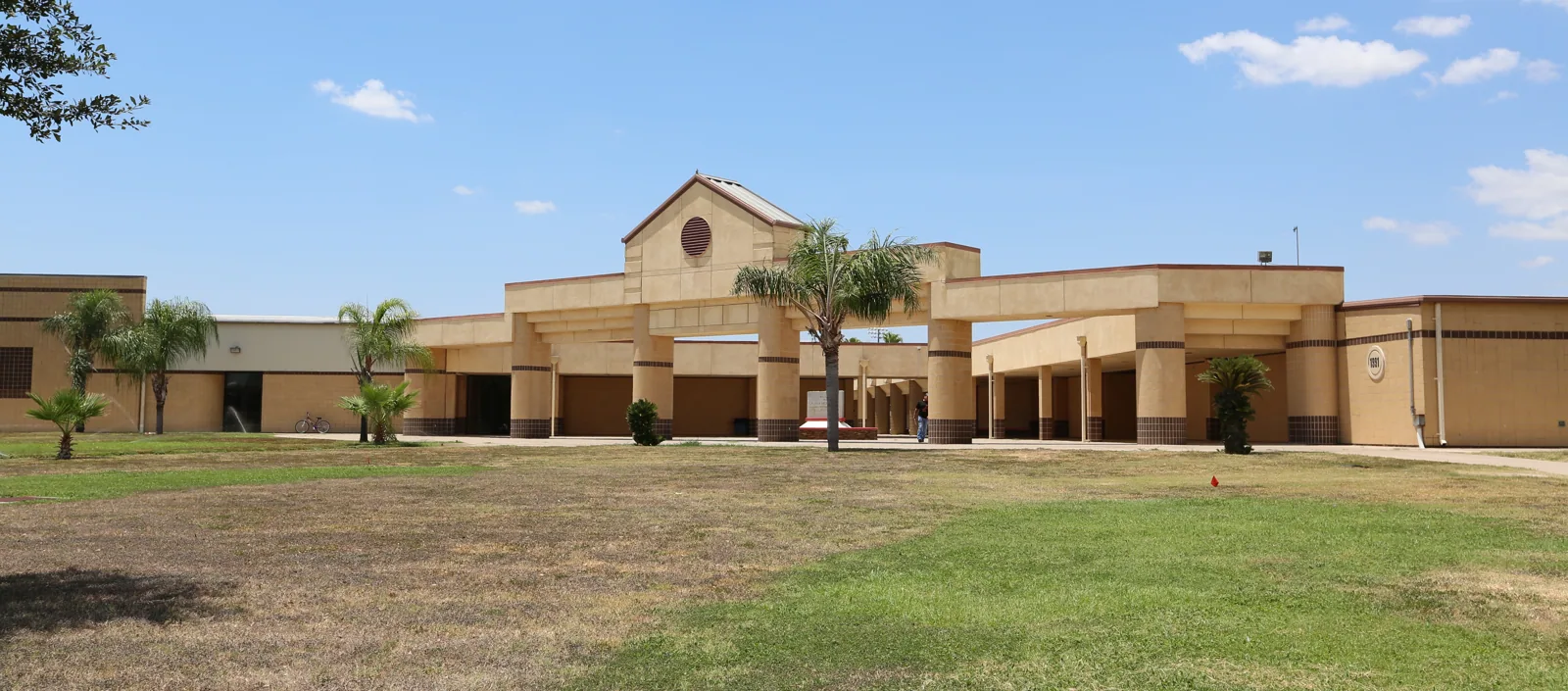
La Joya, TX has a rain gauge reading in the weather record that every roof owner in town can use: 13.92 inches during Hurricane Hanna in July 2020. An inspector starts a La Joya roof sheet with that figure in mind and asks the first practical question, which is whether the roof can move that much water. La Joya had 4,457 residents in 2020, Interstate 2 runs through the city, and La Joya ISD is based in and serves it. Those facts point to two kinds of roof work, school-district buildings and commercial properties along the freeway.
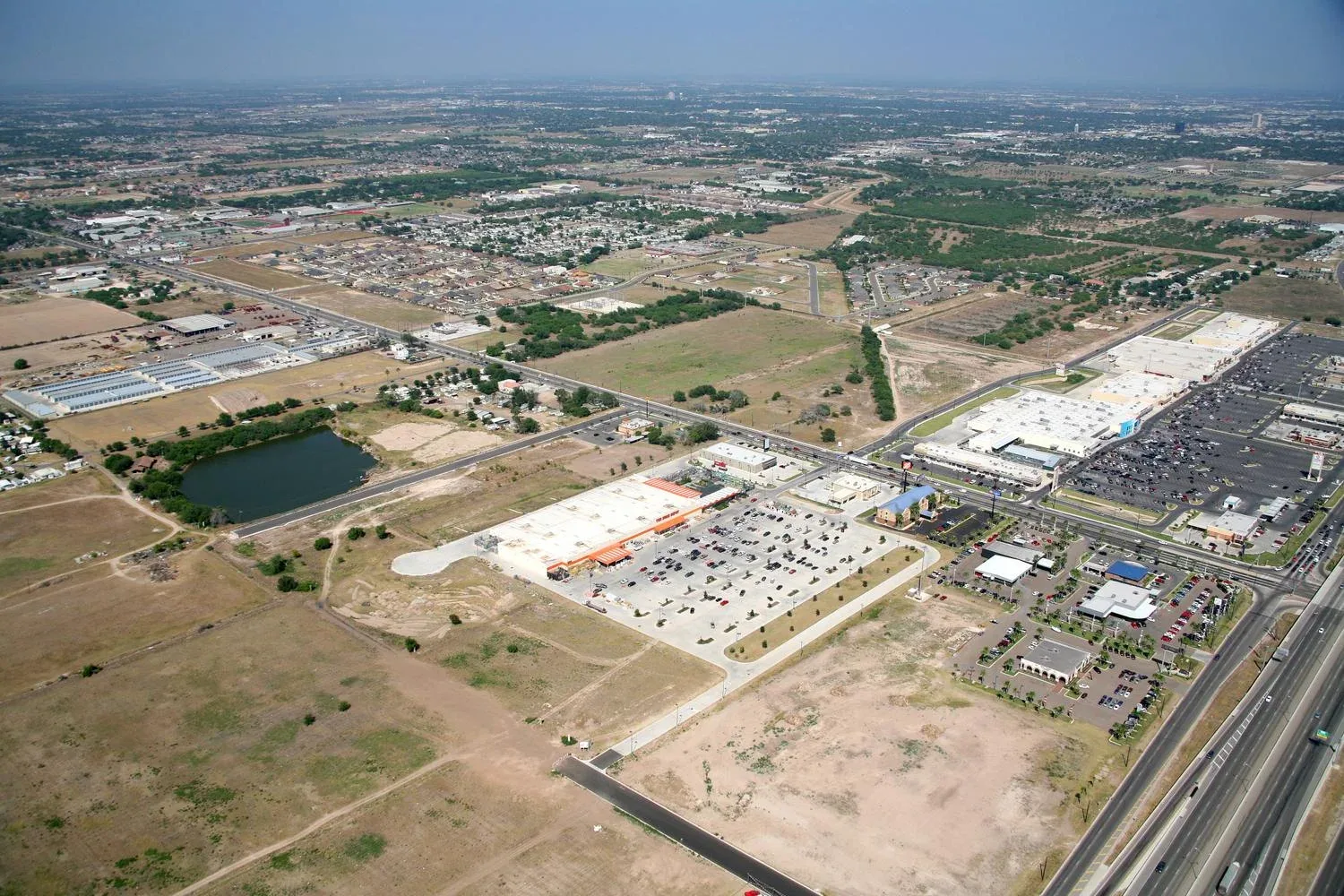
Where La Joya Sits
La Joya is about 16 miles from McAllen and 24 miles from Rio Grande City, with I-2 passing through. Neighbors in the area include Sullivan City and Peñitas, which share the US 83 relief route that bypasses all three. For roof crews, the distances mean planning a visit rather than dropping in, so inspections are scheduled with the owner and a clear window of access.
Planning ahead is a good habit on the roof too. A scheduled walk before each season, with photographs from the same positions, builds a record that shows how the roof is changing. That record is the working tool for every decision that follows, from a minor repair to a replacement budget.
Higher Ground and the Lesson for Roofs
The original community of Tabasco, near the river, died out after floods in 1908 and 1909, and settlers moved to higher ground that became La Joya. The town's history is a record of water and drainage. A roof is a small version of the same problem: a surface that has to shed water to somewhere safe, or the water finds the weakest point and enters.
In Hurricane Hanna, poor drainage left parts of the Mission, La Joya, and Sullivan City area under 18 inches to 4 feet of water. We take that as a reminder to check every outlet. The drain and scupper log lists each drain, its condition, debris found, and depth of standing water nearby. Overflow openings are checked for height and clear passage, and any low area that holds water for more than a day is marked on the sketch for correction.
Corrections range from simple to structural. Clearing a strainer costs little and often resolves the whole problem. A cricket behind a rooftop unit redirects water that had nowhere to go. A tapered insulation section can add slope to a flat area. Each fix is recorded with before-and-after photographs, and the drain log is updated, so the next visit starts from the corrected condition.
School District Buildings
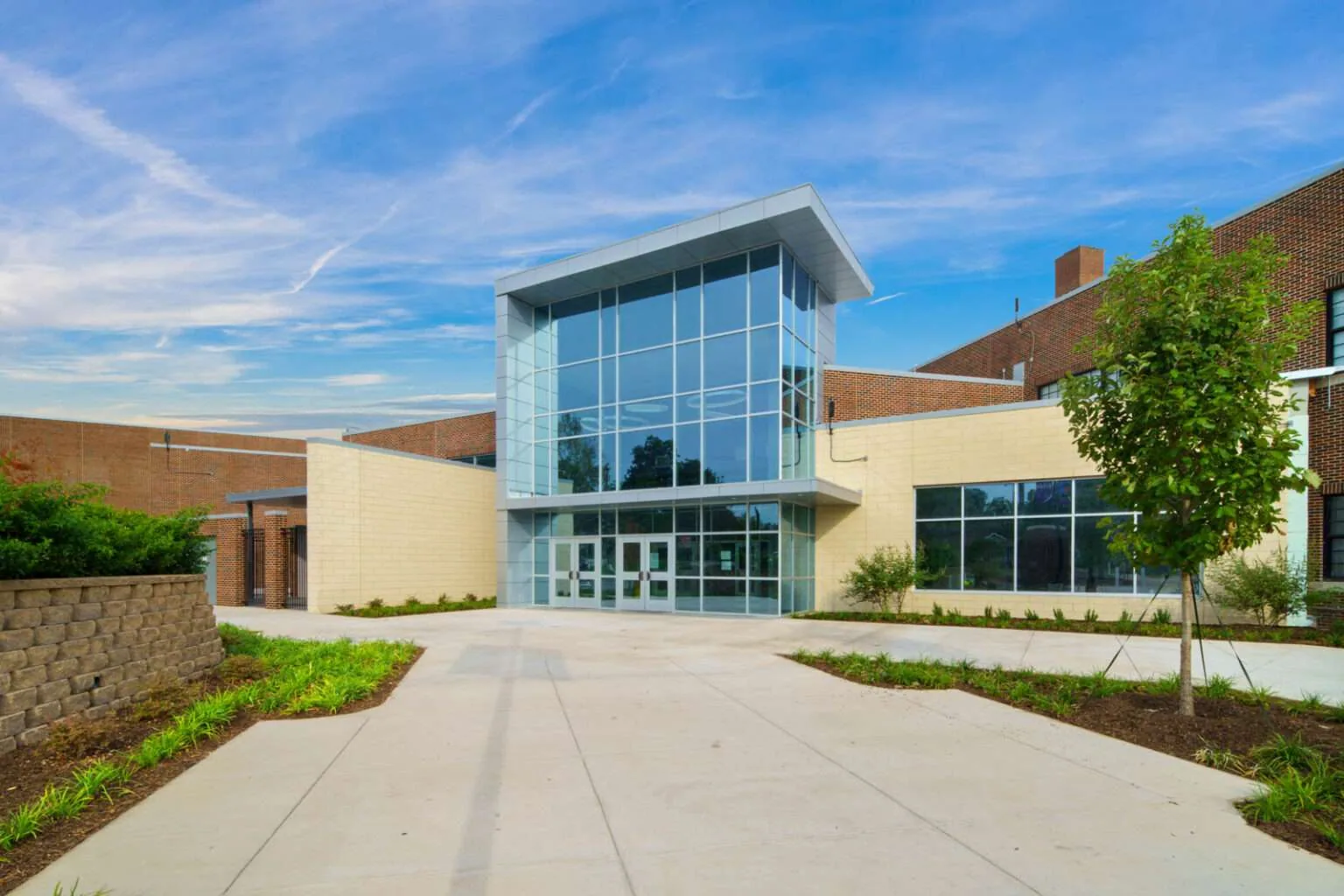
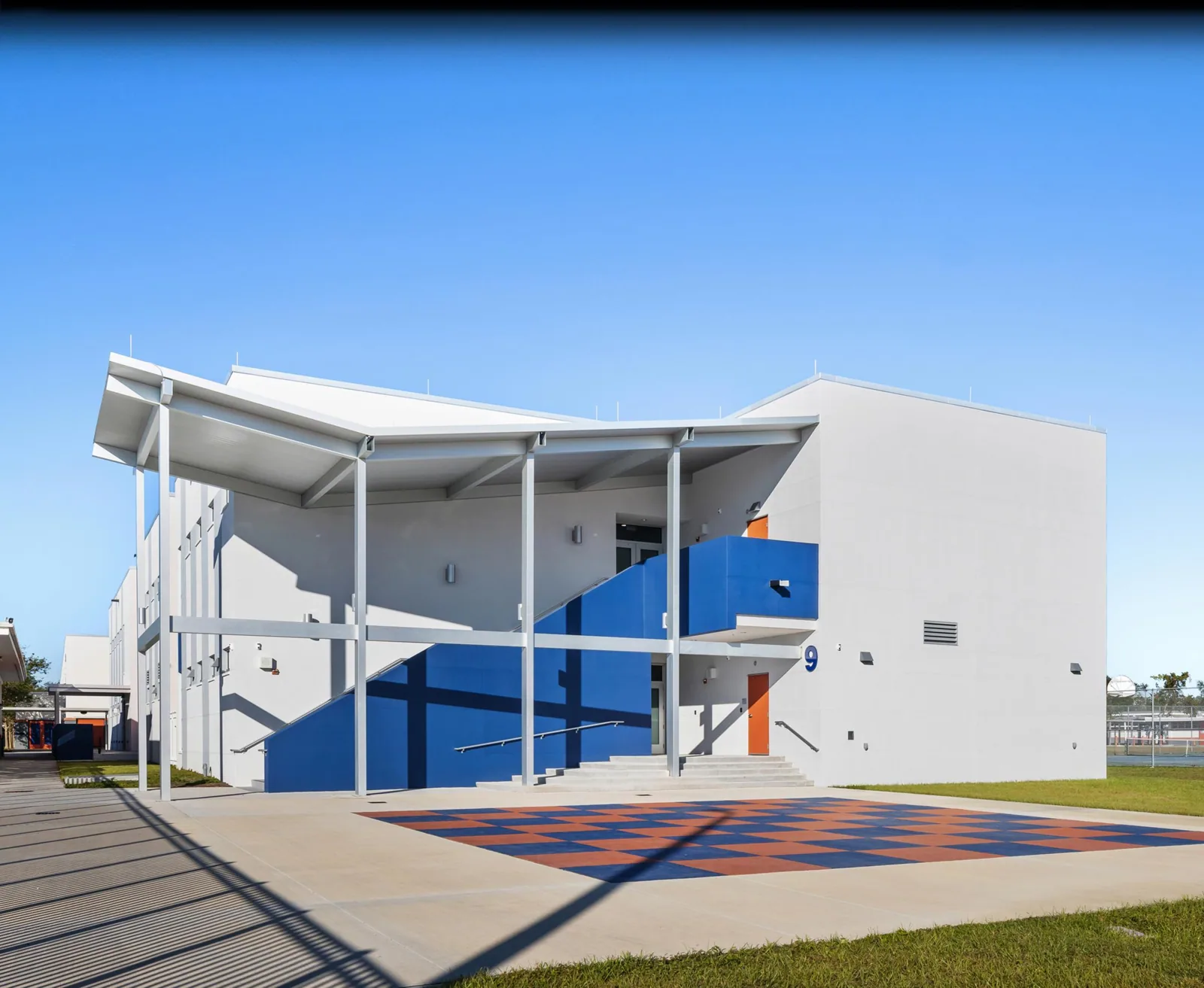
La Joya ISD is based in the city, so district-owned buildings are part of the roofing picture here. A district with many buildings can hold a mix of roof ages and details, and a single leak can interrupt a classroom or an office. The first deliverable for a district is a condition survey of every roof area: numbered sections, photographs, moisture readings, and a rating.
That survey lets a facilities department rank its roofs and spend in order of need. School roofing work is scheduled for breaks, with phasing and interior protection written into the plan. Because district spending runs through a capital budget, the written scope uses measured quantities so bids line up, and the dated photographs show what each roof looked like before work began. A district can also keep the whole portfolio on one sheet through school district roof planning.
Moisture Mapping After Heavy Rain
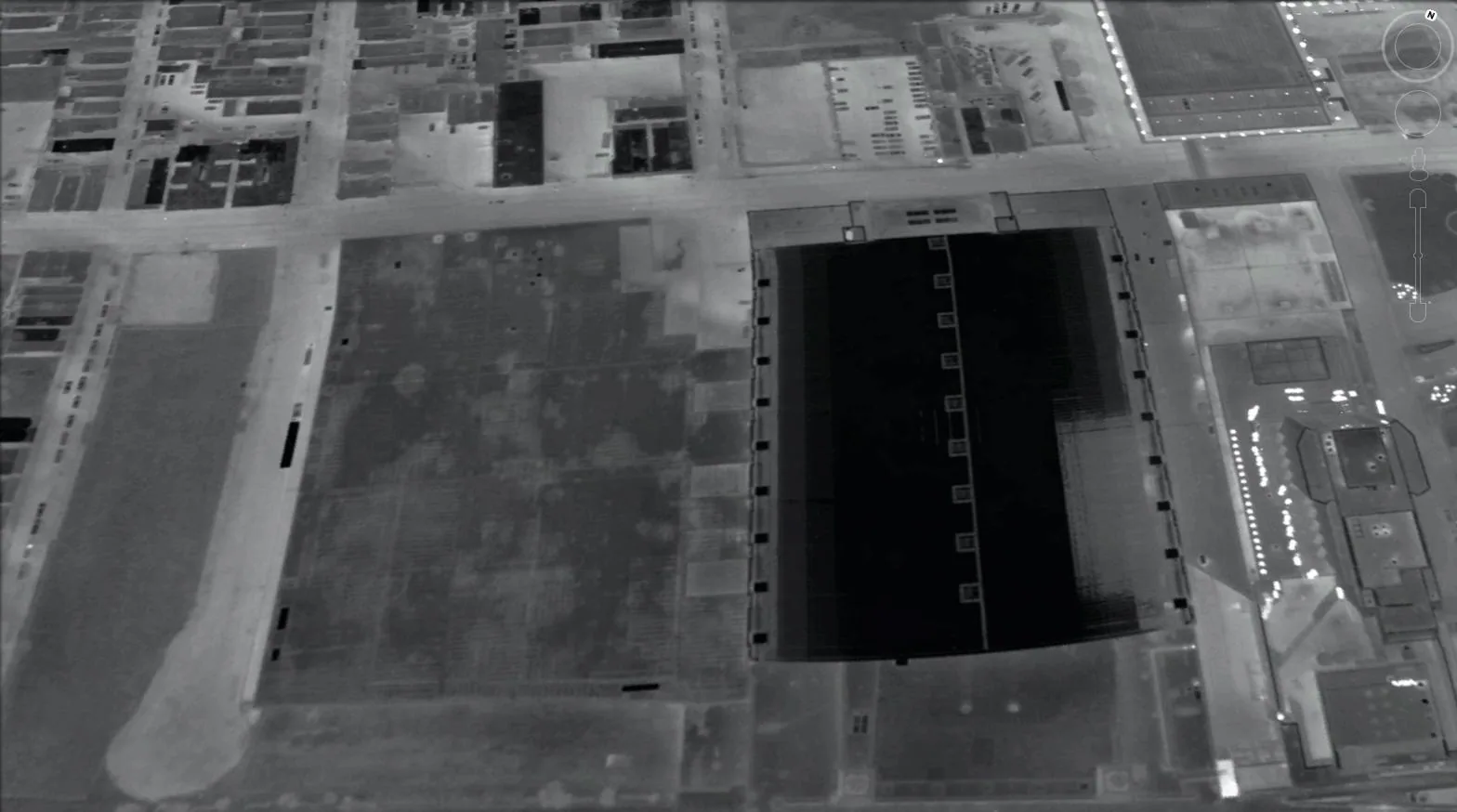
Standing water and heavy rain raise one question about a roof: did any of it get into the insulation? Wet insulation hides under an intact membrane and shows up later as a stain, a smell, or a failed ceiling tile. An infrared moisture survey on a clear evening, followed by core cuts at the suspicious spots, shows the wet areas and leaves the dry ones alone.
The moisture map goes into the owner's file with the date. If the survey finds wet areas, the repair is scoped to them, and the map shows the boundary. If it finds none, that result is also valuable, because it is the baseline for the next heavy rain. A later survey that shows change tells the owner exactly where to look.
Timing matters for the survey. We schedule it after the roof has dried but while the weather event is still recent enough that any trapped water has not yet dispersed or evaporated. A survey taken soon after heavy rain gives clearer readings than one taken months later.
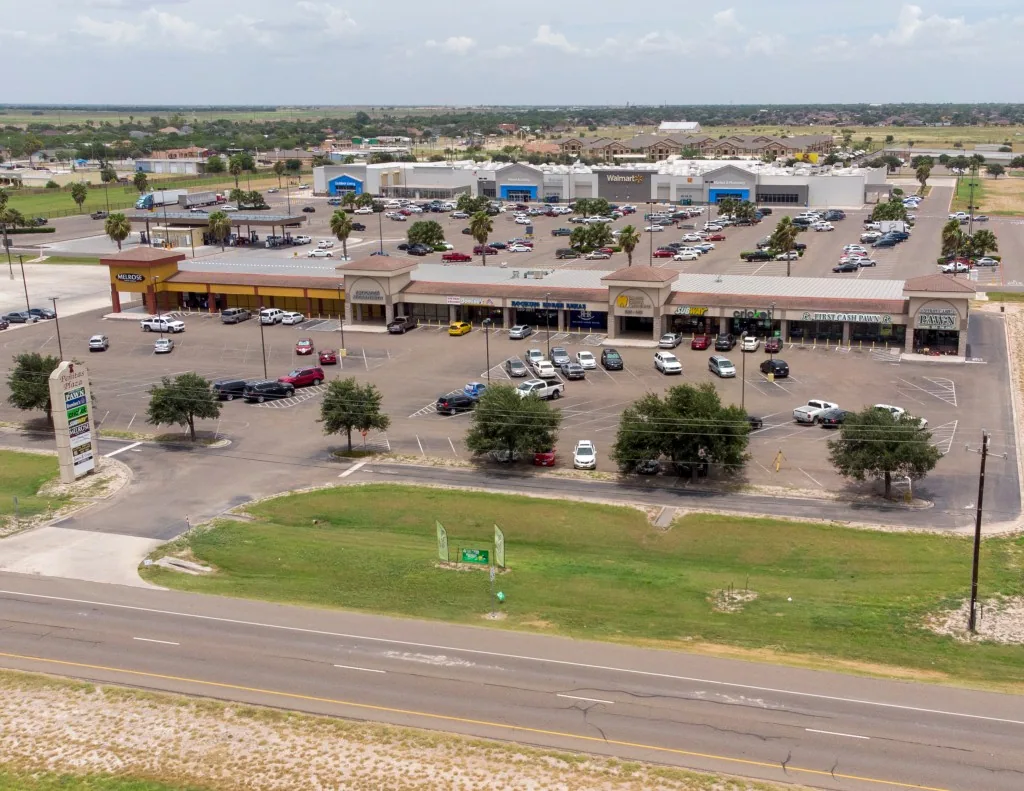
Commercial Properties Along I-2
A property along a freeway is visible to drivers, and its roof is part of how it looks. On a first walk we photograph the full perimeter and check the edge metal, because the edge is where wind and heat do their work. With May through October counted as the Valley's heat-safety season, seams and sealants spend half the year under sustained load.
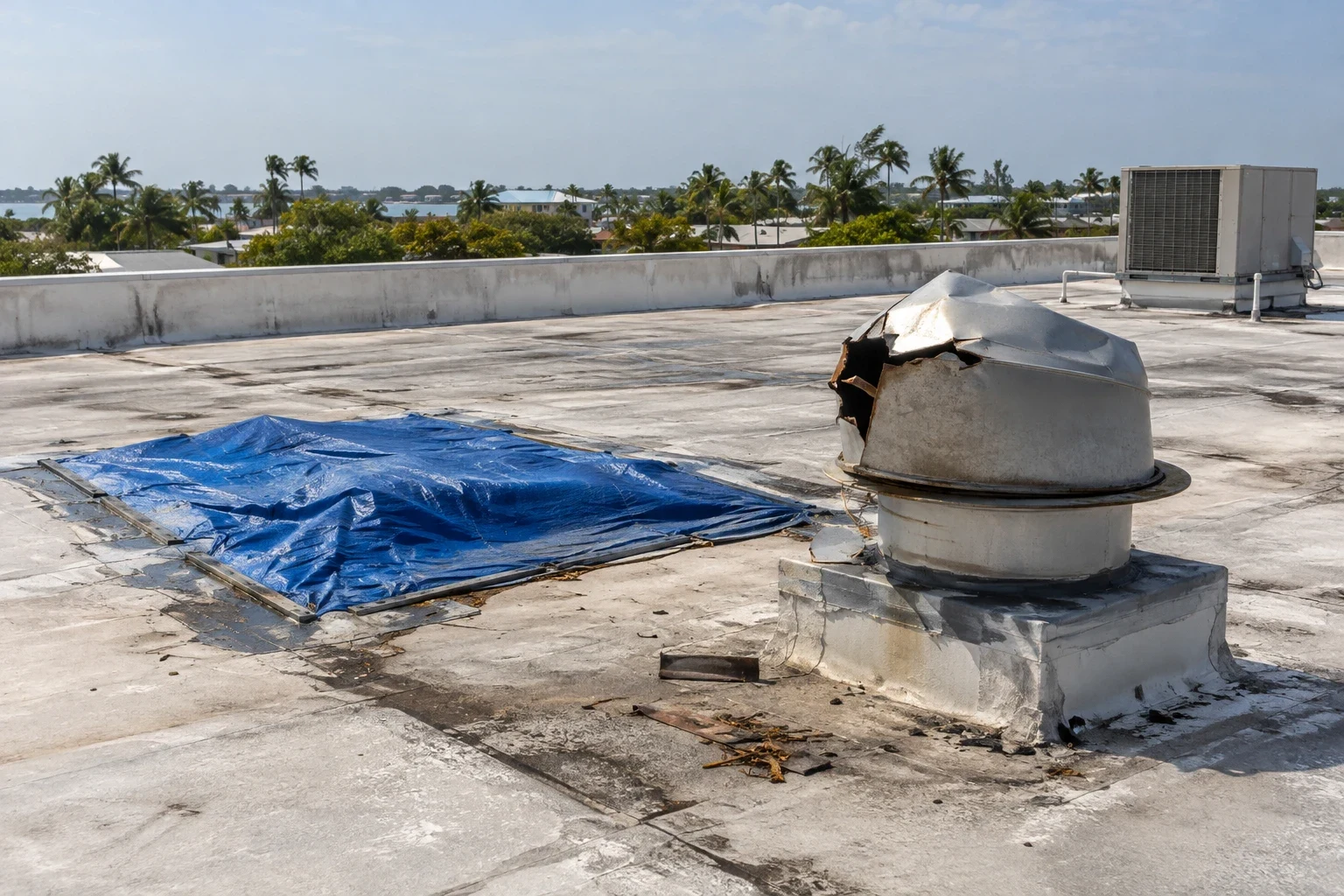
We log rooftop units with their curbs and flashing, check drains, and mark any open seam. The owner receives a ranked list: items to fix now, items to monitor, and items to budget for. When water is already coming in, a call at any hour, holidays included, brings a first visit that dries the building in and photographs it. Storm damage roof repair then proceeds from that record.
Budgeting and Decisions
The cost and timing of roof work follow predictable drivers: area, penetrations, wet insulation to remove, access, and the hours available. We put each into the scope. A sound roof can be repaired or coated. A roof with limited moisture can be patched and monitored. A roof with widespread moisture or repeated failures is a replacement candidate. The evidence decides, and the readings are in the file.
A written roof condition report pulls those pieces together for lenders, boards, and insurers. For an owner in La Joya or Mission, it is the document that shows what the roof is and what it will need.
Questions and Answers
Why do you ask about drainage first on a La Joya roof?
Hanna's rain reached 13.92 inches at a La Joya gauge, and poor drainage put deep water across the area. A roof that cannot shed rain fast enough holds it against seams and penetrations. We check every drain and scupper first because those findings are quick to fix and affect everything else.
What does a school roof survey cost in time?
A survey takes as long as the number of roof sections requires. Each section is photographed, tested for moisture, and rated. The district receives a ranked summary afterward. Because it is done ahead of summer, the findings feed the capital plan while there is time to bid.
Can an infrared survey be done after a storm?
It should wait until the roof surface is dry and there has been sun, since the scan reads temperature differences. A clear evening after a day of sun works well. Core cuts then confirm wet areas, and the map shows the repair boundary.
How are roofs on a freeway frontage checked?
We photograph the entire perimeter, test edge metal and coping, log each rooftop unit's curb and flashing, and mark any open seam or ponding. The result is a ranked list of repairs, monitored items, and budget items. It reads quickly and can be used for planning.
How far is La Joya for a visit or an emergency call?
La Joya is about 16 miles from McAllen along I-2, so visits are planned in advance with the owner. For emergencies, a crew answers at all hours, holidays included, and starts by drying the building in and photographing it.
Schedule a La Joya Roof Survey
Send us the building address and tell us where water has been showing up. We will map the roof, log every drain, and give you a written condition summary suitable for repair planning, budgeting, or an insurance conversation.