
Commercial Roofing Services
Edge Metal, Coping, and Gutters in Mission, TX
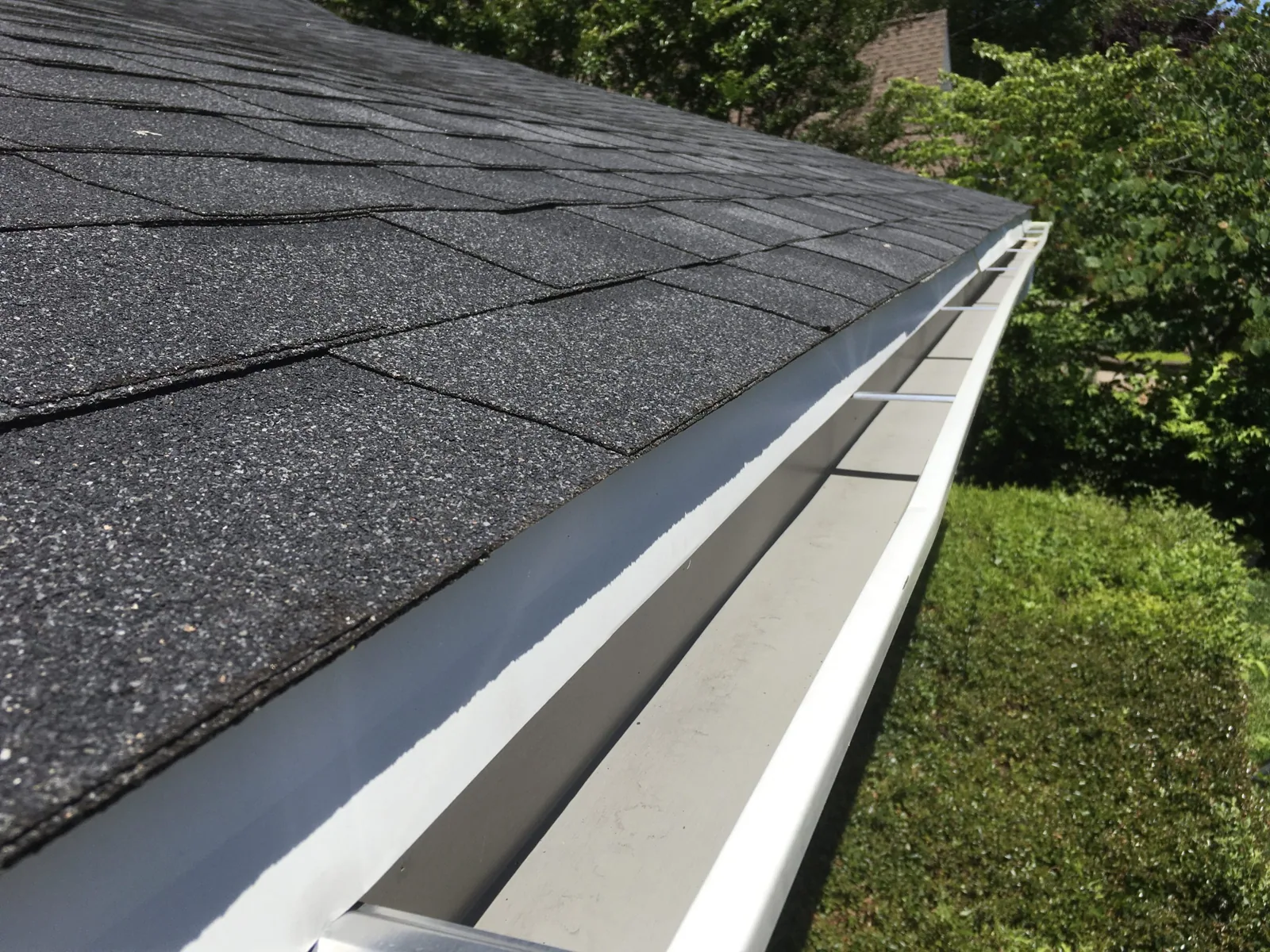
A coping cap that shifts under a gloved hand is a finding, and the inspector writes it down with a location and a photograph. The perimeter is where a Mission, TX roof meets the wind first, and it is also where thermal movement, sealants, and fasteners all work at once. Edge metal looks like trim, yet it holds the membrane edge down and sheds water away from the wall. When it loosens, the membrane beneath becomes the next thing to fail.
The Parts of a Roof Edge
Commercial roof perimeters use a handful of components, and each has a failure mode. Coping caps cover the top of a parapet wall and shed water. Drip edge and fascia metal finish an unwalled roof edge. Gravel stops hold the membrane or built-up edge at a roof without a parapet. Gutters and downspouts carry water off the edge, and counterflashing laps over the base flashing at walls and curbs.
The weak points are the joints between pieces, the fastener rows, and the sealant at corners. Thermal movement widens the gaps over time, especially on long runs of aluminum or steel. We note the gauge, the profile, and the spacing of cleats or fasteners on the sketch, since those details decide how the edge behaves in a gust.
Wind Findings at the Perimeter
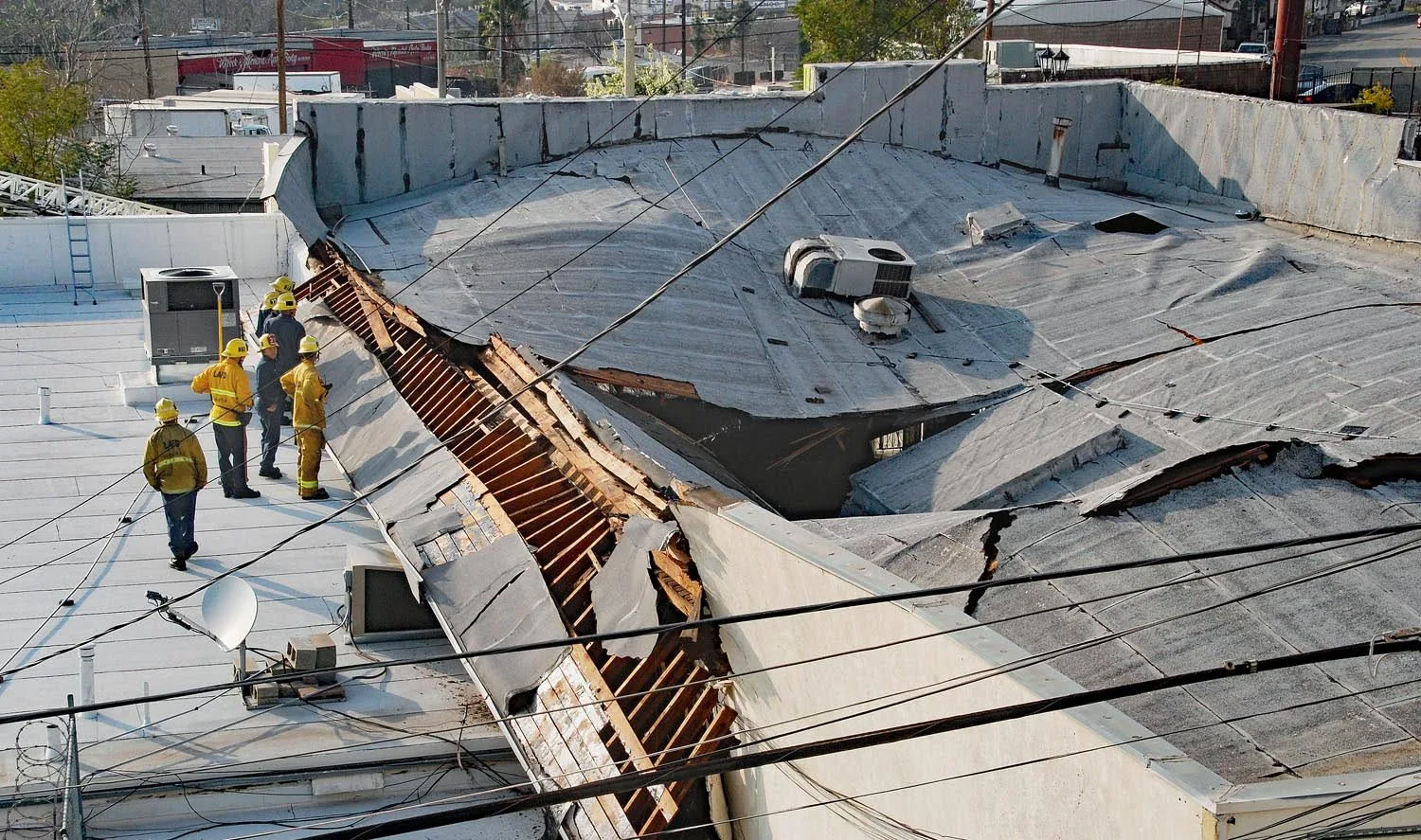
Uplift pressure is highest at corners and edges, and that is where wind damage begins. In July 2020 Hanna's estimated 60 to 65 mph winds reached Mission and McAllen, and several sheet-metal roofs in McAllen were blown off or torn back. In Mission, a school district maintenance shed lost sections of its roof. The pattern is consistent: once metal at the edge opens, the rest of the roof is exposed.
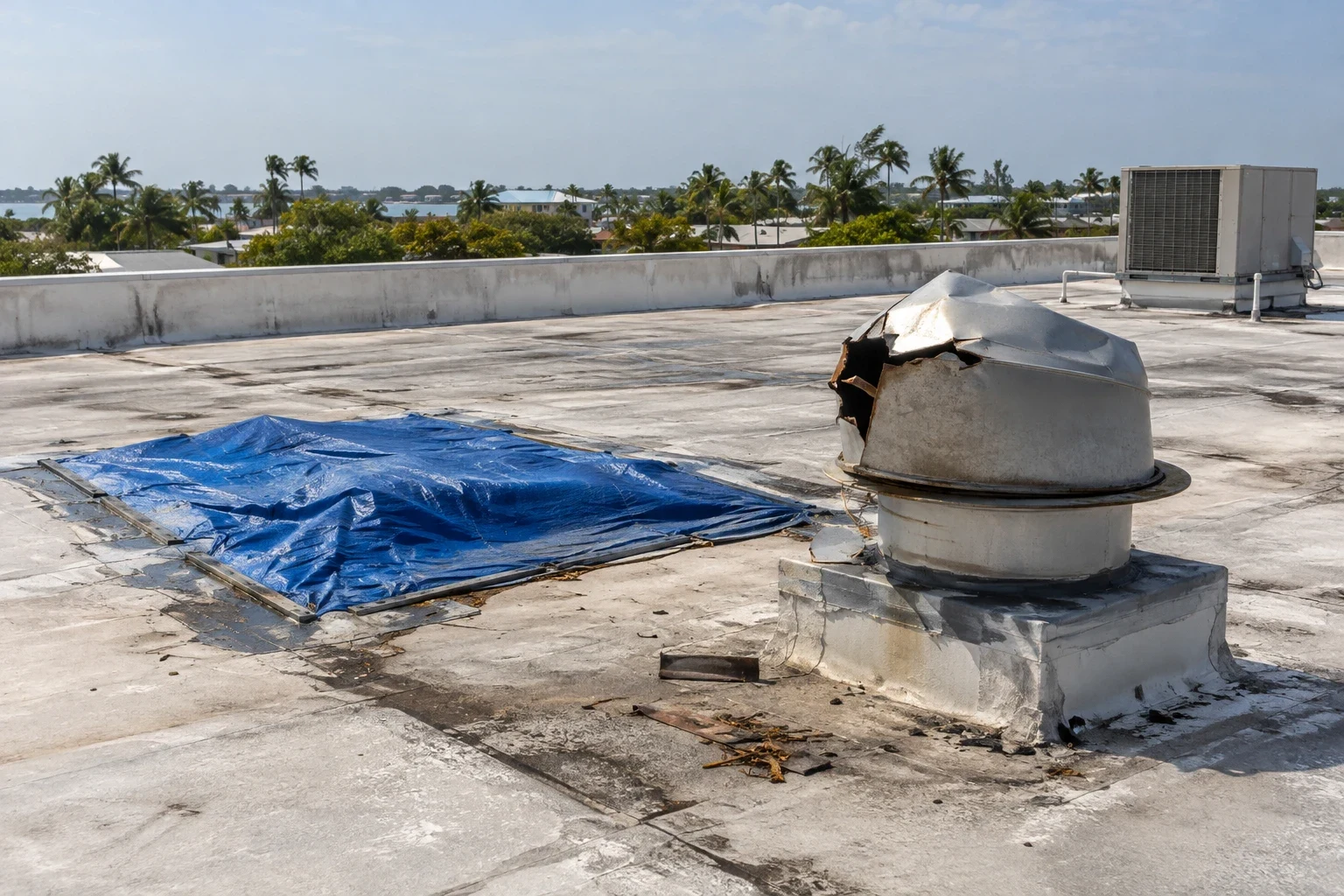
After wind we look for coping that has lifted, cleats pulled free, bent drip edge, and fasteners backed out of the substrate. A wind-damaged roof often shows a line of small signs along one side of the building, which points to the direction the gust came from and tells us where to look first on the next visit.
Fastener Pull Samples and Substrate Checks
Looking at a fastener does not tell us whether it is holding. A pull sample does. On a handful of fasteners per roof section we test how much force it takes to extract them from the wood nailer, masonry, or steel they were driven into. Corroded or stripped fasteners, and nailers that have rotted or split, show up in this test and nowhere else.
Findings go into the file with the location, the substrate, and the pull result. A failed sample on one side of the building leads to more tests nearby, and when a whole run is weak, the recommendation moves from tightening to replacing the metal with a properly fastened system. Replacement metal is fastened to the spacing and pattern the roofing system requires, with continuous cleats or sealed lap joints where the detail calls for them. On masonry parapets, the fasteners go into sound mortar or block, and a crumbling mortar joint is repaired first so the new fasteners have something solid to grip.
Gutters, Downspouts, and Where Water Lands
Edge gutters and downspouts handle water at the building face. Their failures are routine: joints that have separated, straps that have rusted, elbows packed with debris, and downspouts that discharge against a wall or a slab. In a heavy rain, a gutter that cannot pass the flow overtops, and the overflow soaks the wall below.
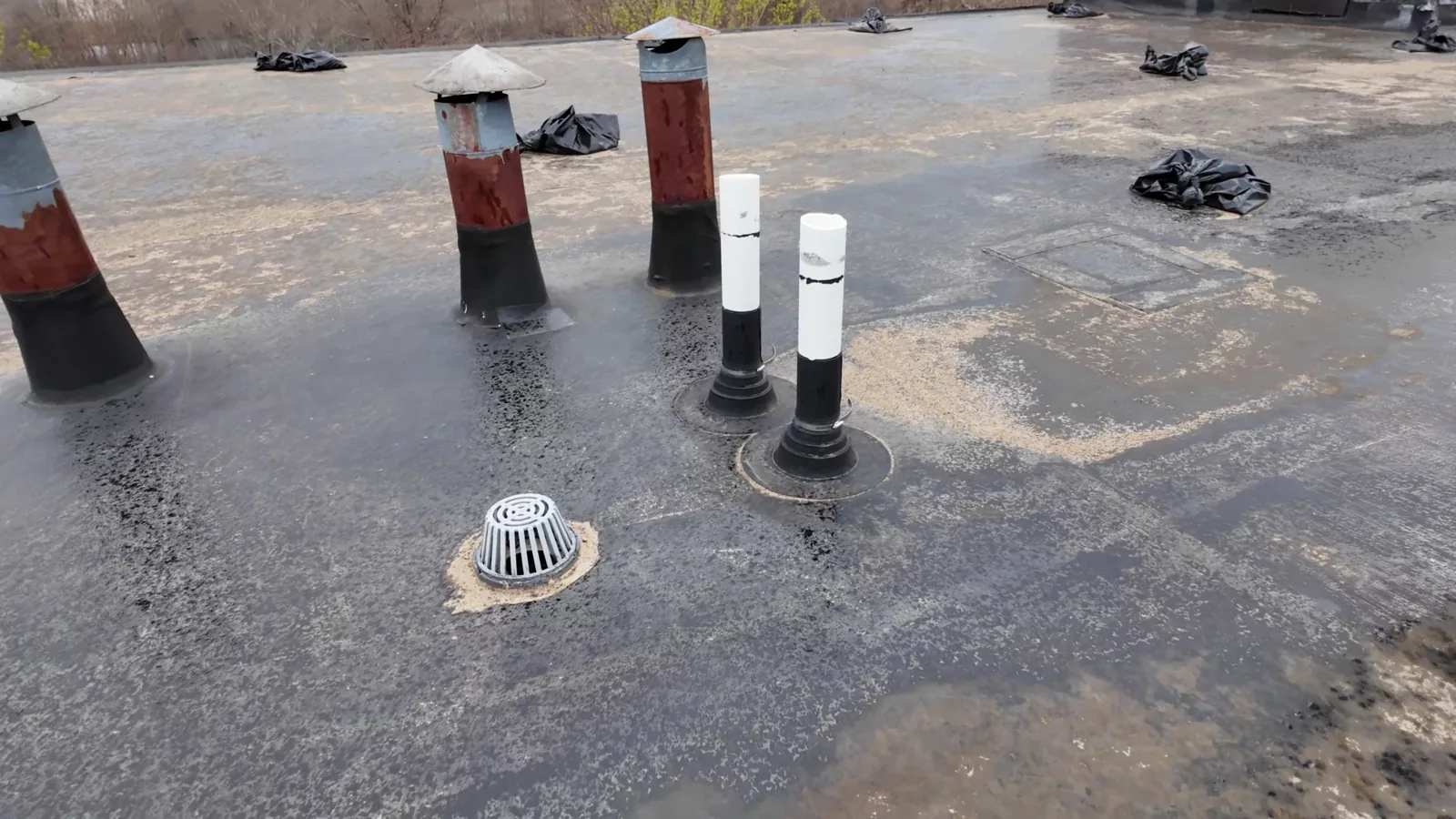
We check slope, joint seals, fastener spacing, and discharge points. Clogged units are cleared, and loose runs are refastened or replaced. Where the building has scuppers instead of gutters, the work links closely to drain and scupper service, and the two are logged together so the whole water path from roof to ground appears in one record.
Street-Facing Edges on Retail and Office Buildings
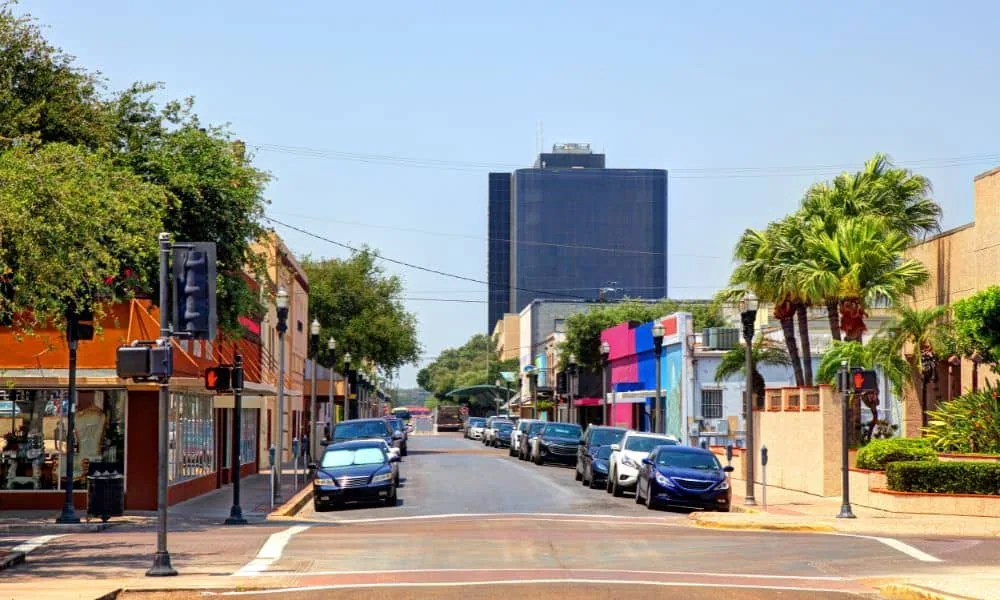
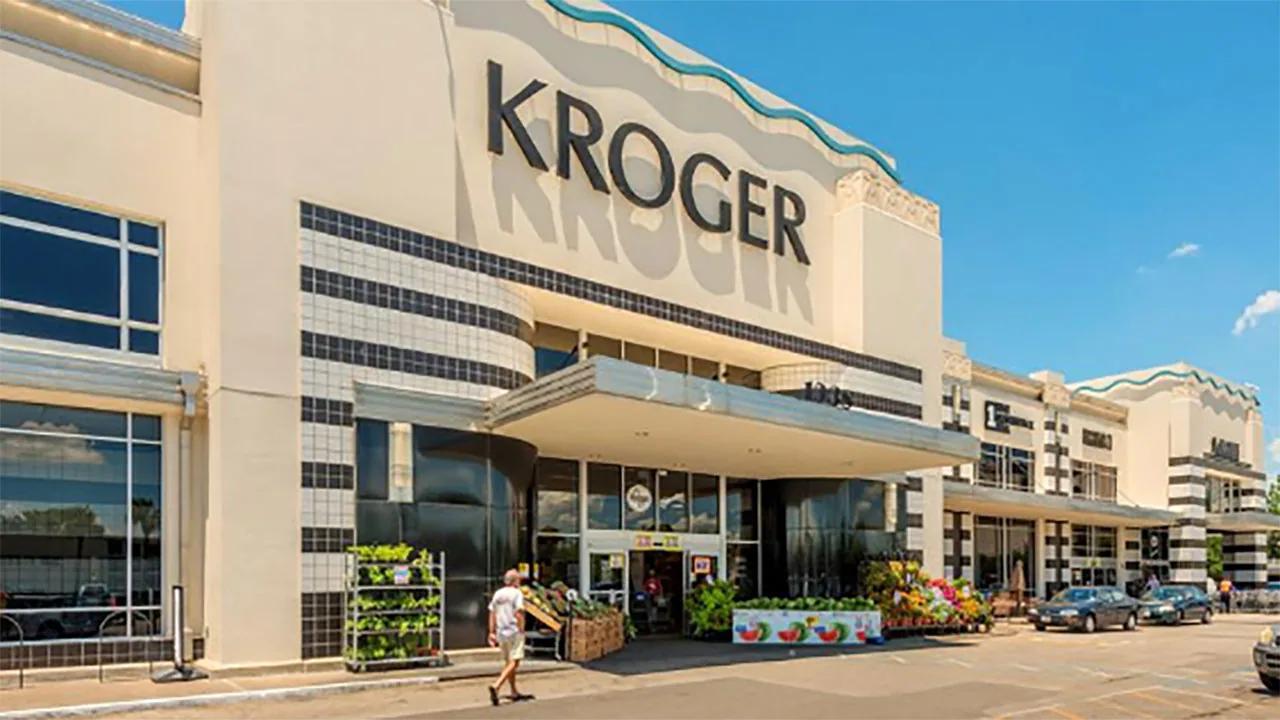
Buildings with visible parapet edges, such as shopping centers and strip retail, have an extra reason to keep the perimeter tidy. A loose coping cap can drop onto a walkway or a parking lot, and wind-driven debris from a damaged edge is a safety matter as much as a roofing one. Along I-2 in Mission, commercial buildings have direct freeway frontage, so a roof edge there can be seen from the freeway.
For owners of shopping center roofs, we photograph the full perimeter, tag each loose component, and group repairs by tenant bay when the roof is shared. That grouping makes it possible to coordinate with individual tenants and keep entrances clear during the work. Lift equipment and material staging are planned with the property manager so that loading zones and fire lanes stay open while the metal is being replaced.
Repair, Replacement, and Planning
Small edge repairs include resealing a joint, replacing a few fasteners, or restoring a section of cap. Larger work replaces the whole run, which is often done alongside a membrane project. Where a system is nearing the end of its service life, edge metal replacement may be bundled into the same scope so the new edge ties into the membrane properly. Each choice is written as a scope line with a recommended timing.
Edges that are wearing but not failing go into the owner's file as monitored items, with a photograph to compare against next season. Owners in McAllen and Palmview can use the same format to compare buildings, and the dated edge photographs speed up any storm damage repair that follows the next big wind.
Questions and Answers
How do you know whether coping needs to be replaced or only tightened?
Pull samples and a joint inspection answer that. If the fasteners hold and the cap is straight, tightening and resealing is enough. If the substrate is rotted, the cap is bent, or fasteners pull out easily, the cap is replaced and attached to the spacing the system calls for. The sketch shows which sections fall on each side of that line.
Why does a loose edge matter if the membrane still looks fine?
The membrane edge is held down by the metal above it. When the metal lifts, wind gets under the membrane, peels it back, and exposes the insulation. Often the first sign is a small gap that is easy to dismiss. Fixing it early costs a fraction of a membrane repair and avoids the interior leaks that follow.
Can gutters be added to a building that never had them?
They can, if the edge construction supports them and the discharge has somewhere to go. We check the fascia, the roof slope, and the grade below, and discuss placement of downspouts with the owner. On some buildings scuppers or interior drains are a better fit, and we say so in the recommendation.
What metals are used for edge work?
Galvanized and coated steel, aluminum, and stainless steel are the common choices, selected for profile, finish, and exposure. Mixing metals can cause corrosion at contact points, so we match fasteners and flashing to the cap. The choice also follows the roofing system, with some membranes calling for particular edge components.
Does edge metal need work after every storm?
Not after every storm, but a post-storm look is worthwhile after any event with strong wind. A brief perimeter walk catches loosened cleats before the next gust. Dated photographs from before the storm make that walk faster, because we compare line by line and mark only what has actually moved.

Request a Perimeter Check
Send us the address and tell us which sides of the building worry you. We will walk the full edge, test fasteners, and give you a written condition summary with photographs of every loose or damaged section.