
Property Types We Roof
Apartment and Multifamily Roofing in Mission, TX
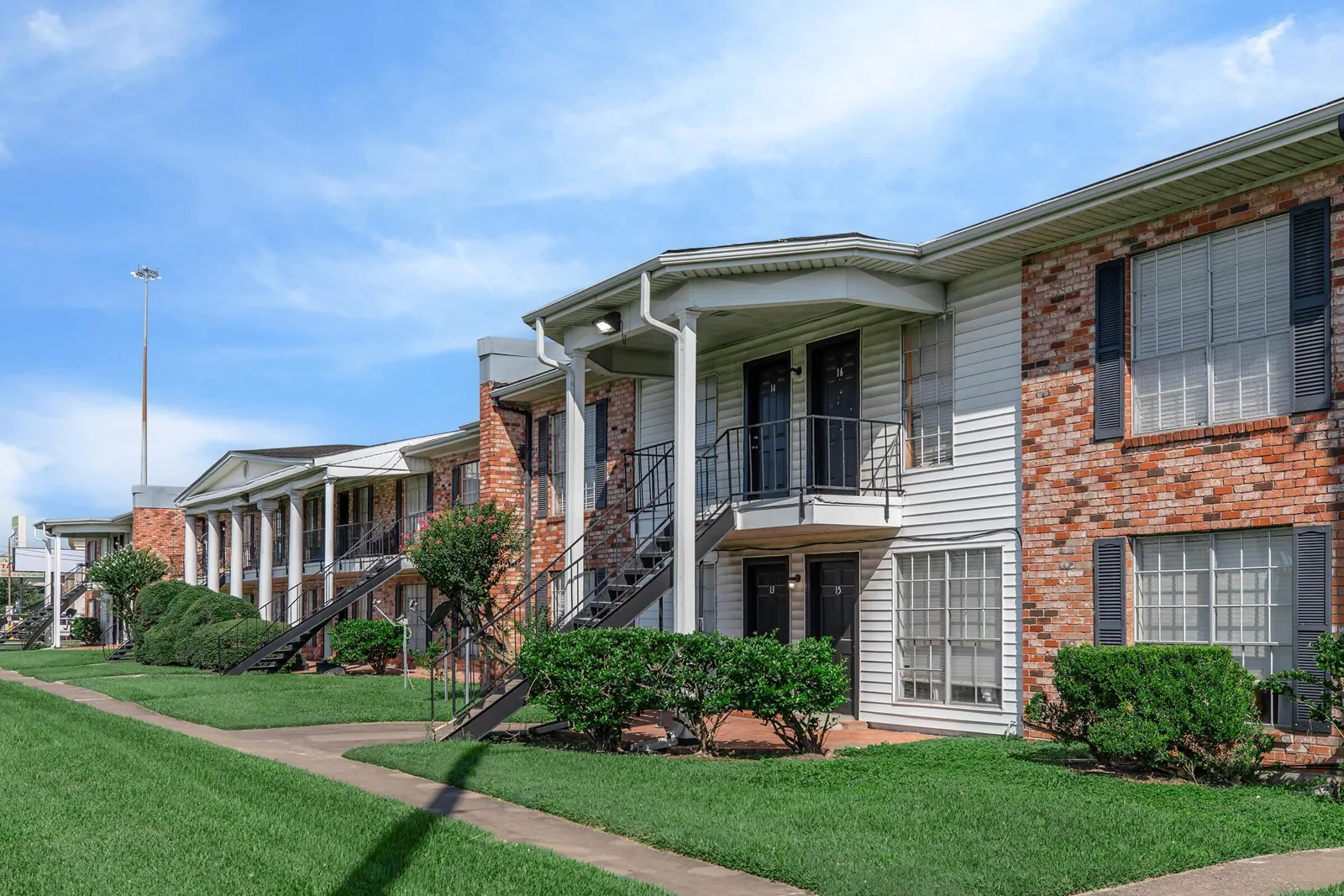
A building number is the first thing written on an apartment roof sheet in Mission, TX, followed by the count of units under it. A complex is a set of roofs, not a single roof, and the property manager needs to know which buildings carry the risk and which can wait. The inspector assigns each building a number that matches the site plan, draws a sketch of its roof sections and photographs the same set of positions on every building: the edges, the drains, the stair towers and the equipment platforms. That repeated pattern makes the buildings comparable, and the comparison is what lets a budget be ranked.
The condition summary that follows is written building by building, with scope lines the owner can fund in stages.
Ranking Buildings by Finding
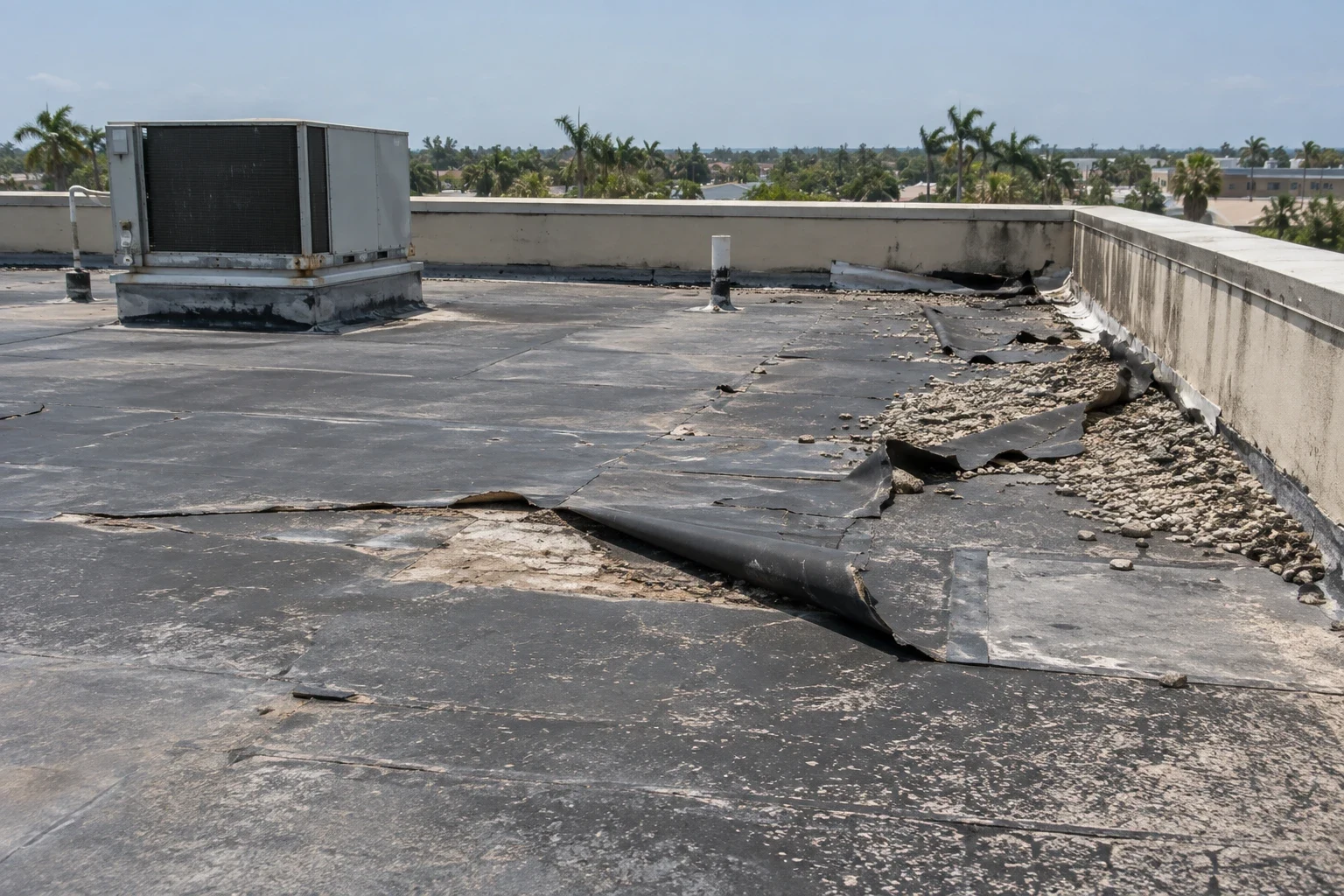
Age is a poor guide to the order of work. Two buildings put up in the same year can have very different roofs because one has a clogged drain, a damaged cap or a rooftop unit leaking at the curb. The ranking therefore uses findings: active leaks over occupied units, trapped moisture, failed flashing, ponding and loose edges, each with a photograph and a position on the building sketch.
Moisture scans are run on every building, and the results are drawn on the sketch in feet. A building with a small wet area near one drain needs a drain correction and a patch. A building with wetness across a whole section needs replacement of that section. The summary lists both types and attaches a cost range, so an owner can compare acting now with waiting a year. For each building the summary also names the cheapest action that stops the active leaks, even when the larger project is deferred, so interior damage does not run on while the budget is being approved. Buildings that share a roof line or a drainage path are grouped, because a repair at one affects its neighbor.
A Growing Metro and Long Holding Periods
The McAllen-Edinburg-Mission metro had an estimated 921,549 residents in 2025, and Mission's economic development office cites Mission among the fastest-growing job markets. An owner planning ahead in a market like that needs a horizon, and a roof capital plan supplies one. The summary projects which buildings will need work in the next one to three years and which can be monitored. Each item carries a date for the next check, so a building on the watch list is looked at again before the tropical season and again after it.
That projection helps owners who plan to refinance or sell. A lender or buyer reading the owner's file can see the dated photographs, the moisture maps and the scope lines, and can tell whether a roof is a liability or a managed asset. A roof capital plan turns those findings into a schedule across budget years.
Drains, Stair Towers and Walkway Roofs
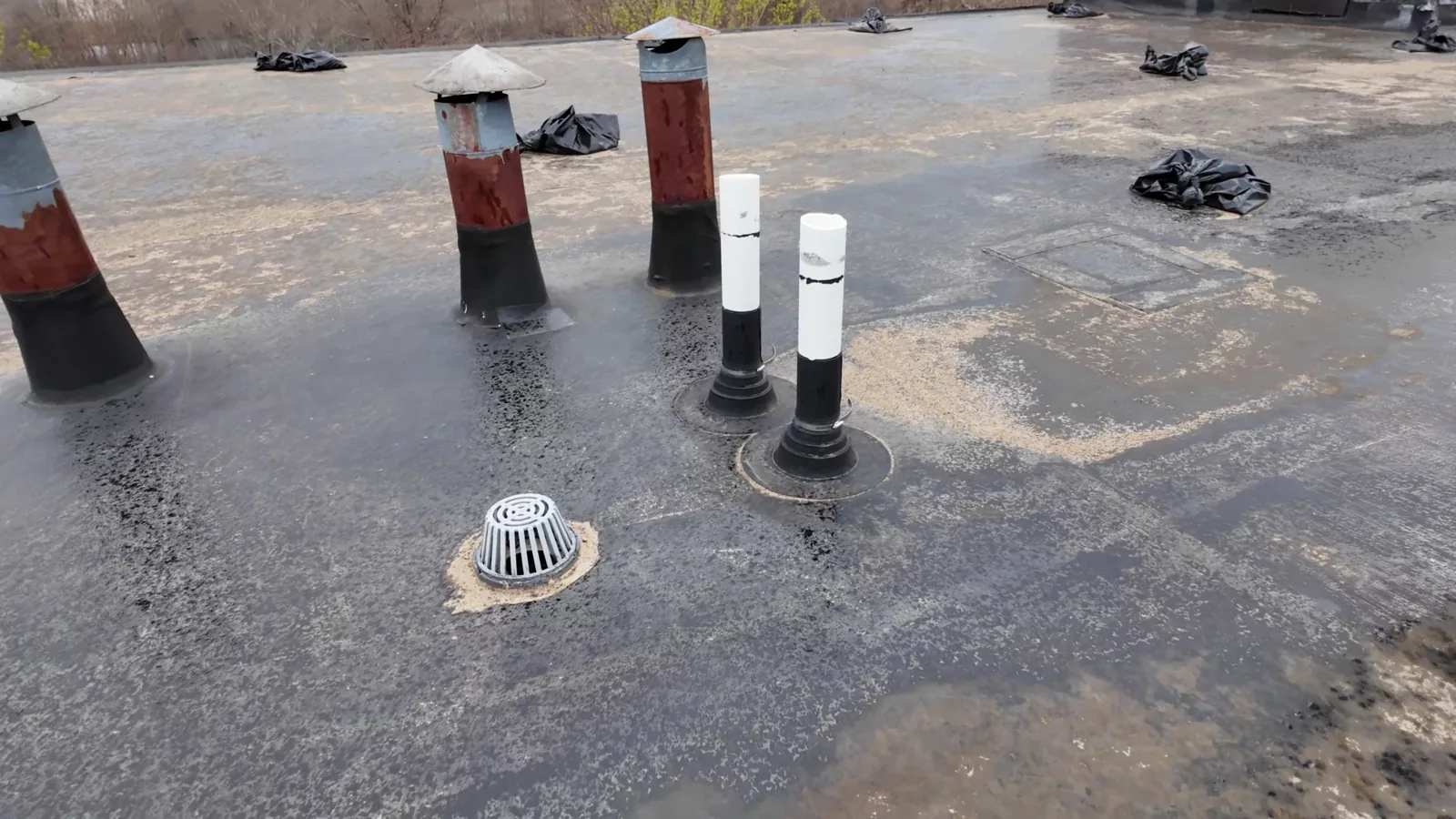
Garden-style and mid-rise complexes have details that offices and warehouses do not: stair towers, covered walkways, balcony tops and short parapets. Each of these gathers water from a wall or a higher roof. The drain and scupper log lists the outlets for each building, with photographs of the strainer, the sump and the water line. A clogged drain at a stair tower can feed water into the top-floor ceiling of a unit, and the resident reports a leak that the roof sheet can trace.
Walkway roofs and balcony tops are small, low and easily overlooked. The inspector records their slope, their drip edges and the sealant at the wall, since a split joint there sends water down the wall into the unit below. A roof drain and scupper scope line corrects the outlet or adds one, depending on the water marks. Roof hatches and ladders are checked too, because a hatch that no longer seals is both a leak path and a safety problem for the maintenance staff who use it.
Storm Baseline Across the Whole Property
Hurricane Dolly's 2008 gusts of 50 to 70 mph reached populated Hidalgo County, and the roofs it lifted near Weslaco were mainly on older structures. In a complex, buildings with older roofs are the first to check for weak attachment. The pre-storm baseline photographs each edge, each cap and each loose item, and a fastener pull sample on a stair tower roof or an equipment platform shows whether the attachment still holds.
After a named storm, the same positions are photographed in the same order. The comparison tells the property manager which buildings took damage and which did not, so crews and residents are directed to the right places first. It also gives the insurer dated evidence of what changed, and the hurricane damage roof repair scope lists only those items. Tarps and temporary repairs are logged with the building number, so a later permanent repair knows where the temporary work sits.
Resident Notices and Access
Apartment roof work affects residents more than most commercial work. Notices go out in advance with the building number, the dates and the expected noise. Parking near the work area is marked off, dumpsters and lifts are placed where they do not block fire lanes or entrances, and the crew accesses the roof from an exterior ladder or a stair tower, not through a unit.
Where a leak is active over a unit, the first step is to make the roof watertight. Interior repairs are the property team's, and the roof sheet gives the maintenance staff a record of the cause. Phased work, one building at a time, lets a complex keep most of its units unaffected on any given week. The schedule shows the order of buildings, the days each one is open and the weather margin, and the property team posts it where residents will see it.
The Owner's File for a Multifamily Portfolio
The file keeps one sheet per building, plus a summary ranking. Owners with properties in Mission, Palmview and Edinburg can use one format across sites, alongside a hotel or senior living building in the same portfolio. The ranked summary on top lists every building with its worst finding and its next action, so a regional manager can read one page, and an asset manager can open the building sheets behind it to check any line against its photographs and readings.
Questions and Answers
How do you decide which apartment building to roof first?
By finding. Active leaks over occupied units come first, then trapped moisture and failed flashing, then ponding and loose edges. Building age is recorded but does not set the order.
Can roof work be done without entering units?
Yes. The crew reaches the roof by exterior ladder or stair tower, and interior access is limited to ceiling checks the property team arranges. Residents receive notices before work begins.
What does an owner receive for a multi-building complex?
One sheet per building with a sketch, tagged photographs, moisture readings and a drain log, plus a ranked summary with cost ranges. The format allows staged funding across budget years.
How are balcony tops and walkway roofs handled?
They are inspected on their own, with slope, drip edge and wall sealant recorded, since they are small and often missed. The scope line lists any repair with its location on the building sketch.
What happens after a named storm?
The same positions are photographed in the same order and compared with the baseline. The manager sees which buildings changed and which did not, and the repair scope lists only the new findings.

Request a Documented Complex Inspection
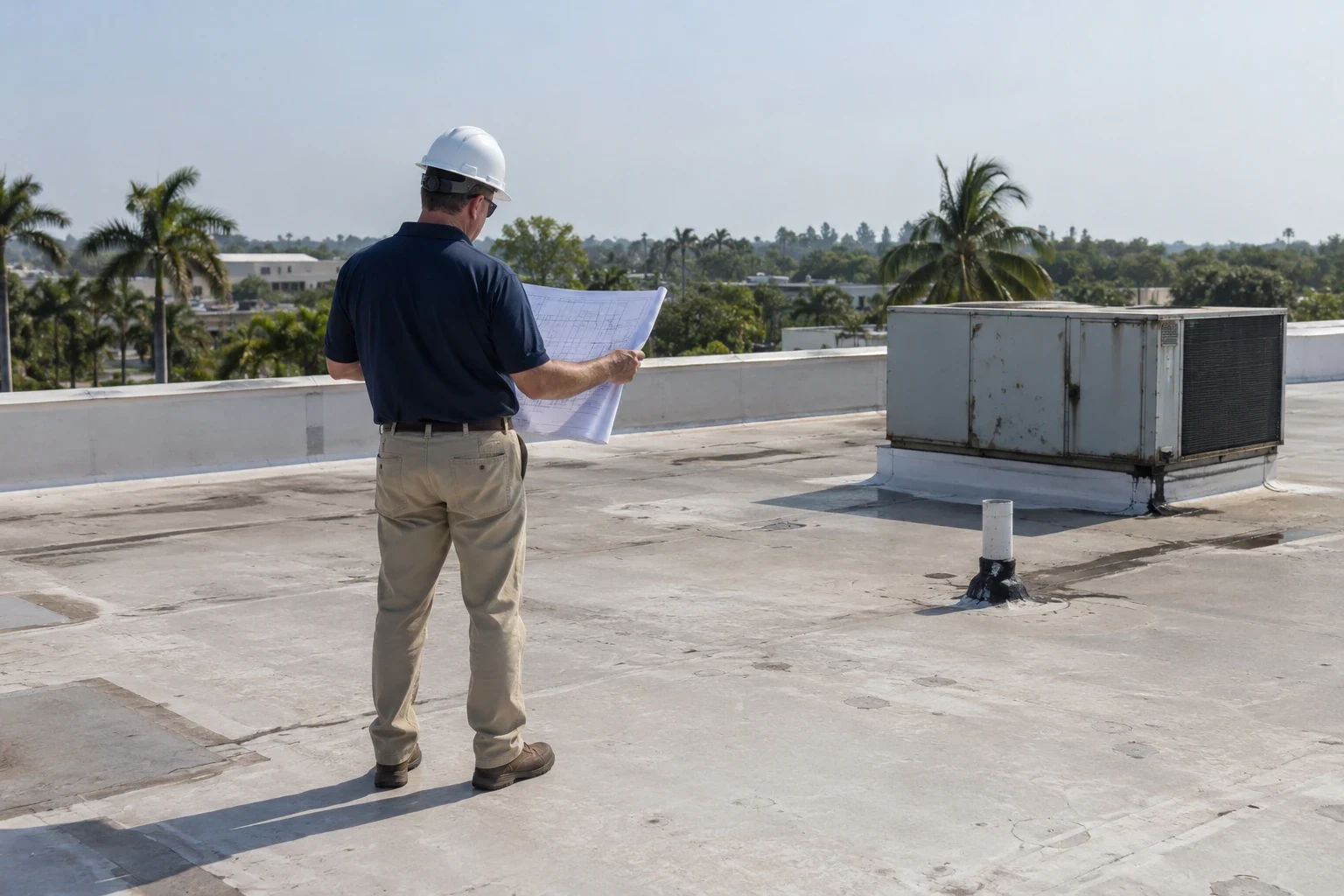
Ask for a documented inspection of your apartment buildings. The written condition summary will include a sketch and tagged photographs for each building, moisture readings, a drain and scupper log and a ranked set of scope lines you can reuse for budgeting or an insurance conversation.