
Property Types We Roof
Senior Living Roofing in Mission, TX
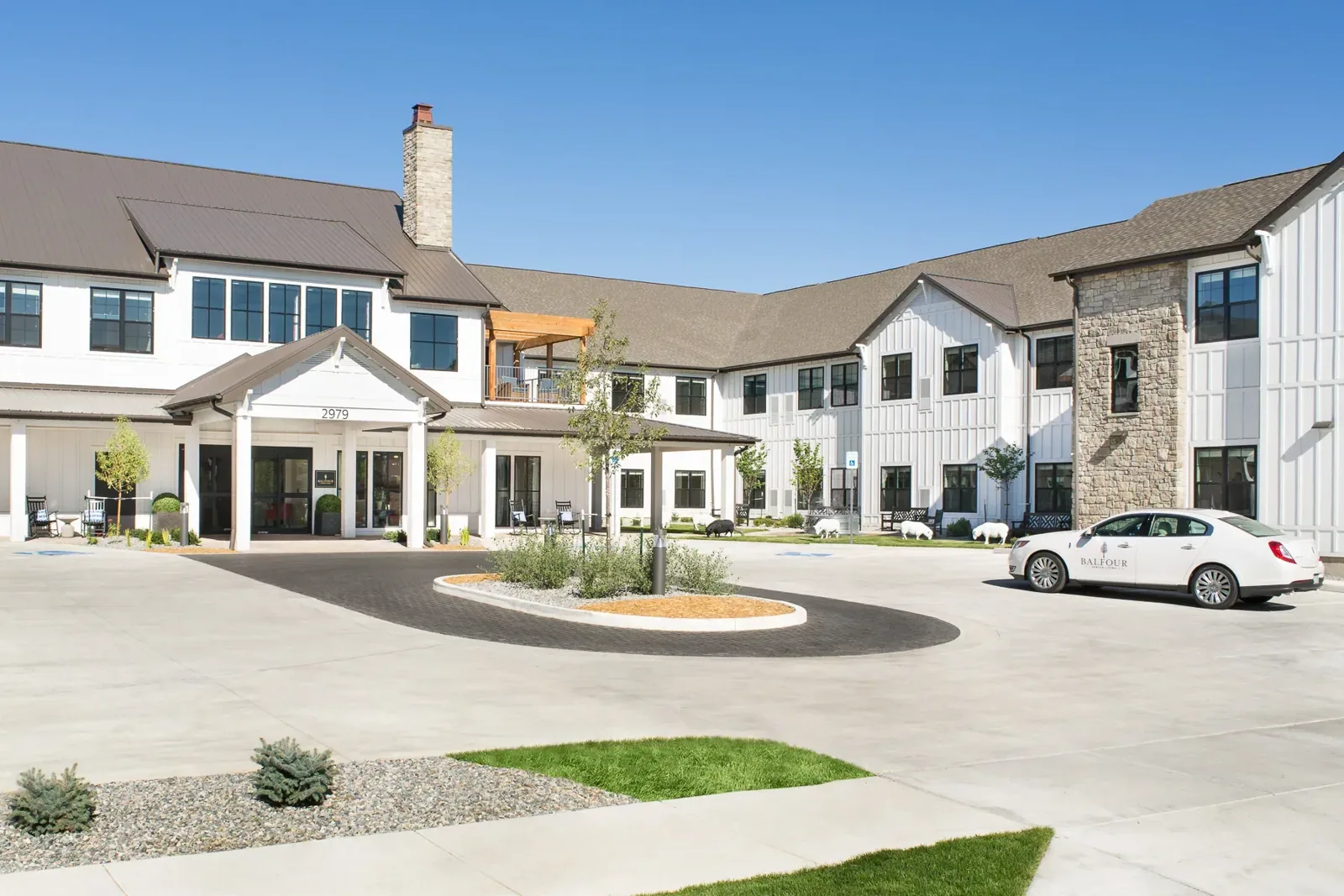
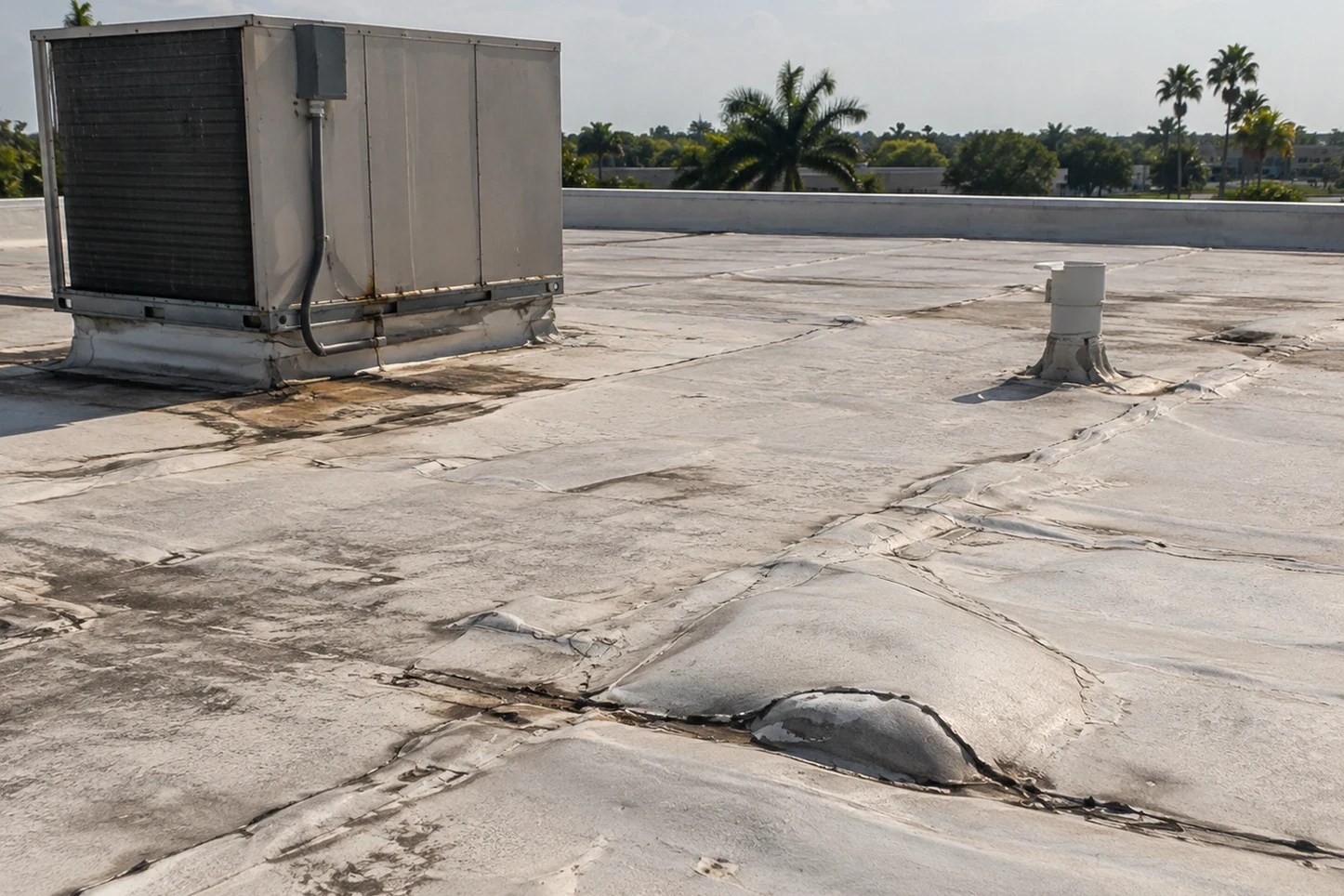
A senior living inspection sheet opens with a dated photograph of the roof drain nearest a resident wing, tagged to the section it serves. A drain that holds water after rain is a finding, and it sits above rooms where a ceiling stain means more than a repair ticket. The photograph, the depth of the standing water and the reading from the moisture meter go on the sheet together.
Communities in Mission, TX, and in Alamo, a winter resort and retirement town, run roofs over residents who live in the building around the clock, so a leak or a tear-off reaches them directly. We document each roof finding by finding, rate its consequence for the rooms below and write a scope line that a director, a regional operator or an owner can read without a roofing background.
Inspection Findings Over Resident Rooms
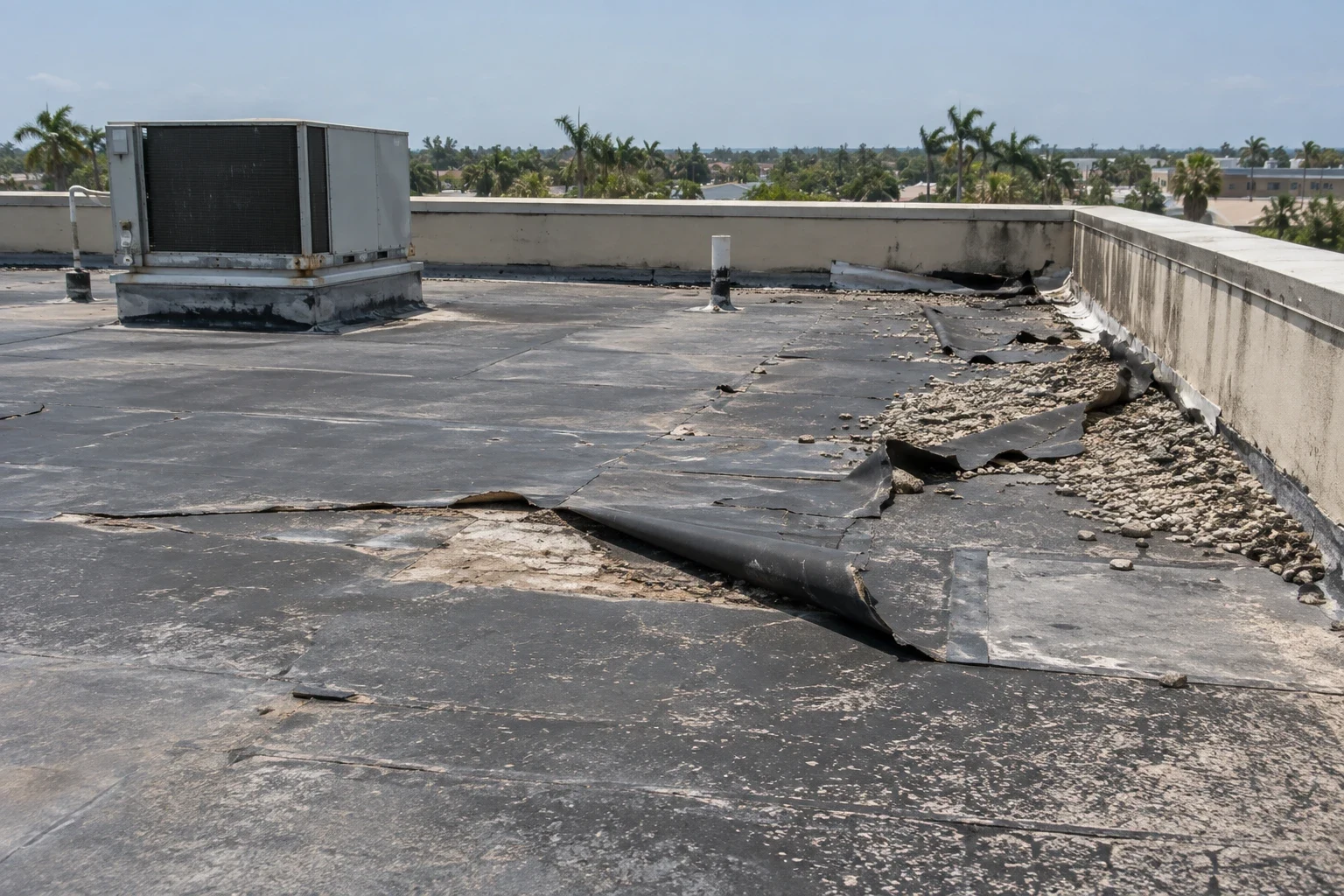
Senior living buildings combine low-slope roofs over wings, mechanical penthouses and covered walkways. Each section is walked in full, because the defects that matter are small and scattered: a lifted corner of metal at a parapet, a split sealant joint at a curb, a seam that has opened along a long run.
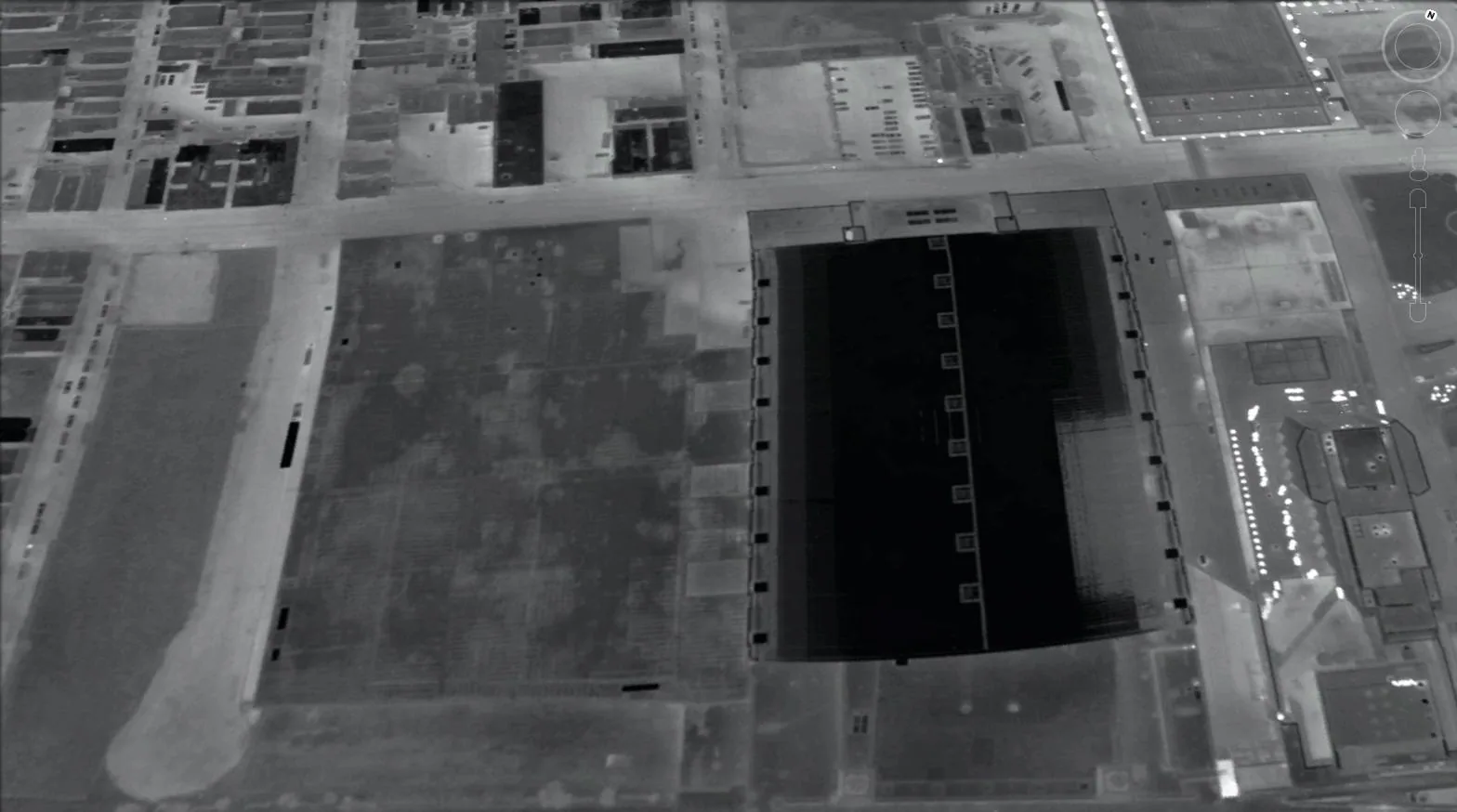
We tag every photograph to a roof section and a room group below it. A finding over a common dining room carries one consequence and a finding over a resident bedroom carries another, and the condition summary says which is which. Wet insulation found by an infrared moisture survey is outlined on a rooftop sketch so the affected rooms can be checked from the inside.
Covered walkways and entry canopies receive their own entries. They are small roofs with heavy foot traffic beneath them, and a failed seam or a clogged scupper there is visible to every visitor. Each is rated for consequence and given a line in the scope.
The Condition Record for the Owner's File
Four pieces make up the record: tagged deck photographs, a rooftop sketch carrying moisture readings, a drain and scupper log and the condition summary. Together they become the owner's file for the building. A new administrator or a new operator can open it and see what was found, when and why a repair was chosen.
Heat comes first in the Valley, with May through October counted by the Brownsville weather office as heat-safety season, and a tropical season overlaps it. The file therefore records coating film condition, the heat and UV damage signs, seam bonds and sealant elasticity as a baseline, so each later visit shows change instead of guesswork.
Winter Texan trailer and motor home courts grew to about 74 in Mission by the 1980s, and Alamo is a winter resort and retirement town, so seasonal occupancy shapes how communities schedule roof work. The record notes the season when each visit was made, so a seam checked in a hot September is not compared directly with one checked in a mild February.
Scope Lines That Account for Residents
A scope line names the finding that drives it. If a section is wet beneath the membrane, the line says so and gives the area from the moisture map. If a section is dry and only the surface has aged, the line may call for a coating or targeted repairs instead.
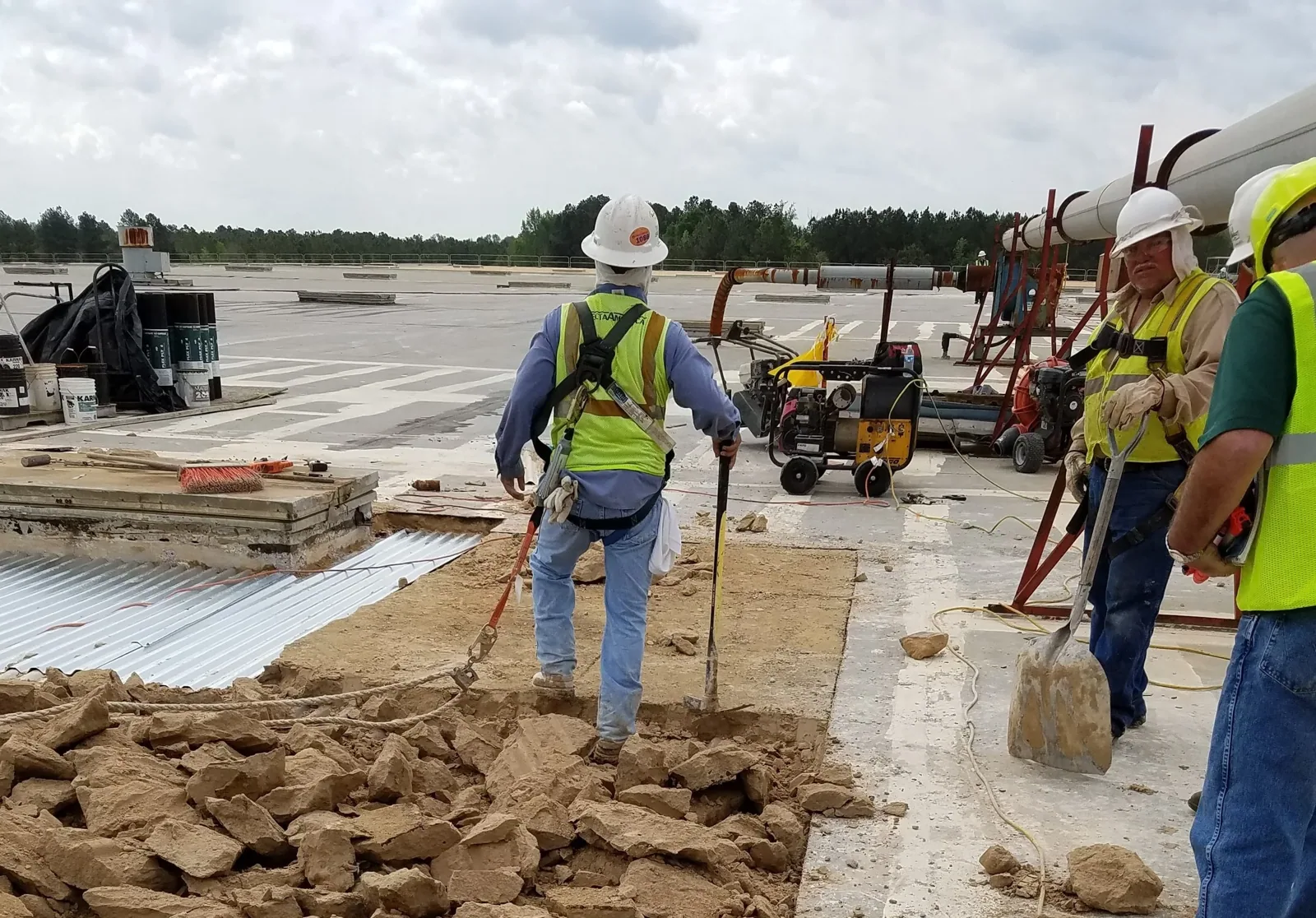
Resident comfort shapes the plan. Tear-off noise, odor and dust are limited to the hours the administrator names, air intakes are protected, and corridors below the work are kept clear. The scope separates work that can wait for a mild day from work that stops water now, with a note on what temporary protection holds in between.
Rooftop equipment that serves resident rooms is listed by unit, with the curb, the flashing and the sealant condition noted. Any shutdown needed for a repair is agreed with the maintenance lead and logged by time.
A Baseline Before the Tropical Season
Hurricane season in the Rio Grande Valley spans June through October, and readiness for flooding continues all year. A spring baseline records edge metal, fasteners, drains and scuppers while the roof is dry and reachable. A fastener pull sample on the metal edges shows how much holding power remains.
The baseline matters because a community's power and mobility plans depend on a dry building. When Hurricane Hanna passed in July 2020, outages reached up to half of county customers, and a roof that leaks during an outage leaves a facility with fewer options. A tight roof is one less variable.
Post-Storm Comparison and What It Shows
After a named storm or a heavy rain, the same sections are walked again and the photographs are matched to the baseline. Hanna's estimated 60 to 65 mph winds along I-2 in July 2020 did their worst at roofs, and Dolly's 2008 gusts lifted roofs near Weslaco, mainly on older structures, so hurricane damage is a real planning input. Edge metal and seams are the first details to move.
The comparison separates new damage from older wear. It also lets an administrator tell an insurer which findings are new and which were already on the sheet, with dates, which speeds the conversation and reduces disagreement.
Options and Recommendation
For a sound roof with surface aging, the options are cleaning, repair and a reflective coating. For a roof with scattered wet insulation, they are section replacement and repair. For widespread saturation, the recommendation is replacement, with the phasing set around resident schedules. The condition summary states which findings favor which path and which are only monitored.
Cost drivers are named without dollar figures: area, deck condition, insulation thickness, access to the roof and the number of rooftop units to be reset. A reroof over an occupied building adds protection and phasing, and the scope says how much. The same format serves a nearby hospital, a medical office or an apartment community.
The recommendation closes with the monitored list: findings not yet repaired, each with a date and a trigger. A second stain or a failed drain test moves an item to the repair list, and the administrator signs off on the order.
Questions and Answers
How should a senior living community prepare a roof for hurricane season?
Take a dated baseline before June. We recommend a full walk of every section, a fastener pull sample on the edge metal, a drain and scupper log and a moisture map. Keep the file where the administrator and the owner can both find it. After a storm, repeat the walk and compare.
Can a roof be replaced without disturbing residents?
It can be limited, not removed. We recommend phasing by wing, limiting noisy work to hours the administrator names, protecting air intakes and keeping corridors clear. Residents and families should receive a written notice before work begins.
What does a moisture map add to a visual inspection?
It shows wet insulation that a walk cannot see. We recommend a map before any decision between coating and replacement, because a coating over wet insulation fails early.
How often should the file be updated?
Annually in spring, and again after any named storm or heavy rain. Each entry adds dated photographs and any new readings. A short file kept current is more useful than a thick one that stops.
Who should hold the roof file?
The administrator and the owner should each hold a copy. We recommend keeping the warranty paperwork and the last condition summary together with the sketch and the drain log.
Does a coating make sense on a senior living roof?
On a dry and sound membrane that needs surface protection and reflectivity, it can. A moisture map should come before the choice, and a film check should follow it. A coating is not a repair for wet insulation.
Request a Documented Inspection
Ask for a documented inspection of your community's roofs. The written condition summary will include tagged photographs, a rooftop sketch with moisture readings, a drain and scupper log and scope lines you can reuse for budgeting or an insurance conversation.