
Roof Systems
Spray Polyurethane Foam Roofing in Mission, TX
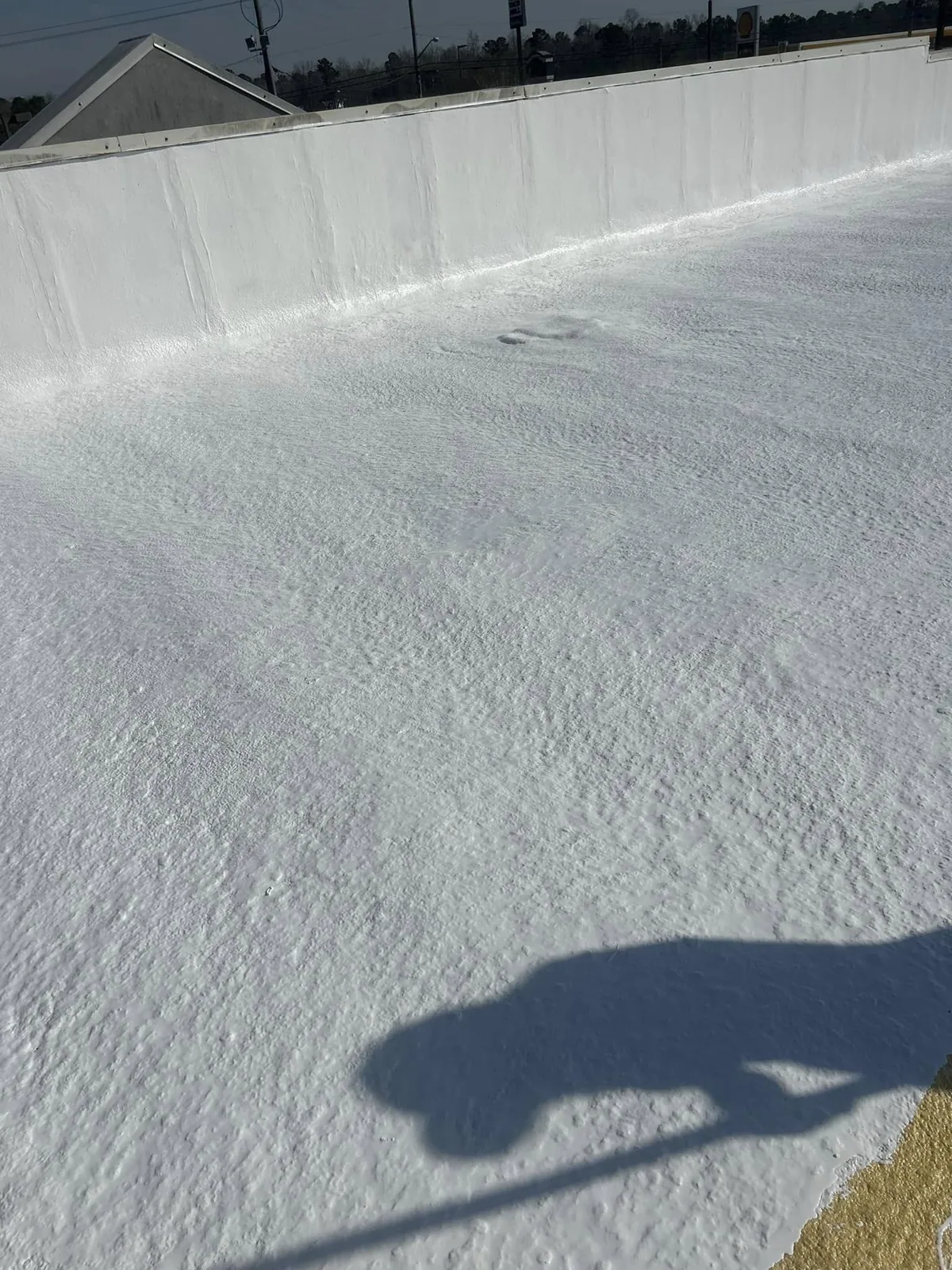
The most telling measurement on a spray foam roof in Mission, TX is the thickness of the coating on top of the foam. A depth gauge pressed into the surface, a dated photograph of the reading, and a tag on the rooftop sketch give the inspector a number that predicts everything else. Foam is a rigid, closed-cell insulation that waterproofs only while its protective coating is intact. When the film thins, ultraviolet light begins to eat the foam beneath it.
Foam, Coating, and Granules
Spray polyurethane foam, or SPF, is made on the roof by mixing two liquid components through a spray gun. The material expands into a continuous rigid layer that adheres directly to the substrate. Because it forms without seams, it wraps around curbs, pipes, and uneven surfaces without the laps that single-ply sheets need. It also insulates, so the roof and the insulation become one assembly.
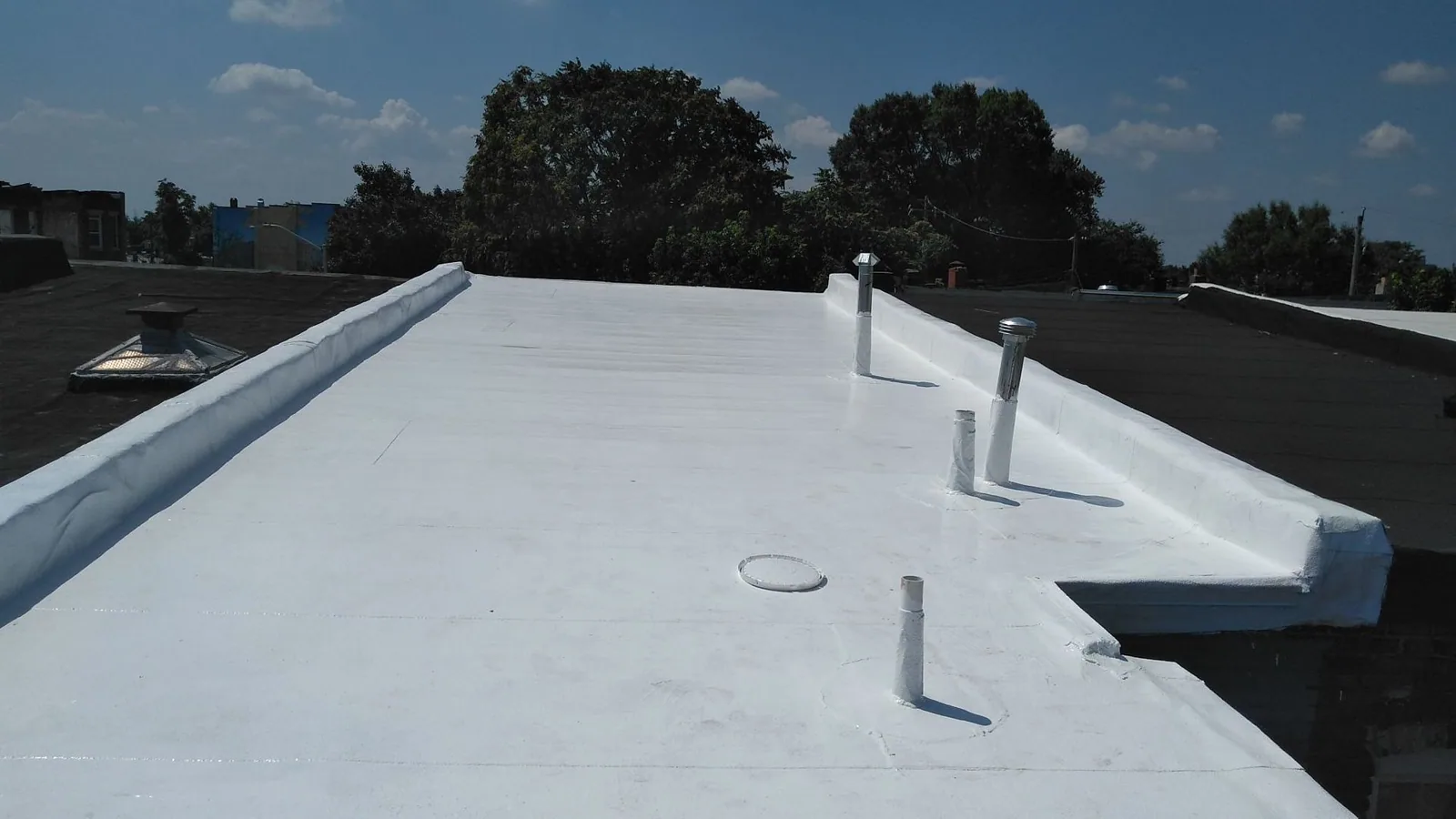
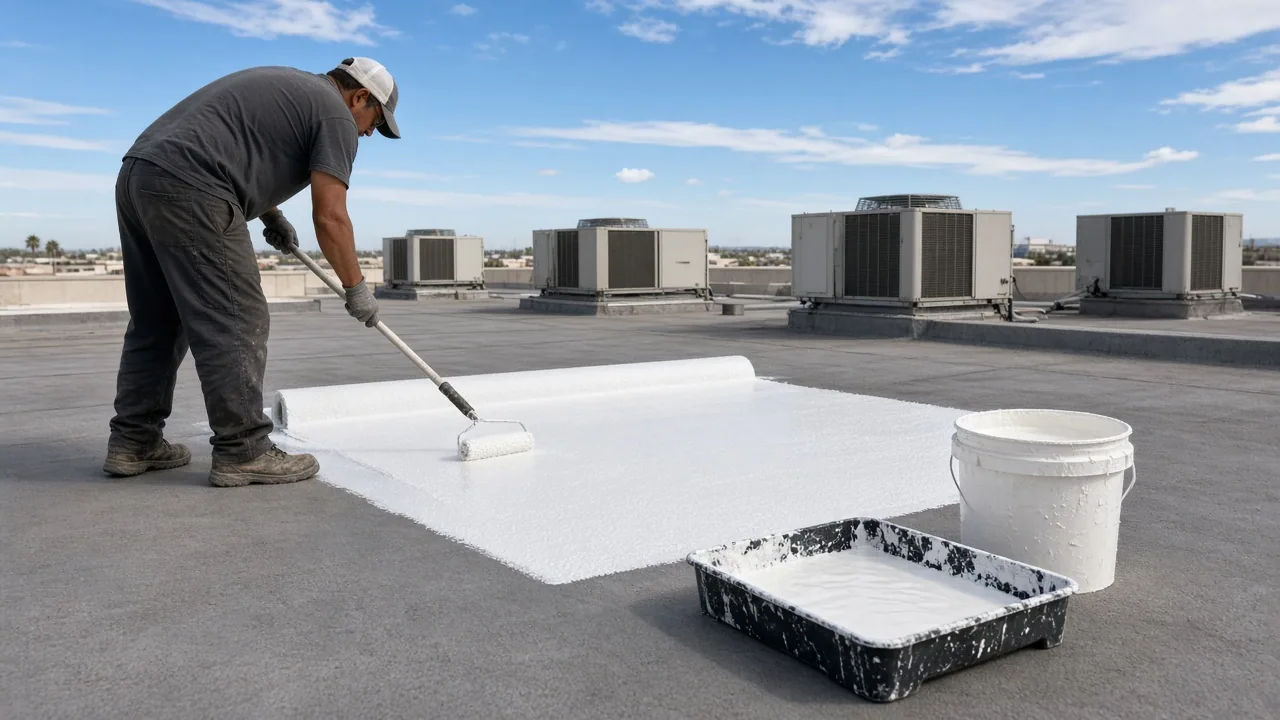
Foam cannot be left exposed. A protective coating, commonly silicone or acrylic, goes on within a short window after spraying, and granules may be broadcast into the wet coating for traffic resistance. The coating is the weather barrier. The foam is the structure of the system, and its density, thickness, and flatness determine how well it will carry that coating.
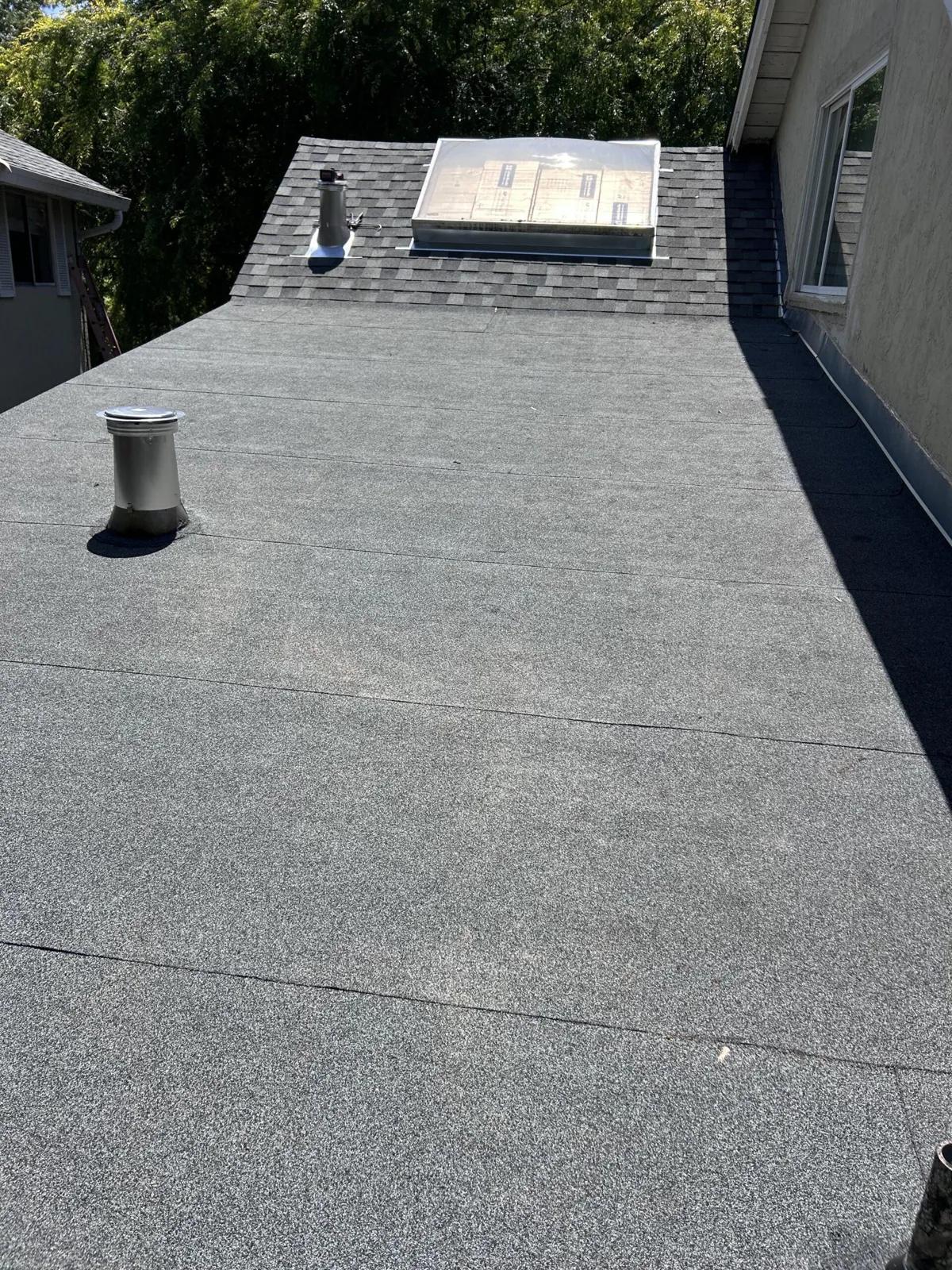
Substrate preparation comes before any of it. Old gravel is swept off, loose membrane is cut away, rusted metal is wire-brushed and primed, and wet insulation is removed. A primer may be needed on certain surfaces. The finished foam is only as flat and well bonded as the surface it was sprayed onto, so we photograph the prepared deck in sections before the rig is set up and again after the first pass of foam.
Weather Windows and Spray Conditions
Foam installation depends on temperature, humidity, and wind. Cold substrates slow the chemical reaction, damp surfaces reduce adhesion, and gusty wind carries overspray onto neighboring cars and buildings. The Valley's long May-to-October heat season gives wide windows in the early morning, while the tropical season from June to October introduces sudden rain that can stop work.
We check the forecast, measure substrate temperature and moisture, and set up wind screens when the site requires them. Cars, glass, and air intakes are protected, and tenants are told which areas will be affected. A record of ambient conditions, lot numbers, and spray passes goes into the owner's file, so any future question about cure or adhesion has data behind it.
Overspray control is a real planning item on commercial sites. Parking lots, rooftop air intakes, and neighboring storefronts are screened, and spray is held when wind rises. Crews work in passes of limited thickness, letting each lift cool before the next, since a very thick single pass can crack or char. The pass count and the measured thickness of each lift appear in the log.
Slope, Ponding, and Rain Volume
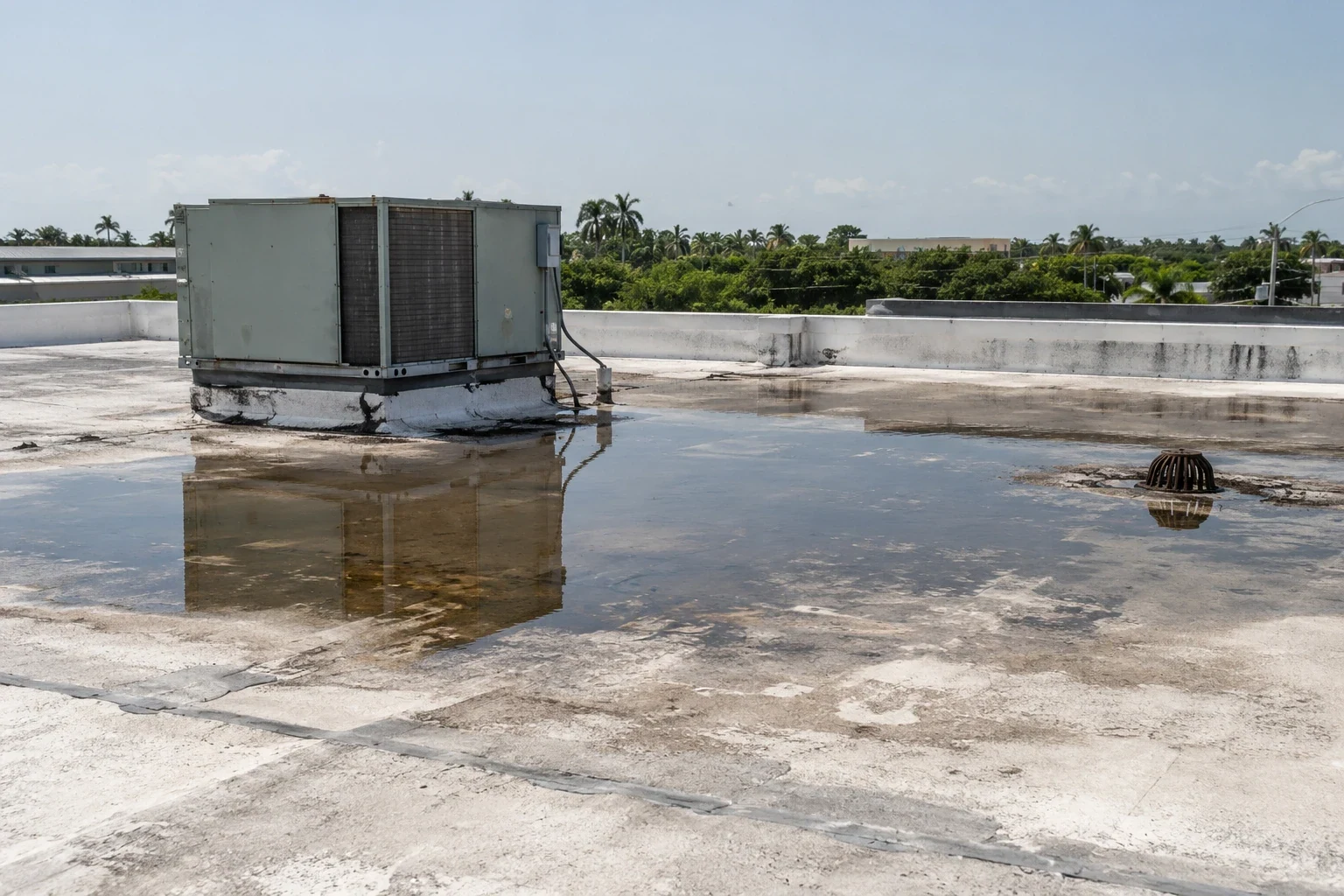
Foam can be sprayed to create slope, filling low spots so water moves toward drains. That feature makes it popular for roofs that hold water. A gauge northwest of Mission collected 14.40 inches from Hanna, and poor drainage flooded ground from Mission out toward La Joya and Sullivan City. A roof that leaves standing water for days after such rain is a candidate for built-up slope.
The coating still matters. Acrylic coatings dislike prolonged immersion, while silicone tolerates it, so ponding areas shape the coating choice. We map the low spots with a level and photograph the water lines after a rain. The ponding water repair analysis shows how much slope the foam can add and where an additional drain is warranted.
Drain details need care when foam changes the roof elevation. A bowl that sat flush with the old surface can end up higher than the new one, which defeats the slope. We lower or reset drains, build sumps in foam around them, and confirm flow with a water test before the coating goes on. Scuppers and overflow openings are checked against the final height of the foam so they still protect the building.
Wind Uplift and Edge Behavior
Foam adheres across the whole roof surface, which gives it good resistance to uplift when the bond to the substrate is sound. Older structures near Weslaco had their roofs lifted by Dolly in 2008, and in 2020 Hanna damaged hundreds of poorly built Valley structures, mostly at their roofs. The risk for a foam roof lies in substrate weakness, not in the foam itself.
We test adhesion at the beginning with a sample patch, then check that the original deck is dry and the surface is clean. The roof edge and the parapet flashings are built up with additional foam and coating, then pinned to structure where needed. After a named storm, the record is compared with earlier photographs to show where coating has been scuffed or cut.
Recoating Cycles and Damage Repairs
A foam roof can last a long time, but its coating needs renewal. The film wears down with sun and foot traffic, and a recoat before the foam is exposed keeps the system sound. The preventive roof maintenance program records film thickness at fixed test points, and the changes between visits indicate when a recoat is due.
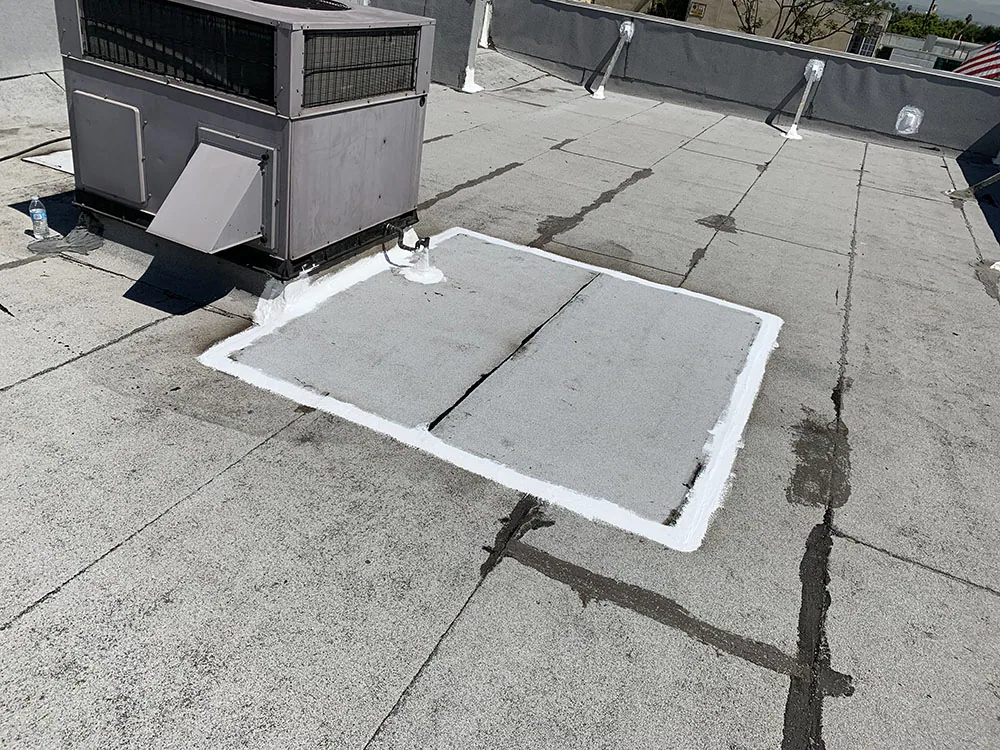
Punctures from dropped tools, bird pecking, and foot traffic are patched by cleaning, spraying a small amount of foam if the damage reaches it, and recoating. The log lists each patch by location, which gives the next inspector a map of weak spots to recheck.
Where SPF Is Considered
Manufacturing plants, warehouses, medical offices, and schools in the McAllen metro can be candidates, particularly where the existing roof is dry and irregular and the owner wants better insulation. A silicone coating over foam is a frequent pairing, and an acrylic coating suits roofs that drain reliably. Compared with a built-up roof, foam adds insulation and removes the plies, though it demands more careful weather planning during installation. Owners who need an added thermal layer, and who want to avoid tear-off weight, weigh those tradeoffs against a new membrane. Properties in Weslaco, Mission, and nearby towns receive the same written record.
Questions and Answers
Why is foam thickness measured as well as coating thickness?
Foam thickness sets the insulation value and the slope correction, while the coating thickness controls weather protection. A thin spot in foam can cause ponding, and a thin coating can expose the foam. We take readings at fixed points so changes over time are clear.
Can spray foam go over an existing roof in the Valley?
Often, if the old roof is dry, clean, and well attached. Moisture mapping and core cuts confirm the condition. Wet insulation or loose membranes are removed first. The foam then bonds to the prepared surface, and the finished assembly includes the old layers as part of the substrate.
What happens if rain interrupts spraying?
Work stops, the exposed foam is covered or sealed if possible, and damp areas are allowed to dry before spraying resumes. Foam sprayed onto a wet surface can blister or lose bond. The daily log shows what was sprayed, what was held back, and what moisture readings were taken.
Does the foam coating need to be reflective?
Reflectance protects the foam from heat and ultraviolet light and lowers the roof temperature in summer. White silicone and acrylic coatings are common for that reason. Colored coatings can be used for appearance, though they absorb more heat, so we compare options with the building's cooling demand.
How can an owner tell the foam coating is wearing out?
Early signs include chalky color, visible foam texture through the film, and small cracks around drains and curbs. A depth gauge confirms thin areas. We photograph the worst spots, record thickness at test points, and recommend recoating before the foam itself begins to erode.
Request a Spray Foam Roof Assessment
Contact us for a visit to your Mission, TX roof. We measure film and foam thickness, map ponding, and provide a written condition summary with photographs and a recommendation that supports budgeting or an insurance conversation.