
Roofing Capabilities
Roof Asset Management in Mission, TX
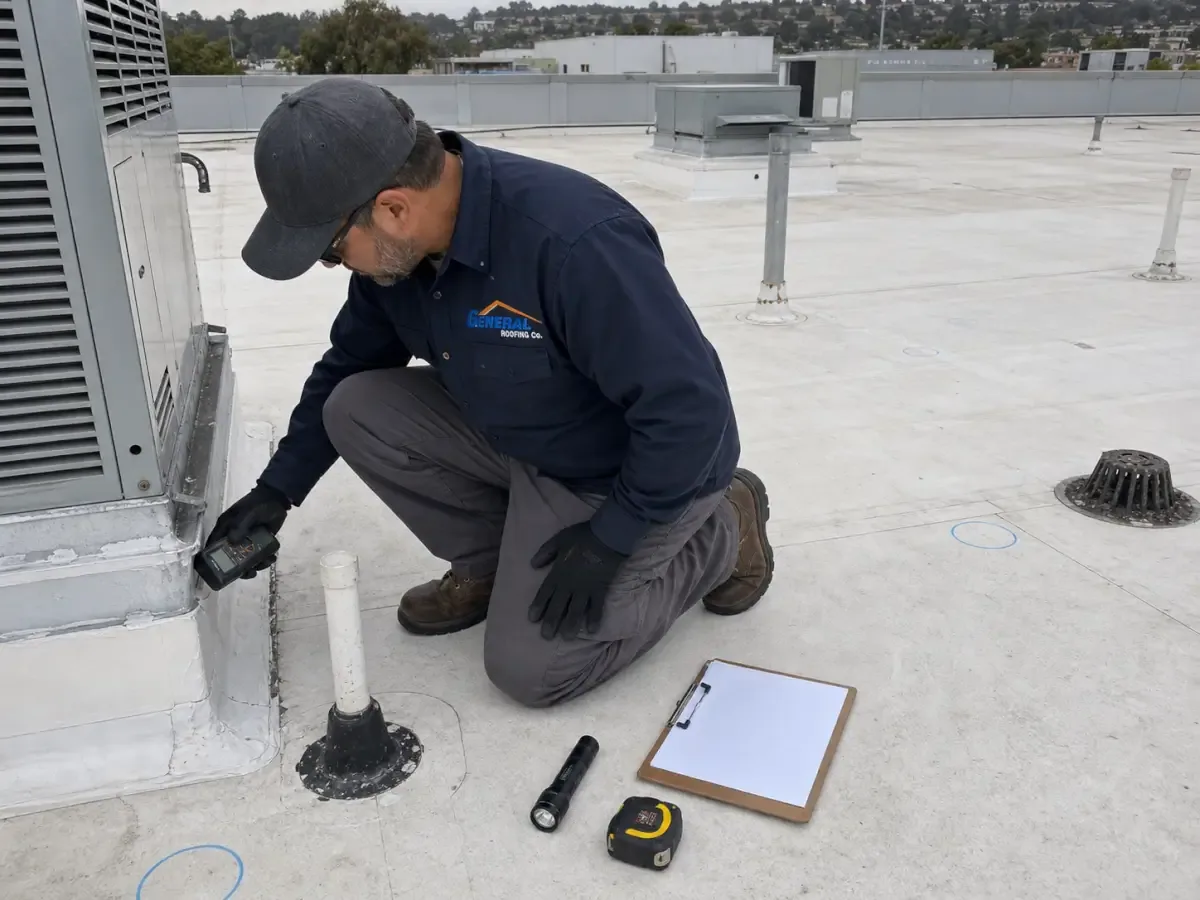
An asset record starts with an identifier and a date: the building, the roof section, the system, the age if it is known, and the day of the last inspection. Without those four entries, a roof is a line on a budget that nobody can compare with the next one. With them, a portfolio of roofs becomes a list that can be ranked by condition and by consequence.
For owners and property managers in Mission, TX, asset management means keeping that list current while the heat season and the tropical season run into each other. The record is not a report written once. It is a file that grows with each inspection and each storm, and the owner can draw on it for budgets, insurance and sale.
What the Record Contains
Each roof section has its own page in the file, so that a six-building portfolio is six sets of pages rather than one general note. The page names the membrane or metal system, the insulation if it is known, the deck type, the approximate area and the presence of rooftop equipment. It lists past repairs with dates, the warranty status if there is one, and the last set of photographs with the position of each.
Condition entries follow a fixed order so that two inspectors reach the same format, and a new inspector can pick up the file without a long handover. Each of those gets a rating and a photograph: the surface, the seams, the terminations, the perimeter, the drains, the penetrations and the moisture readings. A rooftop sketch shows where each finding sits. The file is kept in a form the owner can search, and a copy can go to a lender or an insurer without reworking it.
Condition Over Time in the Valley
Valley roofs sit under months of sustained sun, since the heat-safety season runs May through October. Surfaces chalk, sealants harden and seams work against stiffened material. A single inspection captures a moment; repeated inspections show the rate of change, and the rate is what a budget needs.
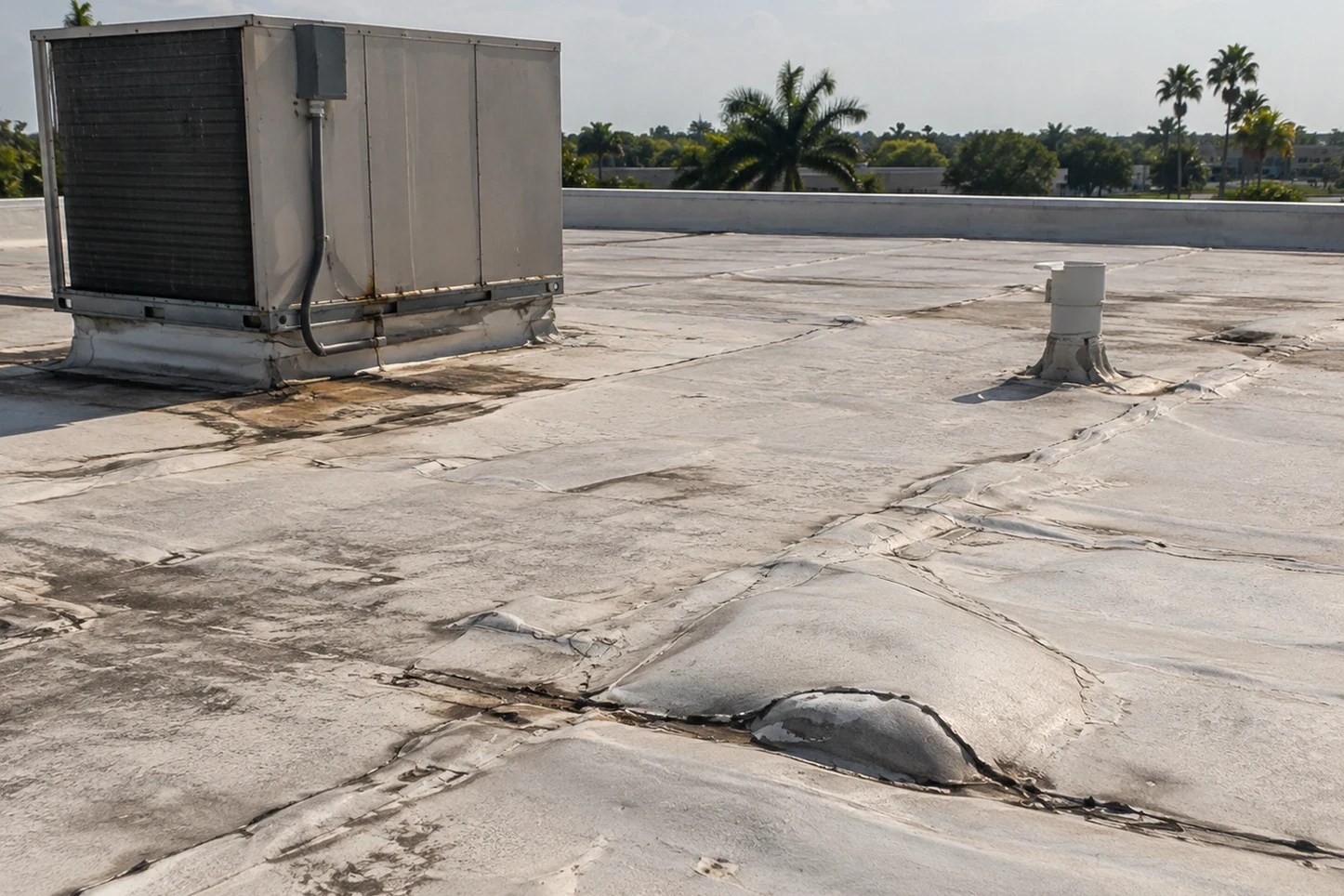
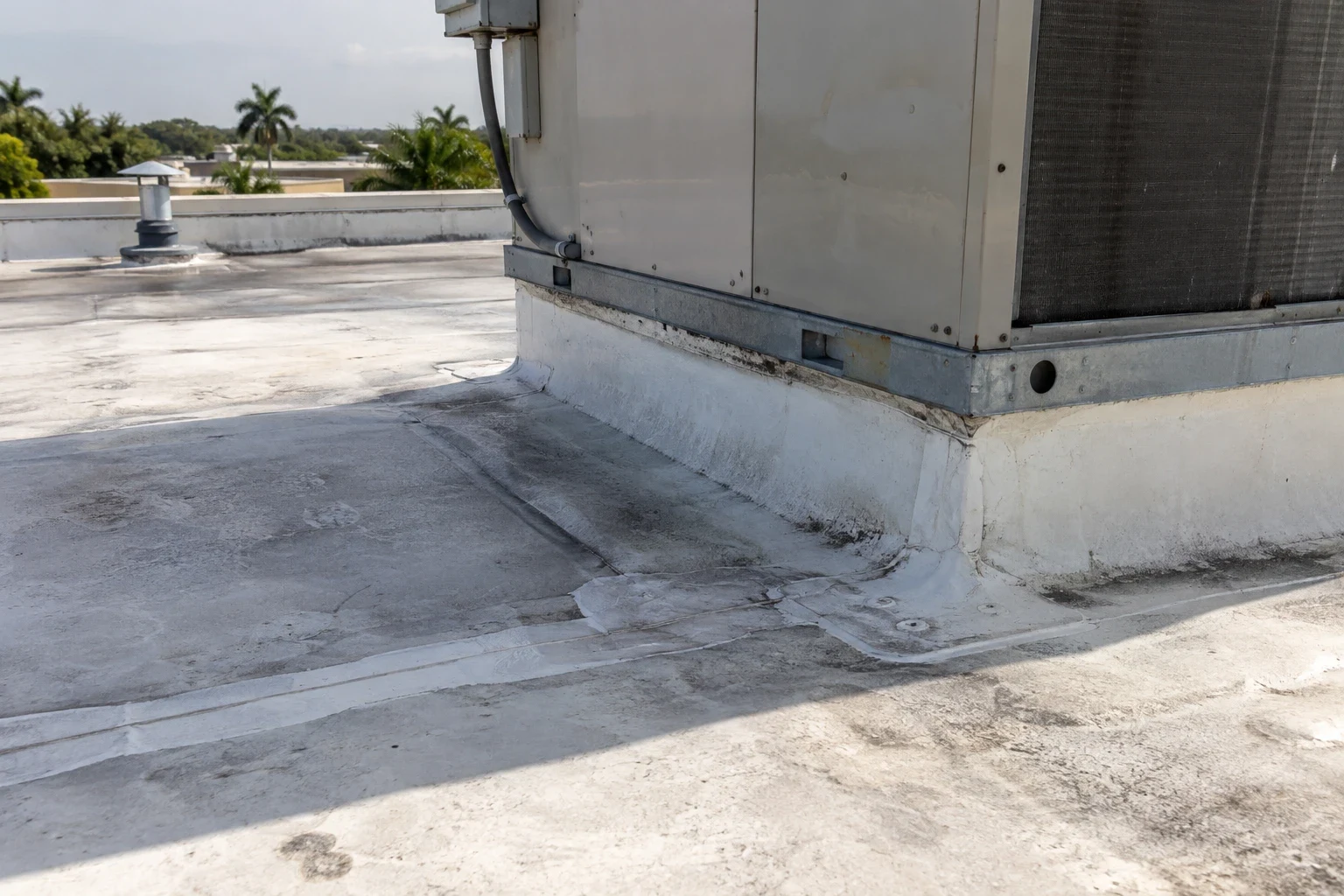
We compare each year's findings with the last. A roof section that moved one grade in a year is on a different schedule from one that has held steady for three. The comparison also shows which details are failing out of proportion to the field, such as flashings at units, so that the plan can address them before they drive a larger scope. A heat and UV damage trend line is often the clearest early signal in the file.
Using the Record After a Named Storm
The tropical season runs from June through October, and the Valley has recent reference events. Hanna in July 2020 is the recent reference: hundreds of poorly built structures harmed, chiefly at the roof, and 12 to 14 inches of rain on parts of Mission and McAllen. Dolly in 2008 did its roof damage near Weslaco, mainly on older buildings.
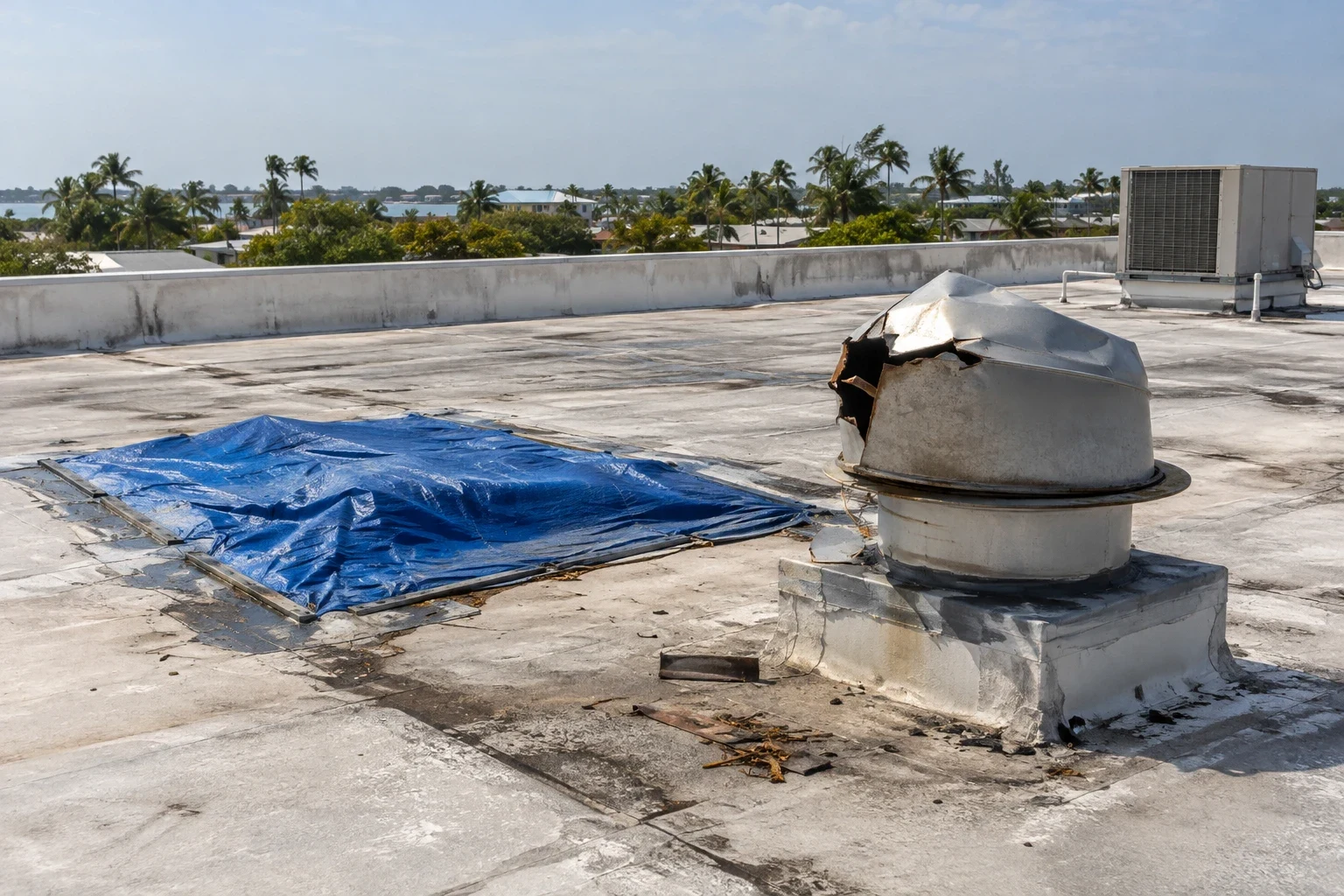
After an event like that, the asset record is the baseline. The post-storm inspection repeats the last entries and marks what changed. Owners with several buildings can see at once which roofs were affected and which held, and they can direct repair crews and adjusters to the right ones. Without the record, each building has to be treated as an unknown. Repairs after the event follow the storm damage repair routine and the file is updated when each is finished.
Ranking Roofs by Condition and Consequence
A ranked list needs two scores. Condition describes the roof: membrane wear, seam integrity, wet insulation, details. Consequence describes what a leak would cost: stock in a warehouse, a clinic suite, a tenant who can close a lease, a server room. Two roofs in the same condition can differ greatly in consequence, and a plan that ignores that spends money in the wrong order.
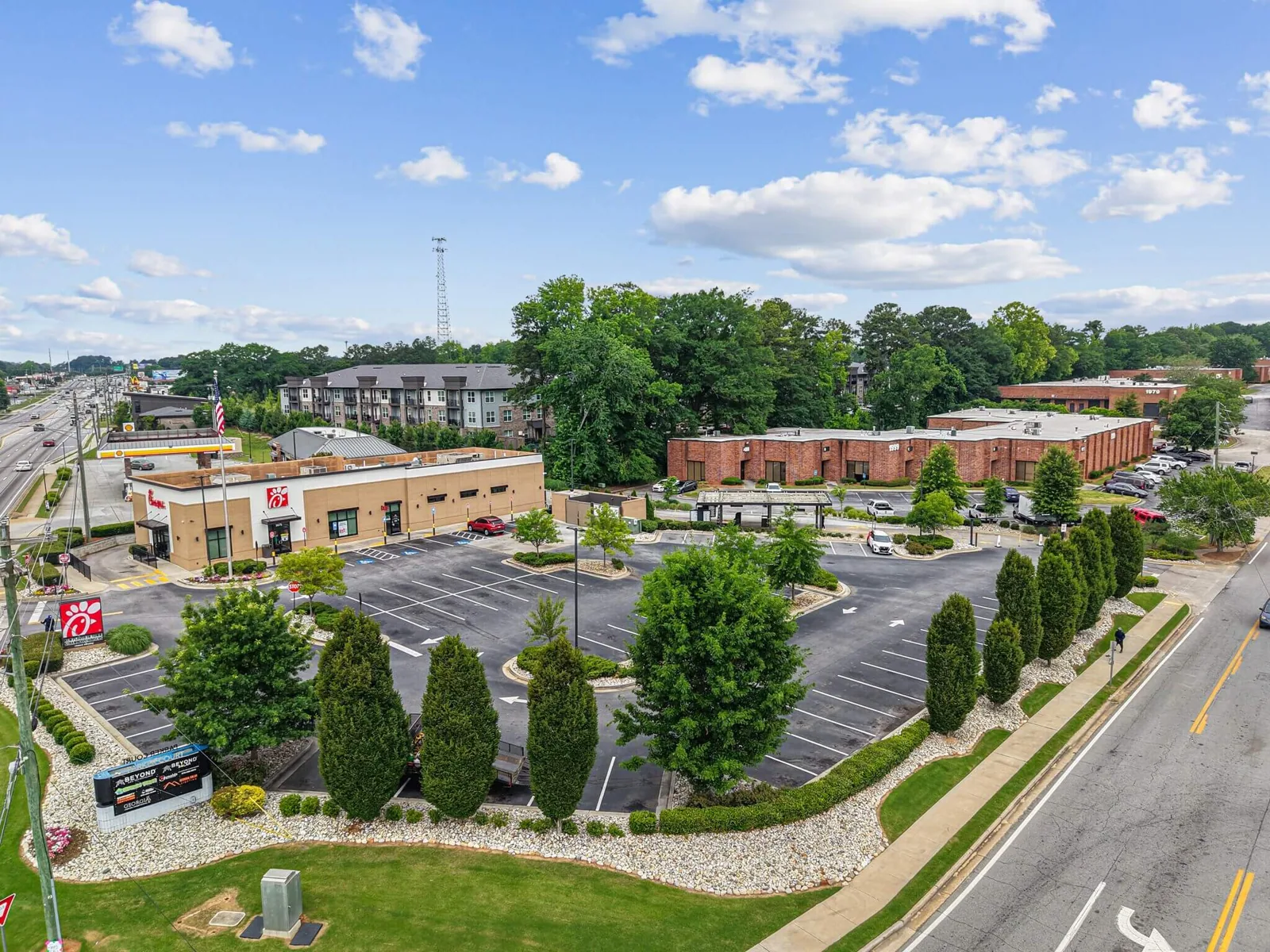
Mission's economic development office highlights manufacturing, healthcare, technology and retail, and buildings with freeway frontage on Interstate 2 / US 83 add to the mix. The McAllen Foreign-Trade Zone adds warehouse and distribution buildings to the metro mix. The same record format handles all of them, with consequence scores set by the owner.
Turning the File into Work
The record is useful only if it drives decisions. Minor findings go on a maintenance list with dates. Defects that need work now become a repair scope, with the repair and its cost written down. Aging systems become capital items for the planning horizon, and roof capital planning converts them into a replacement sequence.
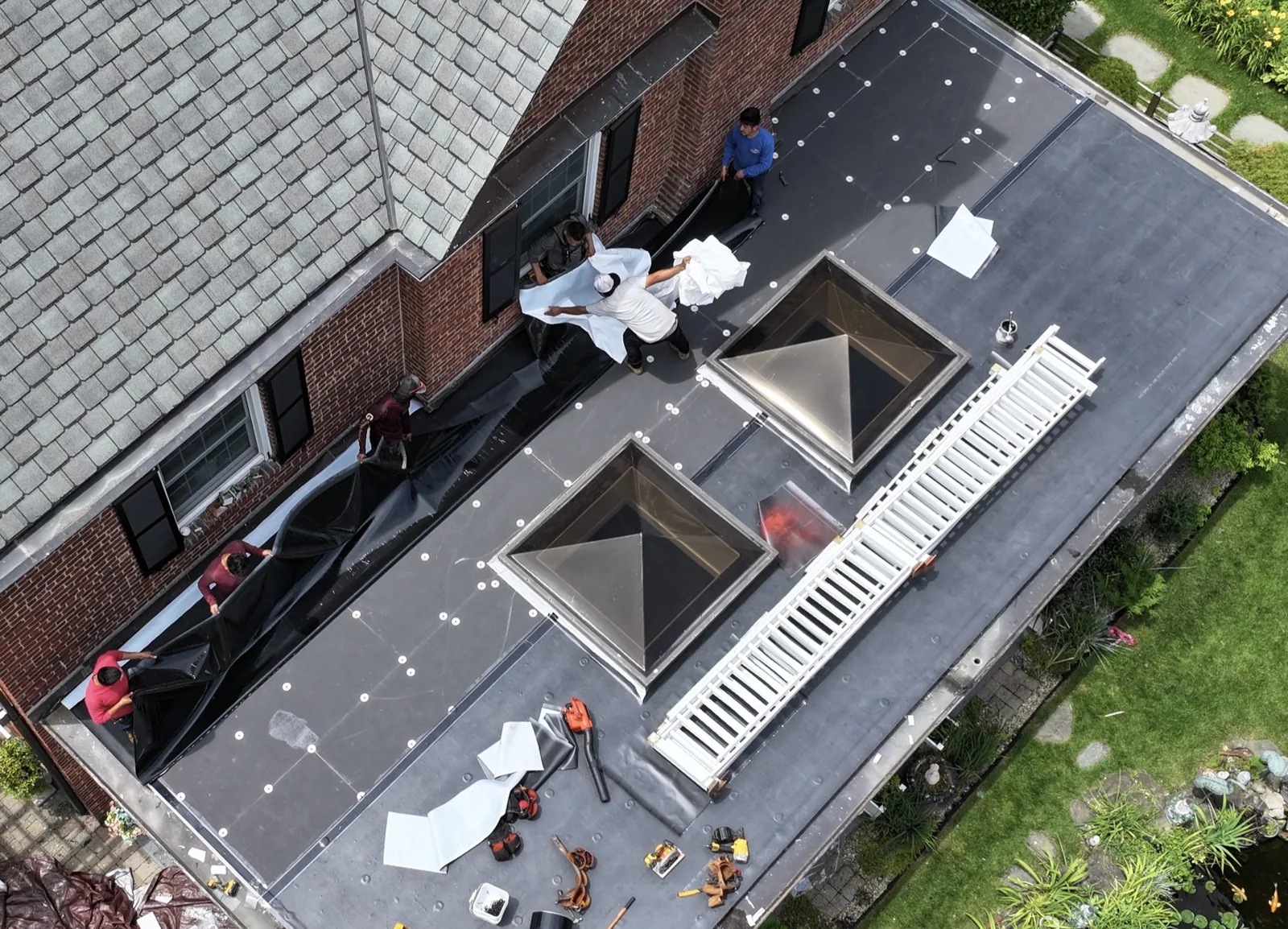
When a roof is repaired, the file is updated with the new materials and the inspection that closed the work. When a warranty applies, the paperwork is linked to the page, which supports roof warranty management. Multi-building owners can combine the pages into a multi-site roof program with one schedule and one set of reports.
What the File Saves
Records have a cost, and the return comes from three places. Inspections go faster when the inspector arrives with the last file in hand, since the second walk checks known positions instead of searching. Repair scopes shrink when the record shows exactly which details failed and which did not. And budget requests carry more weight when they are backed by dated photographs and readings rather than a general statement that a roof is old.
The file also protects the owner at the other end of a building's life. A buyer's consultant will ask for roof history, and a seller who can supply it removes a negotiating point. A lender reading a condition summary with moisture maps and repair logs is dealing with documented facts. None of this requires an elaborate system. It requires that each visit end with the record updated.
Starting a File on an Existing Roof
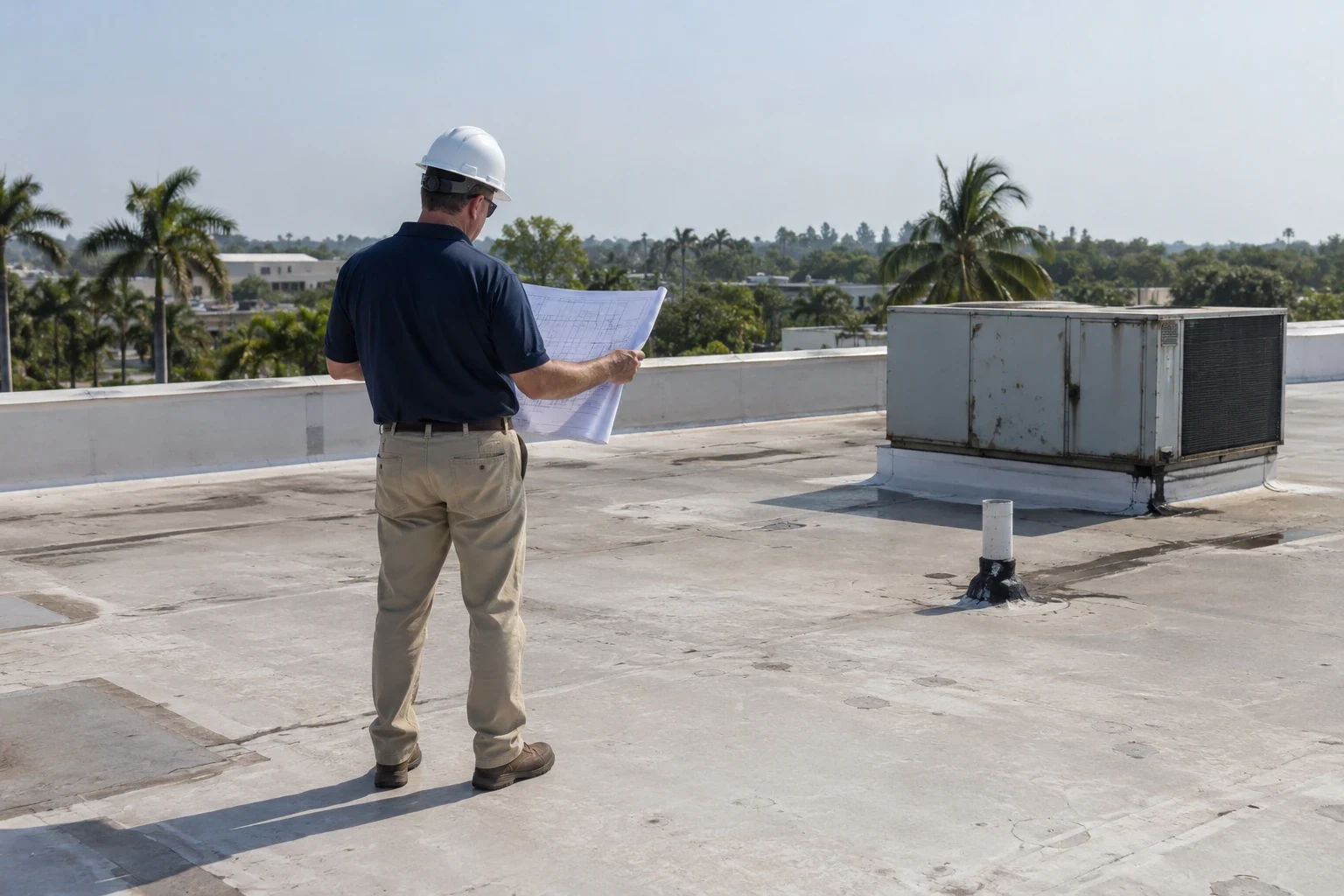
A new record begins with a documented inspection. We walk the roof, identify the system, photograph and tag each condition and take moisture readings, then deliver a roof condition report that serves as the first page of the file. If earlier records exist, such as invoices, drawings or warranties, we fold them in. If none exist, the first inspection is the baseline and the file starts from there. Owners across Mission and McAllen can start with one building and add the rest over time.
Questions and Answers
How is asset management different from a single inspection?
A single inspection records one moment. Asset management keeps the records from every inspection together so that trends become visible. The comparison shows the rate of wear, and the rate is what decides when money has to be spent.
How often should the file be updated?
Every spring, before heat and tropical weather overlap, and again after any named storm. Repairs and warranty events are entered when they happen.
What if I do not know the age or system of a roof?
We identify the system on the first walk from seam type, surface and cores where needed. Age may stay approximate, and the file marks it as estimated. Later records fill the gap.
Can the record be shared with a lender or insurer?
Yes. The file is organized in a fixed order with dated photographs and a short summary, which makes it easy to send as one package. Owners decide what to share.
Does asset management require a long contract?
The scope and term are set in writing before work starts. An owner can begin with a single documented inspection and decide later whether to keep the file current on a schedule.
Request a Documented Inspection to Start the File
Send us the building address and the number of roofs. The written condition summary will become the first page of your roof file and can be reused for budgeting or an insurance conversation.