
Commercial Roofing Services
Cool Roof Installation in Mission, TX
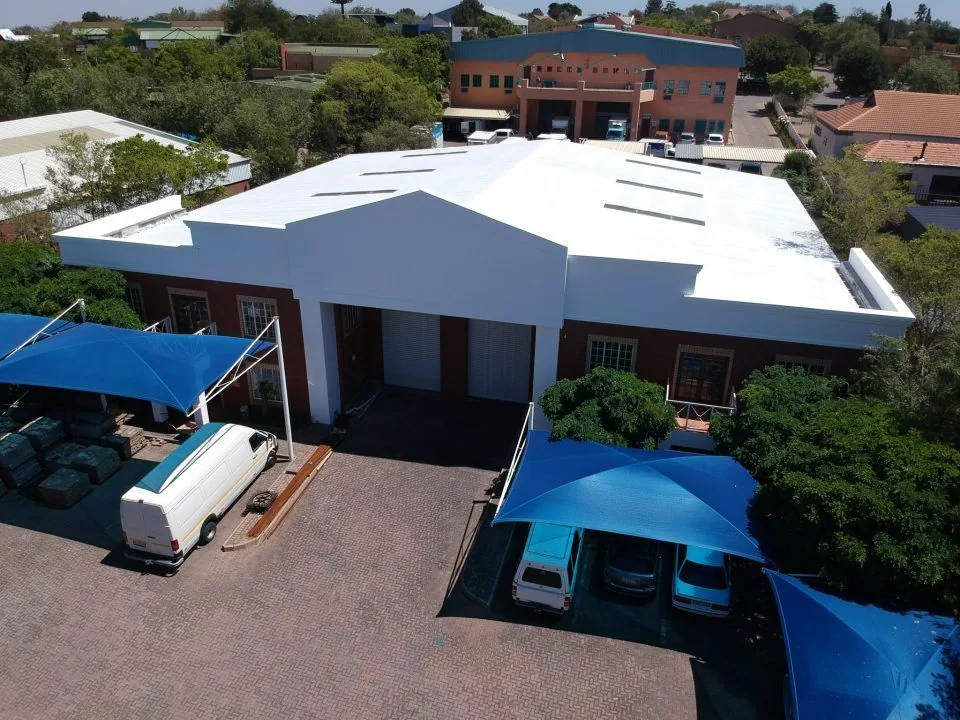
The first reading on a cool roof evaluation is a surface temperature, taken on a clear afternoon and written beside the time of day. On a dark membrane in Mission, TX during the summer months, that number tells an owner more than a spec sheet. A cool roof is a system that reflects more sunlight and releases heat more readily than a standard dark surface. The question for each building is how much that matters, and what the roof has to tolerate to get it.
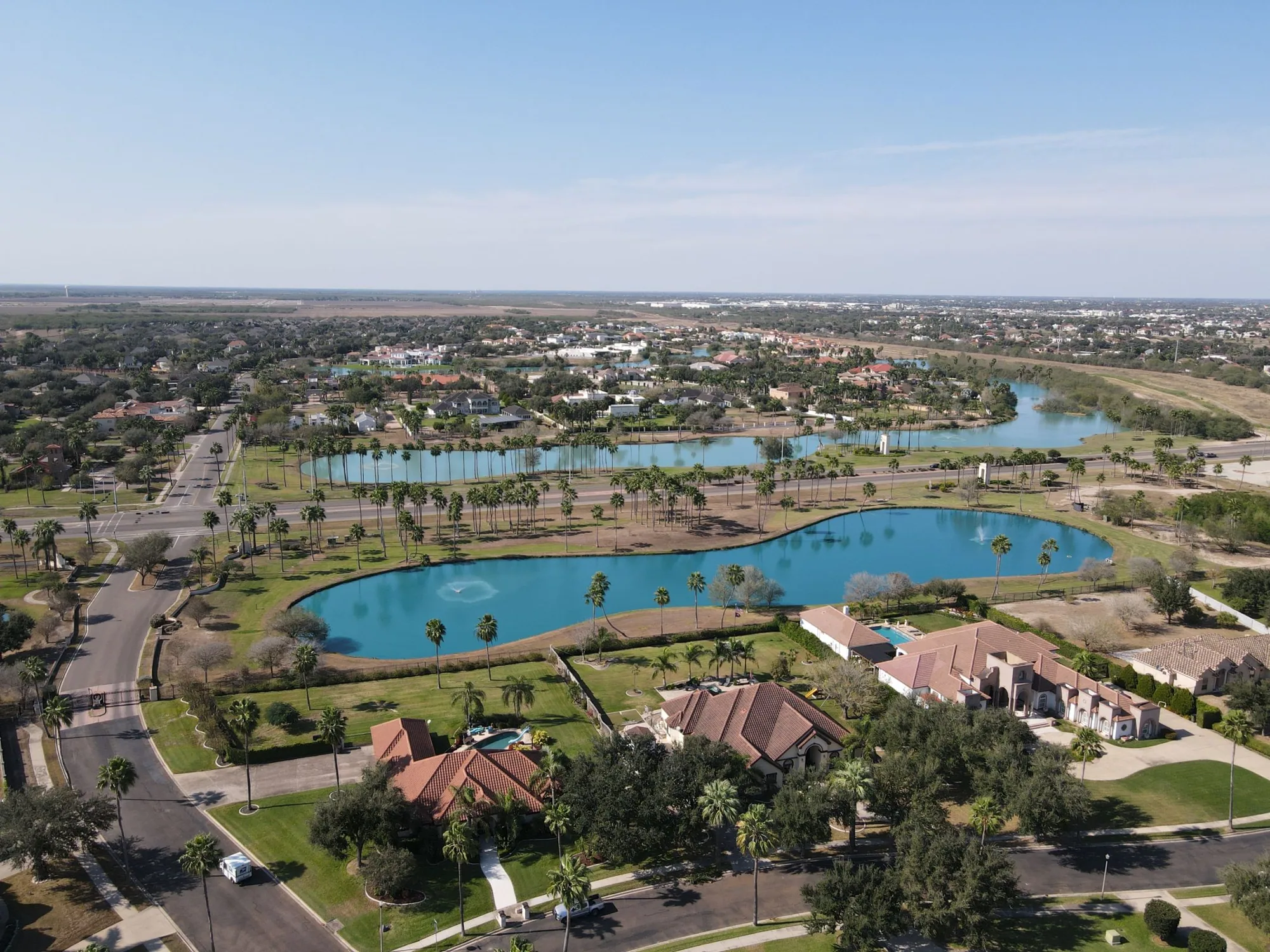
Why Reflectivity Matters Here
The National Weather Service Brownsville office lists May through October as the heat-safety season for the Rio Grande Valley. For half of every year, the sun delivers sustained load to a flat roof, and a dark surface absorbs most of it. That heat moves two ways. It passes into the building, where cooling equipment has to remove it, and it cycles the membrane through daily expansion and contraction.
A reflective surface reduces both effects. The membrane runs cooler, so plasticizers and asphalt-based materials age more slowly, and less heat enters the space below. We do not quote a savings figure, since it depends on insulation, equipment efficiency, and how the building is used. What we do is record the starting surface temperature, so any change is measured on the same roof rather than claimed.
Cool Roof System Options
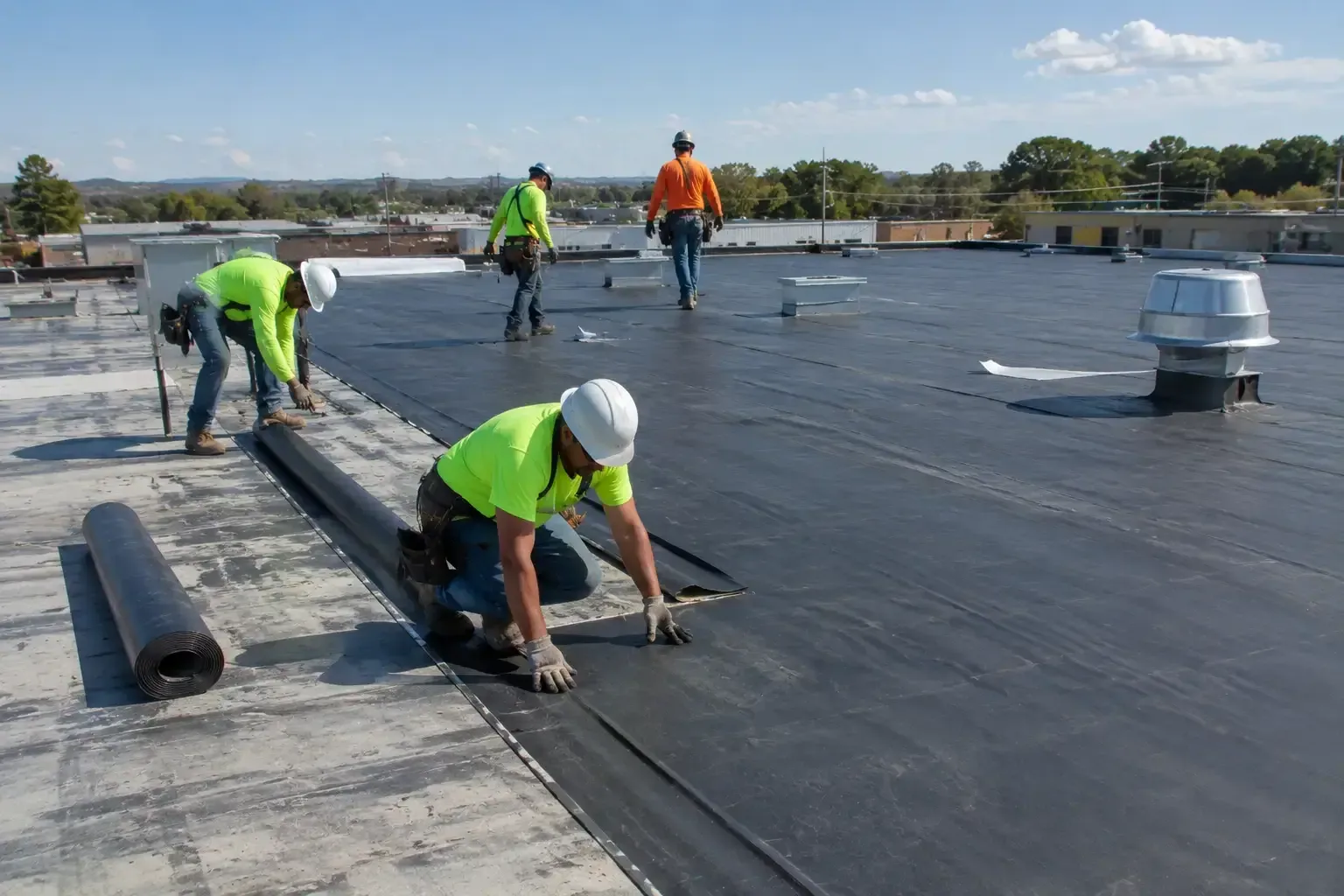
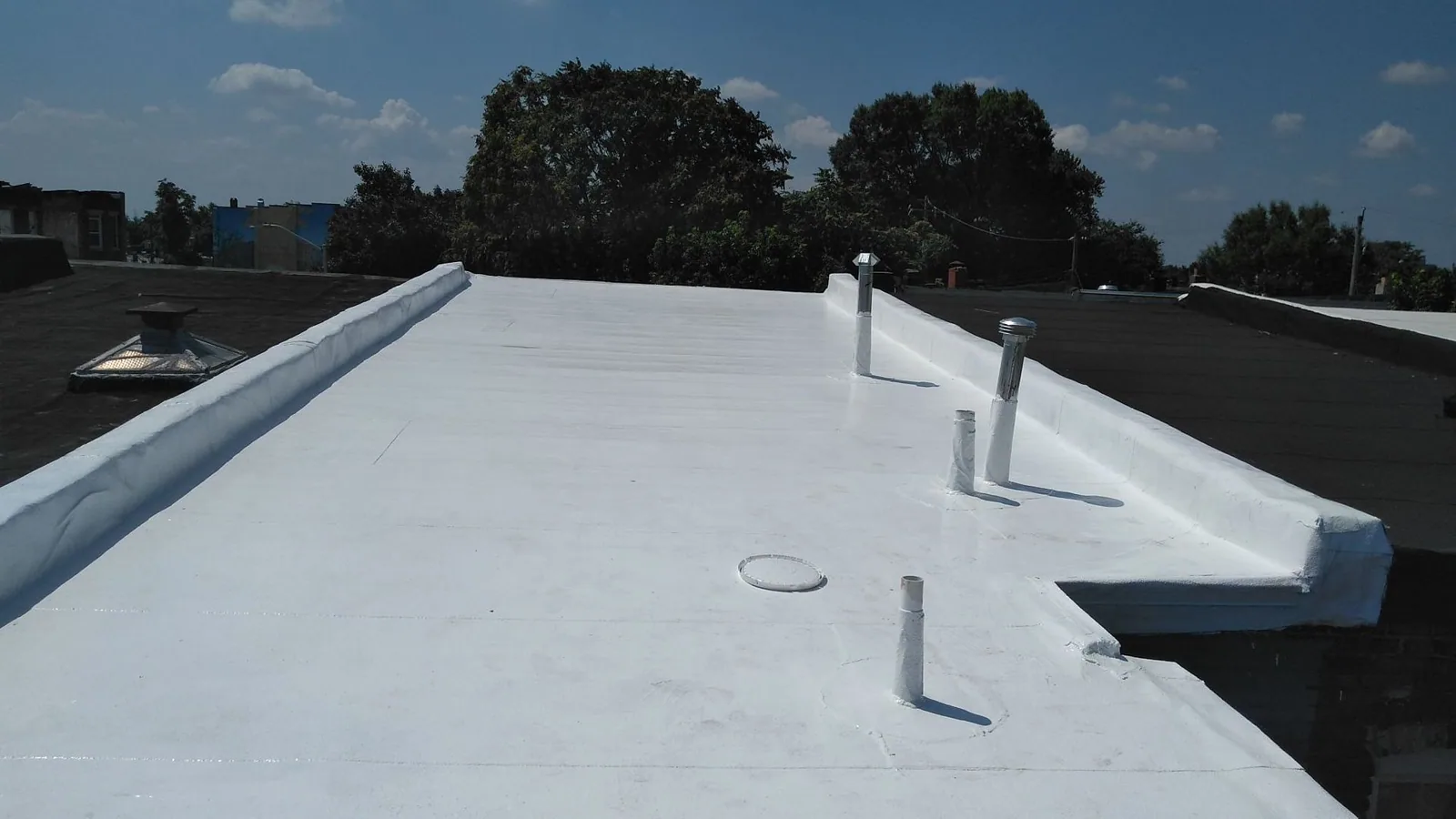
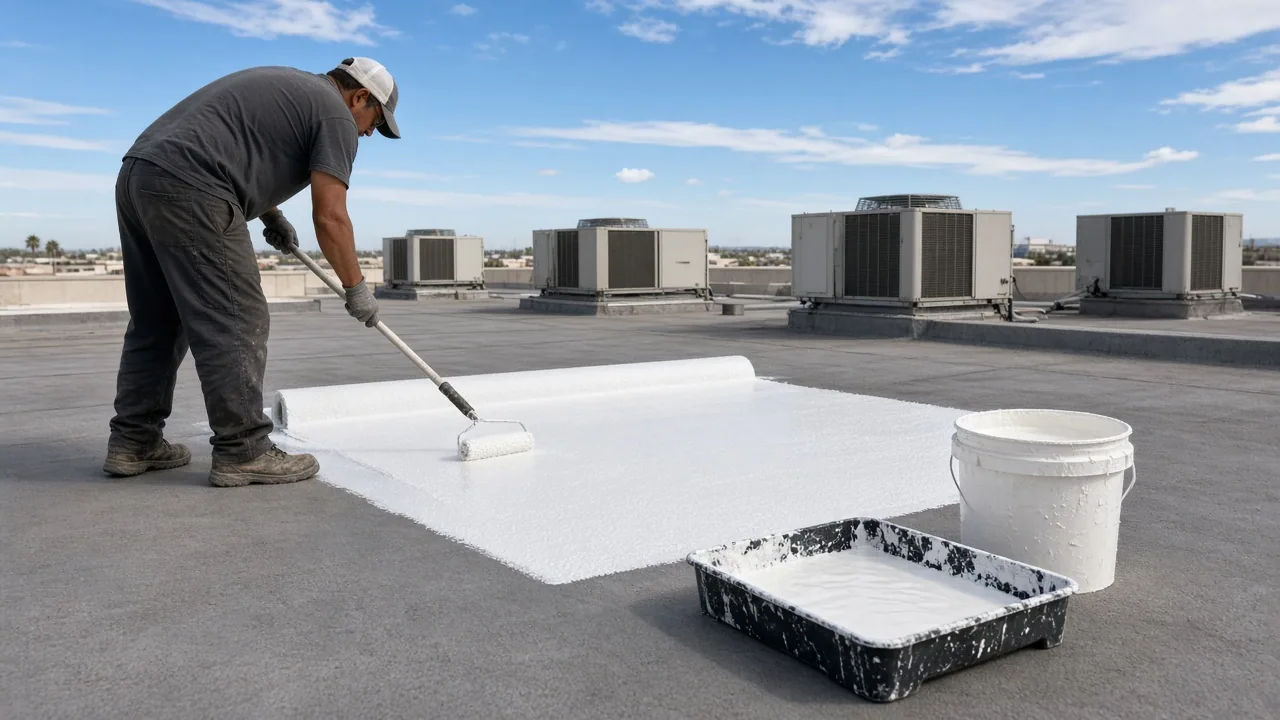
Several systems can deliver a reflective surface. White TPO and PVC membranes are factory-reflective and are installed as complete new roofs. Reflective coatings, either silicone or acrylic, can be applied over a sound existing roof. Light-colored granule cap sheets give modified bitumen a reflective surface. Metal roofs can take factory-applied reflective finishes or field-applied coatings.
Each option has trade-offs. A new single-ply membrane comes with a new substrate and a defined service life. A coating costs less up front and extends an existing roof, but only if the roof qualifies. The choice is laid out in the written scope, along with the condition findings that favor one path or the other.
Color and finish also vary. The whitest available surface reflects the most, but a building may call for a tinted or low-glare finish near neighbors or for rooftop workers. A tinted option reflects somewhat less, and the scope notes the difference so the trade is a deliberate one. Walkways, equipment pads, and roof access points are marked on the sketch, because foot traffic wears a reflective surface fastest along those paths.
Converting an Existing Roof
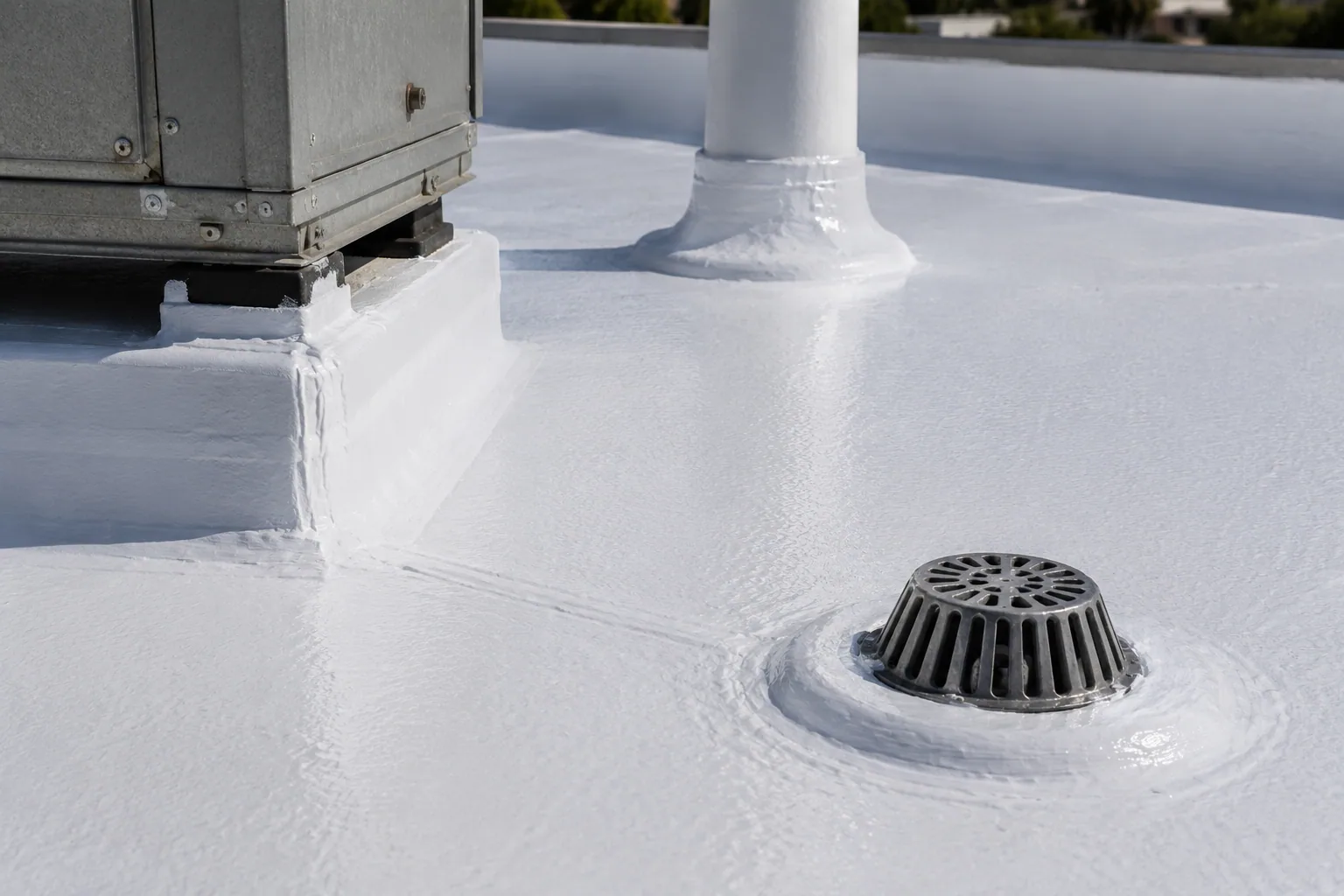
When a roof is sound, a reflective coating is the least disruptive way to get a cool surface. The roof must test dry, the membrane must be tight and well attached, and the surface must accept the coating. These checks are the same ones used for coating restoration, and they come first. A moisture map and a small adhesion test decide whether coating makes sense.
If the roof is near the end of its life, the better plan may be a new reflective membrane. Covering a failing roof with a white coating hides symptoms without correcting causes, and the problems under it continue. Seams, flashings, and drains are all repaired first, because a reflective film shows every poor detail more clearly than a dark surface hides it. We state the finding plainly: where the existing roof can carry a reflective surface, we say so, and where it cannot, we say that too and show the readings.
Keeping a Reflective Surface Reflective
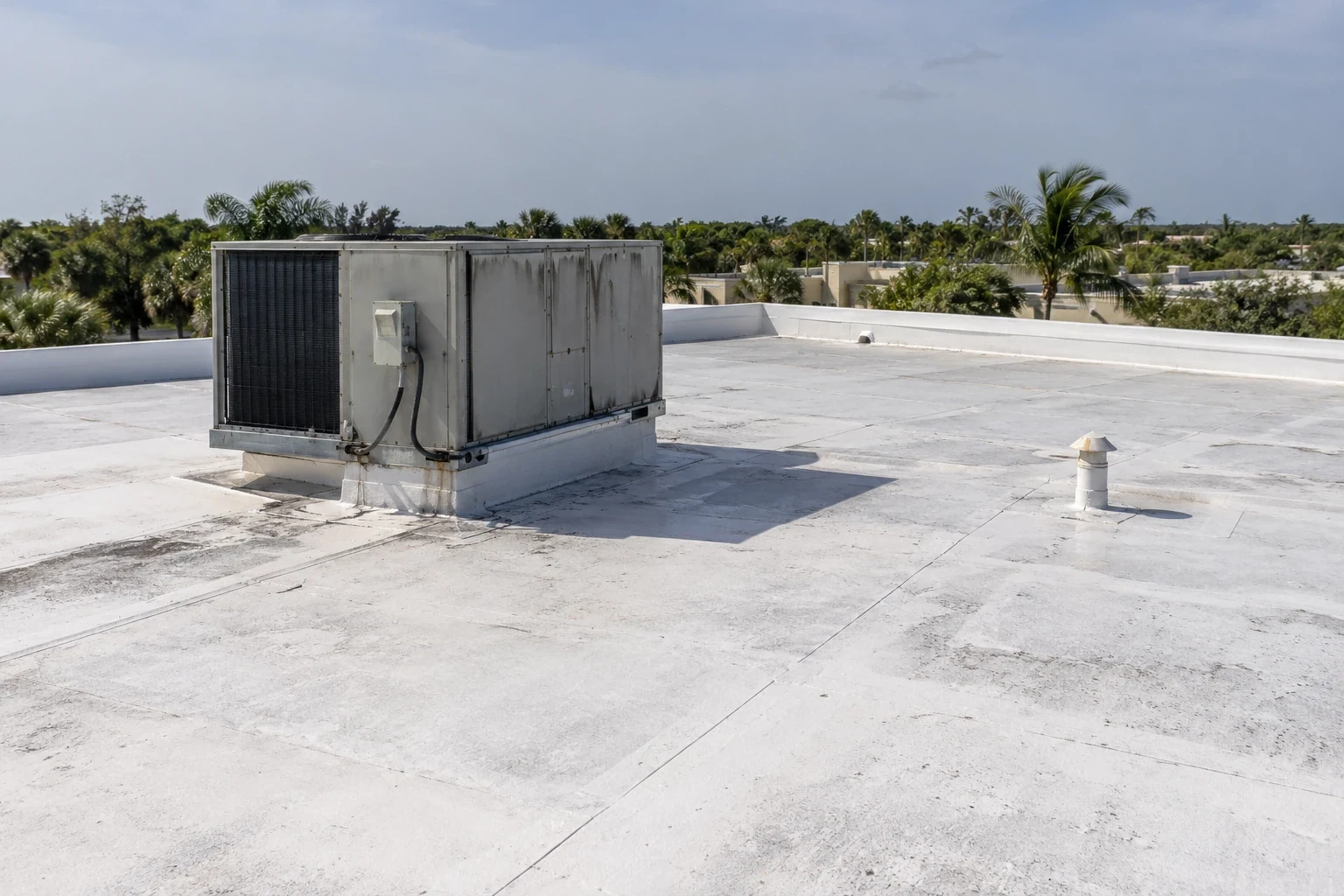
A white roof does not stay white without care. Dust, pollen, algae, and pollution dull the surface, and reflectance drops as a result. Cleaning restores much of it, and the schedule depends on the building's surroundings: roofs near busy roads, agricultural fields, or dusty lots dirty faster. Coatings also thin over time, and a periodic film check tells us when a recoat is due.
We include reflectance observations in the maintenance record, photographing the surface and noting where staining or wear is visible. For a building in Mission with I-2 frontage, the cleaning interval follows the roof's actual condition rather than a fixed calendar.
Wind, Water, and the Cool Roof Decision
A reflective surface does not make a roof stronger. Hurricane season in the Valley runs from June through October, and a cool roof needs the same attachment, edge metal, and drainage as any other. Hanna in July 2020 damaged hundreds of poorly built structures, mostly at the roofs, with estimated winds of 60 to 65 mph along I-2 and north of it. A reflective membrane over weak fastening would suffer the same fate as a dark one.
For that reason, a cool roof project includes the same perimeter and attachment review as any replacement. If edges are weak, they are corrected as part of the scope. Drainage is checked too, since standing water can shorten the life of some reflective coatings and dull the surface faster than dry areas.
Which Buildings Gain the Most
Cool roofs make the strongest case on buildings with large roof areas relative to their interior volume and on those with cooling-dominated operations. Warehouses, distribution buildings of the kind that support the McAllen Foreign-Trade Zone, and big box retail fit that profile, and so do offices and schools in Edinburg where cooling runs through the long heat season.
The owner decides based on budget, roof condition, and tolerance for downtime. We provide the surface readings, the system options with their costs described by driver, and the roof findings that govern the choice. If a solar array is likely in the future, the reflective surface and the array layout should be planned together, as with solar-ready roofing. The record from the first visit is kept so later decisions rest on the same data.
Questions and Answers
How much will a cool roof reduce our cooling bill?
The reduction depends on insulation, equipment, schedule, and building use, so we do not state a figure. We record surface temperatures before and after, and the owner can compare utility records across similar months. Buildings with poor insulation or heavy afternoon cooling loads are the likeliest to show a visible change.
Is a white coating over an old roof a good idea?
Only when the old roof tests dry and sound. A coating over trapped moisture leaves wet insulation in place, which keeps causing damage while the surface looks refreshed. If the moisture map is clean and the membrane is attached, a reflective coating can extend service life and cool the surface.
How long does the reflective effect last?
Reflectance drops over the first seasons as dirt and weathering accumulate, then levels off with cleaning. Different products age at different rates. We check the surface at maintenance visits and recommend cleaning or a recoat when the readings and photographs show the surface has dulled.
Does a cool roof affect warranty options?
Manufacturers set the terms for their own systems, and coating over an existing membrane may change what a warranty covers. We cannot speak for any manufacturer, so the owner should read the actual document. We keep the application records, such as film thickness and weather conditions, that most warranty programs ask for.
Can cool roof work happen while the building is open?
Usually it can. Coating work is done in sections, with air intakes protected and entrances kept clear. Membrane replacement is phased by roof area so tenants stay in place. Odor from coatings is addressed in the schedule, and we agree on timing with the facility manager before starting.
Request a Cool Roof Evaluation
Send us the address and roof type. We will take surface temperature readings, map moisture, and give you a written condition summary comparing coating and new-membrane options for the building.