
Property Types We Roof
Aircraft Hangar and Aviation Building Roofing in Mission, TX
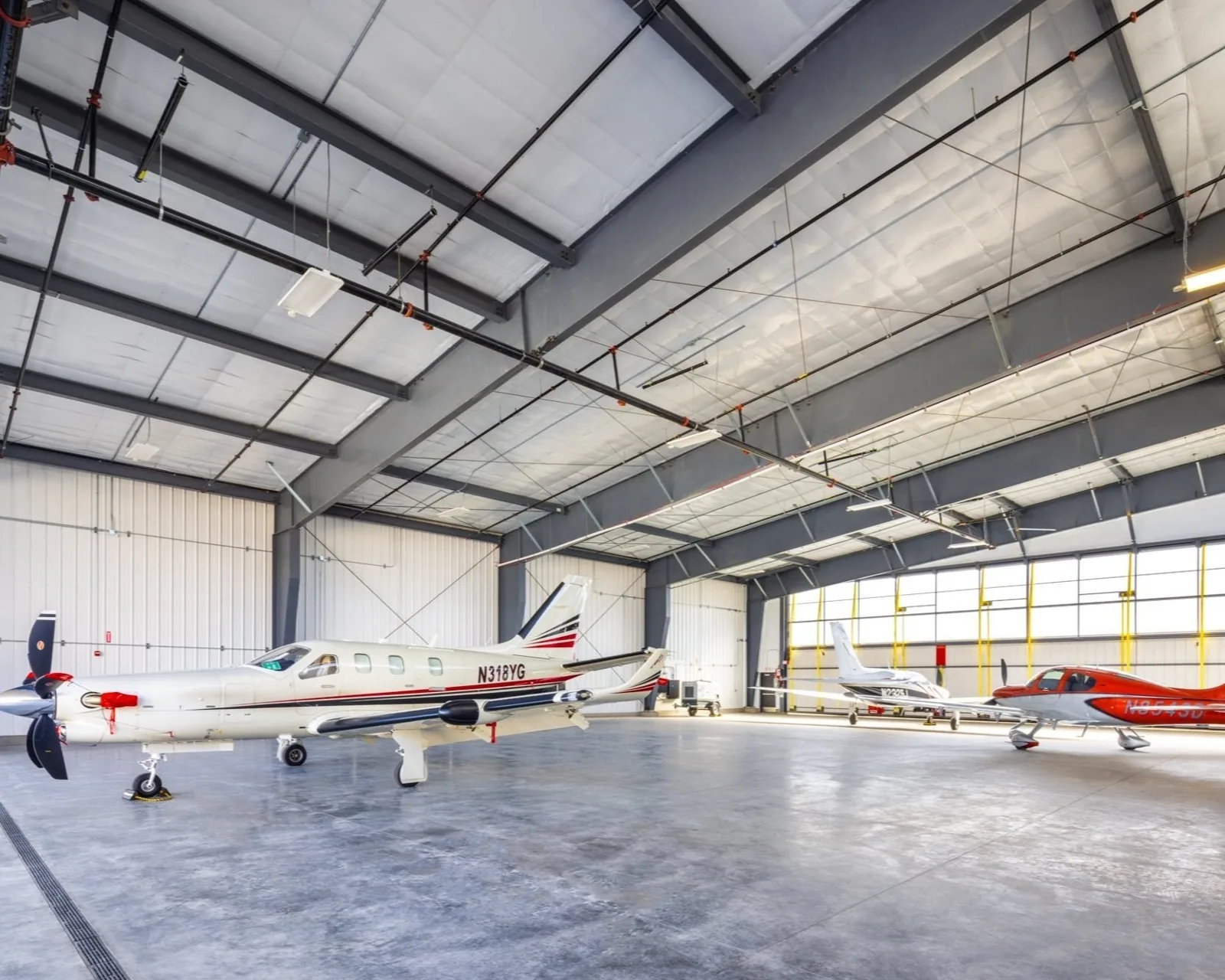
A hangar inspection sheet opens with a fastener pull reading taken along the eave, with a dated photograph of the spot. A hangar roof spans a wide clear opening with few interior supports, so the metal skin and its attachment carry the weight of wind and rain on their own. A reading that falls below the expected range is a finding with a clear consequence for whatever sits beneath.
An aviation building in Mission, TX stores aircraft, tools and records that a leak can damage and that a lifted panel can expose. Each roof finding is documented with tagged photographs, a rooftop sketch and a plain rating, so an owner or an airfield facilities manager can decide what to fund and in what order.

Findings on Large-Span Hangar Roofs
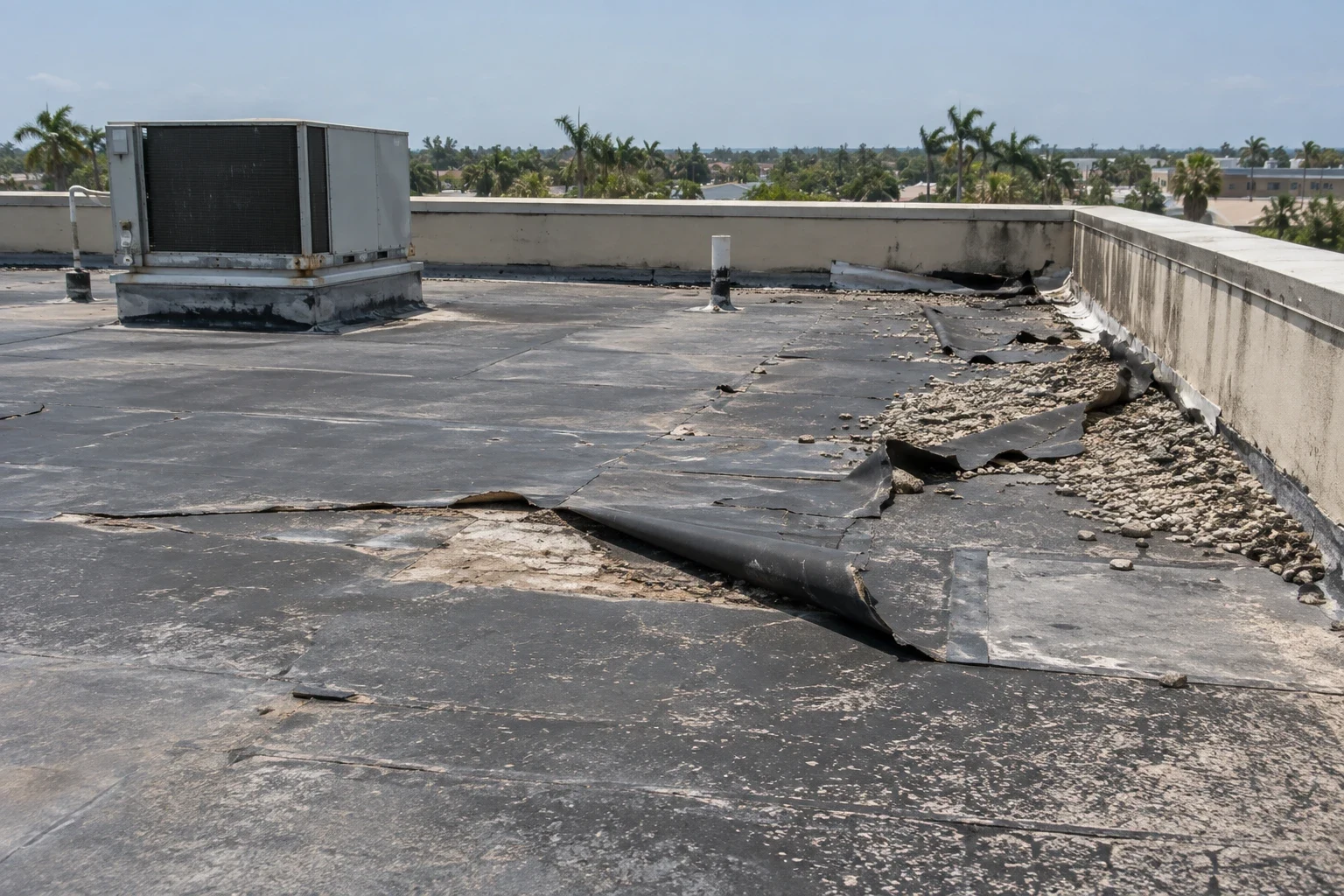
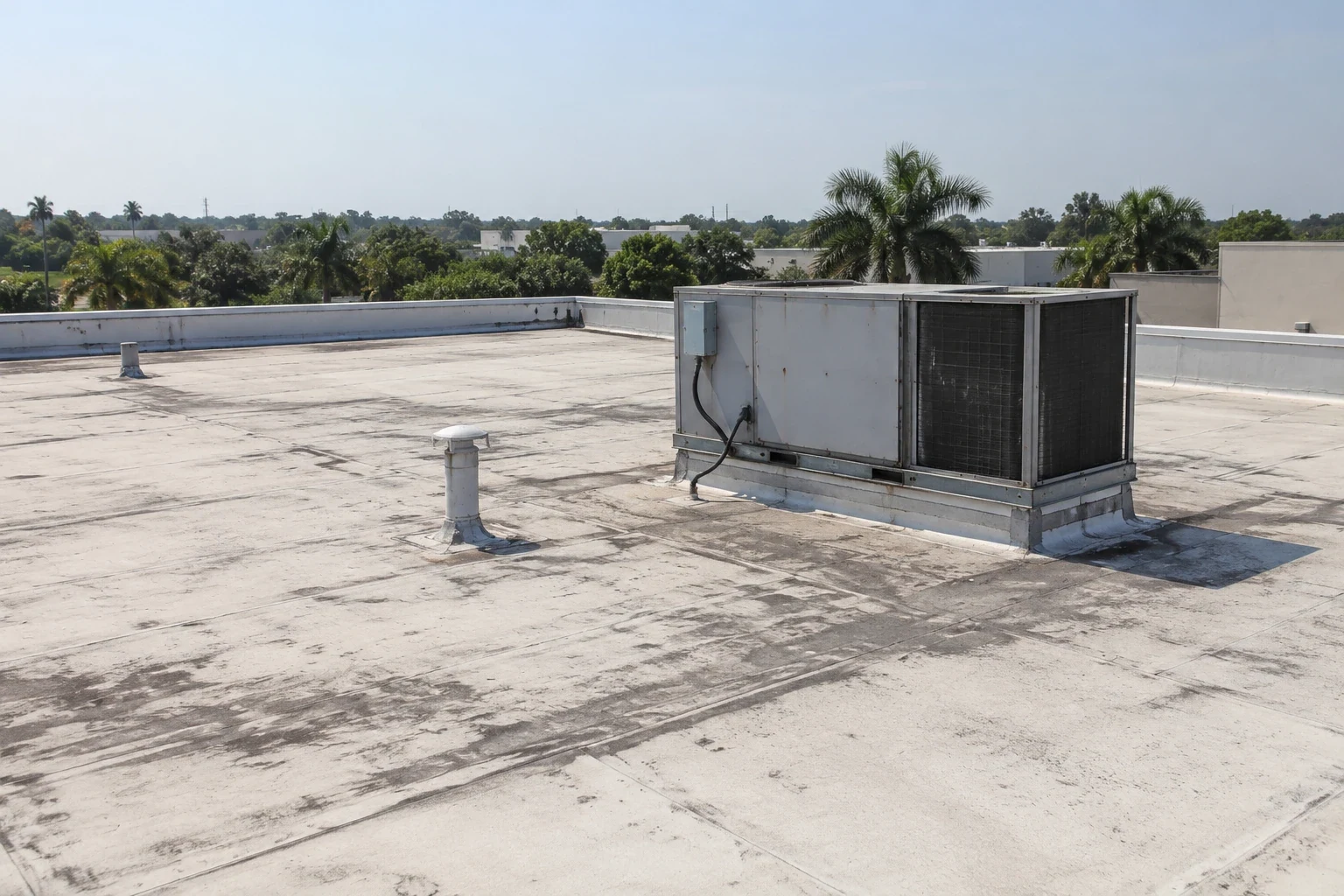
Most hangar roofs are metal panels on long purlins or a low-slope membrane over a deck. Each type has recurring findings. On panels the walk records loose fasteners, sealant that has split at laps, rust at cut edges, loose trim at ridge and eave, and dents. On membranes we look for open seams, ponding and failed flashing at door headers.
Door tracks and headers deserve special attention. Water that runs down a hangar door header can wet the mechanism and the floor, and the seal above the door is rated as its own item. Each finding is photographed from the roof edge and tagged to its location.
Translucent panels and skylights are logged individually. A cracked or loose panel over an aircraft bay is rated above the same defect over an office wing, and the summary says why.
The Owner's File for a Large Building
The file for a hangar starts from a rooftop sketch that divides the roof into grid squares. Each square carries its photographs, its fastener readings and its rating. A manager can look at the sketch and see where the weak squares cluster, usually along the eaves and near the door ends.
The condition summary orders the findings by consequence. A leak over an aircraft bay ranks above a leak over a storage loft. The ranking helps an owner decide where a temporary measure is acceptable and where a permanent repair cannot wait.
Heat belongs in the record. A large metal surface swings through a wide daily temperature range, and May through October is the Valley's heat-safety season. Sealant elasticity at laps and coating film condition are logged each spring so that thermal movement is measured and not assumed.
Photographs are shot at set distances so that a later viewer can judge scale. A tape or a marker is in the frame for every close-up.
Scope Lines for Panel and Membrane Roofs
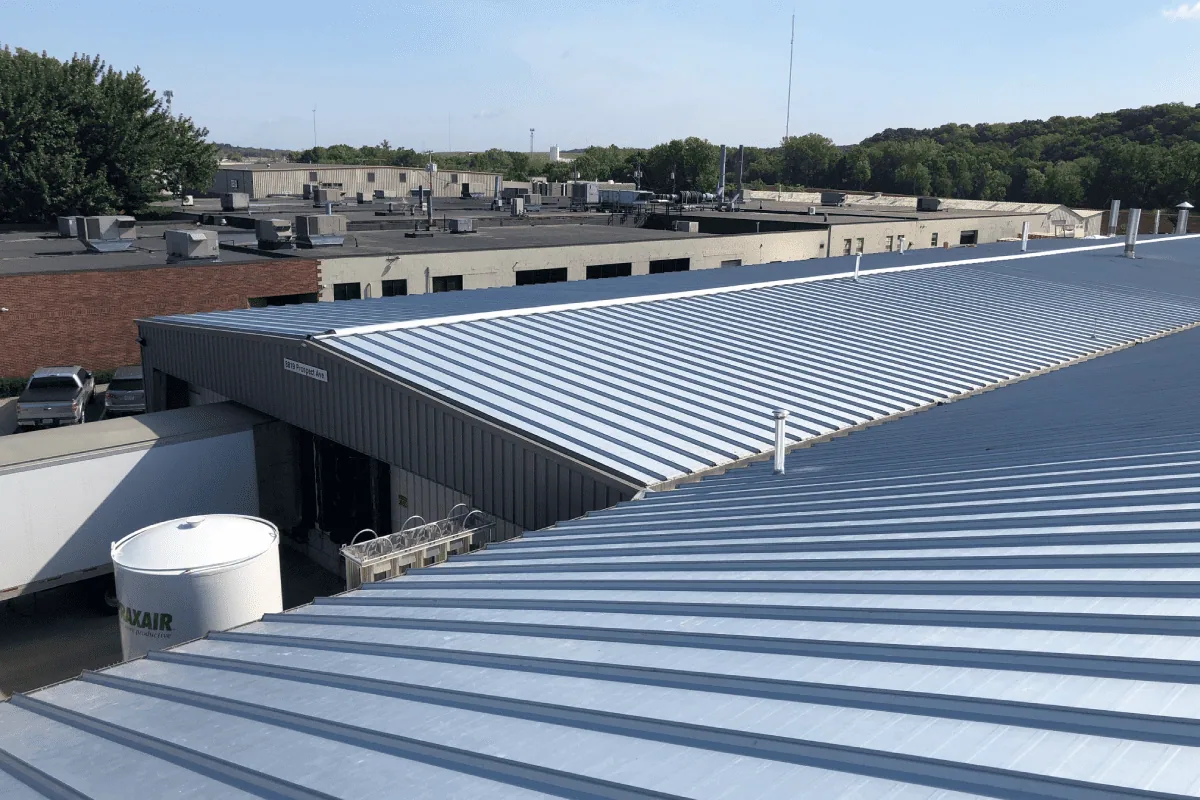
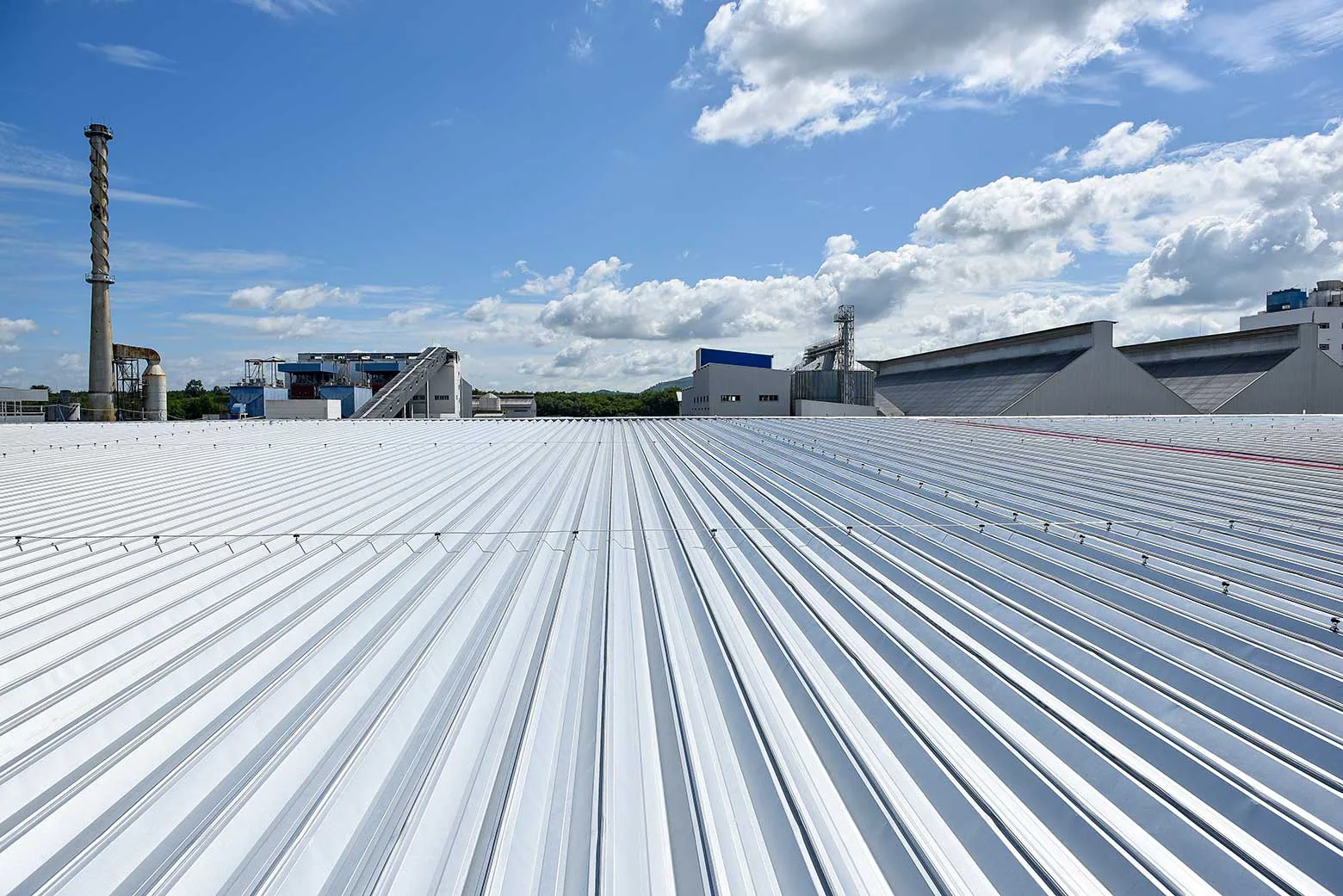
For a metal roof, scope lines cover re-fastening to current spacing, sealant renewal, panel replacement and, where the panels are sound, a coating. A standing seam metal roof upgrade or a metal roof retrofit is an option where the structure allows it.
For a membrane roof, lines cover seams, flashing, drains and sections of membrane. Each line gives its finding, the quantity measured on the walk and the way the crew will reach the roof: lift, crane or rope. Hot work near fuel or aircraft is excluded unless the owner approves a permit, and the line says so.
Access can decide the cost. A hangar roof is tall, and a lift needs firm, level ground near the walls. The line names the access method and the ground preparation, and flags any apron closure the owner must arrange.
A Pre-Storm Baseline for Wind-Sensitive Roofs
Wind is the main exposure for a large metal building. In spring the baseline records fastener pull values along eaves, ridges and gable ends, plus lap condition and trim attachment, ahead of the June-to-October storm season. It also logs drains, gutters and downspouts, since a hangar's long roof sheds a lot of water at once.
The baseline lists loose items that could be moved by wind and become a hazard: equipment on the apron, roof mounts and signage. For aviation buildings, those lists belong in the owner's storm plan, and the roof record is part of it.
Door seals and weatherstripping at hangar doors are logged on the same sheet. Wind-driven rain pushes water along a header, and a failed seal there shows up as a stain on the floor inside long before a roof leak is suspected.
Post-Storm Comparison and What Moves First
In July 2020 Hurricane Hanna blew an estimated 60 to 65 mph along I-2, left hundreds of poorly built Valley structures damaged at the roof and knocked out power for up to half of county customers; hurricane damage like that is the planning case. Dolly in 2008 sent gusts of 50 to 70 mph through populated Hidalgo County and lifted roofs on older structures. For a hangar, eaves, ridge caps and door-end panels are the first to show movement.
After a storm the same grid squares are walked and photographed from the same positions. The comparison separates new damage from older wear and gives the owner a precise statement for an insurer, with dates, locations and photographs. Repairs that stop water at once are logged as temporary.
Debris from the apron and neighboring sites can strike a roof, so the walk also records impact marks, dents and punctures by square. Each is photographed with a scale, because a small dent near a fastener can be the start of a larger failure.
Options, Recommendation and Scheduling
Options range from re-fastening and sealing to coating, retrofit and replacement. Every option carries the finding that favors it, and the weakest grid squares go first in the order. Scheduling avoids times when aircraft must move in and out, and the plan protects equipment below.
Aviation buildings share the Valley's weather with the warehouses and light industrial buildings around them. A warehouse in McAllen or a flex building in Edinburg can use the same file format, and self-storage sites have similar long metal roofs.
The recommendation ends with a short maintenance list the owner can follow between visits: clear gutters, retighten trim, report stains with dates and keep the roof free of foot traffic except on marked paths.
Questions and Answers
When should fastener pull samples be repeated on a hangar roof?
Each spring and after any named storm. We recommend a pull sample on every slope, a walk of every lap and a log of drains and gutters, with the results kept in the building records.
Can a hangar roof be repaired while aircraft are inside?
Often, with protection and planning. We recommend covering equipment, working section by section and agreeing on stop conditions. Hot work needs the owner's permit and a fire watch.
What is the advantage of a fastener pull sample?
It measures remaining holding power instead of guessing from appearance. We recommend sampling along eaves, ridges and gable ends, recording each result with the date and location.
Does a coating suit a metal hangar roof?
On sound panels with tight fasteners it can add protection and reflectivity. We recommend re-fastening first, treating rust and checking the film afterward.
How do high winds affect a large-span building?
They load the eaves, ridge and door ends first. We recommend a pre-storm baseline and a post-storm walk, so that damage is documented in the same positions.
What belongs in the owner's roof file?
Tagged photographs, the grid sketch, fastener readings, the drain log, the warranty papers and the most recent condition summary. We recommend keeping them together and updating each spring.

Request a Documented Inspection
Ask for a documented inspection of your hangar or aviation building. The written condition summary will include tagged photographs, a grid sketch with fastener readings and moisture readings, a drain log and scope lines you can reuse for budgeting or an insurance conversation.