
Property Types We Roof
Auto Dealership Roofing in Mission, TX
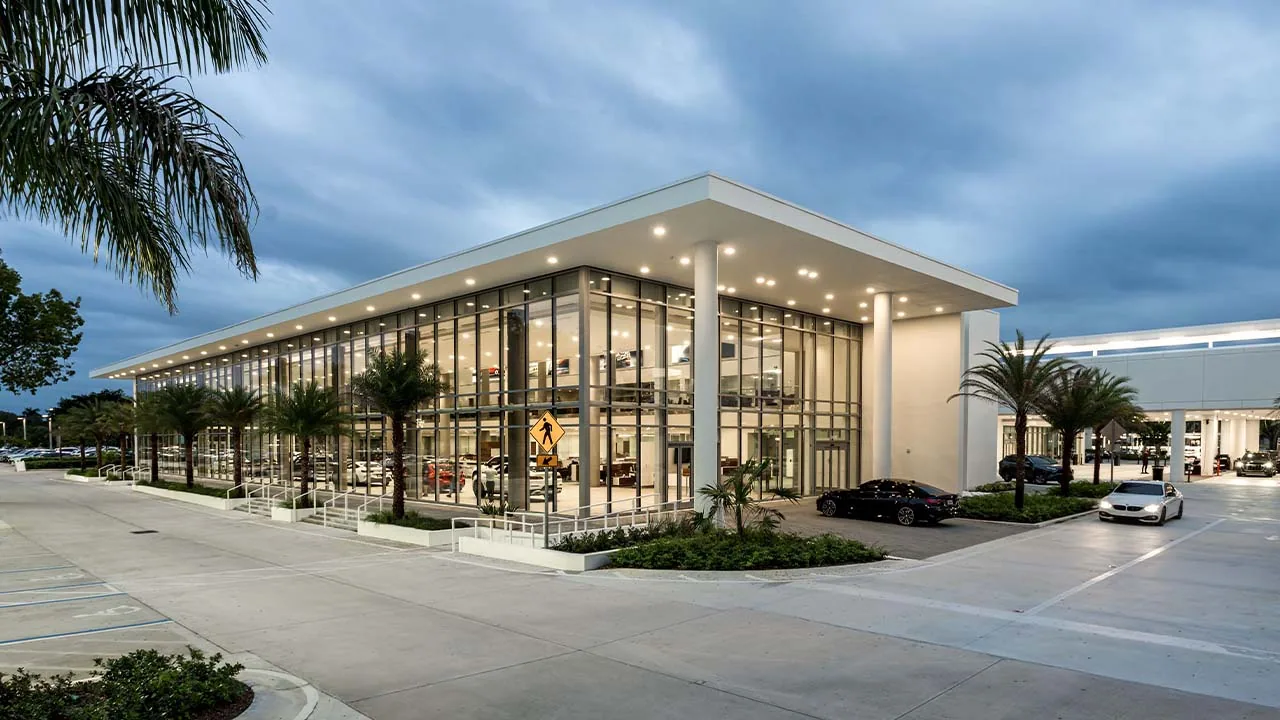
A dealership sheet opens with the location of the scupper nearest the showroom glass and a dated photograph of its outlet. A showroom roof may shed water toward a parapet edge, and a scupper that overflows there wets a wall that customers can see. Those three items, the photograph, a moisture reading and a note on the glass-line sealant, begin the sheet.
Interstate 2 and US 83 give Mission, TX commercial buildings direct freeway frontage, and for a dealership the building is also an advertisement. A stain on a showroom ceiling or a drip in a service bay costs sales and repair hours, so we document each roof finding by finding and write scope lines that a general manager or a corporate facilities office can act on.
Findings Over Showroom, Service Bays and Canopies
A dealership roof is several roofs. The showroom often has a flat or low-slope membrane with parapets and glass walls. The service area may have a larger, taller roof with big door headers and rooftop exhaust. Covered delivery lanes and canopies add edge metal and drainage details.
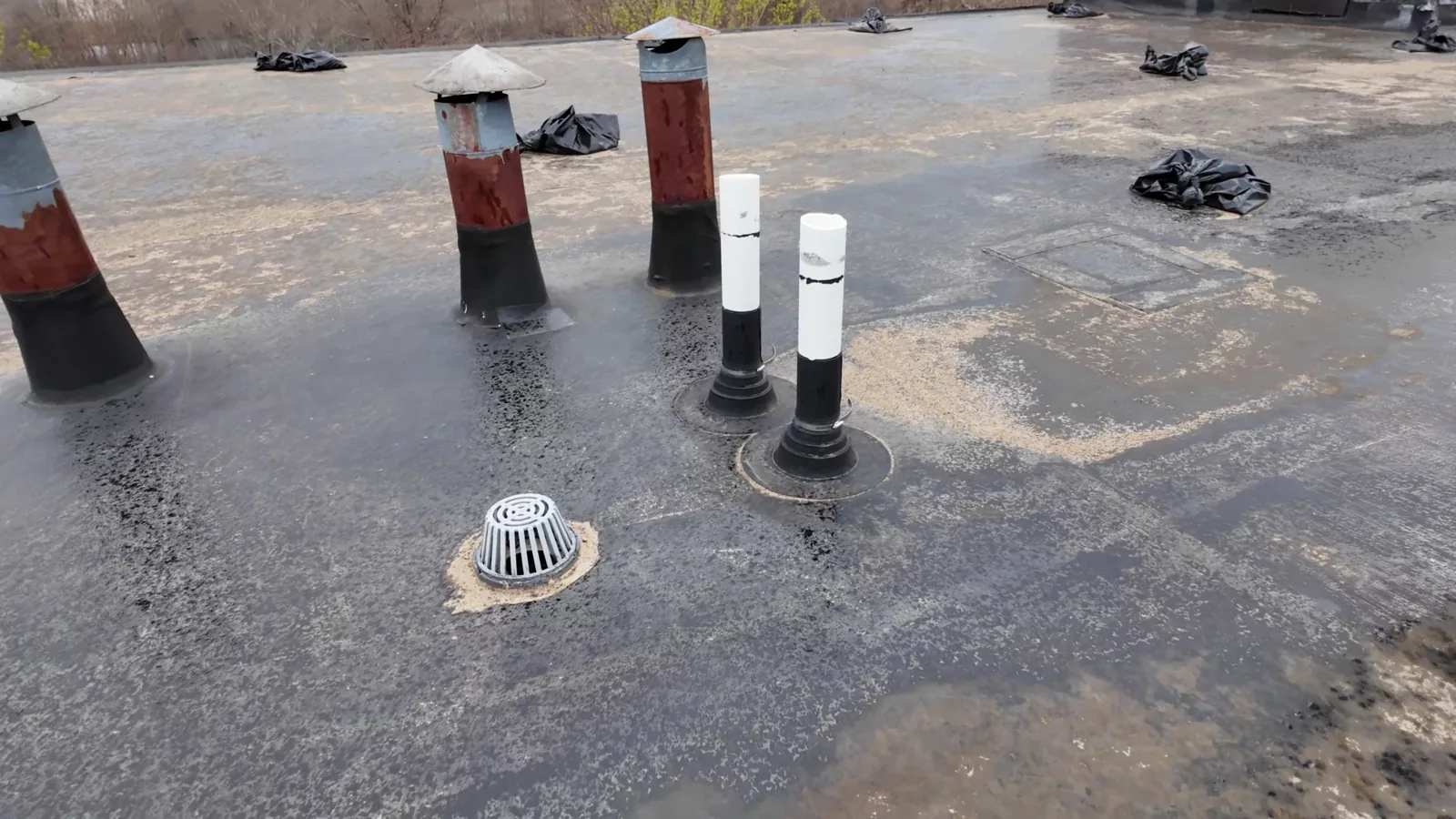
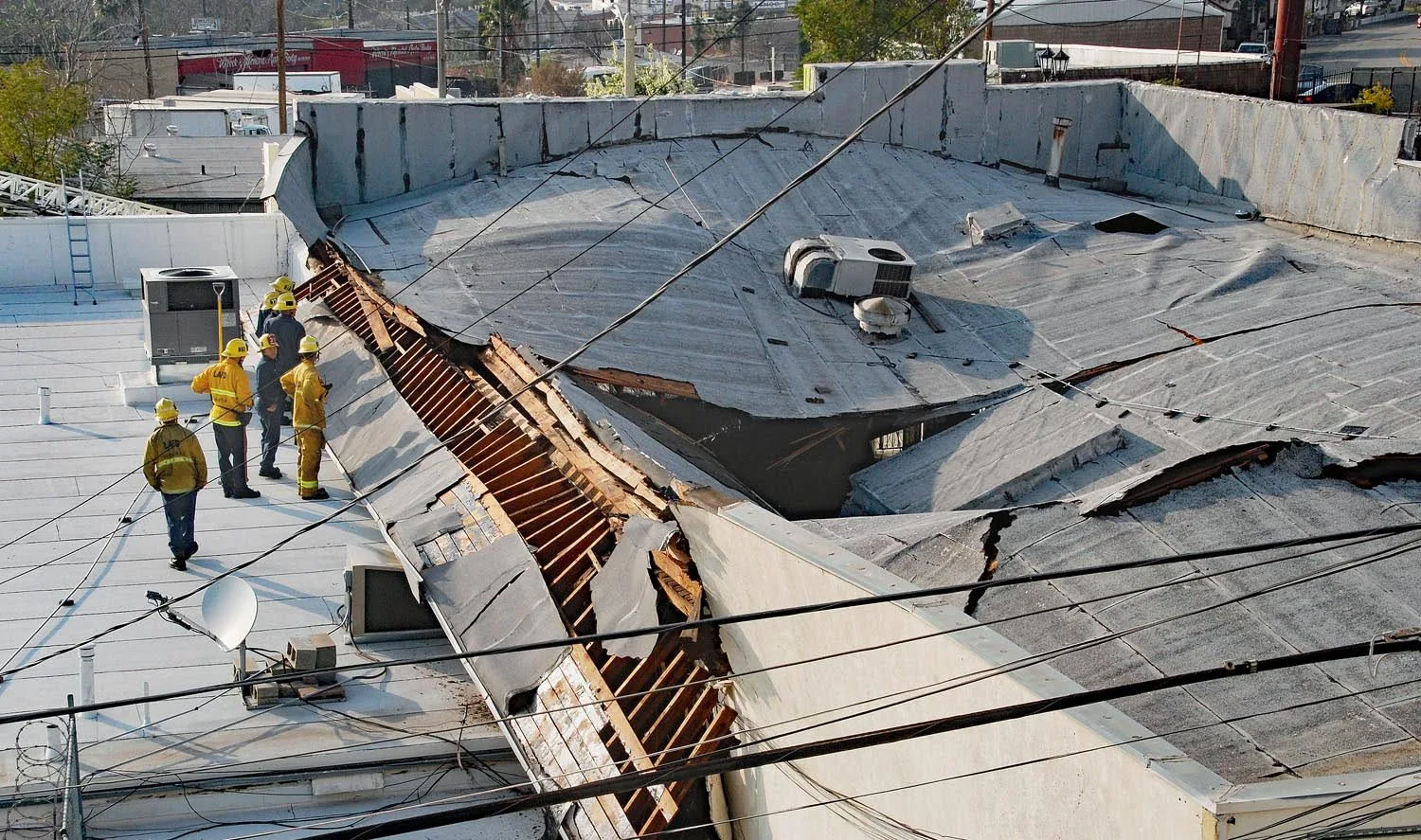
We walk every section. Typical findings are open seams, split sealant at curbs and parapet caps, loose edge metal on canopies and ponding near drains. Each gets a dated photograph, a tag for the section and a rating, so the manager can see which part of the building is causing which complaint.
Glass walls and storefront systems meet the roof at a head flashing, and the flashing is rated separately. A dried bead of sealant above a showroom window is a small finding with a visible consequence, and it is photographed from the roof and from the floor below.
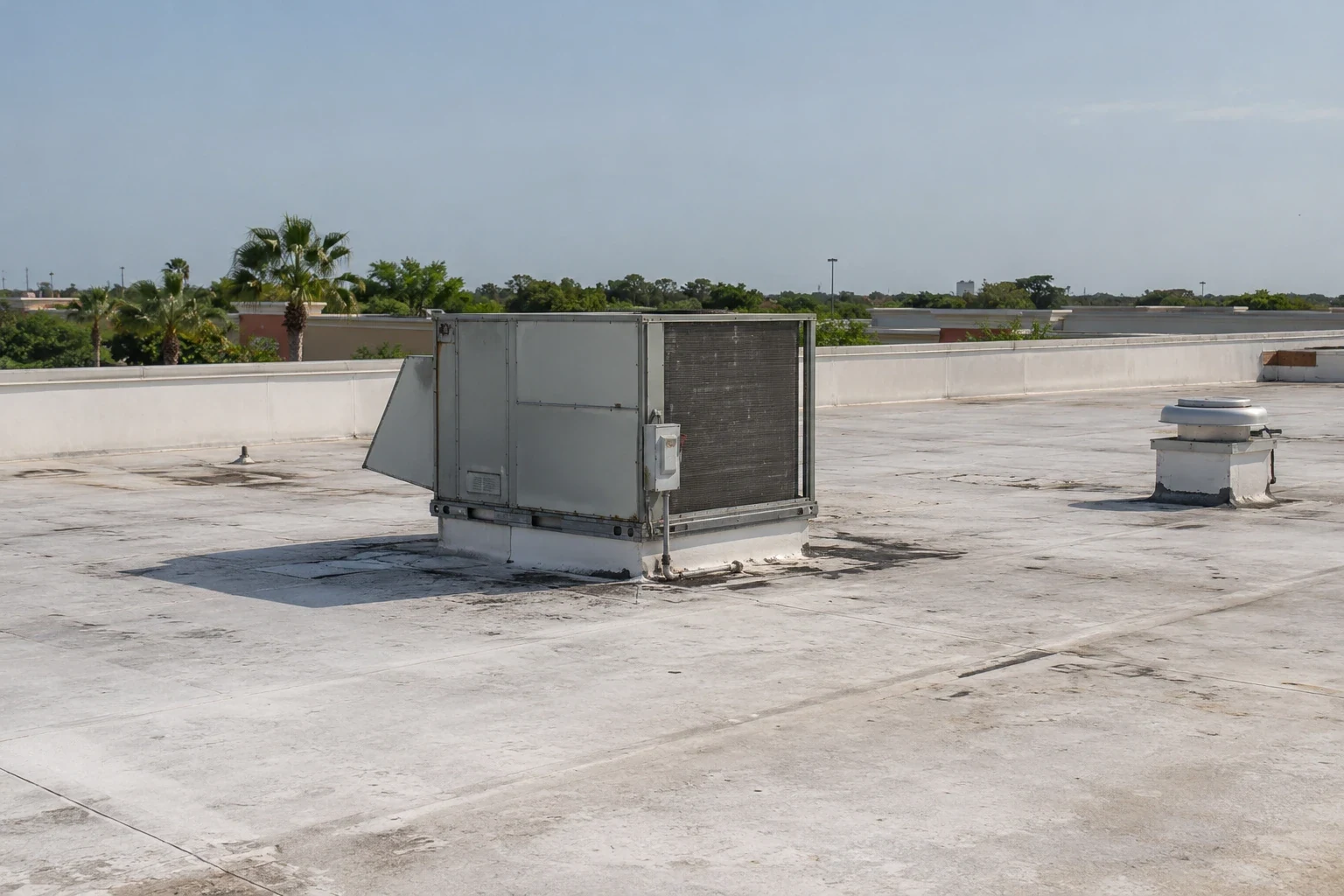
Rooftop units over a service area often serve shops with heavy exhaust. The curbs and boots are checked for heat and chemical wear, and the summary notes where the membrane near an exhaust has softened.
The Condition Record for Corporate Review
A dealership may report facilities condition to a manufacturer or a group owner. The summary is written to be passed along, with numbered sections, explained ratings, cited photographs and recommendations tied to findings. A group with several rooftops can compare them on one scale.
The record also includes a drain and scupper log. Showrooms and canopies depend on a few outlets, and the log shows each outlet's size, its flow when tested and the debris found. A clear log is inexpensive protection for a building that sells on appearance.
A short history table accompanies the record. It lists past repairs by date and location, with the product used. Repeated repairs at the same place show a pattern that a single visit would miss, and the pattern often drives the recommendation.
Scope Lines That Protect Operations
Scope lines are written around the sales and service calendar. Work over the showroom is placed on days with few appointments. Work over service bays avoids the busiest repair hours. The line names the finding behind each task, the area from the moisture map and the protection to be used inside.
For a coating, a recover or a replacement, the line states the surface preparation and the test that follows. A drain and scupper repair is often the first and least expensive line on the list, and it is separated from larger scopes so it can proceed at once.
Warranty paperwork is checked before the lines are final. If a maker's warranty is active, the scope lists the repairs it will accept and the notices it requires. A repair outside those terms can end coverage, so the check comes before the first bid is requested.
Access is part of each line. Showroom roofs may need a lift staged in a customer lane, service roofs may need a crane pick over a bay and canopies may need scaffold. The line names the method and the hours so the dealership can plan around it.
A Pre-Storm Baseline With Inventory in Mind
A dealership holds a lot of valuable property on the lot, and a roof leak above a showroom or service bay adds to the exposure. A baseline taken before the June-to-October tropical season records edge metal, canopy fasteners, sealants, drains and scuppers while the roof is dry.
The baseline also lists the loose items near the building that wind could move, such as signage, banners and equipment on the roof. It notes who is responsible for each and what the plan is when a named storm approaches, including inventory moves that are outside the roofing scope.
Heat belongs in the baseline too. A dark membrane over a service bay can run hot for months, because the Valley's heat-safety season spans May to October. Sealant elasticity and seam bonds are logged each spring so that summer aging is measured.
Post-Storm Comparison for Claims
Hanna's July 2020 damage to hundreds of poorly built Valley structures fell mostly on roofs, and Dolly's 2008 winds lifted older ones near Weslaco. Following a named storm, each section is revisited and its new photographs are set against the baseline. Canopies and parapets are the first details to show movement, which is how wind damage usually begins.
The comparison gives a general manager a clear statement for the insurer: which findings are new, where they are and what they will cost to repair. Repairs that stop water at once, such as a temporary seal over a lifted canopy edge, are logged and labeled temporary.
Water that comes in during a storm is photographed inside as well. Ceiling tiles, wall stains and bay floor wetness are matched to the roof section above, so the repair goes where the opening is and not where the stain happens to appear.
Options and Recommendation
Options range from repair and cleaning, through a reflective coating, to a recover or a replacement. Each option is paired with the finding that favors it and the maintenance that preserves it. Because dealerships care about appearance, the recommendation also says how a coating or new membrane will look at the parapet and from the lot.
Retail neighbors share the freeway corridor. A shopping center or a big-box store in Mission, Pharr or Weslaco can use the same format.
The summary closes with the maintenance the owner should perform: clear drains each season, secure rooftop access and log new stains with dates. These steps cost little and keep the next inspection short.
Questions and Answers
What roof defects usually cause showroom leaks?
Parapet caps, glass-line sealant and clogged scuppers. We recommend testing each outlet with water, photographing the glass-line sealant and logging the condition of every parapet cap. Those three checks cover the details where showroom leaks tend to start.
Can roof work be done without closing the service department?
Usually, by sections. We recommend scheduling loud work outside the busiest hours, protecting bays below open cuts and agreeing on a stop signal with the service manager.
How should a dealership group compare roofs across locations?
On one scale and one table. We recommend rating every section the same way, citing the same kinds of photographs and listing the finding that drives each rating.
What is the benefit of a coating on a dealership roof?
Surface protection and reflectivity on a dry, sound membrane. A moisture map belongs before the work and a film check after it. A coating does not fix wet insulation.
What should be on the roof file for an insurer?
Dated photographs before and after storms, the drain log and the scope lines. We recommend keeping them with the warranty paperwork.
When should a dealership check the roof after a storm?
Within days. We recommend walking the same sections and photographing them from the same positions. Early notes make a claim easier to document.
Request a Documented Inspection
Ask for a documented inspection of your dealership roofs. The written condition summary will include tagged photographs, a rooftop sketch with moisture readings, a drain and scupper log and scope lines you can reuse for budgeting or an insurance conversation.