
Property Types We Roof
College and University Roofing in Mission, TX
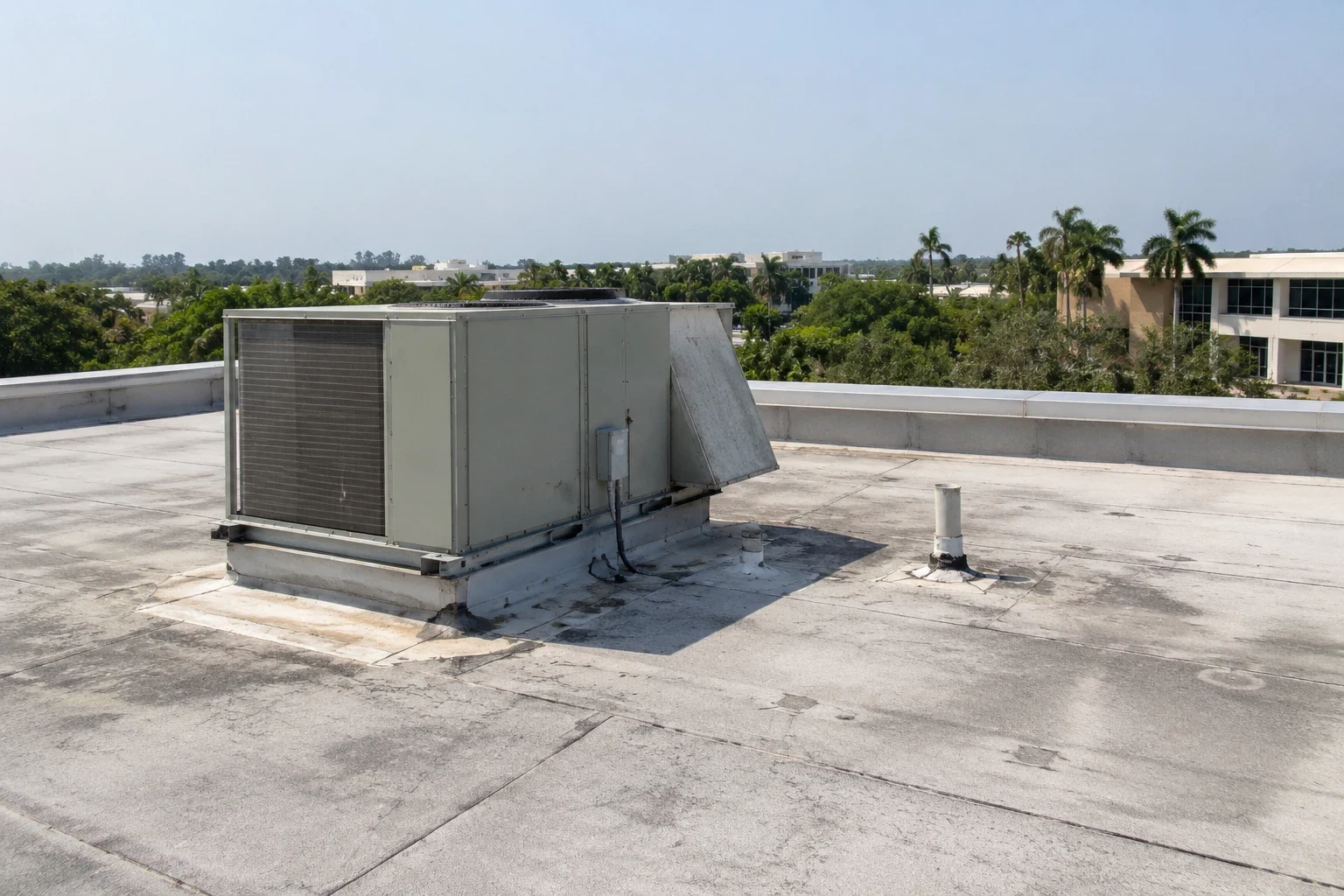
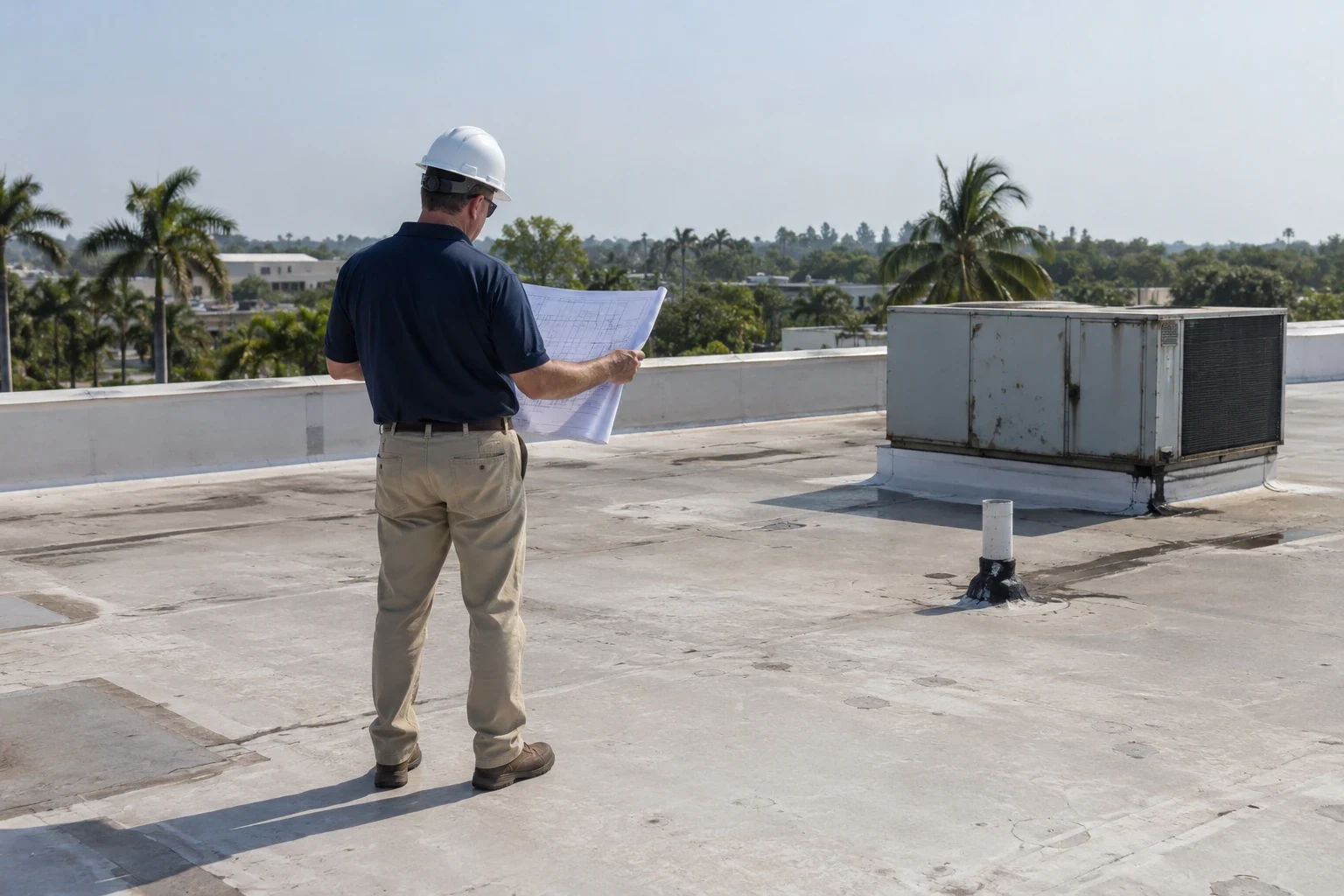
The count of roof sections is the first number on a college roof sheet, because a campus builds in layers and each decade adds a different roof. One building has a membrane laid over an older membrane, the next has metal panels, and a third has a flat deck with a dozen penetrations for laboratory exhaust. The inspector numbers every section, draws it on a rooftop sketch and photographs it from a fixed position. That count tells a facilities office how many different repair details it is managing in Mission, TX, and the sheet that follows gives each one a finding and a recommendation.
Layered Roofs and Their Findings
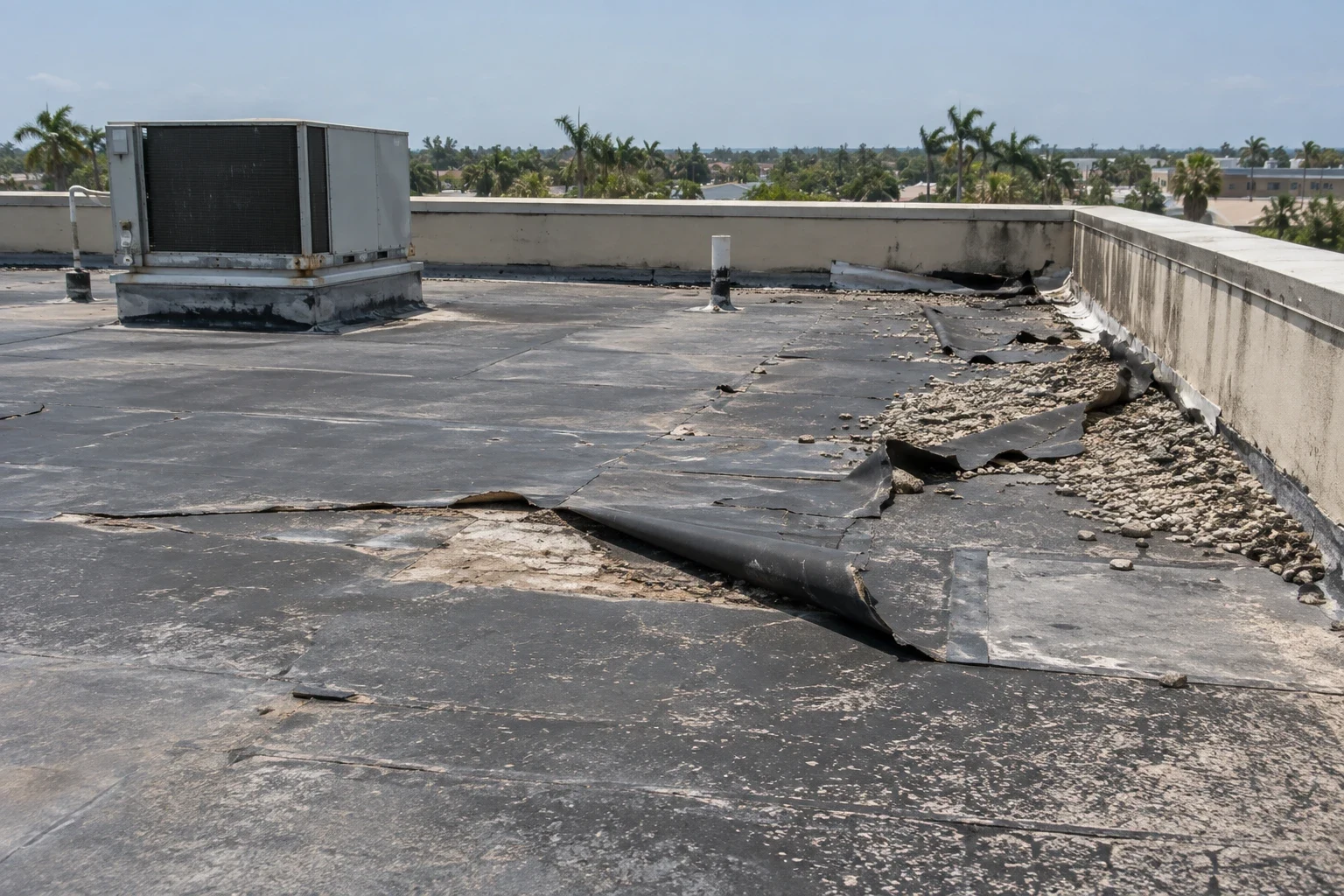
Older academic buildings can carry more than one roof layer, and the inspection looks for the signs: a raised edge, a second row of fasteners, a thickness at the wall flashing that does not match the nameplate on the building. Core samples confirm the layers and show whether the insulation under them is dry. Each core is photographed and tagged to the sketch.
The moisture map follows. It marks the wet area on the plan, in feet, and shows whether the water is confined to one drain basin or has spread under a wide section. A confined area suggests a local repair. A spread suggests that the whole section has reached the end of its service, and the scope line says so with the readings attached. Readings are repeated at the same points on the next visit, which lets the facilities office see whether a wet area is holding steady or growing between inspections.
Drains and scuppers for each section are logged in their own table. A campus with long walks between buildings has many low roofs over covered passages, and those are the first to pond after a heavy rain.
Rooftop Equipment and Laboratory Exhaust
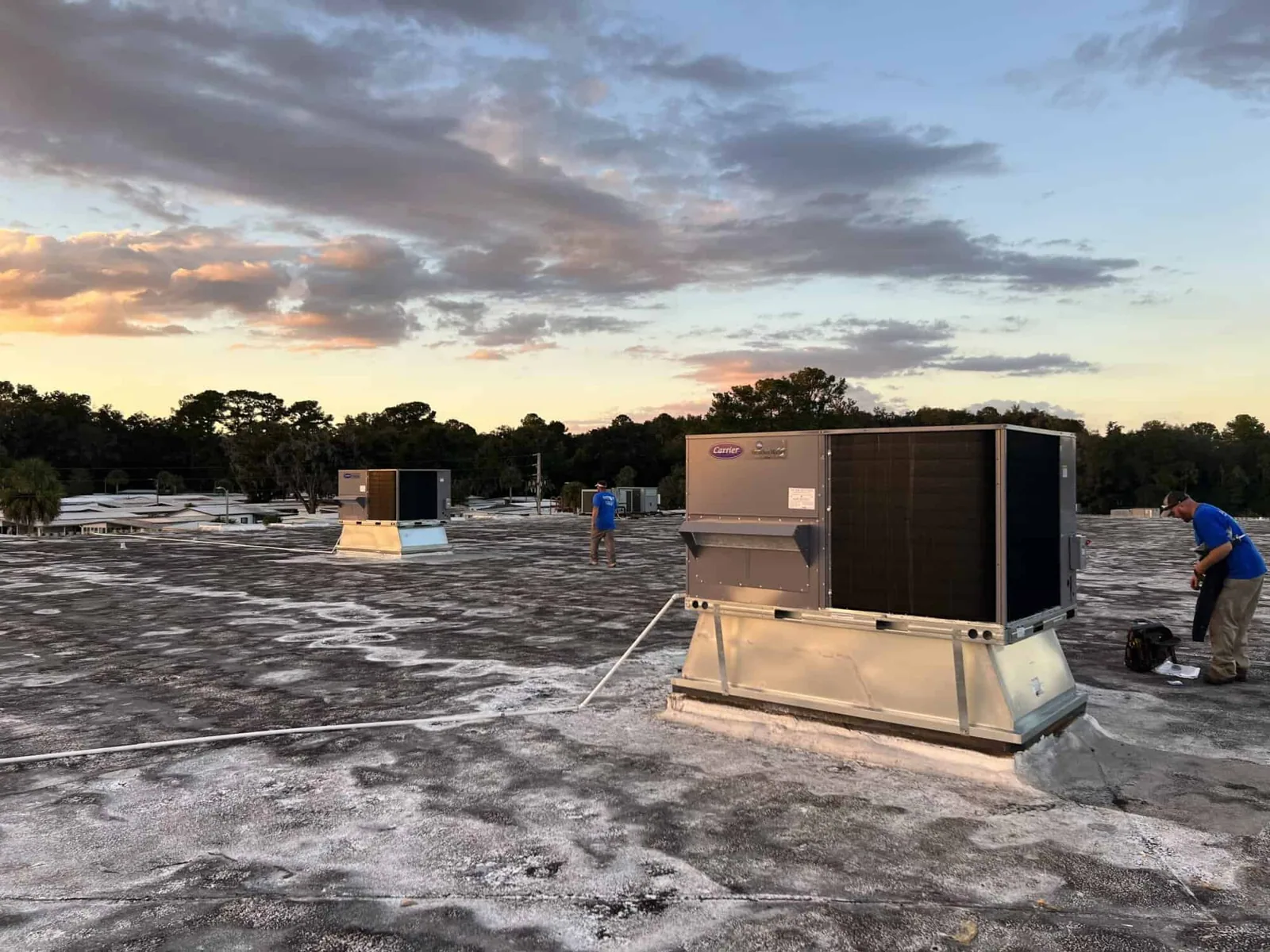
Teaching buildings carry more rooftop equipment than a typical office: air handlers, exhaust fans, chilled water lines and, in science buildings, ductwork that rises through the roof. Each curb and support is a place where water can enter, and the inspector records the flashing, the sealant and the condition of the supports. A curb or support that has shifted is logged with a photograph and a measurement of the gap.
Exhaust matters for the membrane as well. A roof near a fan that discharges warm or chemical-laden air can show a local change in the surface, and the inspection notes it. If the equipment is to be replaced, the owner receives a note on timing, since new curbs are best built when the roof around them is already open. Penetrations that no longer serve any equipment are listed separately, since an abandoned vent or capped pipe is a flashing that can be removed and closed over instead of maintained for years.
Scheduling Around the Academic Calendar
A college has quiet weeks and busy ones, and roofing work follows them. Winter break and the summer term break are the longest windows, but they are not equal. Summer in the Valley is the heat-safety season for crews, which the National Weather Service in Brownsville lists as May through October, and it overlaps the June-through-October hurricane season. Winter break avoids both, and spring break can handle a small repair.
The condition summary therefore pairs each scope line with a window: a section that needs only a drain correction can be done over a long weekend, a coating needs a stretch of dry days, and a replacement needs a break and a bid. The last date for a decision is stated in the summary, so the facilities office can see when waiting begins to cost a semester. Where a bid process applies, the bid documents can reuse the scope lines directly, with the photographs attached as the basis for quantities.
Residence halls and labs add constraints. Quiet hours, research schedules and move-in days are logged on the plan before the crew mobilizes, and a named contact in each building receives the weekly work schedule. Fire alarms and access-control panels near roof hatches are noted so that no door is blocked and no device is disturbed.
Storm Record Across a Campus
When Hurricane Hanna passed in July 2020, rainfall reached 14.40 inches at a station northwest of Mission, and poor drainage produced flooding in the Mission, La Joya and Sullivan City area. A campus with covered walks and many low roofs sees the consequence first at its scuppers and flat areas. The pre-storm baseline records the standing-water marks and the drain condition on each roof, and the post-storm comparison shows which marks are new.
That comparison is useful beyond repair. A college that files an insurance claim or requests emergency funds can show dated photographs, the moisture map and the drain log from before the event, and can point to the findings that changed. The hurricane damage roof repair scope then lists only the new items. Photographs are taken from the same marked positions, so a change in a ponding stain or a lifted edge can be seen by laying two pictures side by side.
Recommendations a Facilities Office Can Fund
Mission's economic development listings include technology among the town's sectors, and the McAllen-Edinburg-Mission metro has an estimated 921,549 residents. Growth like that can put new equipment or solar arrays onto a campus roof, so the summary notes which sections can take added load and which cannot, with the deck and fastener findings that support the answer.
For each section, options are listed with the finding that favors each. Coating suits a dry section with an aging surface. A recover suits a dry section with a sound deck. Replacement suits trapped moisture or a spent membrane. The cost ranges and the order of work go into a roof capital plan that spreads the spending across several budget years.
The Owner's File Across Buildings
The file keeps the sketch, photographs, moisture map and logs for every building in one format. Owners with school roofs, a government building or off-campus sites in McAllen and Edinburg can compare them on the same scale and rank them by finding, not by building age. Because the same sheet format is used for every roof, a new facilities manager can pick up the file and see the last dated photograph, the last moisture reading and the open scope lines without a hand-over meeting.
Questions and Answers
How do you tell how many layers a campus roof has?
By core samples at points chosen from the moisture map, plus the signs at the edge and wall flashing. Each core is photographed and tagged, and the layer count goes into the scope line.
Which window is best for replacing a college roof section?
The longer breaks, with winter break the safest for weather and crews. Summer offers more days but overlaps the heat and tropical seasons, so a buffer for forecasts is built into the plan.
Can a roof carry added equipment or solar panels?
Only where the deck, the fasteners and the membrane findings support it. The summary states which sections qualify, and any section with trapped moisture is corrected first.
What is on the condition summary for a facilities office?
The rooftop sketch, tagged photographs, moisture readings, the drain and scupper log and scope lines with cost ranges and timing. It is written to be reused in a budget request or an insurance review.
How are laboratory exhaust curbs handled?
Each curb is photographed with a measurement of any gap, the sealant is rated and the support condition is logged. If the equipment is being replaced, the curb work is timed with the replacement.


Request a Documented Campus Inspection
Ask for a documented inspection of your campus roofs. The written condition summary will list every section with tagged photographs, a rooftop sketch, moisture readings, a drain log and scope lines your facilities office can reuse for budgeting or an insurance conversation.