
Service Areas
Commercial Roofing in Progreso, TX
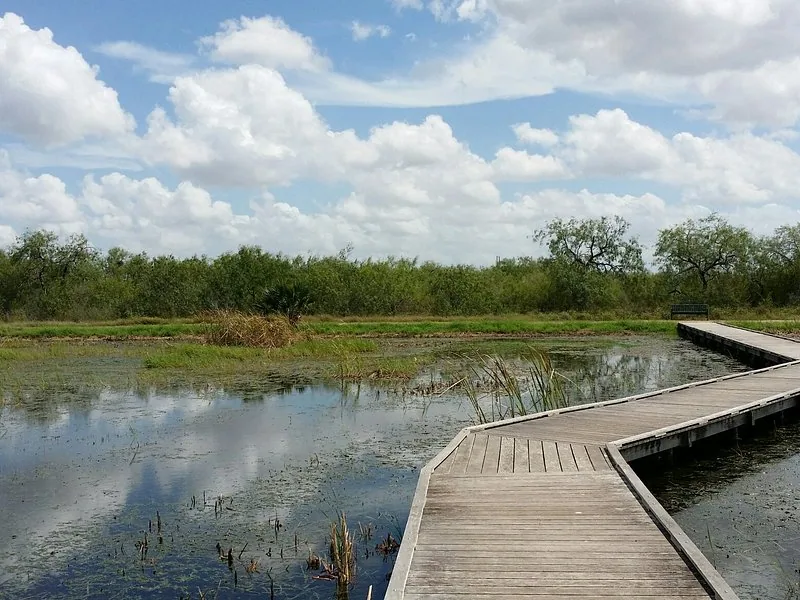
A roofer in Progreso, TX works in a city that sits against the Rio Grande, south of Weslaco on FM 1015 and US 281, and borders Nuevo Progreso, Tamaulipas. It counted 4,807 residents in 2020, and its roofs deal with the same heat, wind, and rain as the rest of Hidalgo County. The first line on any roof sheet here is not a landmark. It is a dated photograph of the edge and a count of drains, since a small city on a busy road corridor has the same roof questions as any other, and the answers are written down the same way.
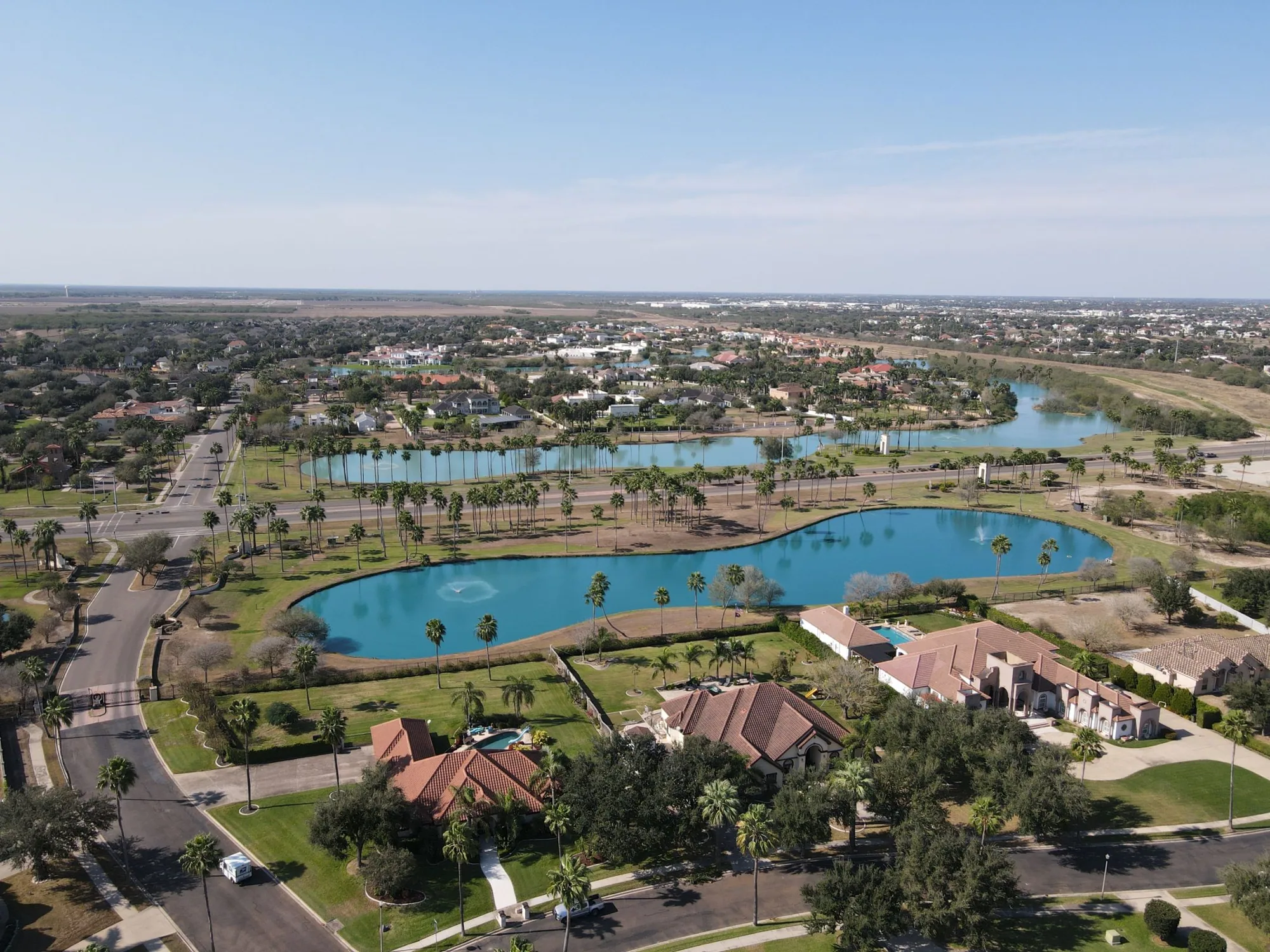
On the US 281 Corridor
US 281 connects Alamo to Nuevo Progreso, one of the Valley's gateways to Mexico, and Progreso lies at its southern end. Weslaco is to the north, with I-2 / US 83 running through it, so a roof visit in Progreso is easy to pair with one in Weslaco.
When an owner calls, we ask about the building's use, age, and roof type, and the walk follows. A small storefront, a storage structure, and a larger commercial building each get a different set of checks, but the written summary has the same sections every time, so an owner with more than one address can compare them.
Wind and the Older Edge
In 2008 Dolly's near-hurricane-force winds reached eastern Hidalgo County near Weslaco, a useful reference for Progreso. Roofs that were lifted there were mainly on older structures. That tells an inspector to start at the edge. Fasteners that have corroded, nailers that have rotted, and coping that has loosened show up on the sketch first.
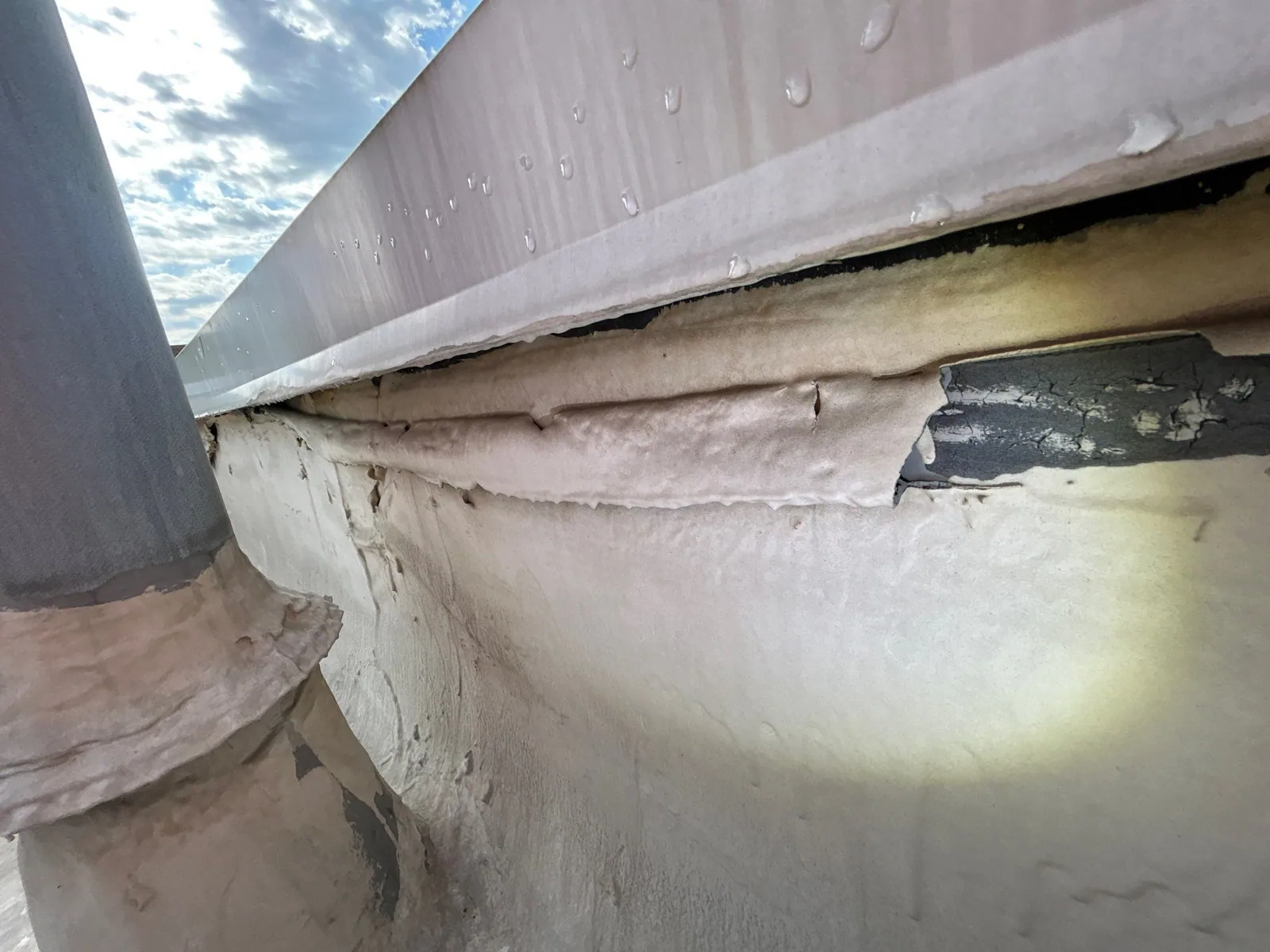
A pull sample on fasteners, a probe along parapets, and a look at the gutter and downspout attachment give a clear read of how the building would respond to a gust. Weak edges are tightened or replaced before the next season. Gutters and downspouts get the same attention, since water discharged against a wall or slab causes its own trouble. Rusted straps, separated joints, and clogged elbows are repaired or replaced, and the discharge point of each downspout is recorded so a later storm leaves a comparison for whether the water path held. Where the problem is in the flashing instead, the membrane-to-wall transition is the place to look, since flashing failure there is how wind-driven rain gets in.
Storefronts and Food Service Roofs
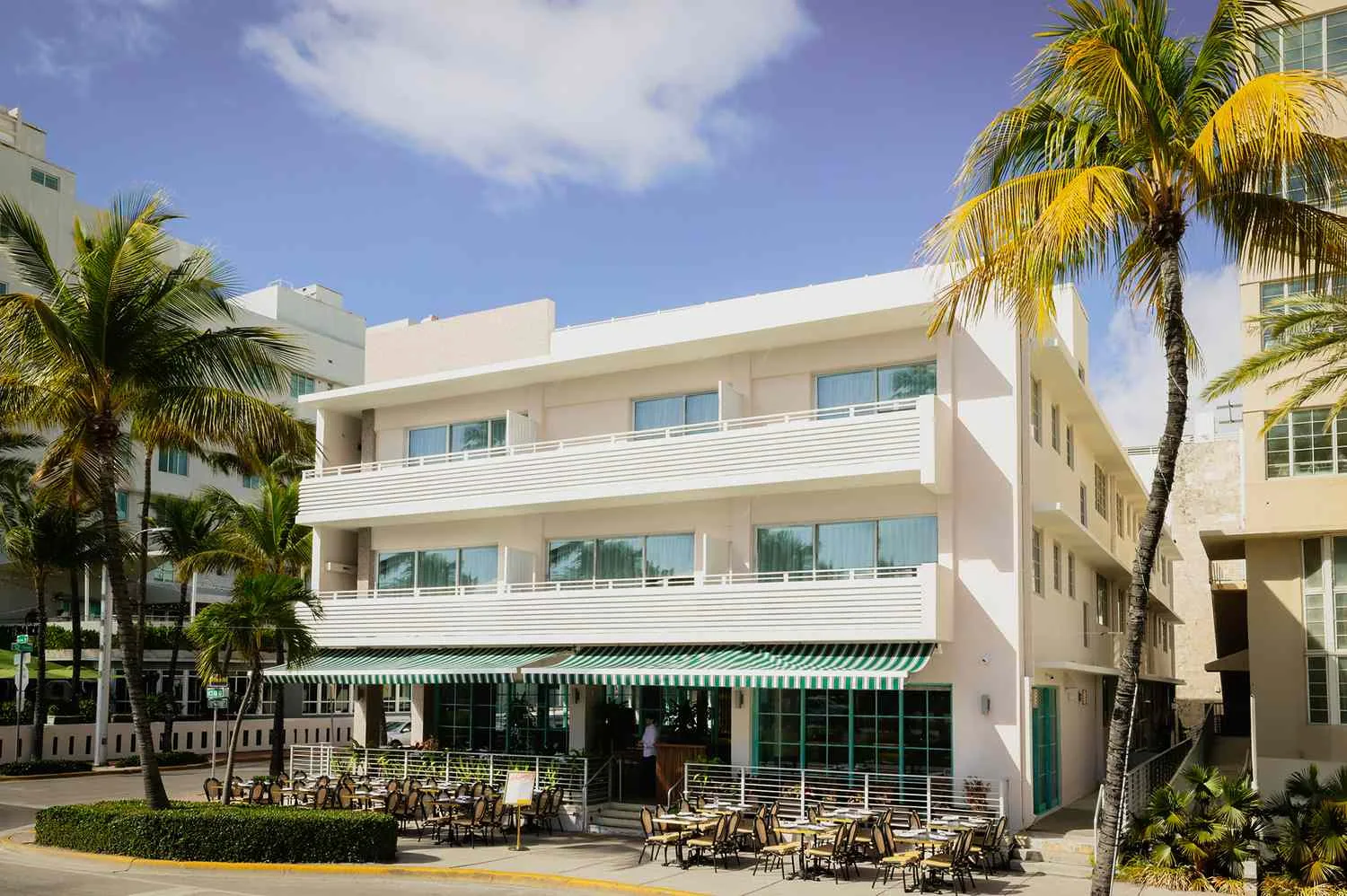
Where a business serves customers directly, the roof has to stay dry through daily operation. A restaurant roof has the added burden of kitchen exhaust, grease, and rooftop units that run long hours. Grease collects on the membrane near exhaust fans, and many membranes degrade in contact with it. We check for staining, install grease containment where needed, and note whether the surface needs a compatible protective layer.
For a row of shops under one roof, as in shopping center roofing, the bay-by-bay log is useful. A leak in one tenant's space can start in another's, so the roof sketch numbers each bay and records the drains and rooftop units that serve it. The landlord receives one summary and each tenant can see what applies to them. Rooftop units serving individual bays are logged with their curbs and condensate lines, and any unit that leaks into its curb is marked for the mechanical contractor with a photograph attached.
Rain, Drains, and Standing Water
Hurricane season in the Valley runs June through October and flooding is a concern in every month. Hanna's July 2020 rain filled a gauge northwest of Mission to 14.40 inches, a reference for the volume a roof may need to move. The gauge stood near Mission, and the same lesson applies to a drain in Progreso.
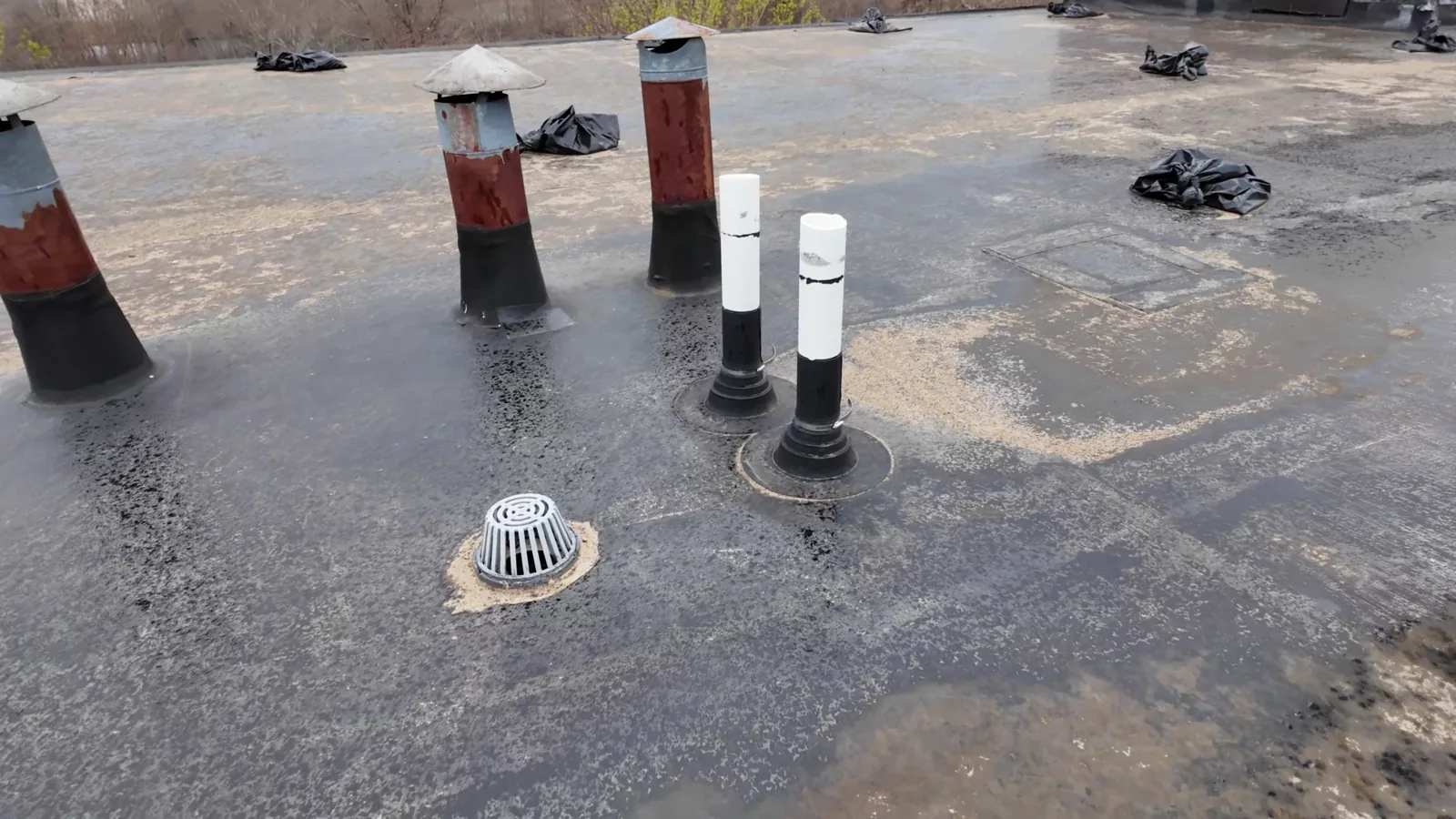
We log every drain and scupper, photograph each, and measure standing water nearby. A drain and scupper correction often solves a ponding problem before any membrane work is considered. Where water stays more than a day, the finding is marked on the sketch, with options listed from cheapest to most thorough: clear the outlet, add a cricket, add an outlet, or regrade with tapered insulation. Each option is priced by the drivers behind it, and the cheaper ones are tried first when the evidence says they should work.
Heat Wear and Coating Choices
May through October is the heat-safety season for the Rio Grande Valley, and a roof here is under sustained load for half the year. Sealants harden, seams creep, and coatings thin. A reflective acrylic coating can restore protection to a sound roof, provided it drains well and the insulation is dry. Moisture mapping and a small adhesion test come first.
If ponding is a recurring finding, silicone is the more water-tolerant choice, and if the roof is beyond coating, the record shows it. The records of film thickness, weather during application, and post-cure photographs go to the owner, and a film check a few months later confirms that the coating is still bonded at seams and details. Walkways and equipment pads are marked before coating begins, so the paths technicians use are protected from the start and the film is not worn through in a single season.
Planning and Budgeting
The pattern of decisions is the same on every roof. Dry insulation and an intact membrane allow repair or coating. Limited wet areas can be patched and monitored. Widespread moisture or repeated failures call for replacement. A written scope lists the drivers of cost and timing: area, penetrations, wet insulation to remove, access, and hours available.
Calls come in at any hour, holidays included, and the first visit is a dry-in with photographs, labeled as temporary in the file. Scheduled visits, timed ahead of the heat season and after the tropical season, build the owner's file. Over a few seasons, the file shows whether the roof is holding, and it gives the owner a dated basis for any conversation with a lender, an insurer, or a buyer. Each visit adds dated photographs and readings to the same sketch, so the owner can compare seasons without rebuilding the record.
Questions and Answers
Why start at the edge on an older Progreso building?
Dolly's wind damage near Weslaco was concentrated in older structures, so edge condition is the best predictor of how a building will respond to the next gust. A pull test and a visual pass over the coping and fascia tell us what needs to be tightened or replaced.
How is grease handled on a restaurant roof?
We check the area near exhaust fans for staining and membrane damage, add or repair a grease containment tray, and recommend a surface that tolerates contact. The log notes where grease collected, so a later visit can see whether the containment is working.
When does a coating make sense for a roof here?
When insulation tests dry, the membrane is bonded, and drainage works. A moisture map and adhesion test confirm that before a product is chosen. If the roof ponds, silicone is the usual pick. If it is wet or failing, coating is not offered.
What does a first visit produce?
Dated photographs of every roof section, a sketch marking findings, a drain log, and moisture readings where needed. The owner also gets a ranked list of repairs with timing, so spending can follow need.
Can you reach Progreso quickly?
A crew answers calls at any hour, holidays included. Progreso lies south of Weslaco along FM 1015 and US 281, and the first visit is a dry-in with photographs.
Schedule a Progreso Roof Walk
Send us the building address and tell us how it is used. We will walk the roof, log every drain, and give you a written condition summary with photographs and a ranked list of repairs.