
Industries We Serve
Roofing for Cities, Counties and Public Agencies in Mission, TX
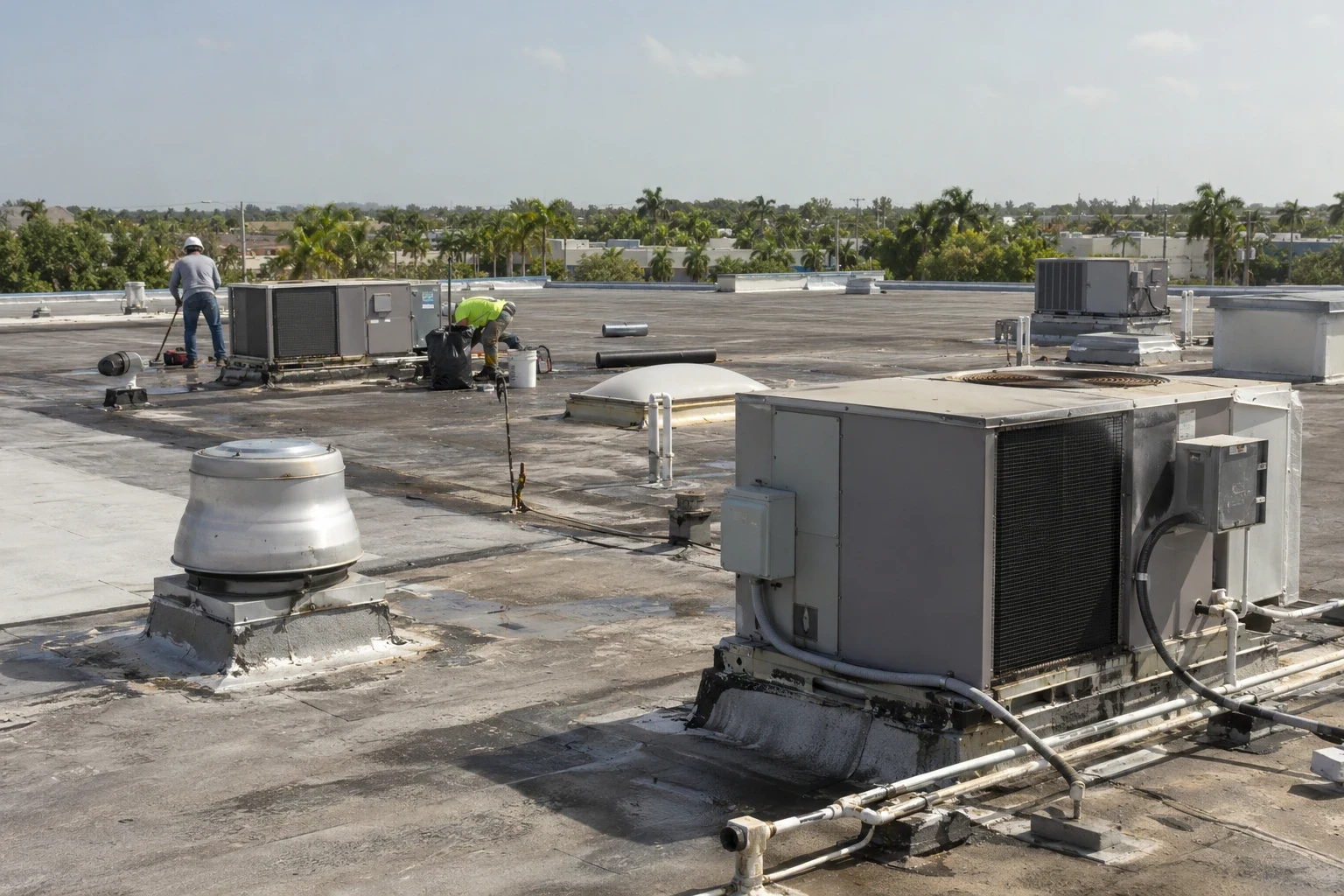
A public agency's roof file starts with an inventory page: every building, every roof section, the date it was last walked and the rating it received. A records clerk, a budget analyst and an elected official can all open that page and find the same answer, and it replaces a search through invoices every time a council asks how much roofing the city owns. The next page is the first dated photograph for each building.
Cities, counties and public agencies in Mission, TX and Hidalgo County answer to boards, auditors and the public. Every finding in the record carries a rating, a consequence and a recommendation, which lets spending on roofs be defended with evidence and repeated from year to year.
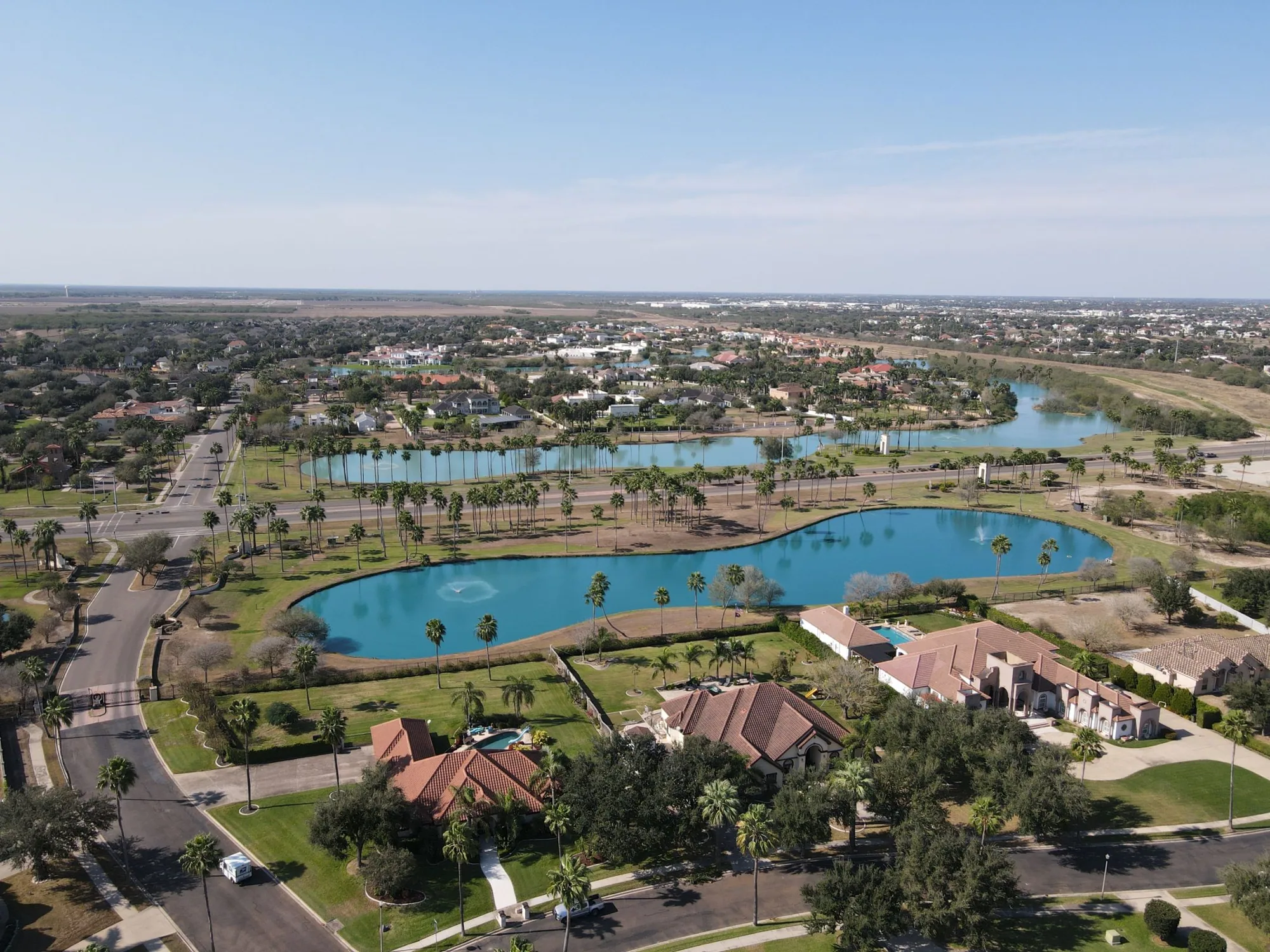
Findings Across a Mixed Public Inventory
A public inventory mixes building types. Offices and courts have low-slope membranes with many rooftop units. Fire stations and shops have metal roofs over bays. Libraries and community centers have skylights and long parapets. Maintenance yards have shed roofs. Each type fails in different places, and each is walked in full.
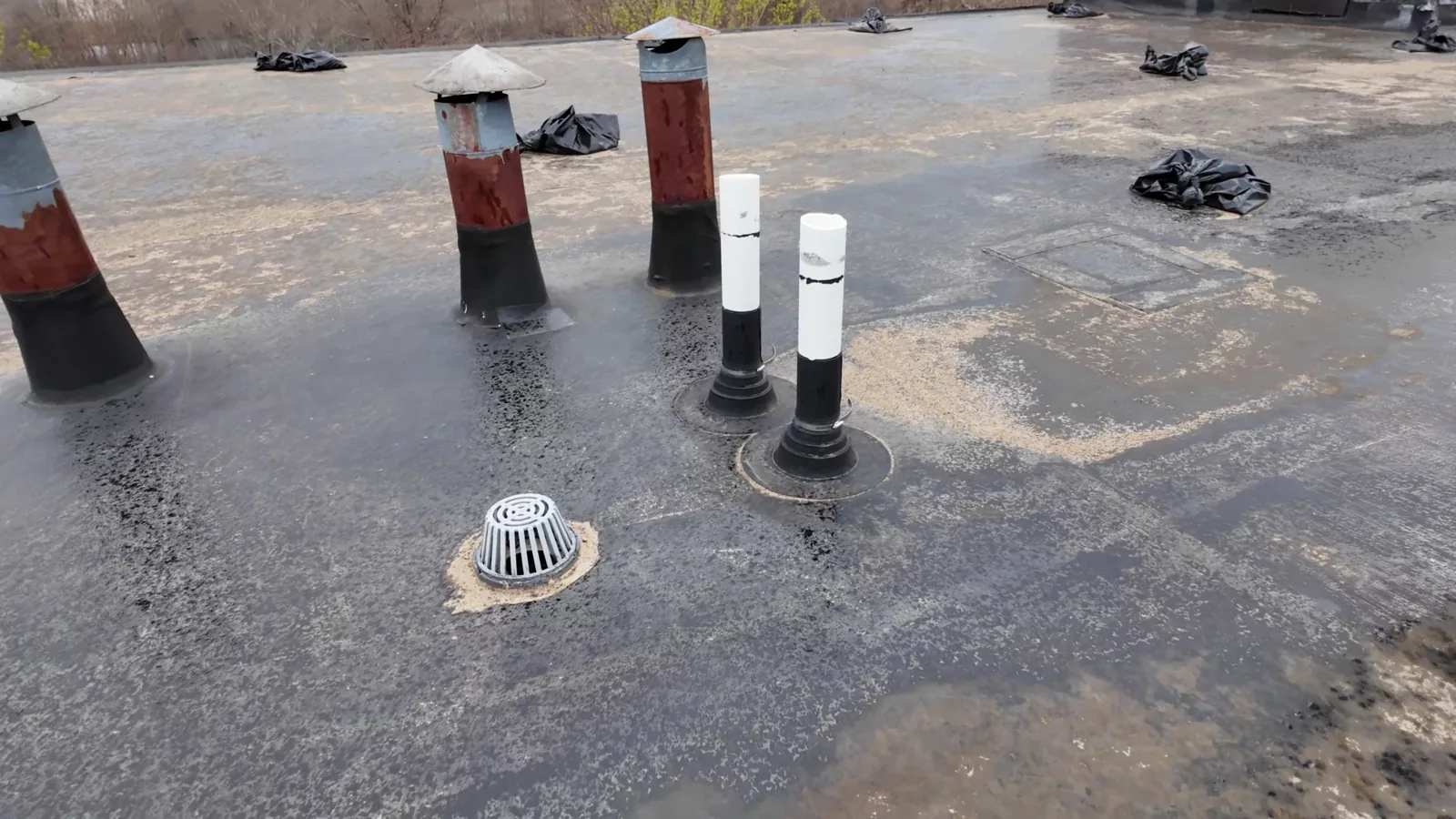
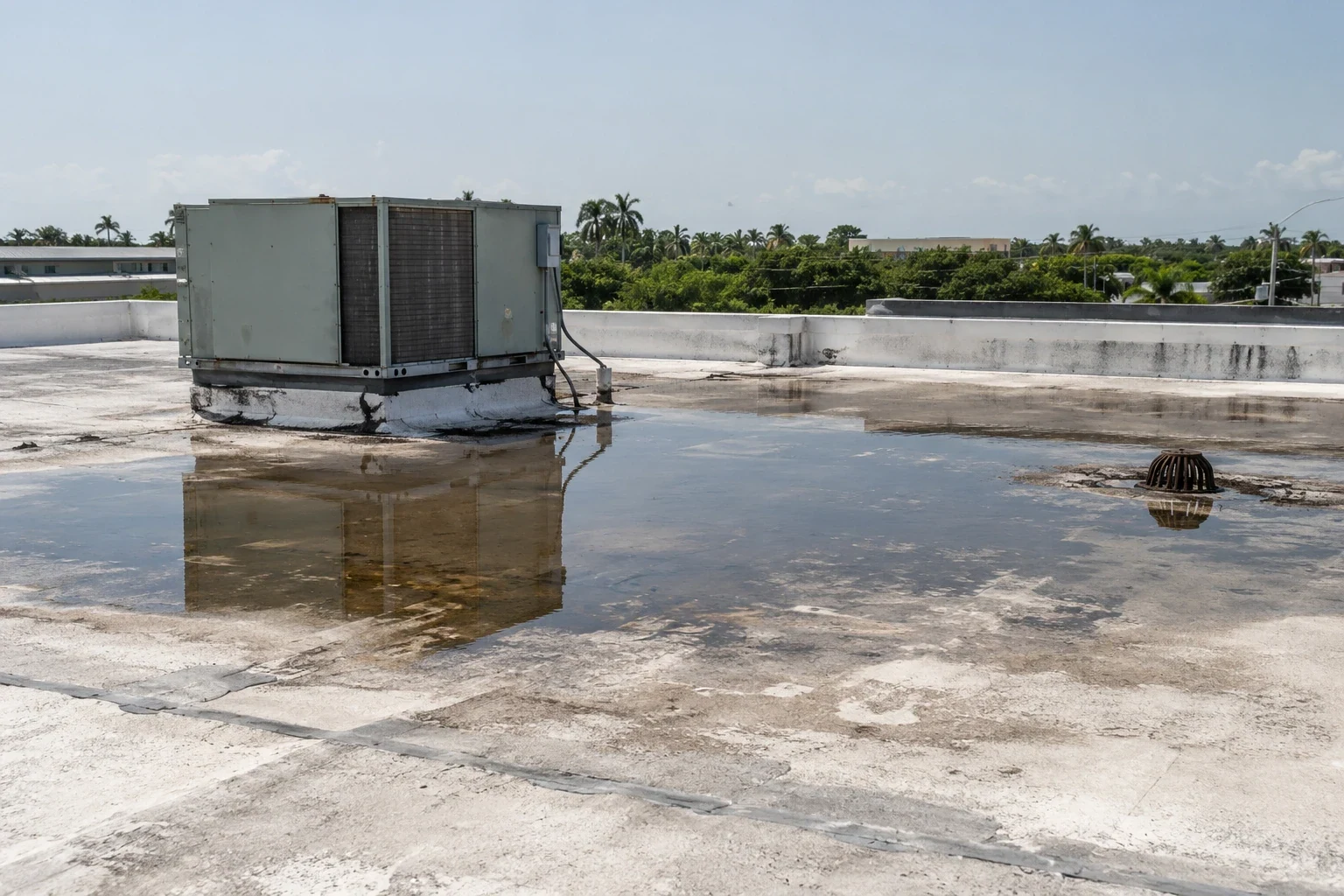
The recurring findings are lifted edge metal, open seams, split sealants at curbs, clogged drains and ponding. Each entry holds a dated photograph, a section tag and a rating. The rating note says what the finding means for the rooms below, and for a building the public enters, it also says what it means for visitors.
Rooftop equipment on public buildings includes air handlers, exhaust fans, antennas and sometimes solar mounts. Flashing at each unit is rated, and a boot that has cracked or a sealant bead that has dried goes into the log with two photographs and the unit's tag.
The route a technician takes from the hatch to each unit is walked as well. A worn path across the membrane is a finding on its own, and the summary recommends walk pads where wear is visible.
The Inventory Table and Records Retention
The condition record is a table plus a file for each building. The table orders buildings by consequence and condition. The file holds photographs, the sketch (moisture readings included), the drain and scupper log and the latest condition summary. Photographs are stored by building and date, in the order taken, so a records request can be answered quickly.
Retention is part of the design. The summary lists what is kept, where and for how long, in a form the clerk can adopt. A roof condition report in this format also serves an auditor, who can check each rating against its photographs without calling the inspector.
Where drawings are missing, the record builds them. The dated sketch carries section boundaries, drains, penetrations and units, and it doubles as the base map for later visits and for the bid package.
Scope Lines Written for Competitive Bids
Public work goes out for bids, and a clear scope produces comparable prices. Each line pairs a finding with its wet area on the moisture map and then specifies the roofing system, insulation thickness, drain work and flashing. Alternates are priced on their own, and each states the condition that would trigger it.
Public hours, security screening and parking limits are part of the line, so every bidder, including a general contractor carrying the whole building, prices the same access. A drain and scupper line is often the least expensive item on the list, and it is separated so it can proceed at once while larger work waits for funds.
Warranty status and permits come first. A warranty in force means a notice to give and repairs the maker will accept, and a permit takes time, so the schedule carries both.
A Pre-Storm Baseline for Emergency Facilities
A fire station, a shelter or an emergency operations center has to stay dry when conditions are at their worst. Hurricane season in the Valley runs June through October, and flood preparedness applies all year. A baseline taken in spring records edge metal, fasteners, drains and scuppers while the roofs are dry.
Pull testing sample fasteners at the perimeter shows how much holding power remains. Rooftop equipment and antennas that need securing are listed too, each with a responsible person and a named holder of the roof key, so access never becomes a question when the weather turns.
Heat belongs in the baseline. Public roofs take months of sun, and the Valley's heat-safety season runs May through October by the Brownsville weather office's count. Each spring the film on a coating and the elasticity of sealants are logged, which turns aging into a measurement.
Post-Storm Comparison and Emergency Reporting
Poor drainage during Hanna in July 2020 put 18 inches to as much as 4 feet of water into parts of the Mission, La Joya and Sullivan City area, and roofs took the main damage to hundreds of poorly built structures. An agency with a baseline can report what changed, with dates, to the state and to its own board, and can justify emergency work.
Building by building, the comparison separates roofs that are unchanged from those with new findings and those needing protection. Where flooding played a part, the ponding water entry records depth and how fast the drain flows, because water held on a roof adds weight and risk.
Photographs inside the building are matched to the roof set. A stain on a clerk's counter wall or a damp floor in a records room points to a roof section, and the agency can brief its board with a picture of both.
Options, Recommendation and Interlocal Planning
The summary offers repair, coating, section replacement and replacement for each building, with the finding that favors each. The recommendation chooses the least costly path that meets the condition, says what would change that choice and lists the owner's maintenance. Cities and counties that share buildings can use one file.
The same format covers a government building in Edinburg, the Hidalgo County seat, or in La Joya, and a school that a district shares with the city.
The recommendation closes with the maintenance an agency can do itself: clear drains each season, restrict roof access and date every new stain with its room. Those habits cost little and keep the next inspection short.
Questions and Answers
How can an agency get roofs ready for a competitive bid?
Open with a documented inspection and a moisture map, and write scope lines that each trace to a finding. Alternates for coating and recover belong in the package, each with its trigger, so bidders price the same facts.
What should be in a public roof file?
Keep the inventory table, tagged photographs, sketches with moisture readings, drain logs, warranty papers and the last condition summary together. Update the set each spring and after any named storm.
What keeps visitors safe while a public building's roof is open?
Visitors keep clear entrances, loud steps are timed to hours the facility manager sets, and a named contact answers questions. Screening and parking belong in the scope so bidders price the same access.
What does a pre-storm baseline give a board after a hurricane?
It shows what changed. The spring photographs and drain logs, kept together, let post-storm findings be reported with dates to the board and the insurer.
Should a public building consider a coating?
A dry, sound membrane can gain service life from one. Map the moisture first, check the film afterward and request a bid alternate that sets the cost beside replacement.
Who ought to hold the roof file?
Both the facilities office and the records office should hold a copy, with the warranty and bid documents filed beside the condition summary.

Request a Documented Inspection
Ask for a documented inspection of your public buildings. The written condition summary will include tagged photographs, rooftop sketches with moisture readings, drain and scupper logs, an inventory table and scope lines you can reuse for budgeting, bidding or an insurance conversation.